‘You’re forced to innovate’: The operators reinventing how they find new players

Three decades on from the creation of online gambling and the industry is at a crossroads when it comes to player acquisition. With saturated markets across the world, the smarter consumers of 2026 aren’t picked up by new operators as easily as they once were.
The affiliate-dependent acquisition model, driven by bonuses and led by CPA (cost per acquisition), has come under pressure from all sides, with regulatory headwinds, tax hikes and rising media costs all coming into play.
“Every user acquisition method has become less effective now because of the margins,” says Sam Sadi, CEO of LiveScore Group. “Either certain costs will have to start coming down, or, because capital is expected to leave the market, demand for marketing inventory will decrease.
“These are all supply and demand marketplaces. The same opportunities will remain, but they will become cheaper.”
The model of big networks and affiliates running brands and just churning players from one site to another with different sign-up offers is gone
— Andrew Steddy, UK country director, PlayOJO
Sadi, an industry veteran who founded a sportsbook called Beteurope as far back as 1999, has seen plenty in his career but believes the current climate is more uncertain than ever.
“[Previously] we could predict, with maybe as little as 1% variance, our projected revenues in the UK up to three years from now,” he recalls. “Now we can’t. We have to put sensitivities for between 10-20% as it’s so unpredictable how the market will behave. Which marketing channels will thrive? Which will disappear or be made illegal? Gambling companies are impossible to predict right now. The revenue forecasts have gone crazy.
“You used to be able to look at a public company and predict, ‘This operator should make this much money next year’. Maybe they could surprise you by being up or down 2% or 3%. Now, if you ask an analyst, they’ll say it could be up 30%, or down 30%. If you try to decide which marketing channels are going to be good or bad, you’re just speculating.”
So, in such an uncertain landscape, how is it possible for operators to grow their customer base?
The legacy model: What CPA and bonusing actually did
Before looking ahead, it’s worth considering what has come before. After all, welcome bonuses, affiliate models, performance marketing and last-click attribution has got the industry to the strong position it is in today – a £6.5 billion gross yield market in the UK alone as of 2024.
A 2025 survey by BonusFinder found that 59% of surveyed Brits had claimed a welcome bonus or promotion offer in the past. That’s undeniably a remarkably high figure and shows how bonuses have really penetrated the wider entertainment market. One only needs to Google a popular search term like “best online casinos” or “new slots games releases” to see the sheer number of affiliate websites dominating the SERPs (search engine result pages).
But the cracks are beginning to show. Andrew Steddy, UK country director for online casino PlayOJO, a challenger brand that launched in 2017 and deliberately shunned wagering requirements as they initially positioned themselves as an operator focused on ‘transparency and fairness’, is of the view that times are changing.
Steddy remarks: “The days of the ridiculous high sign-up offers are probably numbered.” He cites the recent change in UK regulation that means since January 2026, operators have been capped at a maximum of 10x wagering requirements. As a result, Steddy explains: “We’ve seen quite a few operators dropping down their offers. The model of big networks and affiliates running brands – just churning players from one site to the other with different sign-up offers etc – it’s gone.”
When PlayOJO, part of SkillOnNet’s network, set out to make an impact, it deliberately avoided the type of bonus where players would receive 1,000 free spins but hide 60x wagering requirements in the small print, making it nearly impossible to ever withdraw bonus winnings.
‘Race to the bottom’
Steddy elaborates: “It’s a race to the bottom, really, if you start engaging [with big bonuses]. We never competed on that because of our model. It was never something we focused on. Nine years later, the market’s come back to where we knew it would be back then.
“In a way, that makes our job more challenging because we’re having to evolve and find new ways to compete in the new ecosystem, when a lot more brands are offering similar things to us.”
Sadi agrees, putting it simply: “A high bonus is not enough to retain a customer as long as your product is not the best.

“Some would say about any customer that comes in because of the bonus – you’re just bribing them at the front of your store, they were going to come in anyway. The industry has stabilised in terms of what is a profitable way of allowing the customer to sample your product without having to overdo it.”
Sadi doesn’t believe increasing free welcome bets from £20 to substantially higher amounts would actually help sportsbooks gain the cohorts they are looking for. He also warns that bonus abuse is now so advanced and scientific that such bonuses would “crush” operators who tried them.
The affiliate question
So bonuses have become less significant, but are affiliate partnerships still worthwhile for operators? There’s certainly a debate to be had. Clearly, affiliate networks are still seen as valuable by some in the industry, as exemplified by Genius Sports’ recent $1.2 billion purchase of Legend, the most expensive acquisition in the history of the gambling affiliate sector.
While Sadi admits LiveScore has affiliate pages that deliver some value through direct deals to other bookmakers, he has strong views on the subject. “I’m not very fond of the vast part of the affiliate industry. I never have been. I have never fully appreciated the job they do in the ecosystem, the economic value that they bring to marketing or the customer or the betting operator.
“This isn’t universal; there are affiliates that have good products that deliver value to the customer in terms of good content. They have repeat customers that are grown organically, but most of the time it’s been about hijacking Google search traffic that would have otherwise landed on a legitimate betting site.”
Sadi believes it’s OK if affiliate sites are putting the effort into creating genuinely helpful content that brings quality players to bookmakers and casinos. But on the flipside, he quips: “If it’s AI slop, if it’s just hijacking search rankings or creating fake rankings with no real research around what the top sportsbook and casino is… I wish that part of the industry did not exist.”
Steddy has a similarly sceptical view of what affiliates can still bring to the table in 2026, and is of the view they are becoming less important. He elaborates: “With regulation now, brands are having to be very, very careful about which partners they work with because they are now liable for anything those partners say or do, from an advertising and marketing point of view.
“There’s commercial pressures, even before the new [UK] tax increase, on the types of deals you want to do with affiliates to absorb that 40% tax increase. So I think affiliates are the one channel that’s becoming less relevant for us in the UK. In less mature markets, or markets where we are a new entrant, they will still have a key role to play”
The PlayOJO UK country director adds that the operator tends to see lower conversion rates on affiliate channels and higher bonus abuse levels.
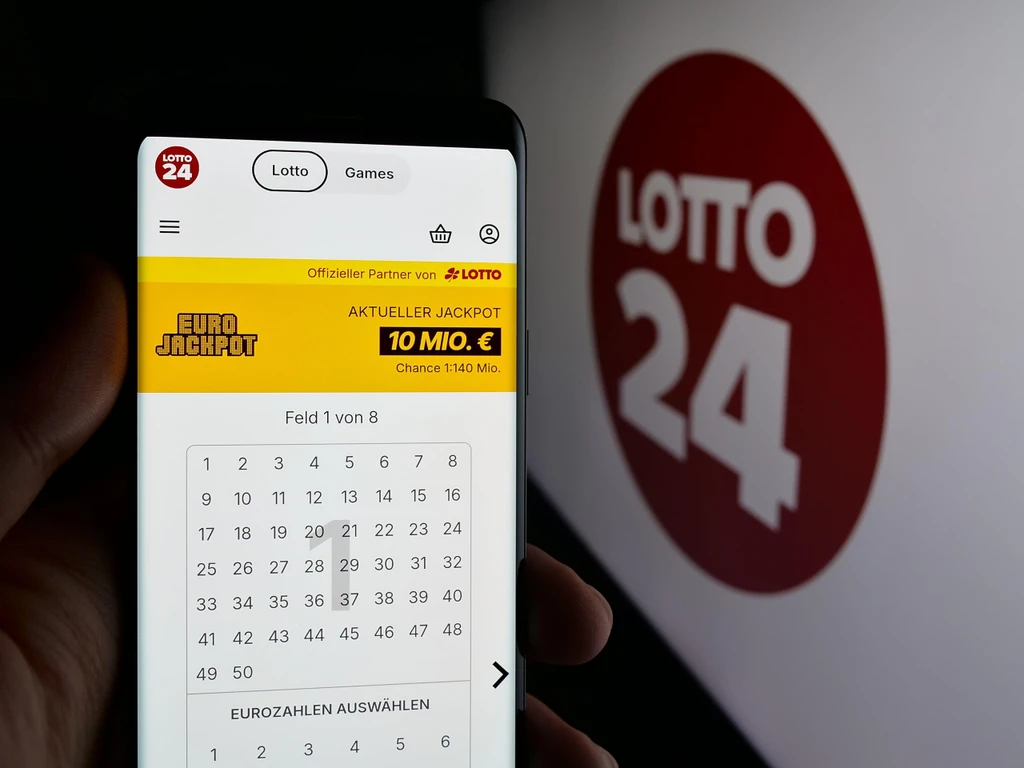
A different perspective on affiliates, however, comes from Barbara Winderlich, director of media and acquisition at LOTTO24, part of the ZEAL Network, the market leading online lottery brockerage in Germany. “We believe that we need to diversify our channels, and one part of that is actually affiliate marketing,” she explains. “Customer behaviours, of course, can be very different based on where and how you acquire them.
“But for us, it’s important to bring players onto the platform and give them a strong product experience. Once customers are on the platform and engaged with us, we see high levels of loyalty across our customer base, which allows us to build long-lasting relationships regardless of where we initially acquired them.”
What’s actually working now?
With this backdrop in mind, how are successful operators going about bringing in new players in the mid-2020s? Brand-led TV and sponsorship, advertising on streaming services and influencer content are among the acquisition methods in vogue.
Winderlich says: “The last couple of years really showed us that diversification is key when it comes to acquisition. The big platforms such as Meta are important for so many industries, and they are still key in advertising for us. But the frequent and sometimes significant changes to their algorithms can come as a real risk to us.”
Given that the social media behaviour of lottery customers is quite different to that of casino players or sports bettors, Winderlich feels it’s wise to diversify across channels to minimise the danger of losing acquisition revenue when social media algorithm changes hit.
At PlayOJO, Steddy believes the days of direct last-click attribution could be numbered. “With more brand channels, above-the-line, sponsorships, out-of-home – there are better models for measuring effectiveness of your marketing spend holistically, rather than channel by channel,” he posits.
Steddy says marketing focus is shifting from purely linear TV, which appeals to an older audience, to on-demand streaming services. They sponsored a late-night live casino show on UK terrestrial TV channel Five for over two years, but had to pull it recently, partly in reaction to tax increases.
“In the last year or 18 months,” he explains. “We’ve diversified to subscription video on-demand chanels. We’ve done quite a bit through Amazon [Prime Video] and Netflix and that has worked well for us, particularly in Canada. We’re reaching new audiences.”
Brand media has always been a key to scale performance marketing. With LLMs being mainstream at this point, you really need to focus on that because the models need to be able to identify you as a trustworthy source
— Barbara Winderlich, director of media and acquisition, LOTTO24
TV and social media’s evolution
Steddy emphasises the need for different channels for different cohorts of potential customers, explaining: “There’s still a market and an audience for linear TV, particularly our older audiences. When you’re pushing bingo, [UK terrestrial channel] ITV will always be the dominant place to be. But for casinos, and reaching younger audiences, SVOD (subscription video on-demand) is where you want to be.
“That’s certainly a channel that’s going to get more and more traction, and they’re opening up more opportunities for gambling companies to advertise there, whether it’s through acquisition offers, QR codes or pause ads.”
Steddy also believes in the role social media channels have to play going forward. “Influencer-driven campaigns and promotions are going to be more important,” he says. “In some ways, they’ll become the new affiliates. There’s scope for user-generated content too. Paid scripted content, not even using influencers, is proving more and more common; it’s user content that brands can distribute through their channels.”
PlayOJO has started doing that with both bingo and casino content, and Steddy has seen many other brands doing the same. “We invest a lot in Meta,” he continues. “Facebook is important for products like bingo because the audience demographic is slightly bigger than on Tiktok or Instagram.
“Social media still has a role to play from a brand point of view, as well as an acquisition point of view. The quality of traffic you get might not be as good as some other sources, but there’s still good volume coming through.”
Convergence: Using media for acquisition
LiveScore Bet has the relatively unique player acquisition route of attracting users of the popular LiveScore media app, which provides sports news and score updates to over 45 million monthly users globally. Sadi says of the regular bettors who use LiveScore, 10% choose to bet through LiveScore Bet, a figure he is looking to drive much higher. One thing he believes will help this is through their partnership with social media platform X, which he says is providing “incredible opportunities.”
The CEO explains how LiveScore has begun to take betting content from X and created a home for it within their media app, where users can see influencer tips that are directly linked to LiveScore Bet betting slips. They are looking to create a community around following social media tipsters within the app.
“How do you create an edge in an environment where you’re heavily regulated and you’re at a disadvantage to the offshore market, or much bigger rivals in the regulated space?” Sadi asks. “You need to do things that aren’t accessible to others, like exclusive partnerships, innovative expansions of your ecosystem, where the user is finding value by just visiting you because they’re interested in betting.
“Then you can communicate to the user in a betting context, and they’re more receptive to trying a new sportsbook because they’re there for betting purposes, whether that’s to research their bets or check tips coming directly from X.”
This route to acquisition is less common, with Sky Bet and Sky Sports one of the few comparable offerings in the industry, although Sadi describes that relationship as more of a “brand play.” Sadi also cites Canadian app theScore as having duplicated the LiveScore model, albeit with a less mature product.
Competing against Tier 1s
Sadi credits this model with allowing LiveScore Bet to reach 3% market share in the UK and hopes this scale will help absorb the impending new costs of tax increases and advertising restrictions. “Our competition is not bet365,” he explains. “We can’t be better than bet365, not in a short period of time, not with our current size and strength.
“But we can be better for someone who uses LiveScore and bet365 together. And using LiveScore and LiveScore Bet together can deliver experiences that using LiveScore and bet365 together cannot. So that’s what we’re really focusing on.”
Looking ahead, Sadi believes LiveScore is well-placed to continue benefiting from its media offering. He says: “We’ve been a little bit more active out of necessity compared to Entain or Flutter. They can just pay millions to be advertised on Sky TV or on digital channels and everything is fine.
“If I just did that, I can’t compete with them. I’m coming from so far behind that I’m forced to innovate.
“So while they may have had a look at how you do a media product, or how you integrate X content into your product, or deliver video highlights to your users, they don’t have the urgency that we have had to find new marketing opportunities and user acquisition models to just get to where we are. So, we’re a little bit more advanced in terms of seeking new ways to acquire new users through media-like properties.”
If you're betting £5 every weekend and you've been doing it for two years, that is just as good as someone delivering you 10 times the value. The cost is going to be proportional anyway. I don't think a lot of operators have got that right
— Sam Sadi, CEO of LiveScore Group
Reliving the USA’s dotnet era
In Italy and Belgium, purported media sites created by gambling operators to get around restrictions preventing them from advertising in places such as on football shirts or on TV have been dubbed “decoy brands” by academics.
Sadi sees this as something comparable to strategies used by offshore operators targeting the USA in the late 1990s and early 2000s, where they would set up free gaming ‘dotnet’ properties which could be advertised when the real money ‘dotcom’ sites couldn’t.
“[Setting up media sites] is probably something other bookmakers will have to look at. Some are doing it to bypass regulations. They’re creating fake media properties so they can advertise their brand, similar to the ‘dotnet’ strategies of maybe 20, 25 years ago. But some are seriously looking at how to create media assets that have their own organic usage, after which we can leverage that to turn them into loyal betting customers.”
This is a key point of distinction – acquisition strategies dressed as content strategies. The operators creating media sites to bypass rules may get some new players, but without putting enough resources into the quality of content – as LiveScore has done over many years – they may struggle to build real loyalty. There’s also the risk of regulators eventually taking action to close the advertising loophole, as happened with those ‘dotnet’ strategies in the US.
Quality over quantity: The new KPI conversation
Many businesses both inside and outside the iGaming space claim they prefer quality over quantity, but in reality, how many actually practice what they preach? Winderlich believes it depends on an operator’s strategic priorities. “Some competitors in the market are strongly focused on growth and market share,” she explains.
“We see that in the way they spend. For those operators, volume can take priority over short-term ROI.
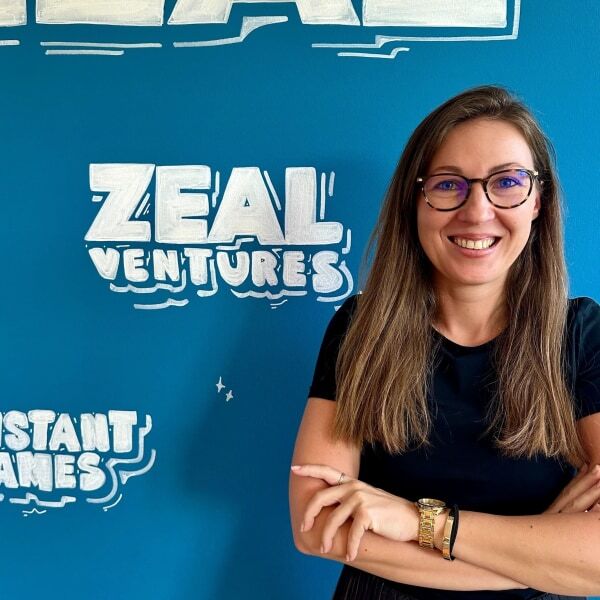
“Others probably do pay more attention to efficiency and player quality as media costs are also increasing over the years. It might be of greater importance that acquisition spends deliver immediate returns.”
Steddy believes it is an industry trend to favour quality over quantity. “From the player value data that we’re seeing,” he explains, “if you can keep players on site longer, it’s for your own benefit, rather than acquiring low-volume, cheap traffic that isn’t going to be around in a few months.
“No business will start to put acquisition on the back burner, because you won’t survive long if you don’t have acquisition, but there’ll be people investing more in retention marketing, CRM and the product.”
“People aren’t going to stick around if you’ve got a poor product,” he emphasises. “Good retention always starts with good acquisition. If you’re focusing on high volume, low CPAs, low value traffic, you know the churn is going to be high.”
LiveScore has already shifted its acquisition focus towards this, according to Sadi. He cites the opening paragraph of an internal retrospective report about the 2026 Cheltenham Festival he had received shortly before his interview with iGB. It read: “Our philosophy towards player quality over quantity has worked.”
Sadi explains: “That’s a simple, real answer, straight from what we’re doing. We’ve switched to that about two years ago when we really invested in our marketing science and our MMM (Marketing Mix Modelling) models. We have a very good understanding of how to acquire profitable cohorts and which channels to invest in accordingly.
“So we no longer focus on metrics that are just FTDs or total active players, and make sure that all our KPIs are based on proprietary metrics that define a good customer, not in terms of size, but long-term profitability and long-term loyalty. That gives you a really good opportunity to give more to good customers, because you’re not wasting money on customers that are just there to get a bonus and bump up your numbers.”
In line with this, Sadi believes operators should put more focus on loyalty-based rewards, rather than just value. He explains: “A good reward system should be targeting loyalty regardless of the size of the customer.
“If you’re betting £5 every weekend and you’ve been doing it for two years, that is just as good as someone delivering you 10 times the value. The cost is going to be proportional anyway. I don’t think a lot of operators have got that right.”
What comes next? The future acquisition model
So what does the future hold for player acquisition? Winderlich thinks the prevalence of AI search will have an impact. “I believe player acquisition will be really about establishing your brand and telling the customer what you stand for,” she insists. “Brand media has always been a key to scale performance marketing.

“With LLMs being mainstream at this point, you really need to focus on that because the models need to be able to identify you as a trustworthy source.”
“I would predict a shift in the growing relevance of organic social media presence. We see the importance of community-driven environments like Reddit for LLMs – they really pick this up. I believe companies will return to investing in that, especially as AI can make it more efficient.”
Brand is key for Sadi too. He says: “Investment into long-term brand building will increase in importance to create more long-term loyalty. But because of, maybe, reduced competition, the importance of marketing in general may be reduced.”
He opines: “It’s going to be really interesting to see what happens in the UK market, and particularly from an above-the-line point-of-view.
“In terms of the spend, I think you’ll get some operators who see it as an opportunity to go strong and try to gain some market share. Inevitably, there’ll be some operators that exit the market or pull back their spend. But there’ll be some, who are just UK-based, like Midnite or MrQ, for example, that will really go for it and double down because they want to be here.
“Some other brands just can’t absorb that 40% tax rate, which is just shy of a 100% increase from one day to the next.”
Ultimately, regulation and acquisition trends might change, but people are always going to gamble, and there are always going to be more potential players for operators to compete for. It’s just a case of how they’re going to go about it.

In partnership with iGB L!ve 2026, which is taking place from 1-2 July at ExCel London.

James Swann-Phillips
James moved into the gambling industry in 2020 after several years in the sports media working for the likes of Sky Sports, the Daily Mail & Metro.
In partnership with
iGB L!VE