
Winning after the World Cup: How operators can turn new bettors into long-term customers
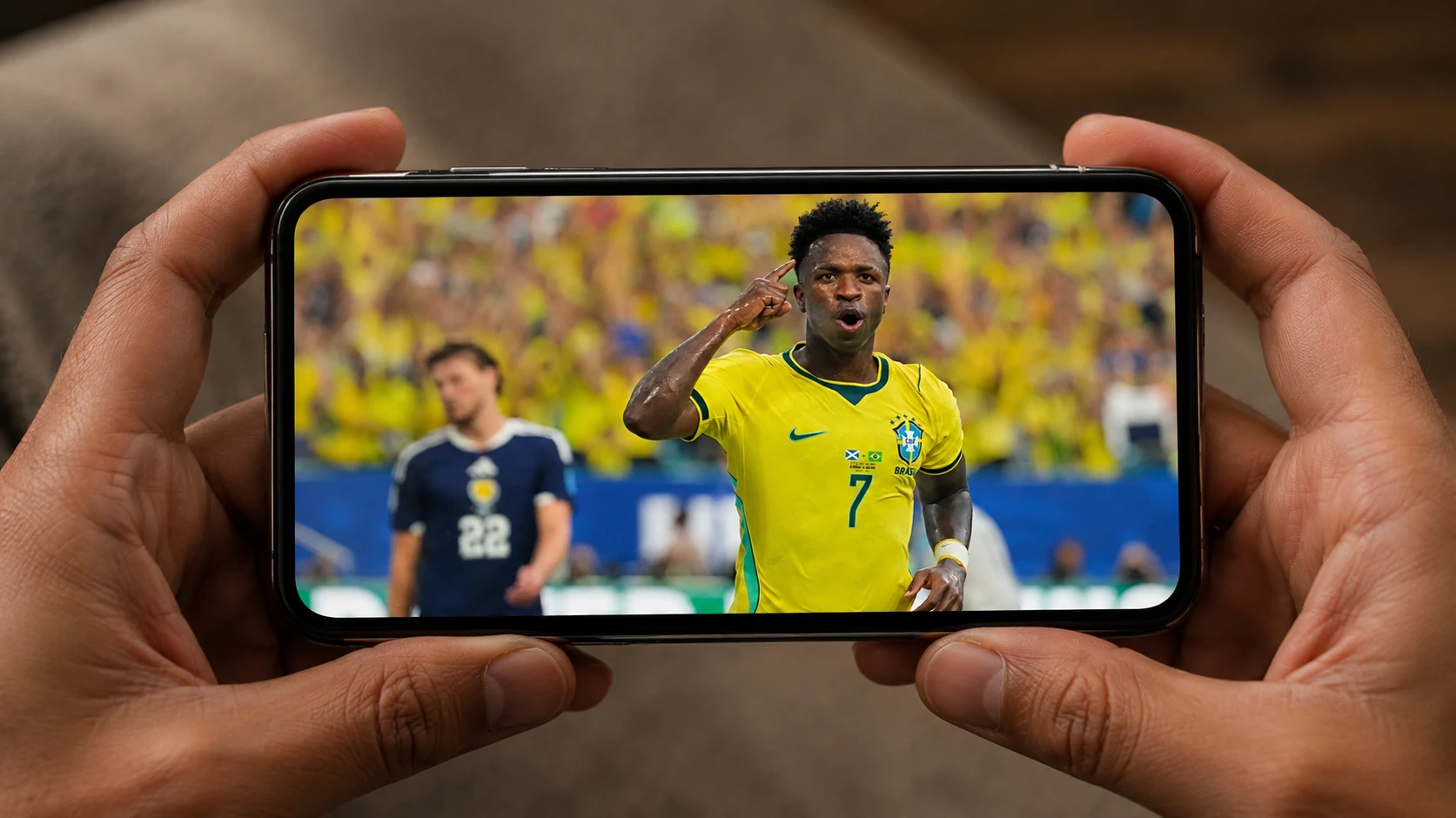
The FIFA World Cup 2026 is the biggest edition of the tournament to date, with 104 matches taking place over 39 days in the USA, Canada and Mexico. For sportsbooks, it represents a huge acquisition opportunity with global wagers on the tournament tipped to exceed $50bn, up from more than $35bn during the 2022 World Cup.
However, while operators focus heavily on attracting new customers before and during major sporting events, the real test often begins once the action is over. Brands inevitably experience a sharp drop in activity after tournaments conclude, as event-driven bettors disengage and acquisition momentum fades.
Building on Sportradar’s ‘Winning Marketing Strategies for the World Cup and Beyond’ webinar and the sports technology company’s earlier guidance on World Cup acquisition strategies, the next challenge is clear: how can operators retain the players they have worked so hard to acquire?
According to Dimi Katsavelis, senior client partner at Sportradar, success after the World Cup requires a fundamental shift in both strategy and spending priorities.
Many operators make the mistake of treating tournament-driven spikes as sustainable growth. During the World Cup they acquire casual fans, event-only bettors and promotion-driven customers, only to continue targeting them all in exactly the same way once the tournament has ended.
The most successful operators take a different approach. Rather than reducing marketing investment after the World Cup, they reallocate it.
During the tournament, acquisition can account for well over half of direct player marketing investment, with CRM representing a smaller share. Once the World Cup ends, that balance should change dramatically. Acquisition spend typically reduces substantially, while CRM, retention and reactivation become the primary focus of marketing activity
Katsavelis says: “The focus should move from ‘How many players can we acquire?’ to ‘Which players are most likely to generate long-term value?’. That means investing in predictive churn prevention, early reactivation programmes, personalised player journeys and intelligent cross-sell strategies.”
Harnessing AI-driven retention strategies
One of the biggest mistakes operators make after major sporting events is measuring success against tournament-level activity.
Major sporting events such as the World Cup or Super Bowl generate exceptional levels of engagement, but sustaining those peaks indefinitely is unrealistic. Instead, operators should focus on whether they are successfully turning event-driven customers into regular users who continue engaging with the brand long after the event has ended.
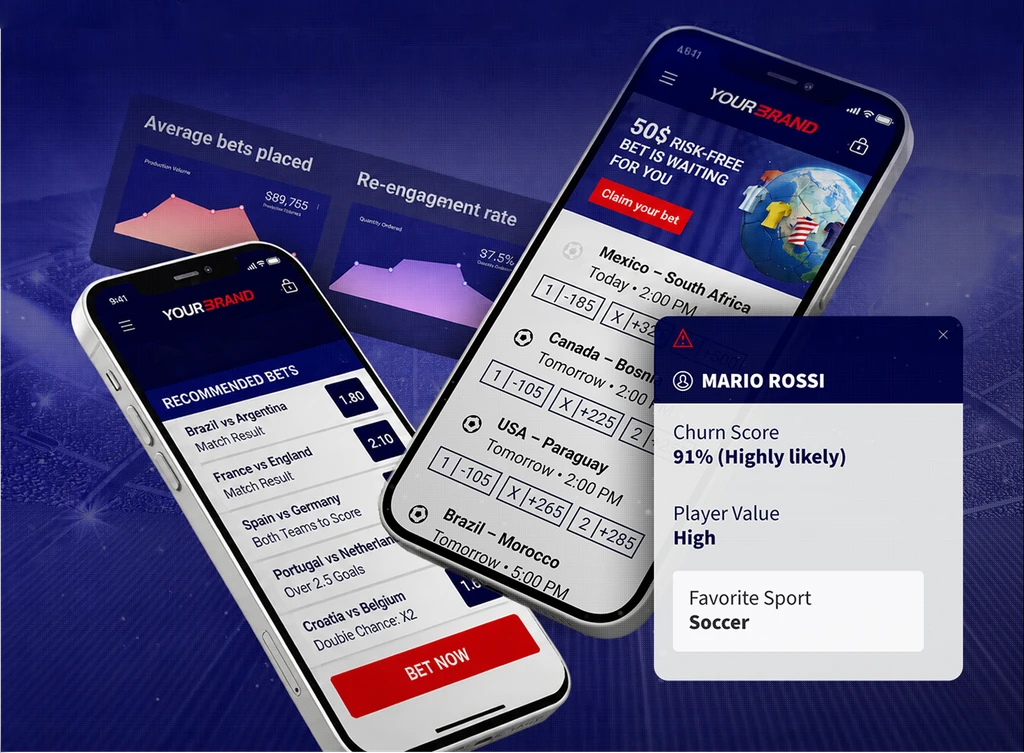
As Katsavelis adds: “Good retention isn’t preserving tournament-level activity – it’s converting event-driven bettors into loyal customers.”
To evaluate retention effectively, Sportradar recommends focusing on three key metrics.
The first is 90-day retention rate, which provides a strong indication of whether customers acquired during the tournament remain active once the initial excitement has faded.
The second is value retention rate, measuring how much of the revenue generated during the World Cup continues to be realised after the tournament. This offers a far more meaningful indicator of long-term success than simple active-user figures.
The third is churn velocity. Understanding how quickly players disengage can help operators intervene before those customers become increasingly difficult and expensive to reactivate.
Data from Sportradar case studies suggests that AI-driven retention programmes can deliver significant improvements. Comparing AI-powered CRM strategies against traditional approaches, retention reached 72% versus 61% after two months. By month six, retention stood at 39% compared with 34%, while after 12 months the figures were 40% and 30% respectively.
The common theme is not simply retaining more customers, but slowing the rate at which they become inactive.
Personalisation as a retention advantage
Understanding retention metrics is only the starting point. Once operators know which customers are staying, which are likely to churn and which continue generating value, the next challenge becomes influencing those outcomes.
This is where personalisation, CRM and lifecycle marketing can become significant competitive advantages.
Personalisation remains one of the most discussed concepts in gaming marketing, yet many operators still approach it too narrowly, according to Katsavelis. Rather than focusing on individual campaigns or promotional messages, effective personalisation is centred on understanding where a customer sits in their journey and what they need next.
The biggest gain comes from finding the right player, at the right moment, with the right objective – the message itself is often the least important part
Katsavelis explains: “The question isn’t ‘What message should I send?’ but ‘What does this player need right now to continue their journey?’”
That thinking should begin before the World Cup has even ended. Operators can start identifying likely churn risks, assessing future value and understanding which customers are showing signs of developing sustainable player behaviour
The goal is to create a smooth transition from tournament engagement into longer-term activity. Effective strategies include helping players establish routines during the critical first four to six weeks after acquisition, creating behaviour-driven onboarding journeys and separating churn prevention initiatives from reactivation campaigns.
Dynamic triggers can also prove more effective than fixed campaign calendars, allowing customer behaviour to determine the next interaction rather than arbitrary dates.
Katsavelis says: “The biggest gain comes from finding the right player, at the right moment, with the right objective – the message itself is often the least important part.”
Connecting the data
Of course, personalisation is only as effective as the data supporting it.
According to Katsavelis, retention is a data problem disguised as a marketing problem. The challenge becomes particularly apparent after major acquisition events, when operators attempt to maintain engagement without a complete view of customer behaviour.
If sportsbook, CRM, analytics and bonus systems remain disconnected, operators inevitably fall back on broad campaigns based on historical reporting rather than future intent.
The consequences are particularly visible during quieter periods in the sporting calendar.
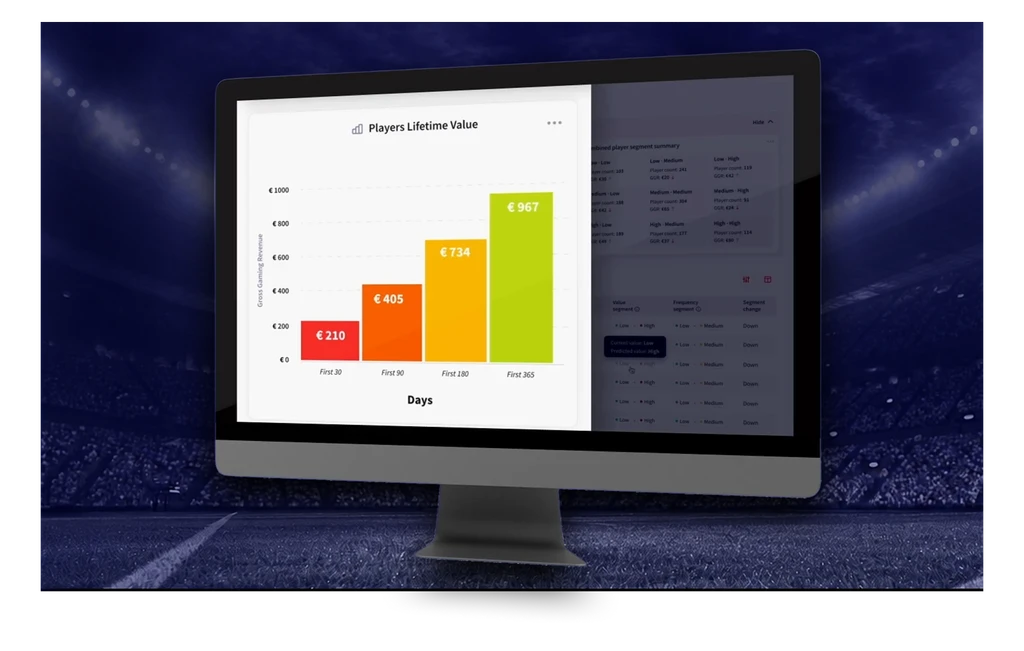
“Operators who rely on broad promotional campaigns often see engagement fall sharply as customer interest naturally cools,” Katsavelis added. “Operators using predictive intelligence can identify which players are likely to disengage before activity drops and intervene with relevant experiences, content, competitions or offers that maintain engagement until the next major sporting cycle.”
By combining customer data into a single intelligence layer, operators can build a more accurate understanding of player behaviour and make better decisions about when and how to engage each customer.
Expanding engagement
Another important retention opportunity, according to Sportradar, lies in introducing sports-first customers to additional products and experiences.
Historically, cross-sell efforts have often failed because they prioritised commercial objectives over customer behaviour. Customers arriving through a major sporting event are unlikely to respond positively to immediate and aggressive casino promotions. Instead, successful crossover strategies begin by understanding the moments when customer intent naturally broadens.
Users do not think in terms of separate verticals, according to Katsavelis. They experience a single entertainment relationship with an operator. That creates opportunities to introduce additional content during quieter sporting periods, between matches or during low-activity sessions.
“Timing beats targeting: never cross-sell when a user is emotionally inside a match – do it when they’re between matches,” Katsavelis says.
The core principle is that you’re not acquiring World Cup users. You’re acquiring future regular users
Rather than pushing customers directly into another vertical, operators can gradually build familiarity through contextual recommendations, low-friction first experiences and personalised follow-up journeys. Sports-themed instant games, match companions and other hybrid experiences can also help extend engagement without creating the feeling of a product switch.
Success should be measured through broader engagement outcomes rather than simple conversion rates alone, including repeat sessions, retention following crossover exposure and the impact on sportsbook activity. As Katsavelis summarises: “The goal is portfolio engagement stability.”
Building trust beyond the tournament
Ultimately, successful post-World Cup retention begins long before the tournament ends.
The operators that achieve the strongest long-term results are those that design acquisition strategies around future retention objectives rather than short-term volume. They recognise that every World Cup customer represents a potential long-term relationship rather than a temporary spike in activity.
That means creating clear pathways from tournament betting into domestic leagues, other sports and complementary experiences. It means replacing promotion-heavy communications with behaviour-driven engagement. And it means identifying customer cohorts early enough to provide relevant experiences throughout their lifecycle.
Trust also plays a critical role. Consistent user experiences, transparent communication, stable value propositions and responsible engagement all contribute to long-term loyalty once the excitement of a major sporting event has waned.
“The core principle is that you’re not acquiring World Cup users,” Katsavelis says. “You’re acquiring future regular users who temporarily express interest through a global event.”
As betting operators pursue their own World Cup success, the brands that emerge strongest may not necessarily be those that acquire the most customers during the tournament. Instead, they will be those that develop the most effective strategies for keeping customers engaged long after the final whistle has blown.

Dimi Katsavelis, senior client partner, Sportradar