
Prediction market roundup: Will Meta be the next to make leap into new asset class?
Amid the explosion in prediction markets nationwide, Meta may be the next to make the jump into the popular new asset class.
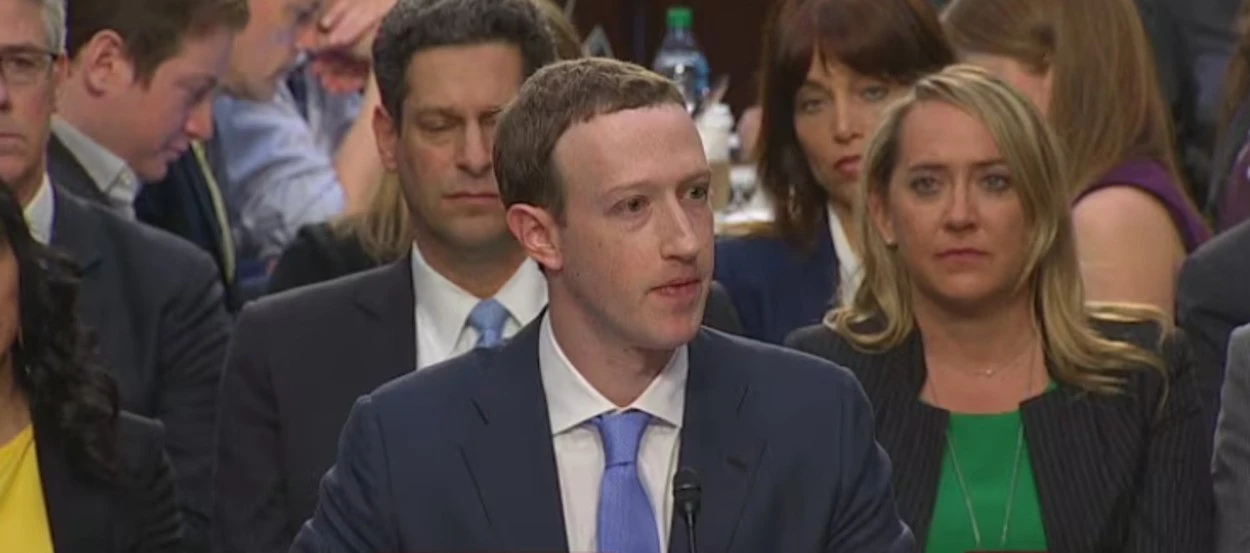
Meta, the parent company of Facebook, is exploring the launch of a prediction market platform called “Arena”, the New York Times reported this week. A team tasked by Meta CEO Mark Zuckerberg to research a possible launch has considered a video game-style point system for currency, the Times reported. Although the team has not dismissed an eventual transition into a real-money platform, one would not occur at launch, according to the outlet.
As this summer’s World Cup indicates, major sports events can be among the most efficient methods for prediction markets to acquire new customers. Through a host of social media apps – Facebook, WhatsApp, Instagram and Messenger – Meta has a reach of approximately 3.5 billion daily active users.
A rollout from Meta would vault the social media company into a crowded field that includes leading commercial sportsbooks, burgeoning cryptocurrency exchanges and startups such as Kalshi and Polymarket that have received multibillion-dollar valuations. According to a separate report this week, Kalshi is seeking a new funding round that would value the company at $40 billion.
Among social media networks, US President Donald Trump’s Truth Social has also explored the launch of a prediction market. Meta has not disclosed a potential launch date and the company declined to comment on the Times report.
Kalshi: Public debut won’t come in 2026
As Kalshi’s valuation continues to rise, it is natural for chatter of a potential listing to escalate. Speaking with CNBC this week, Kalshi CEO Tarek Mansour indicated that any move into public markets will not occur this year.
Over the last week, Kalshi has confirmed that it has engaged in informal discussions with investment banks on an IPO. The talks come as the prediction market operator cleared a key benchmark of $2 billion in annualised revenue.
“A company of our financial profile with the rate of growth that we’re seeing, that sort of conversation,” Mansour told CNBC. “And we’re basically thinking about it, but obviously we don’t have an answer yet.”
The $40 billion valuation sought by Kalshi would nearly double the most recent one of $22 billion attained by the company earlier this year. Following a Series D funding round last October, Kalshi secured $1 billion in Series F funding earlier this year. That round, led by Coatue Management, also included investments from Sequoia Capital, Morgan Stanley and a16z, also known as Andreessen Horowitz.
Polymarket, Kalshi’s archrival, is seeking to raise new capital at a valuation of $15 billion, Bloomberg reported. Earlier this week, the Wall Street Journal published an exclusive feature on a series of purported fake trades by Polymarket influencers. One trade cited by the Journal contained a video of a college student who appeared to win $100,000 on a mention market involving Trump. The trade centred on whether the US president would utter “McDonald’s” publicly during the month of January.
The trade, however, was not real, the Journal’s investigation found. The outlet reviewed more than 1,100 videos during a comprehensive analysis. Polymarket later announced that it has commenced an investigation in response to the report. In a statement provided to the Journal, Polymarket wrote that it is “committed to maintaining accurate, fair and transparent markets”.
Kalshi sues Illinois over proposed prediction market tax
Kalshi has filed a federal lawsuit against the state of Illinois over a new state law that will assess the nation’s first tax on sports event contracts. As part of a $56 billion annual budget signed by Illinois Governor JB Pritzker last week, the law will establish a 15% levy on gross receipts from sports-event contracts placed on prediction markets.
In a 31-page complaint filed in the US District for the Northern District of Illinois, Kalshi accused the state of violating the Supremacy Clause of the US Constitution. The clause, according to Kalshi, is designed to prevent situations when state and federal law conflict.
“Illinois apparently deems itself unencumbered by the supremacy clause,” the lawsuit reads. Kalshi is seeking a temporary restraining order from the Court to stop the enforcement of the tax. The new Illinois legislation is set to take effect on 1 July.

Matt Rybaltowski
Matt is primarily responsible for long-form feature coverage on complex sports betting scandals. He also provides coverage on finance, M&A and other technological developments.