
Winning after the final whistle: Is the World Cup really worth only 1% of annual operator revenue?
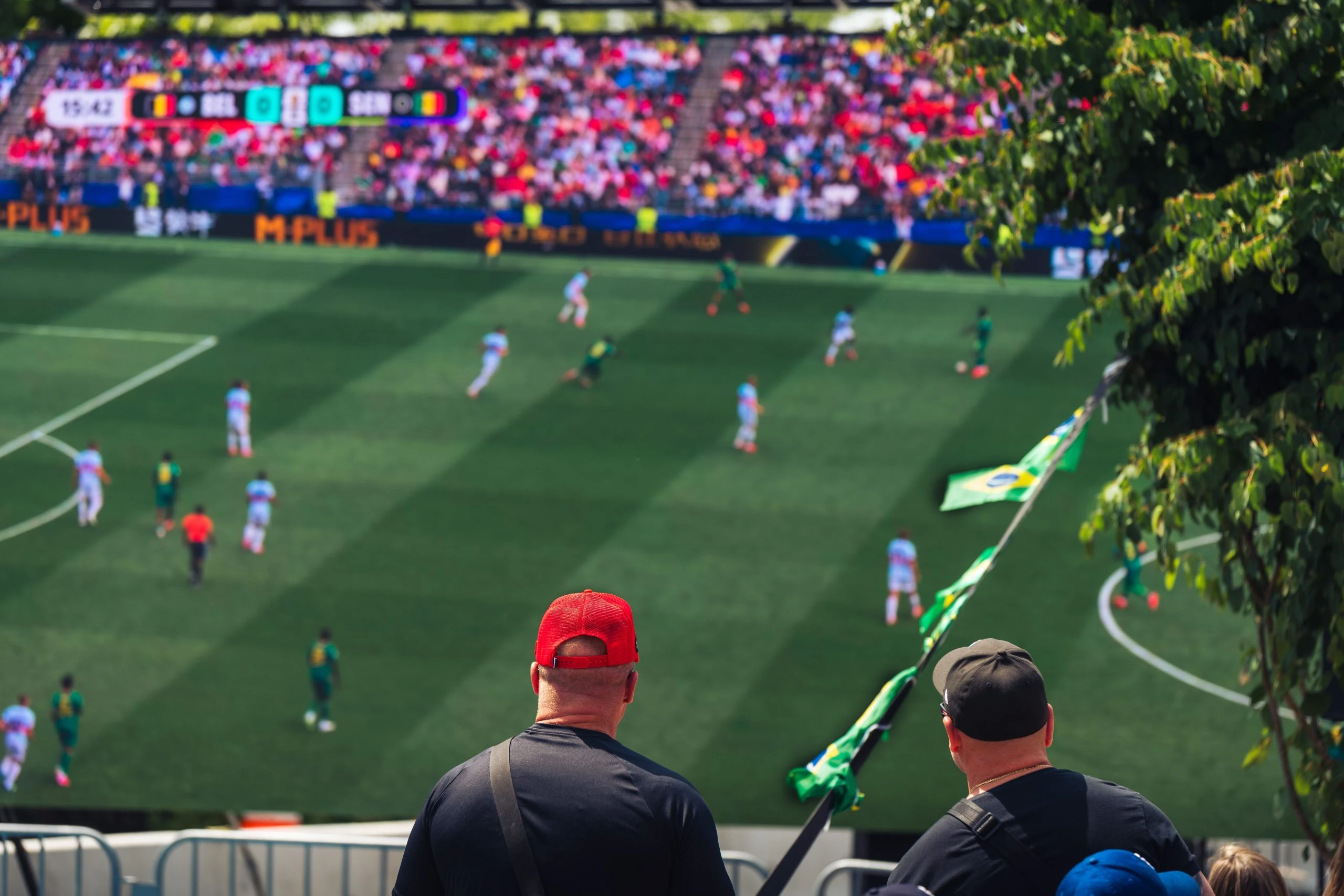
With the World Cup nearing its climax in the US, Mexico and Canada, operators will soon assess whether the tournament has delivered on its commercial promise. Is the real value of major tournaments in what they deliver after the final whistle?
Ahead of the tournament’s kick-off, investment bank Macquarie estimated global wagers could reach $50 billion. But during Entain’s FY’25 earnings call in March comments from CEO Stella David’s on how much annual yield the operator actually makes from the tournament raised the question of just how much value such a huge sporting event provides.
“It’s not as big a thing as you might think,” David told analysts, in response to a question on how much annual revenue the tournament would make for Entain. “I mean, it’s probably worth about 1% or something like that across the year is really where we would anticipate that to be as an upside. It’s bigger than the Euros, but it’s not as dramatic as you would think.”
While the figure seems low, Ed Birkin, managing director of H2 Gambling Capital, believes major sporting events serve more as a customer acquisition tool rather than a key driver of significant incremental revenue. “Overall in markets that report it, [the World Cup is] accounting for around 7% of sports turnover,” Birkin tells iGB. “However, it really depends on the outcomes of games in terms of what is going to be done.
“If you’re only making 1% from the World Cup, then it would be disappointing. However, that also depends on your split. The ones who are more sports-focused will see a lot bigger benefit. Entain, they’ve got the UK business, although their gaming brands are still bigger.”
Results on the pitch matter
This year, the World Cup was expanded to include 48 teams. While this means over 60% more matches, it also led to a significant number of the group-stage matches involving footballing powerhouses against what could be perceived as minnows on the world stage, with several teams qualifying for the first time.
As Birkin references, how operators have performed could be strongly linked to whether the aforementioned minnows have upset some of the favourites. During the group stages, first-time qualifiers Cape Verde held Spain to a draw before also achieving a 2-2 result with Uruguay, while Brazil, Germany, Portugal, England and the Netherlands all dropped points.
According to Chad Beynon, managing director and senior gaming, lodging & theatres analyst at Macquarie Group, what has happened on the pitch will prove “crucial” in determining whether operators have capitalised on the expanded World Cup. “If England makes it to the final, then you’re going to see those numbers completely smash what Entain had been saying,” Beynon says.
“We do need these big teams to make it to the next stage, right? If England, France, Argentina were upset by a smaller market, a smaller GDP country, I think that would certainly hurt in the next stage.”
Does long-term value lie in casino cross-sell?
Beynon and Birkin’s view echo those of Super Group CEO Neal Menashe, who prior to the tournament said its early rounds could be “hairy” due to the mismatches. But for Super Group the real value in the World Cup lies in what it could cross-sell from sports betting into casino, which he claimed sits at around 60%-70%.
Beynon agrees with this view, adding: “In terms of iGaming cross-sell, I think that is the ultimate goal. I mean, we’ve always thought about poker and sports betting as the top of funnel, and then iGaming as the money printer.
“I just don’t know if you’re going to see those same cross-sell rates [with] new customers, because they haven’t participated in iGaming or else they would have an account. So I would say it’s a little bit lower than a new market opening up. But I do think it’ll still be pretty strong.”
Birkin has reservations over whether operators will truly be able to cross-sell into casino as much as they forecast, especially in the US where iGaming expansion has stalled. “In the US, it’s only relevant for five states,” Birkin explains. “Casino is where you monetise players, but I’ve had a few people say to me that this idea that sports betting customers want to go to casino just doesn’t work particularly well.
“So I think some operators are more successful than others. In general, sports betting players tend to have better cross-sell into poker, but in terms of slots and stuff, they don’t seem to have been big across that.”
More of a customer acquisition tool
For betting operators the World Cup may be be less about achieving a bumper quarter and more about winning customers for long-term value. Particularly interesting comments on this came from Robeson Reeves, CEO of Bally’s Intralot during the operator’s Q1 earnings call. Reeves said the company’s UK B2C business wouldn’t spend a lot of money on the World Cup, and would instead focus on hoovering up competitors’ customers once the welcome offers and marketing costs had died down.
With Bally’s more focused on casino than sports, Birkin believes this could prove to be a useful strategy. “All the sportsbook operators are spending a load of money, so all the customer acquisition costs are going up,” Birkin highlights. “Why would you spend money at a time when all the advertising costs are sky high? Because it’s not just gambling companies advertising during the World Cup. It’s every company.
“After the World Cup, the chances are that a lot of the big sportsbooks are going to reduce their advertising because they’ve just spent a load of money. So advertising is cheaper and there’s also less of it, so for the relative price, you get much higher share of voice after the World Cup. So that makes complete sense to do that.”
Measured approach by Bally’s
Beynon agrees, adding that with Bally’s Intralot’s recent M&A moves, they are therefore likely to take a more careful approach to customer acquisition. “I think with Bally’s in particular, they focus on profit margins, probably more than any other company,” Beynon suggests. “They’ve done an incredible job with their business in the UK and throughout Europe, and then with this acquisition of Evoke, it seems like that is the strategy.
“The strategy is they acquire players at lower rates and they retain them at lower rates, so they are not big on huge marketing blitzes. I think they’re very efficient in terms of finding their customers, whether they’re using affiliates or whether they’re acquiring them directly, but I would say that’s just kind of the Bally’s approach,” he adds.
“I think the other thing with Bally’s is they have a number of different acquisitions and a number of different irons in the fire. They just don’t have the capital to spend at the same levels as some of these other sports betting behemoths. So I think they’re just more practical around customer acquisition.”
The US opportunity
With the World Cup in North America for the first time since the US hosted in 1994, Beynon describes the commercial opportunity as “massive”. Primed to benefit is DraftKings, one of the market’s two market leaders, alongside Flutter Entertainment’s FanDuel.
While DraftKings’ EVP and GM of sports Greg Karamitis is reluctant to quantify the tournament’s expected financial contribution, he too believes the key attraction of the World Cup lies in acquiring new customers. “We’re very excited about the customer acquisition and engagement opportunities that the 2026 World Cup presents,” Karamitis tells iGB. “While we’re not providing specific revenue guidance at this time, we view the World Cup as a significant opportunity to deepen fan engagement and expand our customer base.
“The value of a major sporting event like the World Cup really is in customer engagement – both in acquiring new customers and also engaging a large number of existing customers; with the World Cup, this is particularly true as it is during a slower time of the sport calendar.”
Karamitis feels DraftKings is “uniquely positioned” to both acquire new customers and drive engagement, particularly among audiences that have occasionally been underserved by US sportsbooks. He notes that DraftKings offers its sportsbook experience in Spanish, key this year with Mexico serving as a co-host and the number of US citizens who speak Spanish as their first language standing in the tens of millions.
Is too much spent on marketing during the World Cup?
With marketing costs skyrocketing during major sporting events, it could be said that operators risk overextending as they look to capitalise on the opportunity. But Birkin believes they have little choice, suggesting that they could fall behind if they don’t increase their marketing expenditure around the event.
“You can argue the industry does [spend too much on marketing] as a whole, but if you’re an operator, it’s pretty difficult with what all your competitors are doing, because you’re just going to lose share of voice, so you kind of have to,” he explains.
“Should [leading UK operators] William Hill, Ladbrokes, Bet365 be spending as much on marketing in the World Cup? If together they said, ‘we’re not going to spend much on it’, then their revenues probably won’t be affected that much. But the fact is, if other people are but they don’t then a huge opportunity to acquire customers completely [disappears].”
DraftKings’ Karamitis acknowledges that marketing expenditure will skyrocket, but it’s a price the US giant is willing to pay. “While marketing costs can increase during these periods, acquisition efficiency usually improves, and the scale of engagement and the long-term value of customers acquired make these events highly attractive investment opportunities.”
What impact will prediction markets have?
Competition, particularly in the US, has emerged in the form of prediction markets. And while questions remain over just how much of a revenue driver major tournaments such as the World Cup are for sports betting, it is worth noting that prediction markets could eat further into traditional betting operators’ profits.
According to Beynon, US prediction markets leader Kalshi took approximately $15 billion in wagers across the month of May, largely stemming from states in which sports betting is illegal. Beynon expects legal sports betting in the US to generate GGR of around $3 billion across the World Cup. Prediction markets, he estimates, could hit $2 billion in GGR.
“I do think wagering [on prediction markets] is going to be very strong. We’ve seen it, we’ve seen strong numbers on the NBA finals here in the US, and last month Kalshi put up $15 billion of wagering with basketball, with hockey, with baseball, so it was a really strong month for them.”
‘Blaming prediction markets on a terrible World Cup is pretty disingenuous’
But while Beynon expects prediction markets to perform well, Birkin believes they’ll have a “limited” impact on traditional betting revenue, largely because ofa lack of availability in Europe. In June, nine European regulators, including France, Germany and Spain, announced a joint initiative cracking down on prediction markets.
“You’ve got the US, but their main target is states where there aren’t licensed sportsbooks,” Birkin explains. “So what’s the impact? Probably in the US, to operators with licensed sportsbooks, 5% possibly, so still a headwind, but it’s going to be well under 10%.
“In Europe, you’ve just seen nine countries come out and say they’re illegal. They’re not licensed, so if people use them in Europe, you’d argue that it’s competing against black market operators. So around the edges they’re not going to be immune, but it’s going to be a single-digit thing.
“If people have a terrible World Cup, I think blaming prediction markets is pretty disingenuous.”
Final whistle only the beginning
As the tournament enters its final stages, the biggest victory for betting operators may ultimately lie in whether companies can turn just over a month of heightened engagement into years of sustainable player loyalty and subsequent revenue.
“Generally, sportsbooks become profitable on the customer between months 12 and 18, so it takes that long to get through the promotions to see if that new active user is going to redeposit,” Beynon says.
For DraftKings’ Karamitis, whether the tournament has been a success will largely depend on whether it has achieved its goal of strong execution across the competition on aspects such as technology, operations and marketing.
“This is especially key as we work to ensure that we operate at the speed of sports, and make sure our content offering is hyper-relevant to how the event is playing out, and we adapt our offering to the most engaging narratives,” he concludes.
“Given our proven track record of successfully managing major sporting events, combined with our leading technology platform and marketing capabilities, we are confident in our ability at DraftKings to deliver a seamless experience for customers while creating value for stakeholders.”