
How could the gig economy impact direct-to-consumer scratchcard sales?
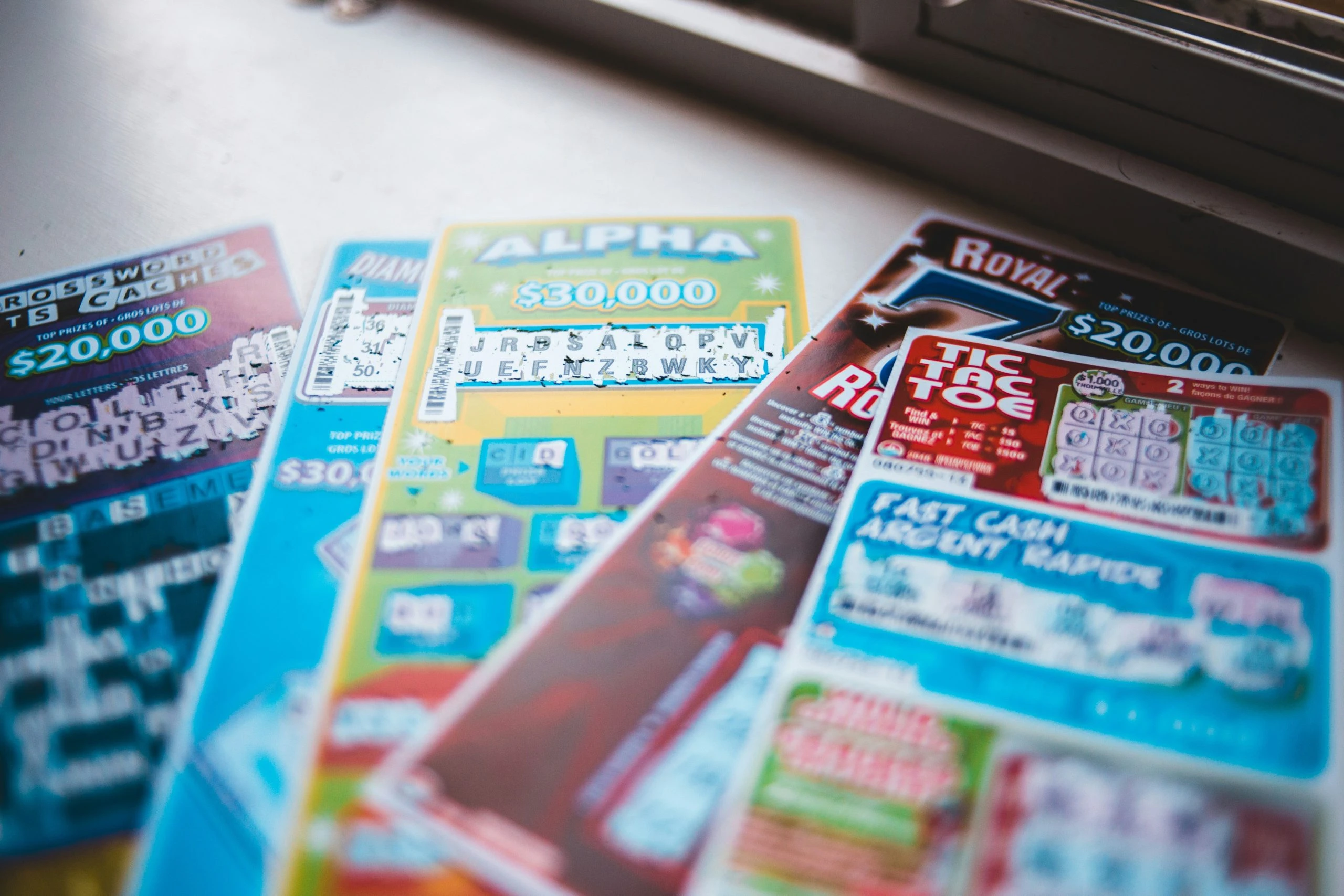
Recently, I saw a news story that got me pondering about an issue I hadn’t even given a passing thought to. It was announced back in early June that Allwyn, the UK national lottery retailer, had a new partnership with Scoot, a “rapid delivery platform” that brings shopping to people’s homes.
One (of the many) thing(s) that I did not know, is that lottery operators in the UK have in fact been doing this for some time with other service suppliers or outlets, notably Tesco and Morrisons, two of the UK’s largest retail groups.
Now, all of these services are seasoned when it comes to looking out for under-age shoppers; and all the drivers involved apparently have to undertake training regarding under-age or at-risk customers.
There is an area of this where the operator and retailer armour is compromised, however, and that’s where gig economy drivers become involved. You’ve almost certainly received a package from a gig economy driver – that’s a driver that is self-employed, running their own vehicle and earning per drop/per pickup.
It’s a very difficult way to earn a living, the money is poor and the drivers have significant outgoings (the obvious ones being specific insurance and fuel, plus vehicle wear and tear). That’s why parcels end up at the wrong house, they’re very rarely handed to the occupant, rather just left on doorsteps, et cetera. I’m not being critical of the drivers – they’re earning a tiny bit over minimum wage, with outgoings that usually bring them below it, and they’re also frequently using multiple apps so they can multi-task and earn more per hour by fitting more varied drops into the same time. In theory, anyway.
Driver training
I did put this to Allwyn and they explained how drivers must be trained, and the responsibility for this remains with the retailer. But Scoot, as a specific example, is an app used entirely by third-party drivers, and does not have an employee/employer relationship. It’s one of those situations where drivers earn based on how quickly they can deliver, and this feels like a problem to me.
But an Allwyn spokesperson explains that due to this model, drivers were much less likely to make repeat deliveries to a customer. “For group retailers using third-party logistics providers, the model is different. These drivers are self-employed and typically operate across multiple platforms, completing deliveries for a range of retailers. Because of the nature of this – with drivers picking up delivery jobs when, and as, they become available across multiple platforms – these third-party drivers are significantly less likely to make repeat deliveries to the same customer or be in a position to identify behavioural patterns over time.
“This reflects a structural difference in the delivery model, and one that is driven by the way these platforms operate at scale.”
Drivers don’t have visibility over retailer orders
Notably, these drivers are not provided with visibility into the specific products they are delivering. “Retailers using third-party drivers actively seek to limit this visibility, with many sealing delivery bags to ensure they remain closed and untouched throughout the end-to-end journey. They’ll know if there is an age-restricted product in the bag and will be prompted to verify the recipient’s age, but will not know the details beyond that,” the spokesperson adds.
“Responsibility for preventing underage and excessive play therefore remains with the overarching retailer, who has access to the in-depth order data and is best placed to understand and monitor customer behaviour, in the same way they do within a store environment.
“This includes ensuring appropriate safeguards, processes and oversight are in place when offering delivery services. That is why our training for drivers is very much directed at those who we know are likely to revisit the same addresses – as they do have a role to play in preventing excessive play.
Allwyn insists the reponsibility “for promoting responsible play” lies squarely with the retailers, which have a National Lottery Retailer Agreement with the operator.
Scratchcards are a growth area in the UK
Every question I had, Allwyn had the answer. Customers are limited to just ten scratchers per transaction, which is also a positive.
While researching a previous article, the old incumbent lottery operator explained to me with some glee that in the UK, almost every home was within a mile of a national lottery retailer. Projects like this from Allwyn ensure that distance is no longer an object, which is great for numbers – although the operator also told me that this presently represents just 0.5% of scratchcard sales in the UK. It’s an area they believe will develop, though, hence the growing number of partnerships.
The research around scratchcards as a factor in problematic or disordered gambling is really fascinating, though. There has not been a huge amount specifically on scratchers themselves, although the Gambling Commission did some research published in 2025 which revealed that scratchcards produced a PGSI (Problem Gambling Severity Index) score of below 8, which indicates it’s really not a big deal for players.
That said, the same research showed a PGSI score of over 8 for non-National Lottery scratchcards, so the format does have the potential for harm. But fortunately, Allwyn is taking a forward-thinking approach to this.
A proper telling off
I got a proper telling off when I suggested that much lottery research lumped scratchcards and lottery draws together, and it was pointed out to me that: “We [Allwyn] have done a huge amount of research into scratchcards over the years and every new scratchcard goes through a rigorous game design process to ensure that it is lower risk and doesn’t appeal to vulnerable groups. All games are risk-assessed at an early stage, ensuring that they are responsible in their design,” the spokesperson said.
“We then use two independent industry-standard tools (Gamgard and ASTERIG) to assess the risk levels of a game’s structural and situational characteristics, and a risk checklist to identify any further risks posed by the game. If any of these tools identify a risk level which is too high, we will revise the game. If the risk remains too high, we will not launch the game at all.”
How addictive are lottery scratchcards?
Researching this story – which was rapidly looking like a non-starter – was now starting to make my head hurt. Surely the scratchcard mechanism is essentially the same as a slot machine, and also has the near-miss factor heavily in use?
I asked Dr Michael Auer, my co-host on the Addiction: An Hour With Auer podcast, his thoughts and whether he was aware of any specific research. “Research sometimes pools scratchcards, often also referred to as instant lottery games, together with lottery draw games. However, the event frequency of scratchcards is much higher which also comes with a potentially higher risk of problem gambling (e.g. Auer & Griffiths, 2023),” he tells me.
“Research into the correlation between scratchcards and disordered play is inconclusive. Some studies report a positive correlation between scratchcards and problem gambling (Mauricio et al., 2013; Short et al., 2015). A recent systematic review of the available research concluded that the previous association between scratchcards and slot machines could not be supported and that scratchcards pose a low risk for problem gambling (DelFabbro et al. 2021).
Scratchcards can come in many forms, Dr Auer highlights. They can include near misses, they can be more or less interactive, they can pay out low prizes but often they can pay out high prizes, but rarely do. “Online scratching is sometimes not even part of the game. With every game it comes down to the mathematical aspects with respect to the risk of problem gambling.”
Safeguards in place for D2C lottery scratchcard purchases
Allwyn kindly gave me a statement when the theme of the article emerged, and I promised them I would use it. They told me participant protection was the operator’s top priority, and underpinned its plans to responsibly transform The National Lottery. “Scratchcards have been available for home delivery for many years, and we’ve been safely and responsibly selling scratchcards via other home delivery platforms more recently as well,” they said.
For orders placed through all home delivery platforms, retailers receive customer details, including the recipient’s name and address, giving them visibility of repeat ordering patterns. As part of their National Lottery Retailer Agreement, retailers are required to use this information, alongside their wider data about their customers, to identify potential indicators of excessive play and take appropriate action.
“All home delivery orders are also subject to our 10-scratchcard per transaction limit – so customers can’t physically buy more than 10 scratchcards in a single order. It’s also worth noting that the time it takes to purchase a scratchcard, play it and then claim any prizes by visiting a shop, creates a natural break in play, which experts agree keeps risk profile lower,” the spokesperson adds.
But only if everything works
I’m certainly not singling out Allwyn with this article – they’ve been open and engaging, answered everything I have asked of them fully, without question. My issue is with third parties who have zero reason to be invested in the health or wellbeing of the end users, but who are integral to the functioning of the sales medium.
It’s unlikely to be out of callousness; it’s just a consequence of the everything-right-now society that has sprung up in recent years. Convenience comes at a sacrifice, and the sacrifice is safety.
Ask any operator, or indeed anyone who is supplying or selling anything with risk involved and one word is always repeated – robust. As in, “we have robust procedures in place; we take safety very seriously”. You know the words, we have all heard them. But when the end user is removed from the supplier or operator by people motivated by doing things really, really quickly, there is inevitably a disconnect.
And this is at every level of the gambling industry, not just a lottery operator or similar. The more links there are in the chain between you and the player, the more chance there is of a weak link, and that chain is of course only as strong as its weakest link. There is nothing to stop people having multiple grocery shopping accounts; just like there is nothing stopping a retailer selling more of something should they want to. People generally find a way.
A devastating story
While researching this article, I came across a truly awful story about a young woman who died after falling down some stairs while drunk. The issue, her family says, is that her alcoholism was allowed full rein to bloom thanks to the availability of alcohol through delivery apps. She was spending over £1,000 a month just on booze, with orders as early as 6am; all this despite the delivery firms having “robust” policies for just such a situation.
It’s great to have processes, it’s great to protect end users – but these processes only work if everyone is on board, doing everything, every time, every day. Deliveroo, Just Eat and Uber Eats were apparently the companies supplying this woman’s booze; these are not small companies, these are supposed to be the cutting edge of what they do and setting the example for everyone else.
The fallibility of their “robust” processes should serve as a warning to gambling operators and anyone selling or providing age-restricted or high-risk products. It’s like Mike Tyson said, everyone has a plan until they get punched in the face.