
Fertitta execs licensed in Nevada, but few details known about state of Caesars deal
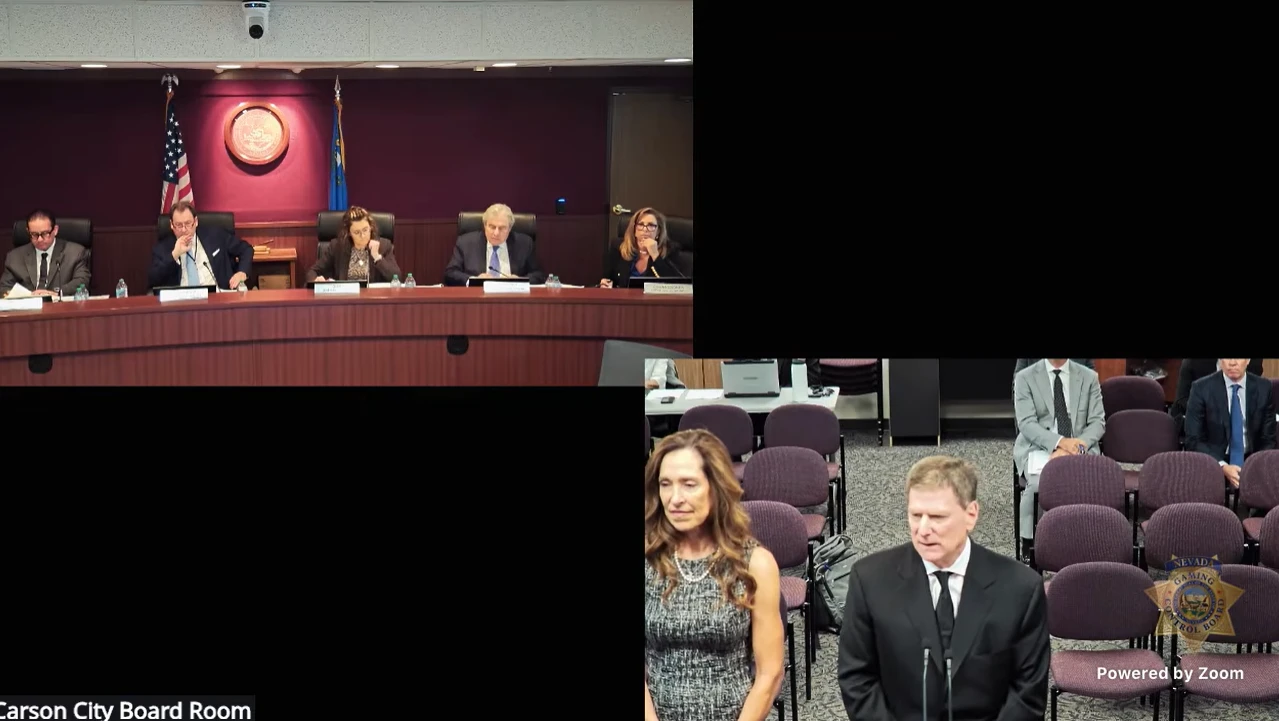
The Nevada Gaming Commission unanimously approved the licensing of two executives from Fertitta Entertainment on Thursday, as the company looks to move forward with its $17.6 billion acquisition and take-private of Caesars Entertainment.
Richard Liem and Steven Scheinthal, Fertitta’s CFO and general counsel, respectively, were both approved for this latest licensing round, although both have been licensed in the state many times since 2005, when Fertitta first acquired Golden Nugget Casinos.
But while the Caesars acquisition was the focal point of the discussion, there were few concrete details about how things will play out from here. To this point, neither company has released any statements regarding the transaction other than an announcement without further explanation from any executives.
A go-shop period that allowed Caesars to solicit competing bids expired on 11 July. Carl Icahn, an investor with previous experience with Caesars, was said to be drumming up a last-minute bid but no news has emerged on that front since the go-shop window closed. When asked by commissioners whether the deal was in fact finalised after 11 July, Liem gave a somewhat terse response.
“I would say when it comes to Caesars, and that transaction, Caesars is a public company, and so Caesars will make whatever public announcements that they need to make,” he told commissioners.
Caesars, in turn, declined to comment on the deal when reached by iGB on Thursday.
Antitrust and questions of influence
In order for the transaction to close, it must undergo antitrust reviews, which could prove to be the most significant regulatory hurdle to clear.
Caesars and Fertitta’s Golden Nugget brand currently compete in six markets throughout the US, including three in Nevada: Lake Tahoe, Laughlin and Las Vegas. Neither the NGC nor the Nevada Gaming Control Board discussed in-state competitive dynamics when approving Liem’s and Scheinthal’s applications this month. When Caesars was acquired by Eldorado Resorts in 2020, both companies had to divest assets for that deal to be approved. The NGCB previously told iGB it would await any federal rulings before making state-level decisions.
Other than the executives’ licensure, the only other definitive step taken so far is the filing of a Hart-Scott-Rodino antitrust application to the Federal Trade Commission. Liem confirmed the application has been filed, but cautioned that the process is case by case with no set timeline.
He cited a $110 billion merger between Paramount Skydance and Warner Bros Discovery to illustrate the complexities of completing multi-billion-dollar M&A deals in a timely fashion. Earlier this week, a federal judge extended a temporary restraining order blocking the merger amid a dozen antitrust lawsuits. As a public company, Caesars must also file a proxy statement and secure shareholder approval in the near future.
Fertitta’s ambassadorship to Italy
The commissioners also had questions about the influence of Tilman Fertitta, the billionaire mogul behind the namesake company. Fertitta is currently serving as US ambassador to Italy and San Marino and was forced to separate himself from his businesses per ethics requirements. Liem asserted that the ambassador is “not involved in daily operations” but does provide “strategic direction”. The comments seemed to spark some confusion among commissioners, but was not pursued further.
Liem later added that Fertitta was given clearance to maintain some duties, such as those related to the NBA Houston Rockets franchise, but not any related to gaming or hospitality.
Scheinthal was the more talkative of the two figures, and said that union negotiations were the main reason for him coming to Las Vegas under his current duties. He said Fertitta has a great relationship with the powerful Culinary Union, and recalled getting a personal phone call from Culinary’s Secretary-Treasurer Ted Pappageorge when the deal was announced.
Can Fertitta reshape Caesars’ AML efforts?
With regards to merging the operations of Caesars and Golden Nugget, Scheinthal said numerous times that the logical pathway would be for Golden Nugget to integrate its assets into the larger Caesars system, not the other way around. That sentiment was in reference to both employee benefits and anti-money laundering compliance.
“They’re much larger than us, the Caesars organisation, they have a tremendous number of people and it’s easier for us to integrate our properties into their system than it’s going to be for us to integrate their properties into our system, so that’s the plan,” he said.
On the compliance front, Caesars is still recovering from a $7.8 million AML fine issued last year for failures related to infamous illegal bookmaker Mathew Bowyer. From 2017 to 2024, Caesars failed to substantiate Bowyer’s source of funds but still allowed him to gamble at its properties. The $7.8 million fine represented a tripling of the $2.6 million the operator reportedly won from Bowyer.
“I know that the Caesars organisation has had some historical issues in the past, but I do think it’s in the past with them,” Scheinthal said. “They’ve got a tremendous [compliance] department that they’ve put together, and ultimately it’s going to be easier to integrate into their system.”
He also noted that Golden Nugget has never had AML issues since Fertitta took ownership, primarily because “we just don’t take the kind of play that would trigger a problem”.
Prediction markets, gaming in Texas
Scheinthal opined on a few other topics of note on Thursday, including prediction markets. Golden Nugget, like Caesars, operates both casinos and online gaming and is doubly vulnerable to prediction markets’ competitive impacts. Golden Nugget operates retail casinos in Nevada, New Jersey, Colorado, Louisiana, Mississippi and Illinois, and its online gaming brand operates in Michigan, New Jersey, West Virginia and Pennsylvania.
His overall stance was that the issue will eventually proceed to the Supreme Court, which is becoming the general expectation. Once it reaches that point, he said, states’ rights advocates have a good chance at success.
“I’m hypothesising, but if you look at who’s on the Supreme Court and their previous decisions and their relinquishment or deferral to states’ rights, you would think that would be the direction they would head in,” Scheinthal said.
The general counsel was also asked about the prospects for gaming expansion in Texas – Fertitta is headquartered in Houston and has many connections to the area, including the Rockets’ ownership. Las Vegas Sands has lobbied aggressively for casinos in Texas for several years, but has been stymied by anti-gaming politicians, most notably Lieutenant Governor Dan Patrick. There have been some rumours of Fertitta pursuing a Houston casino if legalisation does happen, but Scheinthal was bearish on that idea.
“I do not envision that gaming would come to Texas based on current state politics,” he said. “Things can change, but if the current state politics stay the same in 2028, then you would say nothing will happen in Texas until state politics come back for election in 2032, and you would ask the same question then.”

Jess Marquez
Jess has covered the global gaming industry since 2022. A native of Reno, Nevada, he’d like to note that it’s Ne-va-da, not Ne-VAH-da.