
Discussion on the decriminalisation of gambling in Brazil suspended
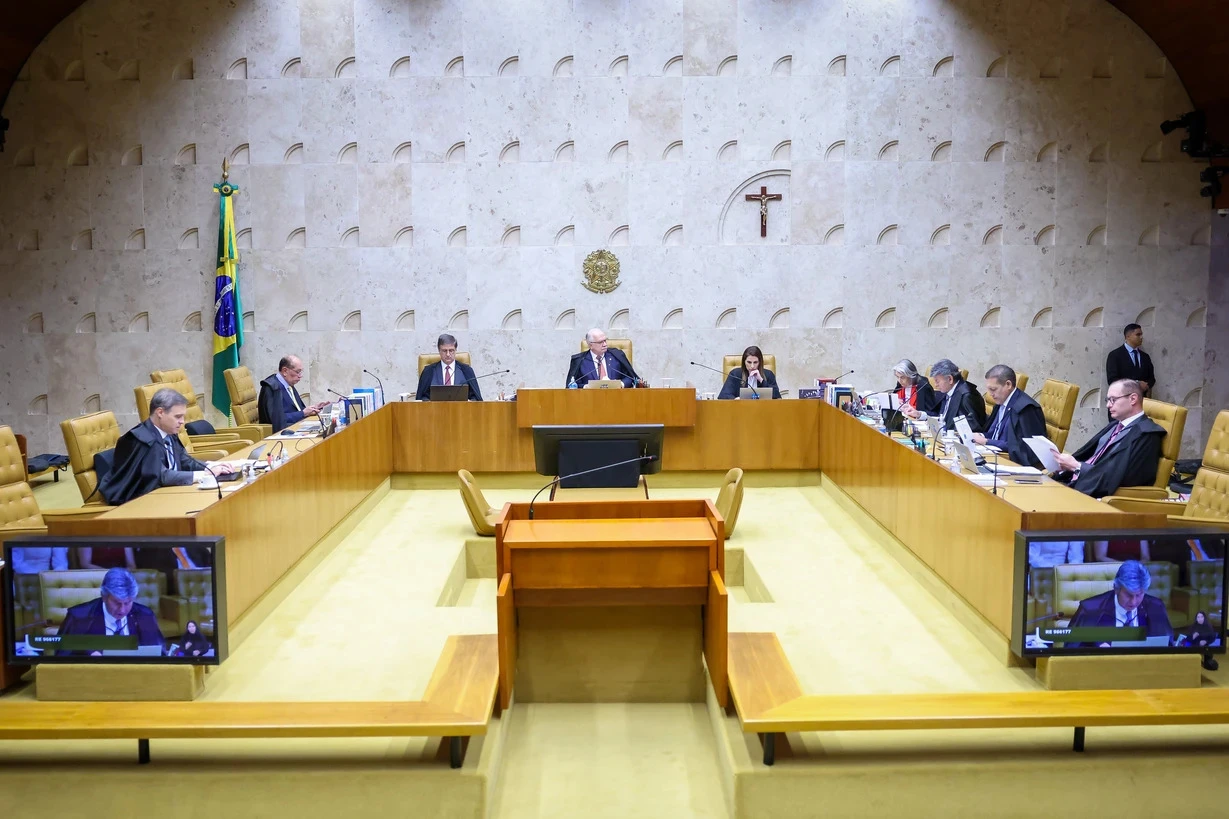
Supreme Federal Court Justice Flávio Dino requested a review of the case records on Thursday, thereby suspending the trial regarding the constitutionality of criminalising games of chance.
Prior to this, he had aligned himself with the vote of the rapporteur, Justice Luiz Fux. Although he voted with Fux, he sought to include the issue of sports betting platforms in the discussions regarding the case’s “general repercussion” status.
Since such an inclusion was not procedurally feasible during the session, he opted to request a review of the records. Consequently, the discussion on games of chance was postponed and is unlikely to resume until early 2027.
Dino would like to make it clear, in maintaining the criminalisation, that lotteries, sports betting, and other forms of gambling constitute exceptions to the rules. He also proposed that the issue of sports betting be included in the discussion of RE 966177. He stated that in Luiz Fux’s own opinion, fixed-odds betting dominated his report.
For Dino, the ideal scenario would be for all cases currently pending before the STF to be analysed jointly to avoid contradictory rulings.
Unsubstantiated arguments
In his opinion, Fux cited various studies on online betting platforms and unsubstantiated arguments claiming that gambling addiction has led to increased instances of domestic violence, suicide, and food insecurity. He further noted that these betting services are accessible to minors and alleged that the activity is linked to criminal organisations involved in illicit operations.
When presenting his opinion, Luiz Fux conflated in-person gambling with data regarding player behavior on online betting platforms.
The rapporteur stated that “gambling derives profit from the individual’s cognitive inability to assess the risks involved in their decision. There is a seductive structure designed to ensure that, even when losing, the bettor continues compulsively in hopes of turning the game around.”
Fux dismissed the argument that gambling is prohibited based on moral or religious values. In his view, the legal prohibition also protects constitutional interests, such as individual autonomy, health, personal assets, and social well-being.
Vote
“I grant the Public Prosecutor’s Office’s appeal, establishing the following legal principle: The misdemeanor of operating games of chance, as provided for in Article 50 of the Law on Criminal Misdemeanors, read in conjunction with the relevant decrees, was upheld by the 1988 Constitution.”
Flávio Dino
Following the final oral argument, Justice Flávio Dino took the floor, acknowledging the constitutionality of the Law on Criminal Misdemeanors. However, he made it clear that the ruling should specify that lotteries and other forms of gambling authorised by law constitute exceptions to the ban.
He then advocated for clear regulations regarding advertising and the allocation of proceeds to the National Health System, requesting that these points be included in the Supreme Court’s decision.
As the matter concerned only Extraordinary Appeal (RE) 966177, he stated he would align with the rapporteur’s vote but requested a suspension of proceedings to review the case. He argued that it would be inconsistent to adopt a strict stance against certain types of gambling while failing to consider others.
“If games of chance are classified as misdemeanors, does that apply to sports betting as well? We need to clarify this,” he said. “Are we addressing games of chance while excluding sports betting? Why?” He concluded by stating that “this is important for understanding the issue.”
‘If you ban it, it goes underground, and that’s worse‘
In his remarks, Justice Dias Toffoli highlighted the proliferation of clandestine websites and stated that a total ban would hinder government oversight. “If you ban everything, it moves into the realm of illegality. And illegality is worse, because the State has no control,” he asserted.
He mentioned a study received from a financial institution indicating that, among the entity’s top 20 recipients of Pix (instant cash) transfers, 15 are illegal betting sites.