
The battle for leadership in Peru: what’s working and what’s not?
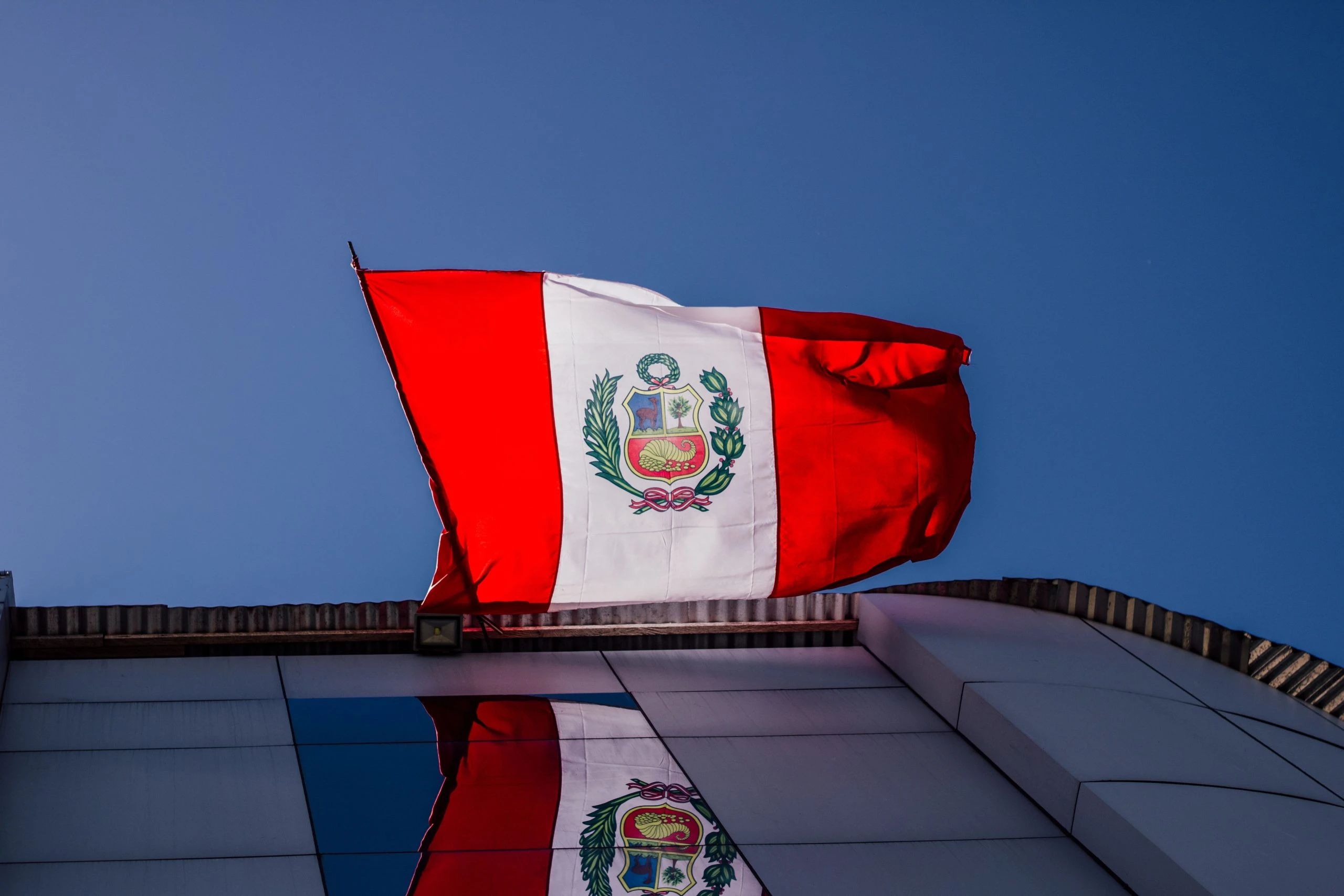
Peru’s regulated market went live in February 2024 and has since attracted a host of international operators, establishing a competitive market that includes legacy domestic operators such as market leader Apuesta Total.
According to Jennyfer Escobar, Stake’s Peru country manager, Peru is one of the most competitive in Latin America. “In the early stages, competition was largely driven by marketing investment, including advertising, sponsorships etc,” Escobar tells iGB. “Today, product quality, platform performance and the overall user experience are becoming much stronger differentiators.
“Players are more informed, have higher expectations and will switch brands if those expectations aren’t met.”
While Stake entered Peru in 2024, Betsson has been in the market since 2008, forming part of the market’s evolution both pre- and post-regulation. Andrea Rossi serves as the company’s commercial director in both Southern Europe and LatAm.
He views the Peruvian market as “quite polarised” with a few operators, including Betsson, dominating the market and the rest playing catch-up. “I think competition has already evolved,” he says. “We have seen fierce competition.
“We have been there for a long time and we have our positioning quite cemented. [But] we need to look at ourselves and keep improving, keep embracing the Peruvian culture and the way we fit in the market by applying a localised approach.”
Local vs international brands
As seen in many markets, especially in LatAm, local Peruvian brands and their cultural knowledge are facing competition from international operators that often bring bigger scale in terms of technology and capital.
For Ramiro Atucha, founder and CEO of Atucha Strategic Advisory, whether international operators can press home their scalable advantages will depend on how seriously they take localisation.
“When we talk about localisation, we’re not talking about the language or doing a game about Machu Picchu,” he tells iGB. “We’re talking about taking the effort to understand what the history of those players is, what they’re used to.
“I always found it funny when Colombia was starting, operators were saying ‘players here do not like slots’, as if they have a different DNA. Five years later, they would say, ‘well, they do like slots, but simple slots’. And five years later, they were playing all the usual [slots]. It’s not that they didn’t like slots.
“If someone takes the time to understand what they’re used to playing, what they like, what their history is and take that into consideration, then you can bridge that gap. If operators take that time to understand where players are at, it does make a difference.”
Strengthening technology
Local operators, meanwhile, have tried to close the gap by strengthening their technology, including working with world-class suppliers.
This can be difficult, however, as Atucha explains some larger platforms entering LatAm will only work with tier 1 operators, rather than helping smaller companies develop. “It’s challenging because first, whatever you would consider a tier 3 or a tier 2 or even a startup in an emerging market like Latin America can eventually become a tier 1 operator,” Atucha suggests.
“We’ve got lots of cases, EstrelaBet being one of them. They started from nothing and they grew a lot. And probably platform suppliers will have ignored them and regret that later on. You’ve got lots of cases like that.”
Betsson’s first-mover advantages
Atucha suggests global scale is only an advantage for international operators when it is executed with a local perspective. Having been in the Peruvian market since 2008, Betsson boasts considerably more local experience than a newer international entrant. “We have seen it all,” Rossi says.
Rossi argues that there is no single ingredient behind the operator’s success in Peru. Betsson has made Peru a key growth market in LatAm, which for the first time in Q2 took over as it largest region by revenue, accounting for 36% of its Q2 revenue at €310.2 million.
“I always like to say that it’s a mix of different factors,” Rossi suggests. “As a matter of fact, Peru has always been one of our driving markets in LatAm, and you always have the attention from the business to be kept on a quite substantial level of investment.
“But that is not just marketing. It also goes into product and into the way that you develop your offering and how you localise what you present or you offer to your customers. And without leaving out local talent, because of course the success also comes from the level of understanding of the market and the cultural embracement and to understand what the customers are really looking into when they have to choose between operators.
“Peru is our legacy. It’s one of our four markets here, so it plays a pivotal role in our ways of operating. Of course, we put a lot of focus into making Peru the market where we put attention and we are really careful about developing in terms of product, and also operationally.”
Stake’s localised approach
Like Betsson, Stake is trying to combine its global scale with a deep understanding of local markets in LatAm. It now holds local LatAm licences in Colombia, Brazil, Peru and Mexico, as well as the Province of Buenos Aires in Argentina.
Having received its licence in Peru in August 2024, Escobar argues Stake’s global scale delivers an advantage only when it is paired with a deep understanding of the Peruvian market and its players.
“We benefit from world-class technology, a market-leading product and one of the strongest brands in the industry, but success isn’t achieved simply by bringing a global platform into a new market,” Escobar says. “We’ve invested heavily in understanding Peruvian players, building local partnerships, working with creators, supporting football and tailoring our marketing and customer experience to local preferences.
“That balance between global capability and local relevance has allowed us to establish a strong position in one of Latin America’s most competitive markets.”
Regulatory foundations
That strong foundation in Peru lies in a regulatory framework deemed to be among the most comprehensive in LatAm.
“The rollout of the regulation was super positive,” Rossi says. “I believe that the Peruvian regulation is one of the best regulations in Latin America. [It’s] flexible, modern, business-friendly. The regulator has demonstrated a commitment to creating a safe and transparent market environment, and there’s a great relationship between the regulator and the operators.”
Escobar sees Peru’s relatively nascent regulated market as an increasingly attractive proposition for operators, pointing to strong player engagement and digital adoption.
“Considering that the regulated market has only been in place for just over two years, its implementation has been very positive,” she declares.
“Looking back over the past two years, the regulation has achieved its primary objective: creating a safer and more transparent market. It has established common standards for all licensed operators, particularly around KYC, AML, and responsible gaming, ensuring that customers receive a more consistent experience regardless of the platform they choose.”
ISC threatens market stability
Atucha praises the regulation and the regulators themselves for making entry into the market easy, as well as allowing them to be competitive against illegal operators. But the market hasn’t been without its challenges.
A 1% selective consumption tax (ISC) on the value of every online bet has been in force since 1 July 2025, after the original policy was scrapped from proposed regulations in July 2021.
Atucha warns that regulations are often perceived as operator-friendly at the start before governments begin looking to squeeze licensed sectors, likening the process to “boiling a frog”. He has observed similar scenarios in other LatAm markets, with tax increases occurring in Brazil, Colombia and Mexico in the last couple of years.
Rossi believes the ISC in Peru is an example of a government implementing new taxes without truly understanding how the industry works, and the potential impacts on channelisation to licensed offerings.
“Peru has been quite successful in channelling customers into the regulated framework,” Rossi comments. “The risk is that this channelisation can decrease in favour of the black market. We know the black market won’t have any consumption tax.
“There should be, in my opinion, a review of the whole ISC or consumption tax framework and find a kind of alignment or a better way to get an income in terms of taxes, but that should be balanced in order to avoid the disruption of businesses and a migration of customers to the illegal market.”
The tipping point
Atucha warns there is a tipping point where higher taxes can undermine channelisation, citing the UK and Germany as important case studies.
“I sometimes wish regulators would look at other cases,” he adds. “I mean, what happened in Germany, what’s happening in the UK.”
This risk is particularly apparent when many offshore operators are established brands rather than unknown entities.
“It’s not a dark alley,” he continues. “It’s a large operator that’s regulated in other places, so it’s not the risk for the player that sometimes is implied.”
The next phase of the race
With the central challenge of tax to compete with, operators face a test of whether they can maintain growth while remaining competitive in an increasingly fierce market.
Escobar expects the competitive landscape to evolve as the market settles, with operators facing a different set of priorities from those that defined Peru’s initial regulatory rollout.
“I don’t believe Peru has reached maturity yet, but I do believe it is entering its next stage of development,” she says. “Peru has one of the strongest long-term outlooks in South America.”
“The market is moving beyond rapid expansion and becoming increasingly quality-driven. Operators will need to compete not only through marketing investment, but also through technology, product innovation, responsible gaming, and customer experience.
Rossi takes a somewhat different view, describing Peru as a mature betting market while pointing to mobile penetration and a growing generation of digital consumers as sources of further growth.
“In my opinion it’s a mature market,” Rossi states. “Because historically, I believe Peru was one of the first betting markets in all of Latin America. Although the regulation was not there, betting was quite tolerated in the past.
“Of course, the room to grow is going along with the increasing penetration of mobile. And of course, demographically wise, a quite important area, a generation that is looking into online entertainment always more and more.”
The next stage for Peru may therefore depend not only on how operators compete for existing bettors, but on how they engage a new generation of digital consumers. “It’s our responsibility, of course, to educate those newcomers into the online gaming world to always play responsibly, with their head on their neck,” Rossi concludes.