
BOS urges Swedish gambling regulator to rethink ‘heavy-handed’ AML approach
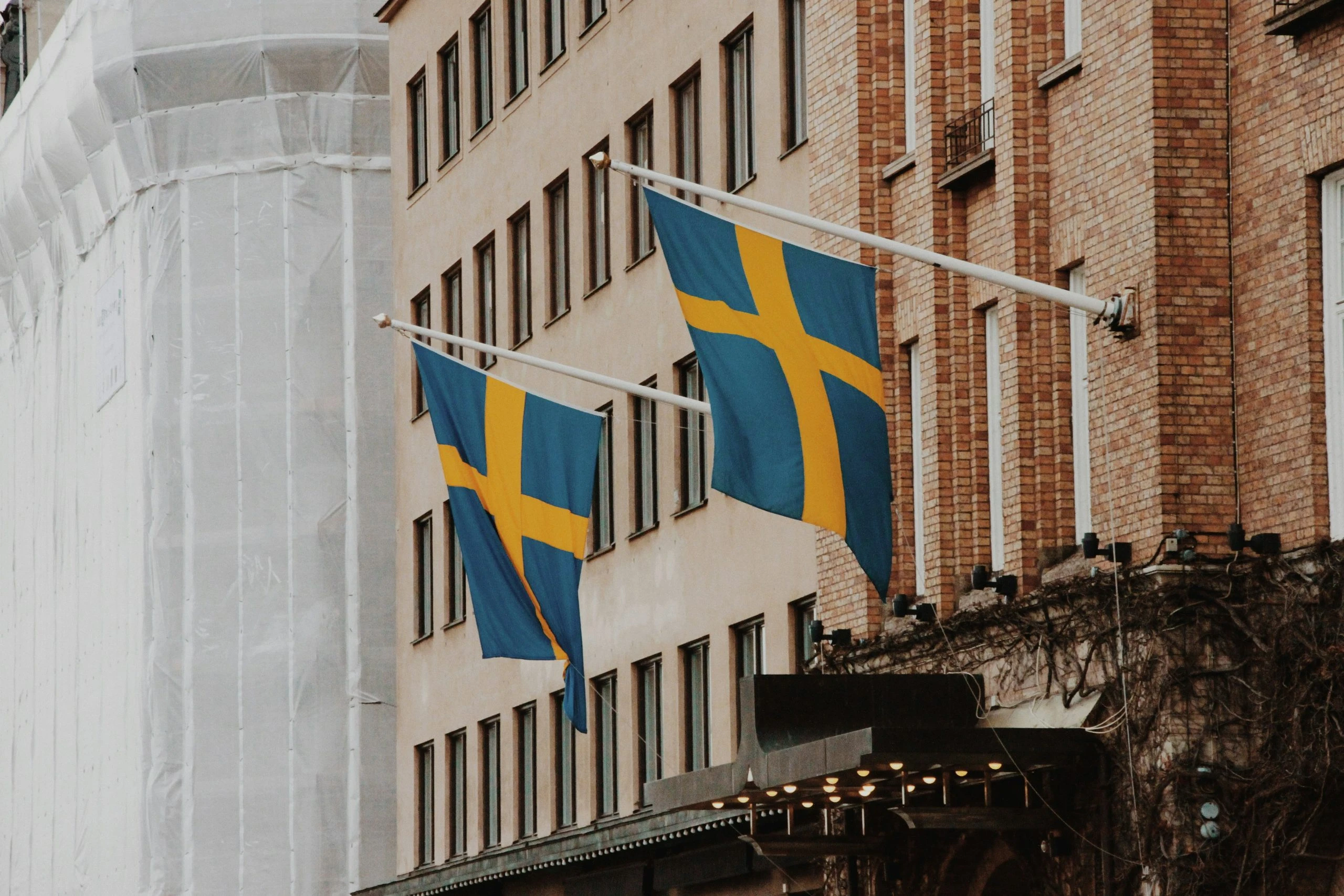
Spelinspektionen, the government agency that regulates and supervises gambling in Sweden, adopts a more sanction‑heavy stance in its regulatory oversight, particularly in anti‑money‑laundering (AML) supervision compared to other Swedish regulators, according to a new report.
The report was commissioned by the Swedish Trade Association for Online Gambling (BOS) and authored by law firm Nordic Legal.
It reveals significant differences in supervisory approaches taken by the Spelinspektionen compared to other Swedish regulators with similar mandates.
Gambling regulator ‘heavy handed’
Speaking to iGB, BOS secretary general Gustaf Hoffstedt explains why such a report was commissioned, emphasising that Spelinspektionen deviates from “the standards and procedures that typically characterise Swedish public authorities”.
“In our view, the SGA is more heavy-handed and less focused on dialogue or collaborative problem-solving compared to other Swedish authorities,” he says.
“We therefore commissioned Nordic Legal – acting independently, notwithstanding our role as the client – to examine the matter and produce a report.”
Hoffstedt believes that the “licensed gambling market in Sweden would benefit if the Swedish Gambling Authority were to adopt working methods more closely aligned with those of other Swedish government agencies”.
Comparing with other regulators
Nordic Legal’s comparative analysis focuses on three areas where cross-authority supervision could be meaningfully assessed. This includes AML oversight, use and magnitude of sanction fees as well as assessments of owners’ and senior managers’ suitability
The Gambling Authority was compared to the Financial Supervisory Authority (FI), the Stockholm County Administrative Board (Lst Stockholm), and the Swedish Schools Inspectorate.
Gambling regulator focused on sample-based AML supervision
Both FI and Lst Stockholm were reported to employ a system-level, risk-based approach to AML supervision. They would both review an entity’s comprehensive risk assessments, procedures and controls. They then would use samples from customer files to verify whether those systems are effective in practice.
In contrast, AML supervision by the Spelinspektionen was often sample-based and customer-case driven. Nordic Legal examined 12 AML-related decisions since 2021 finding that 11 primarily relied on reviewing small samples of between five and 15 customer files.
Notably, the authority frequently excluded the operator’s overall risk assessment and policies from the review scope.
Spelinspektionen prefer high fees
The report analyses sanctions relative to each authority’s legal maximum to account for differences in fee structures and entity sizes.
Among AML cases, Spelinspektionen frequently imposed fees near the statutory maximum. Of nine reviewed decisions between 2022 and 2025, seven involved sanctions at or above 50% of the maximum, with two reaching approximately 91% and 100%.
By comparison, FI’s AML sanctions in large banking cases ranged roughly from 20% to 27% of its maximum, and Lst Stockholm’s fees were usually a smaller fraction, albeit with occasional higher penalties for serious breaches.
Earlier this month, the gambling regulator reaffirmed warnings and imposed financial penalties of SEK4 million ($401,010) on the gaming arm and SEK40 million on the sports betting business of Hillside Group.
Spelinspektionen declined to comment on the report when approached.

Kathryn Evans
Kathryn covers bitesize breaking news with a primary focus on EMEA and US legislation. A proud North Walian, fluent Welsh speaker and lifelong Wrexham FC fan – long before Hollywood came calling.