
Data unlocked: The changing role of the slot catalogue
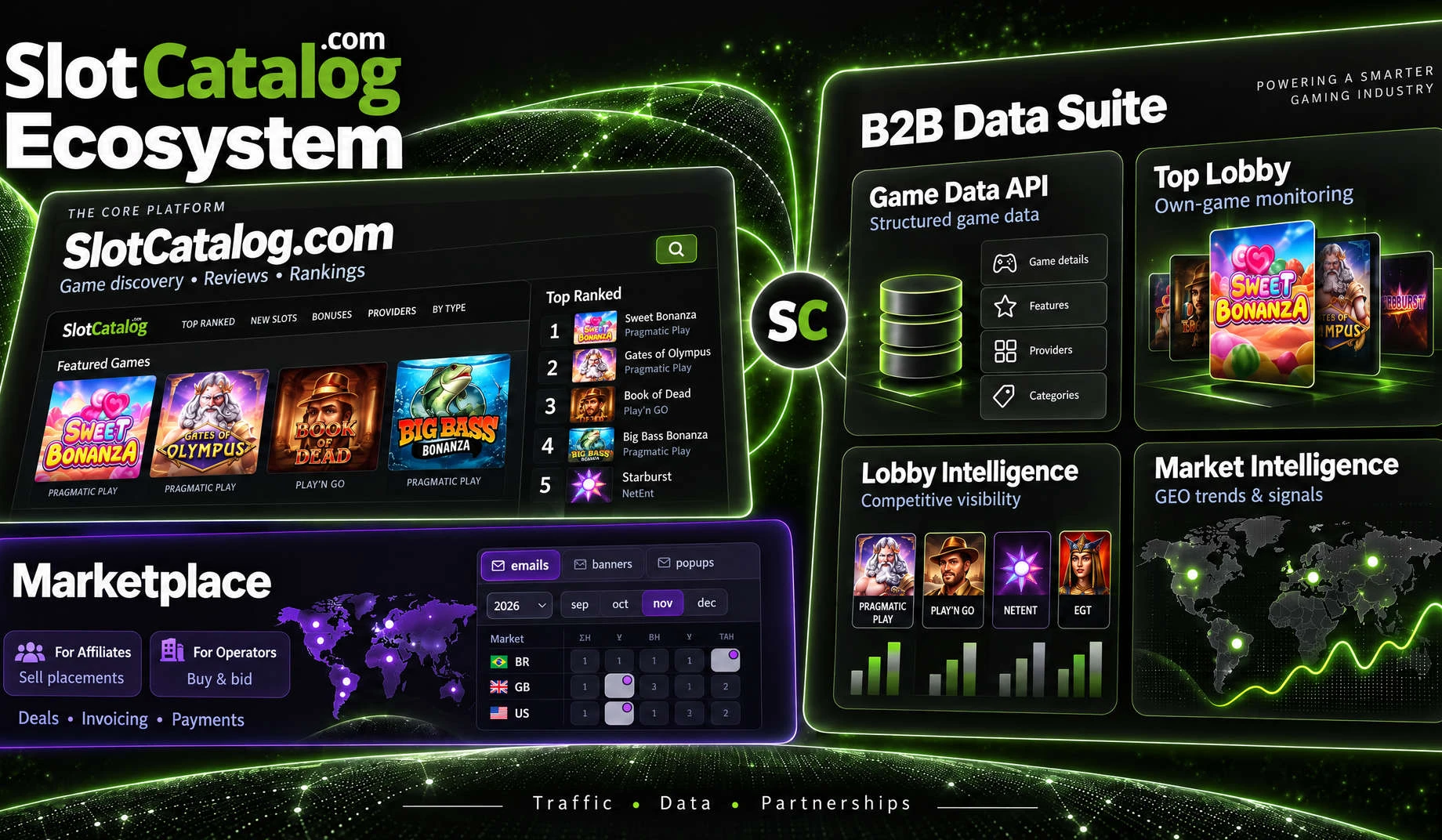
With thousands of games competing for players’ attention and new titles arriving all the time, the online slots market has no shortage of content. The challenge for operators and suppliers is understanding which games will resonate, where they should appear and how best to promote them.
Yet the information available to make those decisions is often incomplete. An operator can see how a game performs in its own casino, while a supplier can assess the results reported by its partners. Neither view necessarily reveals whether a title’s success reflects player demand, prominent lobby placement or a strong position in a particular market.
A similar challenge exists in affiliate marketing, where privately negotiated deals and differing approaches to reporting can make placements difficult to compare. For operators investing in traffic, knowing what they are buying and whether it delivers is as important as securing a prominent position.
The pressure to stand out
It is a challenge Mickey Winitsky has encountered from several perspectives. Before becoming managing partner at SlotCatalog, he worked across the industry in roles including head of acquisition at Caesars Interactive Entertainment, chief operating officer at Pariplay and marketing director at NeoGames, where his responsibilities included affiliate marketing.

That experience has given him an understanding of the pressures facing operators, suppliers and affiliates. In the games market, he sees an increasing emphasis on speed to market, with advances in technology making it possible to produce new titles more quickly but also adding to the volume of content competing for attention.
“The problem in the industry is not a lack of content, but rather getting noticed,” Winitsky says. “The operator needs to know which games to give space to in their lobbies, and the studios need to know where their games are being seen.
“There’s a huge number of new game providers popping up, and AI generation has enabled an atmosphere where you can pop out new games in hours.”
In affiliate marketing, meanwhile, his concerns centre on the transparency of commercial relationships and the treatment of partners.
“In my years in the industry, I’ve seen problems in every shape and form,” Winitsky says. “Suddenly, admin fees are exploding, revenue share is being reduced or VIP players are disappearing. We don’t think that’s what our industry should be about.”
Seeing beyond the casino lobby
An operator’s own data can show which games its customers are playing and how those titles are performing. For suppliers, reports from casino partners provide an indication of how their games are faring across different platforms.
What those figures can miss is the context – a game’s lobby position, its visibility relative to competing titles and how these vary across markets.
Having reviewed more than 50,000 games over the past decade, SlotCatalog has developed its Data Suite product to provide a broader view of game and lobby visibility across markets. Operators can use that information to assess their content offering against the wider market, while suppliers can examine where their games appear and identify opportunities to strengthen distribution or focus their marketing.
‘Our insights and our understanding, together with a partner, can help shape the decision before the brief is even done’
The company also provides tailored reports for partners. In LATAM, its analysis for Royal Partners revealed that around 10% of the demand SlotCatalog tracked was for games from suppliers not yet integrated into the partner’s brands. The insight highlighted an opportunity to align the available content more closely with what players were looking for.
SlotCatalog reports that monthly first-time deposits later exceeded 1,000 at their peak, with approximately 54% month-on-month growth and no increase in the traffic budget. The case illustrates how looking more closely at existing demand can help partners identify opportunities beyond buying more traffic.
For Winitsky, the wider value of market intelligence lies in helping businesses understand the factors that may be influencing their results.
“If you have a game that is doing well, is it because players really want it, or because it’s getting a lot of exposure, or because you have a strong position in a particular market?” he says. “These are very different things, and they can look very similar if you look at the simple reports.”
Turning player demand into new games
Understanding why existing games perform well is only one part of the picture. The same insight into player behaviour can also help suppliers identify opportunities before a new title enters development.
Winitsky says searches on SlotCatalog can reveal interest in concepts that have yet to be turned into games. For developers, those signals provide a starting point for identifying gaps in the market and considering how a new title might appeal to a particular audience.
That approach helped shape Caramelo Dog: Lucky Run, developed by Evoplay and SlotCatalog for the LATAM market. SlotCatalog’s research identified interest in crash-style games and animal themes, alongside search and social media engagement around the Vira-lata Caramelo, a dog that has become a familiar figure in the local culture.
The partners built the game around that character and adapted its presentation and gameplay for the target market. Set on a street inspired by Rio de Janeiro, it uses the CrossyRun mechanic previously deployed in the companies’ Uncrossable Rush collaboration. The mathematical model was also shaped by data suggesting a preference among LATAM players for shorter sessions and quicker outcomes.
For Winitsky, the project demonstrates the value of bringing market intelligence into the creative process from the outset. Rather than assessing a finished game after launch, developers can use insight to inform the decisions that shape it.
“Our insights and our understanding, together with a partner, can help shape the decision before the brief is even done,” he says. “We can tell them what the world is looking for.”

Bringing transparency to affiliate trading
Just as data can help suppliers understand what players want, clearer information can help operators and affiliates make more informed decisions about how to reach them.
Affiliate placements have traditionally been negotiated through individual conversations, with prices and performance figures varying between opportunities. For operators, that can make it difficult to compare what is available and assess whether a placement offers value. Affiliates, meanwhile, must devote time to negotiations and administration as well as generating traffic.
Winitsky has seen those challenges from both sides of the relationship during his career.
“Many of these deals happen in private conversations, and it’s hard for different operators to make deals or to compare deals,” he says. “You see different placements, and it’s hard to compare them because there are different stats.”
A marketplace for clearer affiliate deals
SlotCatalog’s Marketplace, which launched earlier this year, aims to bring those opportunities together in one place. Affiliates can list available positions and their asking prices, while operators can view placements, review estimates of expected traffic and bid for the positions they want. SlotCatalog facilitates the booking, set-up and payment.
Winitsky compares this pioneering model to the development of Google’s pay-per-click advertising, which enabled businesses to bid for traffic and decide how much an opportunity was worth to them.
“We’re letting people bid in real time on traffic, and each bidder needs to decide for themselves what it’s worth to them,” he says. “Being an affiliate, we have a unique position to understand what’s important.”
‘We want to give both sides a clear view of the entire sales funnel and the delivery’
Initially developed to make it easier for SlotCatalog’s affiliate managers and operator partners to work together, Marketplace has since opened to third-party affiliates. This gives operators access to placements across multiple websites, while enabling publishers to offer their inventory to a wider group of potential partners. More than 250 operators are already on the platform, and the company works with 50 vetted VIP operator partners.
Winitsky says SlotCatalog’s aim is to give both sides a clearer view of the transaction and what a placement is expected to deliver.
“We want to move out of the private negotiations and give both sides a clear view of the entire sales funnel and the delivery,” he says.
A more connected casino ecosystem
Winitsky’s ambition is for Marketplace to grow beyond its current focus on affiliate placements. Over the next 12 to 18 months, SlotCatalog plans to bring game suppliers, platform providers and other partners into the platform, alongside operators and affiliates.
The company also intends to expand the types of promotion available. Email campaigns and sponsorships of Telegram groups are among the opportunities Winitsky wants partners to be able to book, bringing more ways to reach audiences into one place.
“We want to turn it into a marketplace for the entire ecosystem,” he says. “We’re going to add game vendors and platforms, and we’re adding more products for them to buy.”
SlotCatalog is also developing a tool intended to connect streamers with offers, as well as a service that would allow affiliates to add free game demos to their own websites. The aim, Winitsky says, is to give partners more opportunities to reach players while allowing affiliates to focus on generating traffic.
The plans reflect his belief that the industry’s different businesses can work more closely together when they have a clearer view of demand and the opportunities available to them. As SlotCatalog expands its role, he wants that principle to underpin relationships across the wider ecosystem.
“We want to make this a really trusted place,” he says. “I would like the industry to understand the demand, compare inventory and make deals with better information.”