
Will Dianna Russini’s BetUS deal complicate an already complicated relationship between the US-Offshore sports betting industries?
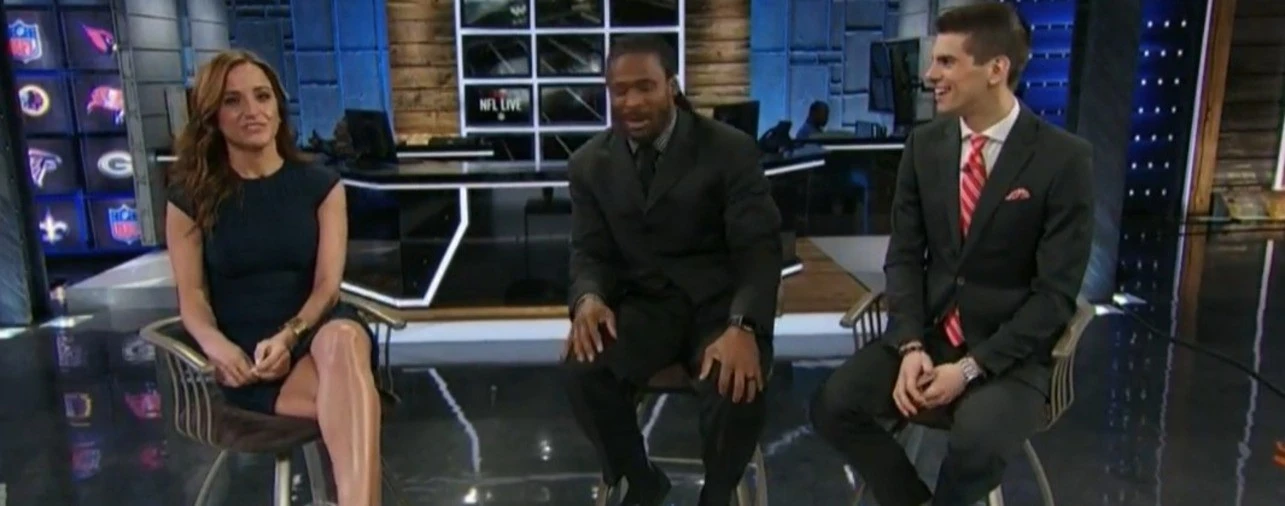
Dianna Russini is taking her talents to the gaming industry.
Later this week, the former reporter from ESPN and The Athletic will end a lengthy sabbatical, months after photos surfaced of her hugging an NFL head coach at an Arizona resort. Page Six, a brand of the New York Post, later published photos of Russini with the coach, Mike Vrabel of the New England Patriots. The subsequent photos were apparently taken inside a Tribeca bar, six years earlier, when Vrabel served as the head coach of the Tennessee Titans. Both the coach and the reporter have denied that they engaged in an extra marital affair.
Russini, 43, resigned from The Athletic in April, but not before criticising the media for engaging in “self-feeding speculation,” she described as “unmoored from the facts.”
Now Russini has resurfaced with a new weekly show that will appear on a multi-lingual online gambling website headquartered in Costa Rica. On Wednesday, Russini is scheduled to make her debut on BetUS, an online sportsbook established in 1994.
“Football has always been my favorite sport to cover, and I’ve really missed being in the middle of the action, breaking stories and connecting fans to what’s happening across the league,” said Russini in a statement.
The hiring may amplify an ongoing struggle between US sportsbooks and the offshore industry for control of vast amounts of North American sports bettors. When news broke of Russini’s hiring on Monday, a former American Gaming Association official noted that a prominent outlet did not make a single reference to the sportsbook’s licensing status. At the very least, Russini’s career move could kickstart a new round of discussion on the role of prominent media personalities in spreading awareness of offshore sports wagering.
Next-level experience
Under the deal, BetUS will become the home of The Russini Report,” a weekly live show and column where she will cover league news, matchups and feature guest interviews.
Russini joins a network that previously struck a deal with NFL Hall of Fame defensive tackle Warren Sapp to host a sports radio program.
Beyond traditional banking methods, BetUS allowed customers, as of 2024, to facilitate deposits through cryptocurrencies such as: Bitcoin, Bitcoin Cash, Litecoin, and Ethereum. The BetUS website contains a link that directs users to a page with bonus options through cryptocurrency, as well as a drop down with “crypto help.” According to ZoomInfo, a leading B2B sales platform, BetUS generates annual revenue of about $150 million, though the figure can be difficult to substantiate since the website is headquartered outside of the US. The revenue is derived from a secure place for sports wagering to more than 1 million clients, the operators claims. Furthermore, the company is committed to “delivering,” the most up to date odds and analysis, the most up to the minute wagering opportunities and the most complete rapid response for clients, reads the website.
“At BetUS, we already provide fans with in-depth sports news, expert analysis, and statistics to help them stay ahead of the game,” said Andres Vargas, who serves as content editor for BetUS. “Bringing Dianna on board takes that offering to the next level.”
A closer look at C+D orders
While it is unclear how many US customers are serviced by BetUS, it does not appear that the privately-held company has not been sanctioned by the Justice Department in at least a decade. In 2007, DOJ unsealed a 34-count indictment that accused the website of conspiring with several defendants to violate laws prohibiting internet gambling. The complaint filed by the U.S. Attorneys Office District of Utah accused certain defendants of disguising “credit card charges for gambling,” as other purchases, thereby deceiving credit card issuers who otherwise would not have authorised the transactions, the complaint reads.
More recently, BetUS has a faced Cease + Desist orders from nearly a dozen states, including several jurisdictions in the Midwest, according to gaming attorney Daniel Wallach. One regulator, the Michigan Gaming Control Board, issued an order to the operator in May 2025 for offering internet gaming and sports betting to Michigan residents without proper licencure.
“Unlicensed operators like BetUS undermine the integrity of Michigan’s regulated gaming market and expose consumers to potential risks,” said Henry Williams, MGCB executive director, at the time. “The MGCB is committed to protecting Michigan residents by ensuring that all gambling activities are conducted legally and responsibly.”
Media coverage of the media
Jonathan Michaels is the founder of Michaels Strategies, a boutique consulting firm focused on the North American gaming industry.
Previously, Michaels served in numerous capacities at the American Gaming Association, including a stint as Vice President of Strategic Alliances. On Monday, Michaels took exception with coverage on the hiring from Russini’s former employer.
Although Andrew Marchand of The Athletic mentioned that BetUS operates an offshore sportsbook, his story did not address any licencing considerations, Michaels indicated.
“Offshore betting website using US media entities to obfuscate their licensing status has gone on for decades…” Michaels wrote on his LinkedIn account.
“Sites like BetUS don’t provide any meaningful consumer protections, they pay no US taxes and allow underage users to access their platforms. To help stop illegal gambling, we must shine a light on these types of partnerships.”
Connective tissue between markets
Since the historic PASPA decision, the turf battle between US regulated sportsbooks and offshore ones has intensified. In a number of instances, though, the markets can be intertwined.
Take, for instance, the case of Jontay Porter, an admitted felon who became the first US professional athlete to receive a lifetime ban for match fixing in the post-PASPA era. The NBA banned Porter for life in 2024 after accusing him of deliberately feigning an illness to ensure that his performance on several statistical categories would hit the “under.”
Over the weekend, The New Yorker published a 10,000+ word feature on the Porter case, documenting how the former Toronto Raptors center wagered more than $500 million during his gambling career, including net wins in excess of $1 million from a 72-hour binge on Russian Table Tennis.
Porter, the younger brother of Brooklyn Nets forward Michael Porter Jr., became enmeshed with a syndicate that allegedly conspired with him to manipulate a series of props.
Two defendants in a sweeping Brooklyn case informed Porter that they typically spread their action numerous offshore books to make the activity more difficult to detect, The New Yorker reported. The case underscores how an illegal enterprise can exploit enforcement gaps in the system when a syndicate maneuvers seamlessly between the black market with those that contain stricter guardrails.
Lower risk tolerance on props
Conversely, some industry stakeholders maintain that the offshore industry has more rigorous standards on numerous props which can mitigate some of the risks of an integrity breach. A US-based agent who is no longer in the gambling industry told iGB that offshore operators don’t take some of the props on certain stats that are available on regulated books. The sentiments were echoed by a former US sportsbook manager who spoke to iGB on a condition of anonymity at a 2025 gaming conference. After leaving the US market, the executive took a position with an offshore operator.
For its part, the NBA established a framework last month for restricting objectionable props, including those on reserve players who receive sparse action off the bench. The NBA followed by entering a memorandum of understanding with the US Commodity and Futures Trading Commission to establish integrity standards on sports-event contracts that require the use of NBA official data.
Earlier this week, iGB reached out to BetUS for comment. In a lengthy email, iGB inquired how BetUS regards the general dialogue between offshore books and US state regulators. The questions also delved into whether the operator believes that offshore sportsbooks are being treated fairly by states that have issued C+D orders.
BetUS did not immediately respond to the inquiry.
Russini, meanwhile, did not address the current environment for offshore sports wagering in her brief statement. Instead, she appears focused on bringing the same zeal she had at The Athletic to her new employer.
“I’m excited to get back to reporting on the NFL and bring that passion to BetUS,” Russini stated. “I want to give fans more than just the headlines, sharing insider perspectives, uncovering the stories behind the biggest moments and helping audiences better understand the teams, players and matchups that shape each week.”