
More features isn’t innovation, and I’d know – I helped start the arms race

Pull up the promo sheet for almost any new slot and count the features. I can almost guarantee there will be a cascade of some sort, two or three wild variants, a hold-and-win, a jackpot ladder bolted on near the bottom, and a paid bonus access so you can skip straight to the part some might think is the only bit worth playing.
You’ll more than likely find eight, nine, ten mechanics, all stacked on top of each other.
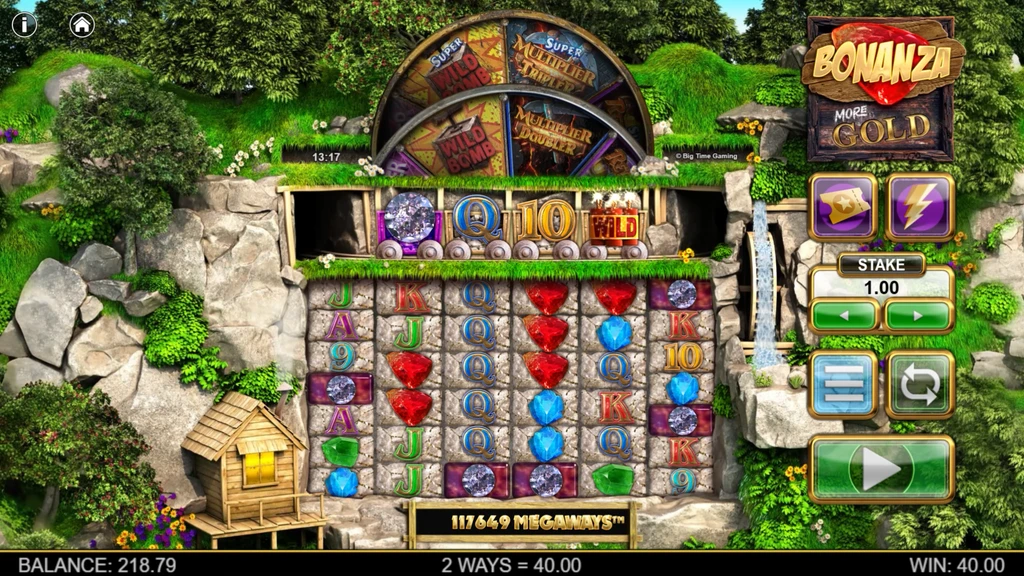
I’m not throwing stones from a safe distance – Megaways™ is a big reason those sheets got longer in the first place. When Big Time Gaming dropped 117,649 ways to win into Bonanza back in 2016, that number did an enormous amount of work in the marketing, and I understand completely why every studio since has gone looking for a bigger one.
When I say we’ve confused adding things with improving things, take it as a confession as much as a complaint.
The anticipation is thrilling
What actually made Megaways™ work had almost nothing to do with the size of that number. The reels changed shape on every spin, which was the crux of the Megaways™ concept.
You’d drop in not knowing whether you were staring at a little two-symbol reel or a huge one, and that anticipation is thrilling. It gives you a small, specific buzz, over and over. 117,649 was just the number that organically came from that.
We didn’t invent a huge number and build a game backwards from it. Instead, we had something we wanted players to feel, and those numbers followed.
That’s an important distinction I think many people within the industry have lost sight of. A mechanic earns its place when it makes a player feel something or decide something. It doesn’t earn its place by existing so a game can tick a box or hold its own on an affiliate’s comparison grid.
Thinking about the future of iGaming, a lot of what’s being packed into games right now sits squarely in that second group. Much of the content being released currently exists to be listed instead of played.
The features I’m still proud of are the ones that force a decision, because that’s something crucial in slot gameplay you can’t fake.
Put a gamble wheel in front of the free spins and let a player push for a better bonus or lock in what they’ve already won, and you’ve handed them a real choice. They’ll remember how it felt to hit big, or to go one spin too far and watch it disappear. Nobody remembers a marginally bigger multiplier, but they’ll remember gambling their way to the top bonus available.
Building for the spreadsheet
The reason we keep building the wrong things is because the whole chain quietly rewards it. For example, operator lobbies sort and filter by feature, whilst affiliates build tables where more features read as more value.
A game with one well-balanced idea and a clean base game looks, on a spreadsheet, thinner – and therefore less appealing – than a game with nine mechanics, even when it’s plainly the better thing to sit and play.
‘This industry has drifted into optimising for how a game looks in a lobby instead of how it plays’
That’s why so many studios are building for the spreadsheet, because that’s what earns them distribution. I understand it, as I’ve been faced with making those calls myself.
This industry has drifted into optimising for how a game looks in a lobby instead of how it plays over repeated sessions, and those are not the same thing.
The thing that actually makes a slot good has started being overlooked as a result. Things like volatility, hit rate and pacing are where a game is really made or ruined, and none of it stands out in feature lists anymore. You rarely see much fanfare around well-tuned variance, for example. These factors get less love than they deserve, while another wild variant that stands out in a promo sails through.
We’re very good, as an industry, at building the things that are easy to shout about, whilst quietly neglecting the things that are hard to.
The standout idea
Better ideas are undeniably harder, which is the entire problem. Adding another feature is a plan most teams can deliver with their eyes closed but finding one idea strong enough that the game doesn’t need eight of them is a lot more challenging.
When it pays off, though, you get a game that people actually talk about. Nobody has ever recommended a slot to a mate by reading out its paytable.
That standout idea doesn’t always have to be a revolutionary mechanic, either. It could be an immersive world, or a character, or a tone – something that makes the game feel like an experience.
We could spend a fortune fine-tuning the maths whilst neglecting the game’s personality, then wonder why so many of them blur into one the moment the bonus ends. Unfortunately, you cannot buy your way out of being forgettable with a tenth feature stacked on top.
None of this means mechanics don’t matter. I’ve dedicated much of my career to them, and I’m not about to stop. As we see it, mechanics are a means to an end, and somewhere along the line we started treating them as the end in themselves, as if having more guarantees a better game. It doesn’t.
The best game I could put in front of you this year probably has fewer features than the one sitting next to it in the lobby. If there’s a real next step for slots, I see it coming from someone cutting theirs down to the single idea that genuinely works and trusting players to notice the difference. We don’t make that an easy choice to make, but we should.