
Breaking the grid: Kambi’s vision for the sportsbook’s next chapter
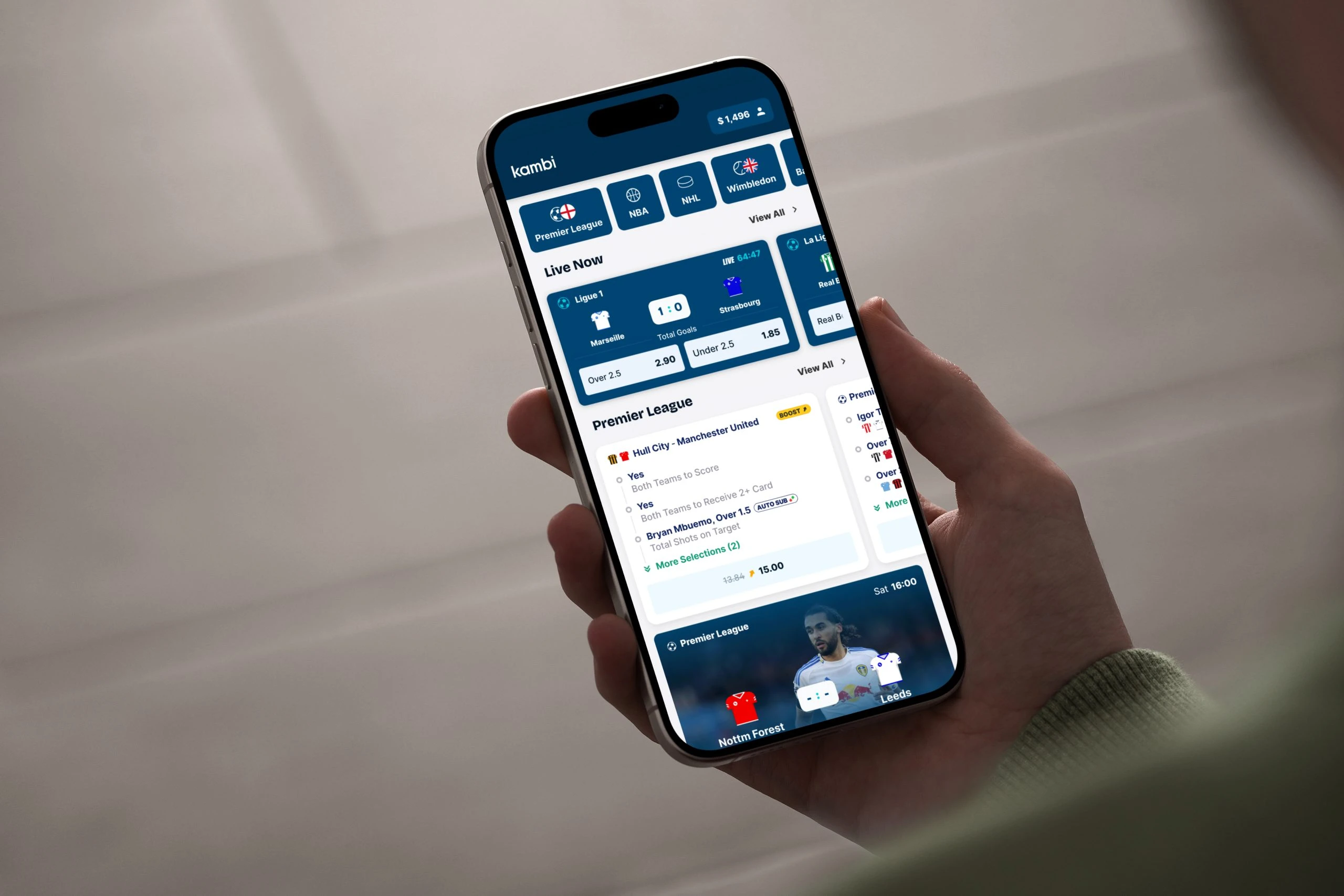
The sportsbook has changed dramatically since online betting emerged, but the way customers navigate it remains familiar. A grid of events, markets and odds guides them through a predetermined catalogue – an approach developed when the offering was smaller and finding a match result or over/under market required relatively little searching.
Today, customers can combine individual player performances and build increasingly complex wagers around an unfolding match. As customer preferences shift towards more complex bet types, Kambi’s AI trading is expanding those possibilities further, creating a growing gap between what a sportsbook can offer and what its menus can usefully put within reach.
For Erik Lögdberg, chief product officer at Kambi, that gap points towards a different sportsbook experience – one that can respond to what customers want, with less dependence on browsing an ever-expanding catalogue.
His vision builds on technology already supporting greater product flexibility, while recognising that the wider customer experience will evolve progressively.
“We are arguably at the ceiling of what the current model can reasonably place at players’ fingertips,” he says. “The offering has evolved dramatically, and its delivery needs to evolve alongside it.”
The technology opening new possibilities
Historically, sportsbook product development has been shaped by what trading teams could profitably price and risk-manage. Complex combinations involving related player propositions could be appealing to customers yet too resource-intensive to offer through human trading alone.

AI has expanded those boundaries, with Kambi’s first fully AI-powered World Cup in 2026 providing a demonstration of how far the technology has progressed.
Across more than 100 million bets, AI handled every stage of the pricing lifecycle – from ingesting data and creating the offering to managing risk, liabilities and settling bets. Kambi recorded zero downtime and an operator trading margin of 18%, while processing more than a million individual bet combinations during the final alone.
The performance levels required to support that level of depth and combinability provide the foundation for Lögdberg’s vision, and the next steps: “We are breaking the offering down into its core elements so that we can price, present, risk manage and settle any opportunity, rather than being tied to a fixed offering or catalogue of products,” he explains.
From fixed catalogue to responsive sportsbook
With that foundation in place, Lögdberg sees an opportunity to rethink how customers discover and create bets, underlining that reliance on a static grid of markets restricts both the customer journey and an operator’s ability to innovate with new products and experiences.
As one example, rather than searching a fixed list of markets, a customer could express an interest in a particular athlete, match situation or combination and receive relevant, priced betting opportunities. This would be supported by the necessary trading, risk-management and settlement capabilities.
“We don’t know exactly what that journey will look like, but the direction of travel is towards a sportsbook that responds rather than simply lists a fixed offering,” he says.
‘The operator determines the proposition and experience rather than designing it around the limits of the grid’
Operators could also define opportunities around particular match conditions or data on teams or players, with prices generated on demand. Kambi’s technology enables promotions and rewards to become a fully integrated part of the user experience – shaped around the bet, the moment and the customer’s intent – with settlement logic built in.
The precise interface remains open to development, with Kambi shaping up to showcase new products in early 2027. And by breaking down the offering into its core components alongside this, Kambi gives operators scope to also create journeys suited to their customers and brands. Kambi sees its role as one that provides the engine and controls that allow partners to bring those ideas to life.
For Lögdberg, this is central to the opportunity – enabling operators to determine what they want to build, with fewer restrictions imposed by the traditional catalogue.
“Put simply, the operator determines the proposition and experience rather than designing it around the limits of the grid,” he explains.
Where the vision is already taking shape
While the broader on-demand sportsbook remains a work in progress, Lögdberg points to Kwiff’s Flex feature as an example of how AI trading is already giving operators greater freedom to innovate.
Developed in concert with Kwiff, Flex allows customers to add protection to one or more selections within a bet builder, allowing the bet to pay out as a winner even if protected selections fail. According to Lögdberg, it goes beyond conventional accumulator insurance because the protection is integrated and customisable, with settlement logic built into the product itself.
The example illustrates how AI trading can support innovation in the mechanics of a wager, alongside changes to how it is delivered to customers.
‘The goal is to make relevant opportunities easier to find and more intuitive to act on’
Kambi argues that its network is essential to developing those opportunities. More than 70 global partners, around 1.5 billion bets processed each year and over €17 billion in annual liquidity provide insight into betting behaviour and emerging demand for which there is no shortcut to acquiring.
That information helps identify what is worth creating, while the AI trading engine supplies the capability to deliver it. Together, they provide a foundation for partners to develop distinctive products around their own customers.
“Data without the trading engine can spot an opportunity but cannot deliver it at scale,” Lögdberg explains. “The engine without data can create breadth but cannot tell what matters.”
An evolution shaped around the customer
Lögdberg expects the transition to unfold gradually over time, with Kambi planning numerous on-demand products for the near future. For now, the grid can remain a useful way to browse as operators introduce new experiences alongside it.
“This will be an evolution over months and years, rather than a single moment when the grid breaks completely,” he says.
Product teams will remain central to making those experiences intuitive. As the engine handles more pricing and risk-management activity, human traders will increasingly focus on setting priorities across sports and competitions, managing trading operations and shaping partner strategy.
The task ahead is to translate proven trading capabilities into better customer experiences. Greater breadth alone will achieve little if it leaves players struggling through more options, making relevance and ease of discovery central to the vision.
Kambi has demonstrated important parts of the technology needed to support that change. How the company and its partners use it to reshape the sportsbook will define the next stage of the journey.
“Dynamic cannot just mean busier – it has to mean better,” Lögdberg says. “The goal is to make relevant opportunities easier to find and more intuitive to act on, not to present every possibility at once.”