
Player engagement starts with behaviour, not bonuses
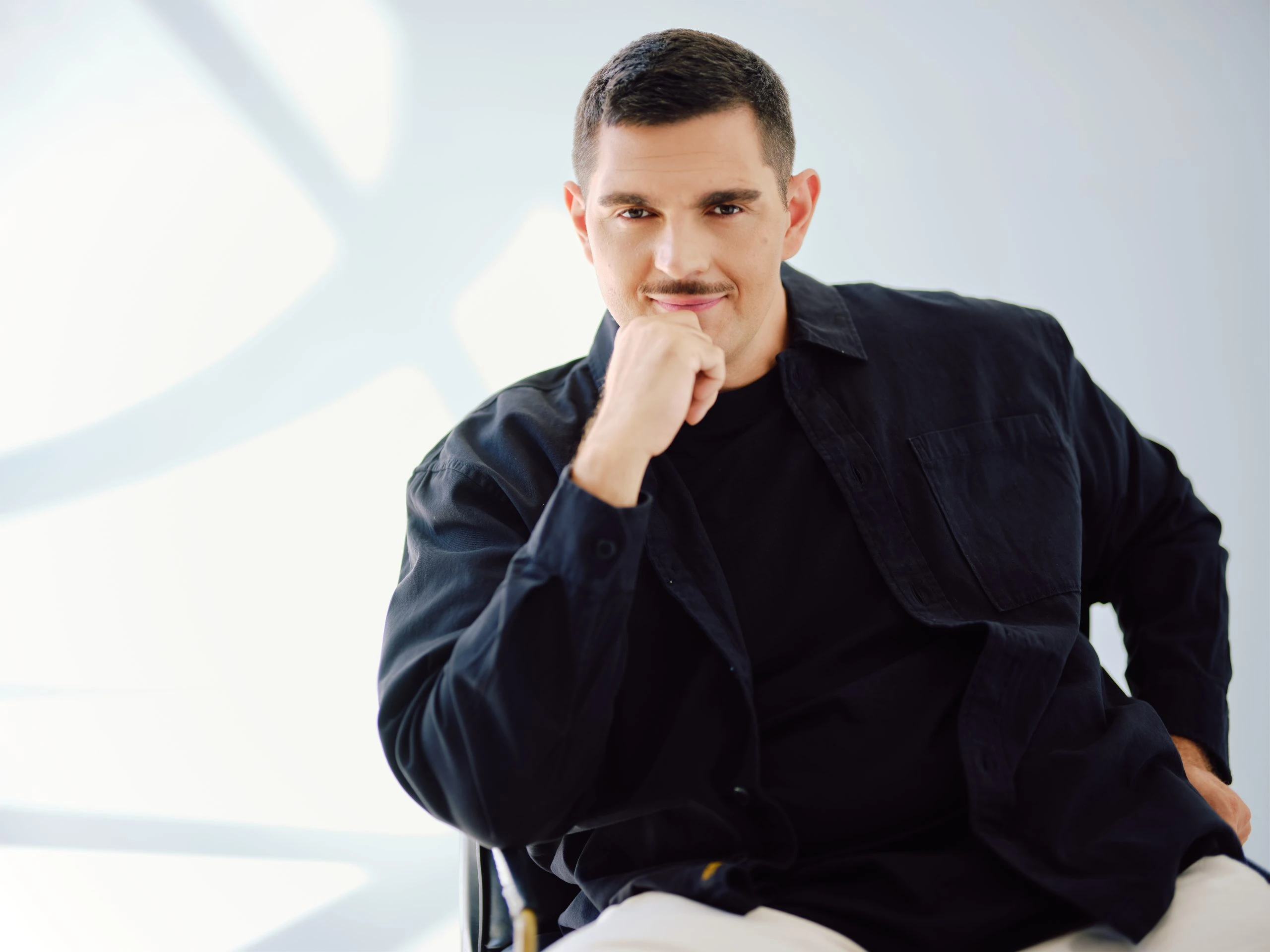
A few years ago, Kyryl Avdieienko’s team added another field to the registration form for an iGaming site. This, he recalls, wasn’t a change most of the team was particularly excited about. In fact, they were convinced it would fail.
“Half of our product team was thinking it wouldn’t work,” Avdieienko, now chief product officer of SOFTSWISS, says. “Everyone was sure that it would decrease the conversion because it’s an additional field.”
A/B testing revealed the opposite, however, with the longer registration form actually performing better than the shorter version. The experiment was repeated, revealing the same results.
“In this geo, it was okay to have lots of fields in registration,” he explains. “After we conducted this test, we found out that more fields worked.”
People in that market were just accustomed to something longer, and the additional step helped the registration process feel more familiar. “A short registration field was for them some shock because they got used to lots of them,” he adds.
The importance of diving deeper
This experience, where the standard thinking of ‘shorter is better’ didn’t hold, has changed how Avdieienko approaches product development. The assumptions that had served his team well didn’t reflect how that particular market’s users behaved and showed him the importance of diving deeper to understand each demographic’s behavioural patterns.
And for an industry constantly developing new ways to engage players, it’s worth asking how often company decisions reflect what players actually want.
Avdieienko was among the panellists on Entertainment and Gamification Technologies at the first Tech Race Summit, held in Warsaw this autumn for technology professionals in the sector. The event was built on the argument that, as iGaming matures, it needs more room for serious discussion about the technology behind its products and player experiences; a further session is planned for Hall 7 at iGB Barcelona. iGB spoke with him about the current state of gamification in iGaming and what the future may hold.
What do players actually do?
Avdieienko has a habit of visiting gambling venues when he travels for work. He’s interested in how people interact with games, but also what they do around them.
“Playing casino games in Asia or Vegas or even Europe, it’s a totally different experience,” he says. In Germany, for example, he has watched people playing machines at petrol stations over a coffee, and ducked into a small betting shop in Cyprus watching customers fill in selections by hand and pass them to a member of staff.
“People were doing everything with the pen,” he says. “They were checking what they want, giving it to the operator, and he’s entering all this into the computer and giving the receipt back.”
Neither experience resembles the sophisticated registration journeys, personalised experiences or engagement metrics that operators deploy day to day, but that’s exactly why he visits these places. “I’m trying to put myself in [the player’s] place all the time,” he says.
Test the assumptions
Avdieienko is on the supply side of gaming, but he is responsible for developing the products for SOFTSWISS’ B2C partners. This means he understands how a gambling platform works, and will navigate it very differently from a new player accessing a site for the first time.
“I’m not the best representation of [the end user] because I know how it works,” he admits. “Sometimes it can even stop me from having new ideas.”
Watching players can show how they behave, but not necessarily why they behave in that way.
To interrogate that behaviour, teams must test the assumptions and find what is shaping the actions, he says, as the registration experiment showed. “Data is not what somebody is thinking. It’s just a representation of actions that you can rely on,” Avdieienko says.
No bad mechanics
Tournaments, missions, loyalty schemes, leaderboards, wheels and streaks have quickly gone from an exciting innovation to part of a widely used gamification playbook across the industry. Anything new will quickly be replicated across an operator or supplier’s competitors.
Avdieienko won’t be drawn on which, if any, are the most effective. “I would say that there is no bad mechanic,” he says instead. “There is a bad approach.”
“All these gamification mechanics, they’re seeking the attention of the user,” he explains. “And sometimes it feels overloaded or fragmented.”
For example, a casino might have a tournament running alongside a daily mission, while collecting points in a loyalty programme and then spin a wheel to get another reward. Each individual feature serves a purpose but when thrown together they could become a distraction from the games.
“What should be some sort of engagement on the roadmap, this feature in reality can come to some sort of noise for the end user,” Avdieienko adds.
It becomes an arms race as operators look to replicate something from a competitor, or a product team throws in another mechanic to boost engagement. That just creates a crowded interface while teams “blindly copy everything they see” without understanding where and for whom the features actually work best.
And the noise now extends beyond iGaming. Yes, gamification emerged from quests, achievements and leaderboards in video games, but adoption was accelerated by mobile gaming and now loyalty programmes even gamify the shopping experience.
“Everybody right now has [some form of gamification],” he adds. “Even in your grocery store application you can have a Wheel of Fortune or loyalty points.”
This means the novelty has arguably worn off, and there is an element of players expecting some form of gamification within their gambling experience.
Would players still take part without a bonus?
This brings us to a question Avdieienko asks when his product managers propose a new gamification feature.
“Is this mechanic or feature still cool, and will the player like it, even if we remove some sort of reward or bonus from the end of the story?
“If the answer is no, it means that we just created a feature that delivers a bonus, and the bonus itself is the main goal.”
Avdieienko is more interested in mechanics that players actually find fun to make SOFTSWISS’ products perform well for its clients. This could even go as far as creating another layer of gameplay around a casino’s underlying games, to engage without any form of money involved.
“Gamification is just some sort of multiplier,” he says. “But if you have zero in the beginning, it will give you zero.”
So product teams have to decide which ideas are actually worth investing in, in the first place. For SOFTSWISS Avdieienko says teams gather feedback from operators, affiliates, product specialists and the wider market before using scoring models to help prioritise development.
Testing them challenges the assumptions behind those decisions. Sometimes the test’s conclusions are “shocking”, he admits, because it often goes against what the team had been expecting.
However, Avdieienko does not believe every decision must be dictated by data, and argues there are times his team has to pursue an idea because the numbers can’t yet demonstrate the opportunity.
“We’re all humans,” he says. “We have this inner feel and we need to trust it most of the time.”
Equally, that means some experiments will – and have – failed. But ultimately it’s the iGaming industry, an element of risk is built in. And it’s certainly better than being so safety-conscious that a business stops trying anything new.
Choose your own adventure
Ultimately, however, Avdieienko believes gamification will evolve beyond features created by operators and suppliers, and more towards direct interaction between players.
He expects user-generated experiences and user-generated content to dominate over time, pointing to online games where players create their own environments and communities.
Rather than participating in an operator’s tournament a casino player might be able to challenge friends, organise competitions or join others in shared quests.
SOFTSWISS’ role, he adds, would be “to provide some sort of platform where people can challenge their friends or other people in some sort of quests, challenges, tournaments, leaderboards”.
That, of course, changes the role of the operators and suppliers. Currently in iGaming most, if not all, interactions are designed but under this evolution they would provide the tools and setting for players to build their own.
The social aspect of gambling also particularly interests him, especially amid the rise of prediction markets, where making a trade might only take seconds but the discussion on what you’ve staked money on can travel to social networks. Whether the same kind of player-led interaction could develop for iCasino is still an open question.
For operators accustomed to adding another wheel, tournament or mission, it would mark a major shift. Avdieienko believes the freedom for players to shape their own experiences will matter more than finding another feature to add.
It is also the kind of idea that, by his own admission, he can’t judge simply as someone who knows how the platform works. As the registration experiment showed, what product teams think players want isn’t always what works.