
As work continues on the GSR arena, Reno’s gaming market is surging like never before
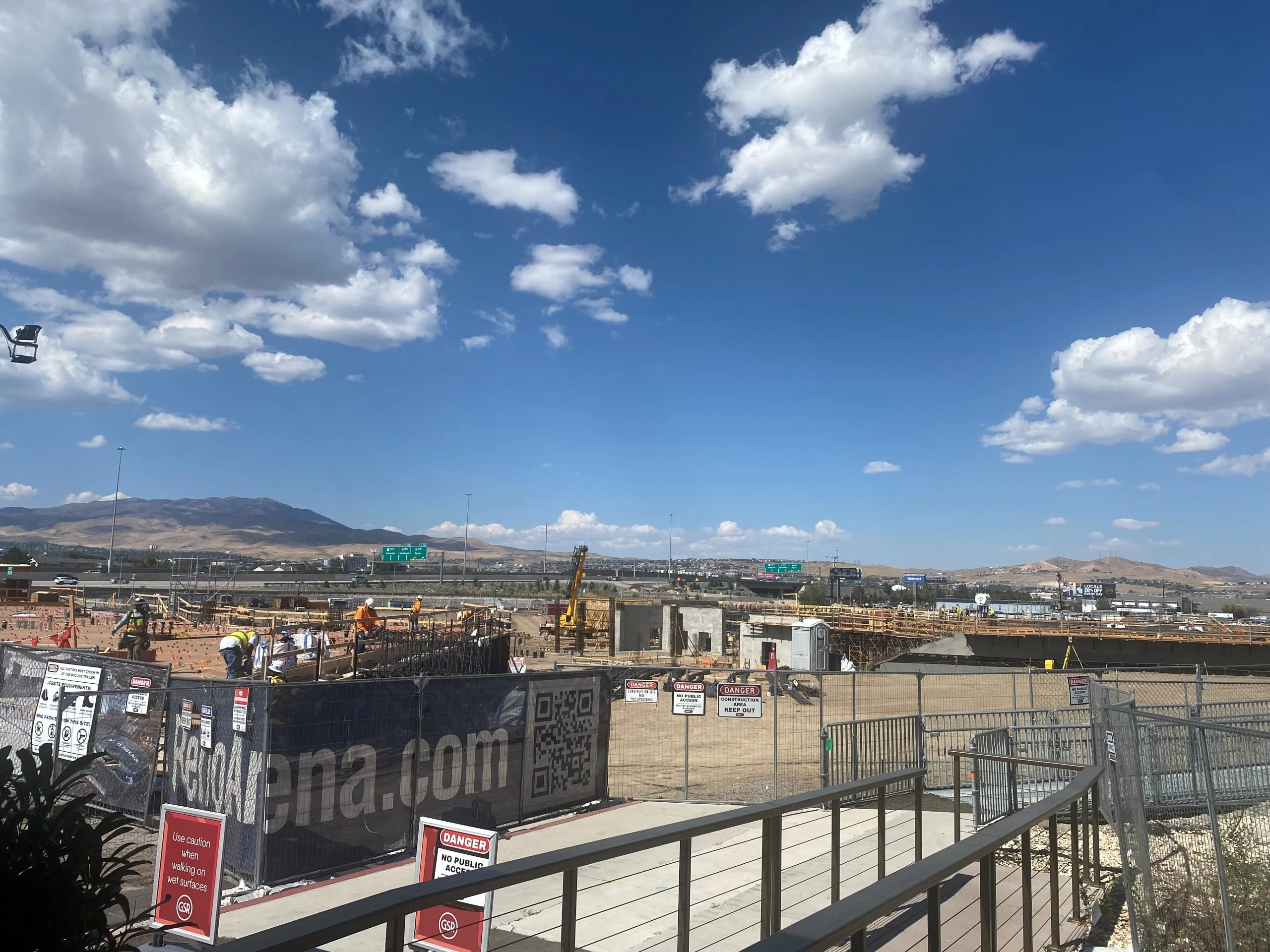
Far away from the buzz of the Las Vegas Strip, about 450 miles to the north in Reno, work is steadily progressing on what could be the next transformative project for Nevada’s gaming and tourism industries. The Grand Sierra Resort has seen a number of bold ideas come and go in its nearly 50-year history, but billionaire Alex Meruelo’s 10,000-seat arena project is now a reality and it is coming at an opportune time for the region.
Approximately three years after the project was first announced, foundation and infrastructure work are continuing as winter approaches, which could slow the pace depending on severity. The arena is just one part of a broader $1 billion multi-phase expansion plan that would represent the largest private investment in Reno’s history if fully built out.
“There’s a great deal of progress being made, a great deal of work happening and the garage has just begun,” GSR’s chief marketing officer, Chris Abraham, said at a tour of the site with iGB last month. “The arena, we’re out of the ground, we have walls, we have foundations, all the underground work is basically done, so now it’s the fun time when we can actually start building up and everyone gets to see.”
Original cost estimates for the arena were about $350-$375 million, but Abraham said that range is “probably more like $450-$500 (million) right now”, as Meruelo is “sparing no expense” for the venue, which will host University of Nevada men’s basketball games as well as a slew of other sports and entertainment events.
“For a 10,000-seat-plus arena, it’s going to be the very best one of those, maybe in the world,” Abraham said.
The Reno Roadrunners?
The GSR team is drawing inspiration from some of the state-of-the-art arenas around the world for the design plans, including the Intuit Dome in California, the Moody Center at the University of Texas and others. In terms of operations, the Mohegan Sun Arena in Connecticut is also an inspiration given its similar capacity and connection to a large casino property, although that venue is more than 20 years old.
The arena will also host professional hockey, which has been sparse in Reno’s history. The Reno Aces, the Triple-A affiliate of MLB’s Arizona Diamondbacks, have been successful largely because of Greater Nevada Field, but many other local professional sports teams have folded due to venue difficulties.
Meruelo previously owned the NHL’s Arizona Coyotes, a struggling franchise that was eventually sold and rebranded as the Utah Mammoth in 2024. The NHL had “lost patience in [Meruelo’s] ability to find a long-term arena solution in Arizona and facilitated a sale,” per ESPN, but he retained ownership of the Coyotes’ American Hockey League affiliate, the Tucson Roadrunners.
The Roadrunners extended their Tucson lease through the 2027-28 season in April. That would coincide well with the GSR arena’s tentative 2028 debut, but Abraham said that neither the timeline nor the Roadrunners’ potential relocation are finalised.
“We expect to have hockey as part of the future of the arena, it’s just a determination right now of what kind of hockey and how does that look,” Abraham said. “So that hasn’t been determined yet. We’re probably another six months or so from really getting into the details of that. But I know Mr Meruelo is looking at a few options and will make a decision soon.”
Recruiting in the NIL era
While the hockey element is unconfirmed, the university’s involvement has been a central aspect of the project from the beginning. The partnership was brokered between Meruelo and school President Brian Sandoval, who served as Nevada governor from 2011-2019.
Sandoval is no stranger to Nevada’s gaming industry, having served as chair of the Nevada Gaming Commission prior to becoming governor. He also took a corporate role at MGM Resorts immediately after leaving office and currently serves as chair of the Resorts World Las Vegas board of directors. Sandoval and Meruelo have maintained a relationship since the latter purchased the GSR in 2011.
Nevada athletics, when successful, are the biggest draw in town. Peak periods like the 2010 football season with quarterback Colin Kaepernick or the 2018 basketball season with Caleb and Cody Martin are revered as legendary, but the down years are more common, especially in the ultra-competitive name, image and likeness (NIL) era.
The university is hoping that the new arena will serve as a recruiting tool, but Nevada Athletic Director Stephanie Rempe told iGB that in the NIL environment, the school has to invest in good players first – the venue is just another piece of that effort.
“We’re investing in our basketball programme because everybody wants them to be successful now, and also it’s important to the Meruelos, of course, when we go into that venue that we’re winning and attracting people and people are buying tickets and it’s a great experience,” Rempe said.
Casino-arena considerations
Both the GSR and the university are cognisant of how rare such a setup is. Only a handful of college teams for any sport play at off-campus facilities, with one example being UNLV football at the Raiders’ Allegiant Stadium. Rempe said she has had conversations with other schools about managing an off-campus operation, but she acknowledged that this arrangement “might be the first on a property that’s owned by a private person”, especially at a casino.
The relationship between sports betting and college athletics has been complicated, and at times toxic. College athletes have faced harassment from bettors, the NCAA has called for restrictions to betting markets, and a massive college point-shaving scandal involving 20 former players was announced this year in Pennsylvania federal court.
Sports event contracts on prediction markets are currently banned in Nevada, but wagering on in-state colleges has been legal there since 2001. As such, the university will soon be playing games within walking distance of betting counters taking action on the contests themselves.
“You’re always concerned about it, and you need to make sure you put things in place and educate your student athletes, which we do a lot, so they understand the gaming piece,” Rempe said. “So you have to be conscious of that and be responsible.”
From the GSR perspective, Abraham notes that “the community has been visiting this property” since its opening, with guests of all ages coming through constantly. Hosting Nevada athletics is “really nothing different than what we’ve been doing all along”, he said, but his team will do whatever the university requests to “make sure we’re providing a really welcoming environment to everybody”.
A Reno resurgence
Meruelo’s massive investment appears to be well-timed for the Biggest Little City. Reno finished the most recent fiscal year in July with $825 million in gross gaming revenue, per the Nevada Gaming Control Board. That represented a 7% increase year-over-year, a standout performance for an extremely mature market that typically goes up or down one or two percentage points.
Reno’s momentum has continued to accelerate since then – August’s GGR of $79 million was a 15% increase YoY, and its pace this fiscal year is a further 8% ahead of last year. The city set monthly hotel room revenue records for every month from January-June this year, and August represented a new record for any month on record. Visitor counts increased 14% over last fiscal year and monthly records were set in January, April and May.
“We’re proud of these results, but our work is focused on what comes next,” Mike Larragueta, president and CEO of Visit Reno Tahoe, said in a statement last month. “We want to continue creating demand for Reno Tahoe throughout the year, reaching new audiences, and strengthening the destination in ways that create lasting value for our community.”
Abraham first came to Reno in the 1990s for a role at IGT and he has seen the resurgence of the market first-hand since returning in 2014. This arena project, doubted at times, is now moving full speed ahead.
“As you can clearly see, it is happening. It is definitely happening,” he said, motioning to the work site. “There are a couple hundred people right now as we speak out there building what is going to be just a wonderful experience for the entire city. So we couldn’t be more excited about that.”

Jess Marquez
Jess has covered the global gaming industry since 2022. A native of Reno, Nevada, he’d like to note that it’s Ne-va-da, not Ne-VAH-da.