Finland in focus: Licensing window opens for Europe’s newest market

Finns love to take a punt – that much is not up for debate.
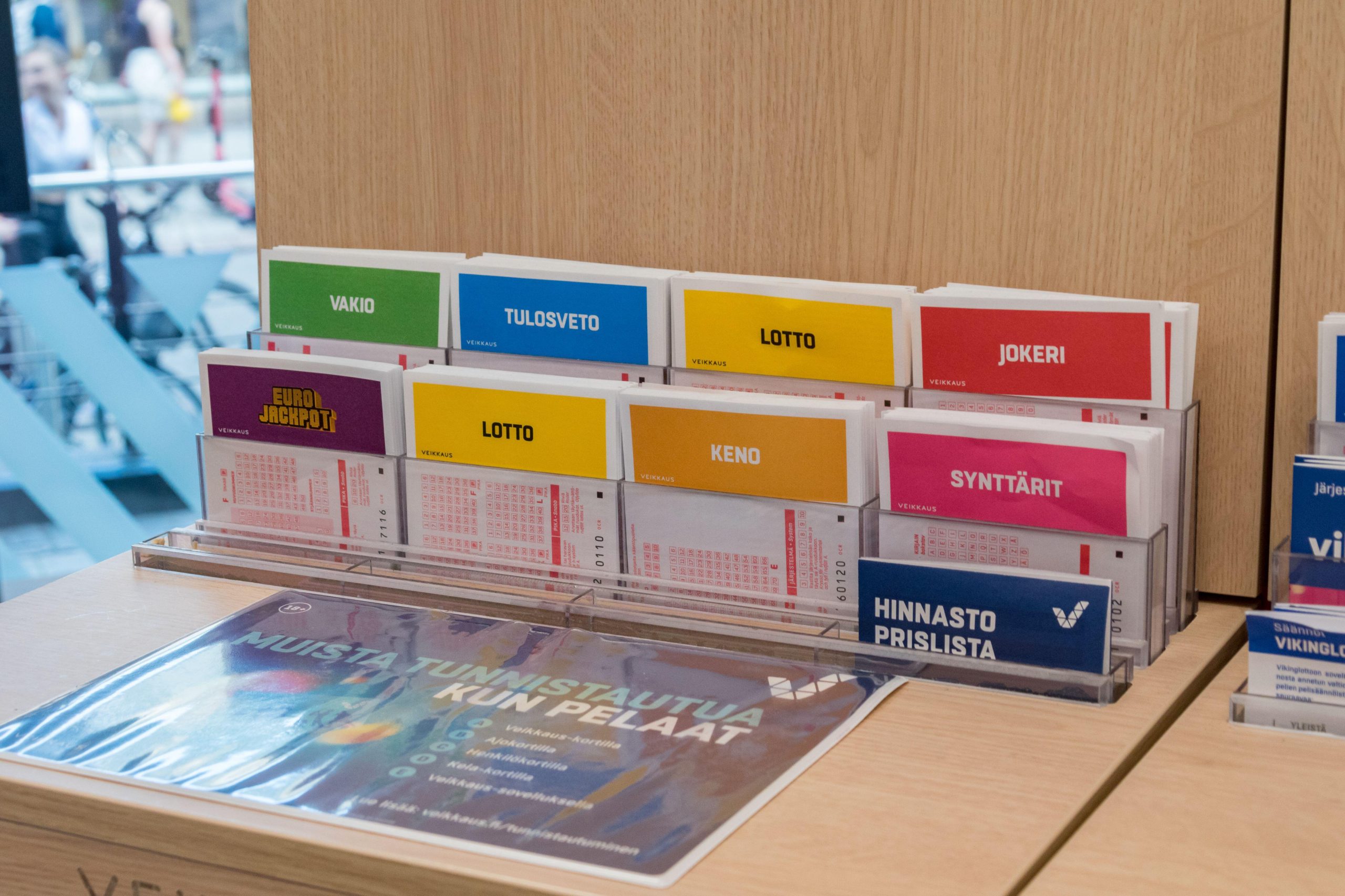
The Nordic country has one of the highest gambling participation rates in the world – around 70% of the population participates in some form of wagering each year, spurred by widespread availability. Watching lottery draws on TV on a Saturday is part of the national zeitgeist. Walk into many supermarkets, petrol stations and kiosks in Finland and you’ll find rows of slot machines.
Those slot machines – as well as all other forms of gaming in the country – are currently under the exclusive purview of state-owned Veikkaus, one of the last holdouts of a fading era of government monopolies in Europe’s gambling industry.
Soon, it is all going to change. The Finnish parliament passed its sweeping new iGaming bill in December 2025 that will officially end Veikkaus’ long-standing monopoly and open iGaming up to private operators starting 1 July 2027. Veikkaus however will retain exclusivity over land-based gaming machines, lottery and scratch cards.
Licensed Finnish iGaming operators will be subject to a flat tax rate of 22% of GGR.
There’ll be an additional yearly licence supervision fee ranging from €4,000 for operators with under €100,000 in annual GGR, up to €434,000 for operators with at least €50 million in GGR.
Finnish market in numbers
- One of highest per capita gambling rates in the world
- Total estimated market GGR of €1.9 billion in 2026
- Monopoly operator GGR of €931 million
- Estimated 81% of total market GGR from online sources
In March, the window opened for operators to submit B2C license applications for the upcoming market launch. The past few months have seen prospective operators scrutinising the new regulatory framework, learning the local landscape and evaluating where exactly they might stack up in Europe’s newest market opening.
Finland’s market in context
Despite Finland’s small population and large land mass, gambling participation is very high by international standards. A 2017 Economist chart ranked per-resident gambling losses in Finland the fourth highest in the world. (Finland is also regularly ranked the happiest country in the world).
Finland’s market had an estimated total GGR of €1.9 billion in 2026, according to H2 Gambling Capital data. The bulk of that figure, €1.1 billion, came from gaming while €269 million derived from betting and €456 million from lottery. Around 81% of the country’s total estimated GGR came from online channels, H2 data shows.
By the late 2010s, widespread consensus emerged around the need for reform of Finland’s gambling regime, spurred by a steady contraction in market share of the monopoly operator Veikkaus. Despite its monopoly status, a sizeable grey market exists in the country.
The channelisation rate in Finland is estimated to be around 50%, having once been as high as 90% a decade ago. By its own admission, based on internal revenues and third-party data, Veikkaus estimated it had a market share of 51% going into 2026. Veikkaus’ total GGR for 2025 was €931 million, a sharp decline from the €1.8 billion GGR it enjoyed in 2017.
Grey market will shrink, but black market concerns linger
The surprisingly broad political consensus underpinning Finland’s gambling market reform is held up by hopes that liberalisation could, alongside mitigating rising gambling harm levels, revitalise the shrinking tax revenues flowing into government coffers.
Channelisation is essential to both goals. How well the new framework serves those goals is yet to be seen, though some remain sceptical there is enough meat in the new law to allow the regulator to crack down on unlicensed activity.
Several stakeholders agree that there are not many new tools in the upcoming framework to rein in the black market. “There is no real mechanism for the black market to [for example] block payments, or whatever, for the ones operating outside the licensed system,” says Jarkko Nordlund, head of icasino and sportsbook at Veikkaus.
There will be some new hurdles for the grey market post launch. Unlicensed operators will be subject to income tax under the new licensing regime. And unlike current rules where unlicensed operators can legally operate Finnish-language websites as long as they are not directly marketing to Finnish customers, the mere use of the Finnish language will become subject to scrutiny from the regulator, according to Pekka Ilmivalta, head of office at law firm Nordic Legal.
Ultimately, however, how effectively Finland’s gambling activity is directed to licensed channels depends on the approach and proactivity of the regulator. “The critical question is how active the regulator will be,” notes Finnish gambling consultant Jari Vähänen. “Will they have enough tools to block and prevent black market operations? I’m a little bit sceptical about that.”
The critical question is how active the regulator will be
— Jari Vähänen, Finnish gambling consultant
A freedom of information request submitted by iGB to Finland’s regulator the National Police Board revealed that in the past 12 months, the regulator had sent zero prohibition orders – an official order to cease operation or marketing of gambling activity – to unlicensed operators.
The request also revealed that 14 ‘hearing letters’ – essentially warnings that can lead to prohibition orders – had been sent in the past 12 months. Of those, ten were issued to individuals and four to operators. Those operators were Magic Poro Ltd, Blixx Gaming Ltd, Befuria GO OÜ and White Hat Gaming Ltd.
How, and who, Finland’s regulator targets post launch will be a key test. Vähänen warns officials to focus where the real risk is, rather than solely on what can be seen. “In Sweden, in principle they have same kind of legislation, but of the Swedish regulator’s tens of punishments and court cases, all but one were against license holders, not black market operators.”
All things considered, Nordlund isn’t too worried – he thinks focus has rightly been on designing a functioning licensing system first and foremost. “Now the focus is more on creating the market, a sustainable environment for the licensees, and then the black market [enforcement] will come.”
Anticipation builds
The prevailing mood as we approach one year to market launch is one of cautious optimism – though not without risks on the horizon.
“I try to keep optimistic,” Antti Koivula, chief compliance officer at new joint venture Hippos ATG, tells iGB. “That being said, as a lawyer, I always tend to get the negative stuff on my table being in legal compliance. But there is huge value in the Finnish market.”
Ilmivalta says industry stakeholders are invested in the potential of the market. He points to his estimate of 40-50 licensed operators by market launch as a sign that the market’s potential is considered high.
“There are concerns about marketing, about responsible gambling guidelines and different things, but generally I would say the mood is quite positive,” he tells iGB. “It’s been a long-awaited change in the Finnish market. And if you look at the Finnish customer behaviour, Finns are quite heavy gamblers. They are used to playing; many on the lotto side, but still gambling and doing it online, that’s what people are used to.”
I always tend to get the negative stuff on my table being in legal compliance. But there is huge value in the Finnish market
— Antti Koivula, chief compliance officer, Hippos ATG
Responsible gaming a compliance sticking point
Finland’s new licensing framework has broadly been modelled on Sweden’s – which itself moved away from a monopoly structure in 2019 – according to several lawyers who have analysed the legislation.
Stakeholders agreed authorities had done a good job overall in designing a legal framework in which compliance would be fairly straightforward, but there remain significant gaps when it comes to the finer details.
One such area pertains to responsible gaming. In January, the Ministry of Social Affairs and Health published draft responsible gaming guidelines. The measures drew significant backlash from operators and other industry stakeholders, who argued they would risk undermining channelisation and in turn harm prevention goals.
The recommendations include a centralised cross-operator loss limit system, monthly and yearly loss limits, temporary account freezes, continuous monitoring with a tiered intervention model and more. The guidance also describes AI problem gambling risk identification technology as not suitable to fulfil statutory obligations – a claim which has been criticised in the subsequent consultation process.
Alongside the burdensome measures is the criticism that, while operators have a legal duty of care under the new framework, these responsible gaming measures are not legally binding and are simply ‘guidelines’ designed to promote uniform practice.
This has caused confusion about how and whether operators must follow them. “They can’t force operators [to adhere], they can’t give any punishments, so it’s unclear what the purpose is of these recommendations,” Vähänen says.
But Vähänen and Koivula warn that it does set the agenda for how officials will approach player care, particularly given the legislation’s broad provisions and the regulator’s discretion to issue decrees. “There are a lot of question marks around whether the regulator will de facto expect the operator to apply them in practice,” notes Koivula.
A new version of the responsible gaming guidelines is set to be published soon, which many operators eyeing the market hope will shift in their favour. “The political will is to find a balance between business opportunities for operators and responsible gaming, but if there will be more and tighter betting limits, loss limits, then I’m not sure if the balance will be possible anymore,” Vähänen adds.
“The potential problem is that the civil servants are mainly from the social ministry side and are looking for a model where they would try to block heavy gambling. If that happens, there’s a big risk that the most problematic gambling won’t stop but will move outside the legal system.”
Marketing restrictions cause concern
One of the most controversial aspects of Finland’s new licensing framework is the highly restrictive rules around marketing. Notably, this includes a ban on the use of affiliates, a ban on influencer promotions, and heavy restrictions on social media that limit marketing to operators’ own social channels. Advertising is instead largely reserved for traditional media and sports sponsorships.
This approach could end up undermining the reform’s stated goals, as traditional media channels and sporting sponsorships are much less targeted than online channels like social media and affiliates can be.
Koivula described the restrictive approach to online marketing but liberal approach to traditional mass media as ‘schizophrenic’.
“The new gambling law has two main aims, to increase channelisation and to prevent gambling related harm. Affiliates are not going to disappear, they are going to boost the black market, and I don’t know how that serves the aim of increasing the channelisation rate or reducing gambling related harm.”
The law offers broad strokes, but clarity is needed on many of the finer points
— Pekka Ilmivalta, head of office, Nordic Legal
Ilmivalta expects marketing to be one of the main sources of friction from a compliance point of view. For him, the problem is in the lack of detail. “The law offers broad strokes, but clarity is needed on many of the finer points.
“With lots of operators entering the market and wanting to make their brand known, there will of course be cases of people pushing the limits. So it depends on what kind of guidance there is coming from the regulator. Inside [the gambling act] there’s lots of things that can be interpreted differently, and with good reason as well.”
He gave examples around marketing restrictions in legacy and social media. “Right now [the law says] it’s OK to market in digital media which is connected to print media, but what does that mean? Is there a loophole for some kind of affiliate operations by print media businesses?
“And of course with social media, there are no influencers [allowed], that much is clear – but there’s a fine line between sponsorship and influencers and using celebrities in marketing.”
Bonusing will also be very heavily curtailed, with a ban on acquisition bonuses and a requirement that bonuses cannot be personalised or segmented. Even within the strict rules remains uncertainty around key details, Koivula says. For example, according to the regulator, moderate bonuses are allowed for existing customers.
“But what does an ‘existing customer’ mean – do they have to go through the KYC process which is mandatory for all new customers anyway, or do they have to be a customer for a fixed period of time? On the other hand, what does ‘moderate’ mean – €10, €50, €100, €500? To be compliant, I would need to have a clear answer for those questions.”
Koivula is hopeful that further guidance will be issued around marketing before launch, but Veikkaus’ Jarkko Nordlund says the industry is anxiously waiting on clarity.
“The law is fine. Now everyone is begging a bit, like, what are the definitions of the law? We still don’t know how we’re able to use bonusing, what advertising is allowed, what media is allowed, duty of care, player protection. Everyone is pro licensed market, but we would love to have the nitty gritty details.”
Key concerns around Finland's iGaming reform
- Lack of new tools for regulator to tackle black market
- Uncertainty around responsible gaming 'guidelines'
- Heavy-handed marketing restrictions may backfire
- Lack of detail in certain areas, for example marketing and bonusing
Cold country, hot market
Compliance footnotes aside, the market is shaping up for a hot launch. A separate freedom of information request submitted by iGB revealed that as of March 30th, a total of 24 operators had already submitted gambling license applications to the National Police Board. Other operators have publicly stated their intention to apply but are waiting for more clarity on things like responsible gambling and marketing rules.
All of the industry sources iGB spoke to estimated that there would be roughly 40-50 total licensees once the market goes live. (Licensing is expected to take 3-6 months, sources say). Each licensed operator is eligible to launch multiple brands under the new framework.
Hippos ATG’s Antti Koivula expressed concern around potential market saturation, arguing that many operators may not be sustainable in a country like Finland. “Even though Finns gamble a lot per capita, Finland is still only a country of 5.6 million inhabitants, 4 million adults. It’s a rather small country to add a lot of operators into the mix.”
Jari Vähänen argues some operators are poised to fare better than others. He says large operators – ones with tens of millions to spend on mass media marketing – are broadly happy, but smaller operators who don’t have market share already will struggle in the market. “My advice [to smaller operators] has been that… you won’t have existing customers, you won’t have the money for heavy marketing competition in mass media. So how can you succeed here?”

Who will dominate the market?
As the market opens up, Veikkaus, the current state-owned monopoly, is likely to maintain a strong position going forward thanks to its entrenched brand recognition. Sweden’s former monopoly holder Svenska Spel, for example, still maintains a strong position in its market seven years on from liberalisation. Finland’s restrictive marketing measures may serve to further compound Veikkaus’ lead.
But Veikkaus’ Jarkko Nordlund partly pushes back against the idea that marketing restrictions give the incumbent monopoly a dominant advantage for launch. “There are thousands of other ways to do marketing, so I don’t see it as a competitive advantage for us,” he says, arguing that they have the same tools available to everyone else.
“Everyone can operate, so many things are allowed that whatever size of the company, it is possible to come and make a good business. I’m positive that the market will be attractive and suitable for everyone to enter, [at least] the serious ones. I have huge respect for international operators because they play in so many markets, they are used to much more strict requirements.”
Nonetheless, Nordlund is very much focused on keeping Veikkaus at the top of the market following its launch in July 2027. The operator has been undergoing an internal transformation to position itself for liberalisation, including an international hiring spree and overhauling its internal systems and technology through new suppliers.
We are looking to be the market leader, but in a humble way. We need to really work to get to that position. We are hungry and ready to commercially compete for market share
— Jarkko Nordlund, head of icasino and sportsbook, Veikkaus
He says the brand currently is connected mainly to lottery and sports, so online casino is an obvious growth opportunity. But he sees growth stemming less from one vertical and more from combining multiple product offerings, as Veikkaus will now be able to cross-sell under the new framework.
“We [currently] have a huge amount of limitations – cross-selling, bonusing, we can’t do almost anything to icasino. So I see a lot of growth opportunities for us because we’ll have an equal playing field, everyone is paying taxes, and is under the same framework.
“My task is to maintain the market leading position. We are looking to be the market leader, but in a humble way. We need to really work to get to that position. We are hungry and ready to commercially compete for market share.”
Meanwhile Hippos ATG has ambitions to revitalise the horse racing betting vertical in Finland, though its ambitions extend beyond just the racing sector.
“If you look at for example the sports betting figures in Sweden, ATG is doing great there, and we are well equipped to continue that road in Finland as well,” Hippos ATG’s Koivula claims. “When it comes to casino, that’s where the most competition will be, and that will be a challenge, but again, I’m really trusting we will find our place.”
For all the industry’s qualms, there is broad consensus that Finland’s new gambling framework is in generally good shape. Time is on the government’s side to iron out the kinks. Estimates are that market size, channelisation and tax revenue are all set to rise thanks to the gambling reform.
“It all makes sense,” Koivula concludes. “From the state’s perspective, from the customer’s perspective, from the operator’s perspective, from the monopoly’s perspective. It’s a win-win-win-win situation.”

Jake Nordland
Jake is an experienced trade journalist in video games, esports & regulated gaming. He covers emerging trends in the global gaming industry with a focus on long-form analysis.