
Six months on, Resorts World NYC is growing, but its revenue isn’t
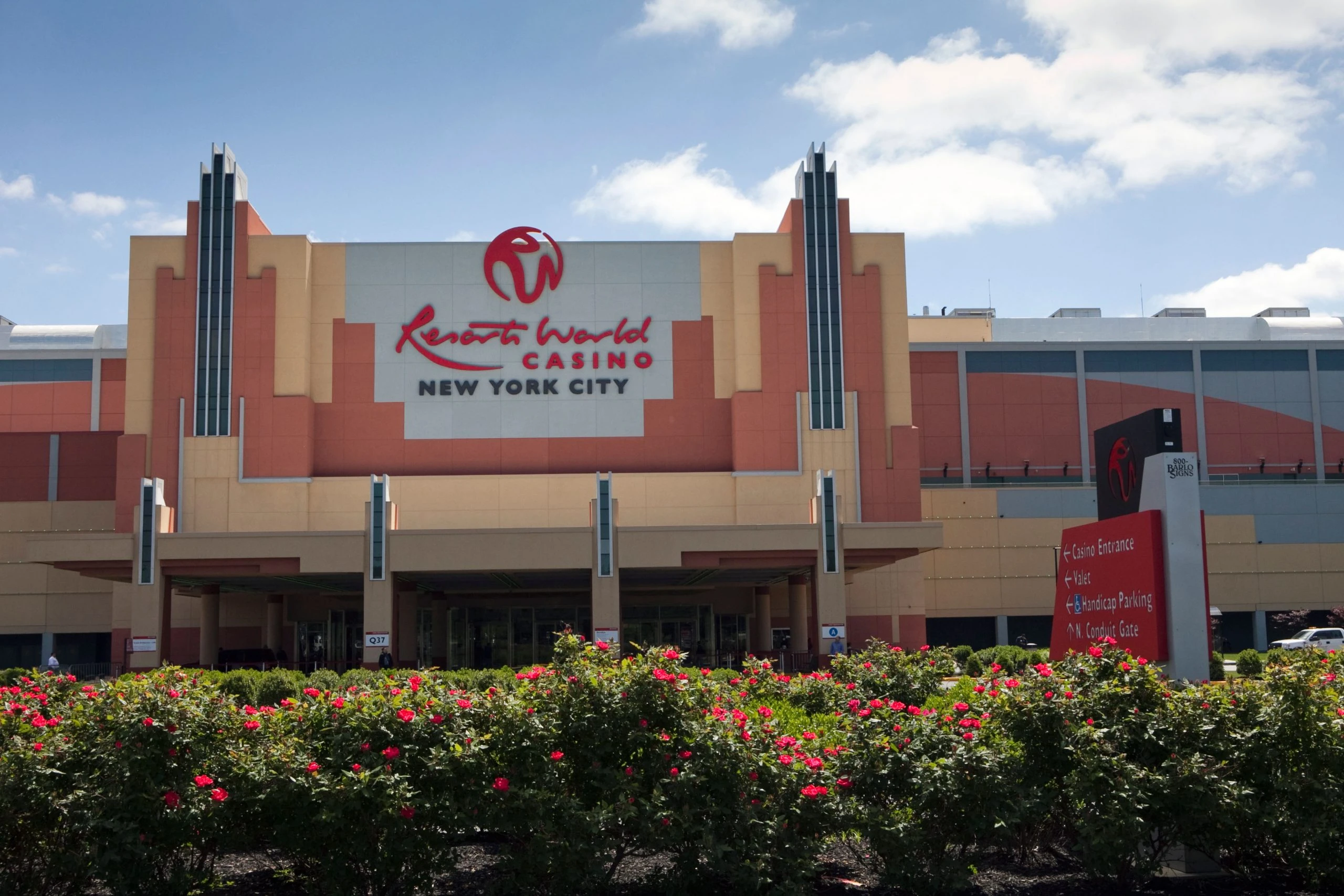
The downstate New York casino market now has its first six months of performance data on the books, as Resorts World NYC eclipsed the half-year mark as a full commercial casino earlier this month.
According to New York State Gaming Commission data, the racino-turned-casino is averaging about $30 million in gross gaming revenue per week thus far. From the beginning of May through the beginning of November, weekly GGR has landed within a range of $27 million to $32 million. Notably, this is despite the fact that the property’s slot and table counts have increased dramatically during that time.
Resorts World opened with about 2,500 slots and 240 tables, and those totals have since increased to nearly 4,000 slots and 350 tables. Plans call for a gradual increase to up to 6,000 slots and 800 tables, but the state’s Gaming Facility Location Board noted in its licensing selection report last year that Resorts World only submitted configurations for 4,635 slots and 534 tables in its application.
On the slots side, average win per unit per day has decreased from $1,505 in the first week to around $700 currently, with promotional credits increasing from a weekly average of $700,000 in the first few months to over $1,700,000 per week currently. Despite the marked changes in unit count and promotions, slot GGR has stayed within a tight range of $19 million to $22 million per week.
Table GGR, meanwhile, has not increased meaningfully with the addition of more than 100 more units in recent weeks. In the third week of October, Resorts World posted $12.2 million in table GGR with 242 units — the following two weeks, with 301 units and 345 units, respectively, GGR was below $10.5 million both times.
Big promises to fulfill
The stagnation in GGR despite the aggressive expansion could be a troubling trend for Resorts World as 2026 comes to a close. The casino was easily the most ambitious in the application process last year, both in its projections and its proposed tax rates.
Resorts World estimated that in 2031, when all three downstate licencees are operational, its annual GGR would fall between $2.7 billion and $3 billion. The GFLB cast doubt on these figures, saying they “significantly exceeded” both the other bidders and the state’s internal analysis, “primarily due to assumptions related to tourism and high-end play”. With a current pace of about $1.5 billion in annual GGR, those estimates would represent a near doubling with two other competitors nearby.
Both of those competitors, Hard Rock Metropolitan Park and Bally’s Bronx, submitted more cautious projections and lower tax rates. Resorts World is currently paying 56% on slots and 30% on tables, whereas Bally’s committed to 30% and 10% and Metropolitan Park committed to 25% and 10%. Both of those projects are projected to open in 2030.
State officials also expressed concern that long-term underperformance could impact the project’s financing plan. Resorts World’s $5.5 billion expansion and renovation “relies heavily on future operating cash flow and future debt financing,” the GFLB noted. If performance “falls below projections or if additional debt cannot be secured,” the project could face “funding shortfalls, potentially requiring further capital support to complete the project from its parent, an affiliate, or third parties,” the board added.
The racing levy dispute
Even after securing a licence and opening the doors, Resorts World and New York Governor Kathy Hochul’s administration are embroiled in controversy. Hochul and state regulators interpret Resorts World’s 56% slot levy as being separate from the property’s horse-racing purse obligations, which amount to $150 million or more per year if paid individually. The casino disputes this, arguing that its 56% pitch included the racing levy.
The added racing costs would push the effective rate to over 70%, Resorts World said, which would be untenable from a business and lending standpoint. State lawmakers effectively punted on the issue for this year while passing a stop-gap measure over the summer to ensure the racing industry continues to receive its payments. But the issue was still unresolved as of early September.
“By law, tax rates do not, and have never, included racing support payments,” Hochul spokesperson Gordon Tepper told New York Focus at that time. Resorts World spokesperson Stefan Friedman told the outlet that the two sides were “having constructive conversations” about how to “build on our successful partnership, but Friedman did not say whether the project would be scaled back or cancelled if the tax issue was not resolved its favour.
Preparing for the 2027 Breeders Cup
Resorts World New York is located on the grounds of Aqueduct Racetrack, a venerable horse racing facility that closed its doors in June. Still, the New York Racing Association depends heavily on sponsorships to help drive purse amounts.
In August, the casino sponsored the Resorts World Ballerina Stakes at Saratoga Race Track. Run at 7-furlongs, the Grade I race for Fillies and Mares was won by Ways and Means, a 5-year old mare owned by Klaravich Stables.
Ways and Means captured the Fillies + Mare Sprint on 31 Oct. at the Breeders Cup World Champions, bolstering her campaign for American female sprint horse of the year. The closure of Aqueduct coincided with the re-opening of Belmont Park, after a $550 million facelift that temporarily shut down the track for several years.
Before hosting the 2027 Breeders Cup World Championship, Belmont will hold a lengthy fall meet. The 2026 meeting at Belmont this fall features $17.7 million in total purses, including the $1 million Jockey Club Gold Cup.