
Lula steps up attacks on bookmakers in the final stretch of his reelection campaign
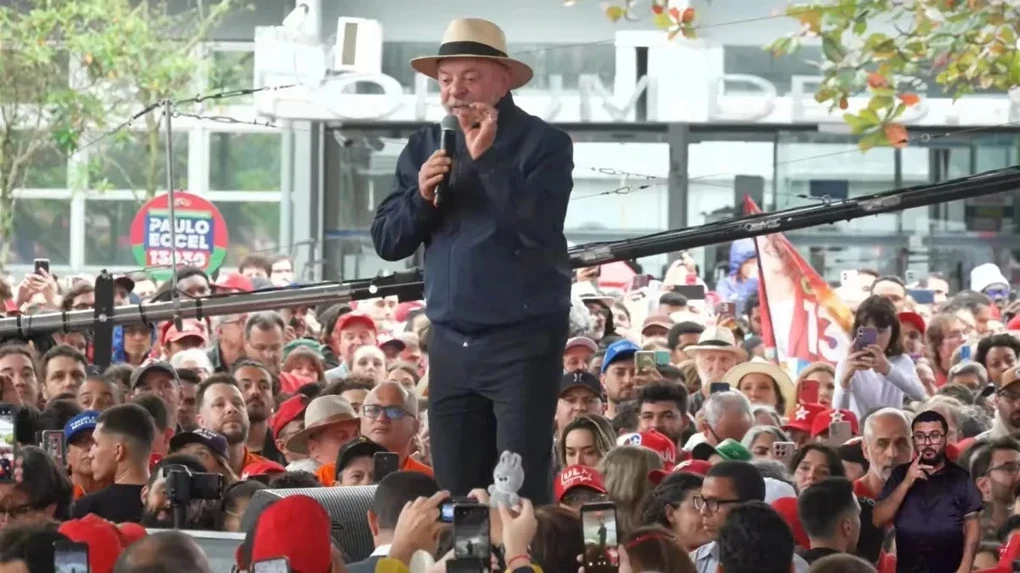
In the final stretch of the Brazil presidential campaign, President Lula significantly ramped up his rhetoric against betting companies, making the issue one of the core pillars of his electoral strategy.
At various events across the country, Lula stated he was “determined” to put an end to these companies’ operations in Brazil.
He argues the current model leads to indebtedness, encourages compulsive behavior and distorts the relationship between soccer, fans and clubs. A provisional measure restricting the operations of betting companies — and potentially banning online casino games — is expected to be issued this week.
His most forceful statements were made on the 18 and 19 September during campaign events in Guarulhos (São Paulo) and Florianópolis (Santa Catarina). At both events, Lula described online betting as “a disease.”
He cited cases of Brazilians who sold assets, hid debts from their families and reached desperate situations due to gambling addiction. According to him, the government intends to tackle the problem with tough measures. This includes a total ban on betting platforms — a topic that, he noted, has been under discussion for months with the economic team and the Central Bank.
Football clubs’ manifesto
This narrative gained momentum following the release of a manifesto signed by major Brazilian football clubs. They advocate for the continued operation of betting companies, claiming that a potential ban could spell the “end of football” in the country.
Lula reacted immediately, calling the claim a “lie” and pointing out that clubs — and the Brazilian national team itself — had won world titles long before the expansion of the betting industry.
“Football cannot survive at the expense of the poor,” he said.
He argued that fans already contribute financially to the sport and should not be pressured into betting to prop up team revenues.
The president also explicitly named clubs such as Flamengo, Corinthians, Santos, Grêmio and Internacional, stating his intention to summon club officials to discuss the impact of betting on sports and to combat irregularities like money laundering.
He emphasised that the sector — regulated in 2024 by the Secretariat of Prizes and Betting — now involves billions of reais and directly influences the sports landscape, advertising, and the behaviour of young people.
Beyond criticising the sector, Lula linked the debate on betting to the issue of household debt. He has stated that the practice particularly affects young people without stable income. In Santa Catarina, the president identified betting as a factor exacerbating families’ financial crises.
This toughening of rhetoric comes amidst a direct clash with Flávio Bolsonaro, his main adversary in the presidential race. Without naming the candidate, Lula stated that his rival wants to win to “get his father out of jail,” whereas he seeks re-election to “keep Jair Bolsonaro in prison”. The issue of betting has become part of a broader narrative aimed at combatting what Lula terms “irregularities” and “abuses.”
The Workers’ Party (PT) campaign assesses that the betting issue resonates with sensitive segments of society, especially families burdened by debt. The topic is expected to remain central in the final days leading up to the first round of voting. The government is preparing a provisional measure for release this week, although the final details of the proposal have not yet been settled.
Rift between the Executive branch and the Finance Ministry
There is no consensus within the government regarding a ban on online betting via a provisional measure. While the Planalto Palace, specifically President Lula and the Secretariat of Communication, advocates for restrictions, the Ministry of Finance is reluctant to accept changes. The ministry understands the dynamics of the betting industry and fears a drop in the tax revenue it generates.
The restrictions championed by Lula are likely driven by electoral considerations, as the president seeks to regain popularity amidst the rising momentum of his main opponent’s candidacy.
Meanwhile, the economic team is focused on public coffers and the 2027 budget, given that betting revenue is already factored into the Budgetary Guidelines Law.
Beyond the potential loss of revenue, legal challenges to the restrictions are anticipated; a shutdown of betting operations or a ban on online games could force the government to compensate companies that had relied on the established regulatory framework.