
Brazil Senate Committee approves restrictions on ads and betting sponsorship
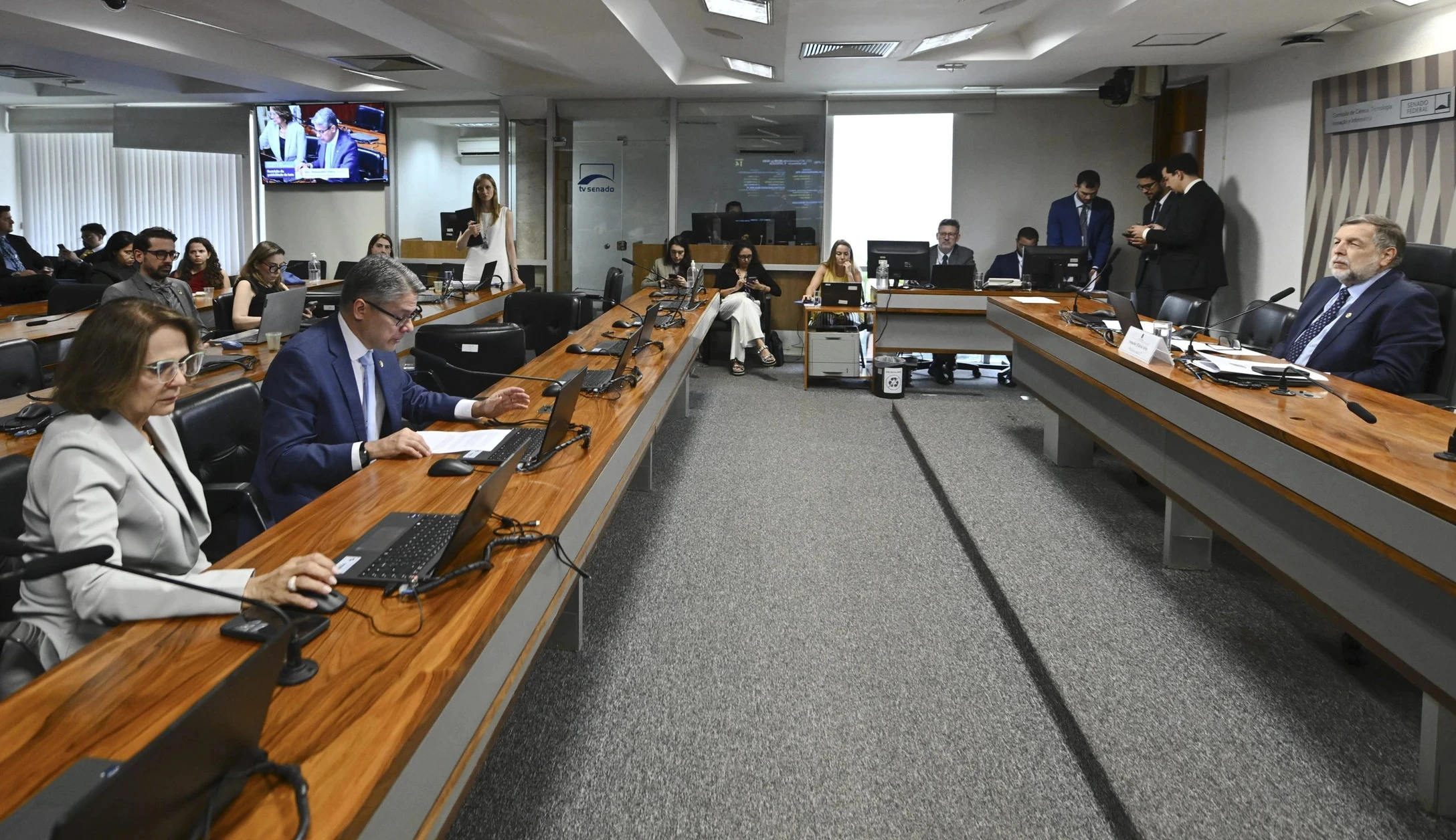
On Wednesday, the Science and Technology Committee (CCT) approved a project furthering restrictions on advertising and sponsorship of betting.
The proposal also established criteria for risk classification of products and clarifying the obligations of operators and platforms. The measure would likely grant the illegal market the opportunity to continue expanding, as it would be unaffected by the new rules. The committee approved a request for urgency for analysis by the Senate Plenary.
Authored by Senator Damares Alves and six other senators, Bill 2.470/2026 amends the Betting Law, which regulates fixed-odds betting, with measures aimed at protecting mental health, consumers, and the family economy. The bill received a favourable opinion, in the form of a substitute from Senator Alessandro Vieira.
“This is a non-partisan initiative. It stems from society’s current understanding of the extent of the damage caused by so-called betting,” the rapporteur stated.
On Tuesday, the CCT held a public hearing to discuss the project. Government and betting sector representatives participated in the debate and presented divergent positions on the proposed measures.
Advertising
The approved text includes a series of restrictions on advertising for online betting and gambling:
Advertising prohibited: Direct or indirect marketing communication regarding betting on radio and television, newspapers, magazines, outdoor media, streaming services, podcasts, social networks, video platforms, apps, websites, blogs, forums, search engines and other internet environments is prohibited.
Messaging and targeted advertising: The restriction also extends to instant messaging, SMS, email, notifications, advertising automatically targeted by algorithms, telemarketing – which shows ads again to people who have already been exposed to certain content – and profiling based on user behaviour.
Other means of dissemination: The prohibition includes advertising in electronic games and esports, sports uniforms and equipment, public transport and affiliate content, tipsters, comparison sites and other paid intermediaries.
Promotions and benefits: Bonuses, promotional credits, free bets, cashback, free spins, rewards and loyalty programmes used to encourage membership, retention or return to betting are prohibited.
Misleading messages: Messages that present betting as a risk-free activity, a source of income, a financial solution, a sure profit, a guaranteed method or a way to recover losses cannot be disseminated.
The restriction does not extend to strictly institutional communication made through the authorised operator’s own official channels, such as websites, apps, internal platform areas and customer service channels. In these spaces, information should be limited to company identification, official channels, access rules, self-exclusion and blocking mechanisms and mandatory warnings.
These channels may not contain promises of winnings, bonuses, invitations to bet, boosting or features designed to attract and retain user attention. The operator will also be responsible for the actions of affiliates, agencies, influencers, and other third parties who are paid or incentivised for commercial promotion.
Sponsorship
Sponsorship by betting companies would be prohibited for clubs and other sports entities, federations, leagues, competitions, sports broadcasts, cultural events, shows, educational and social projects, philanthropic entities, civil society organisations, political parties, candidates and election campaigns, as well as digital influencers, athletes, artists and celebrities.
The ban covers brand exposure, naming rights, licensing, ambassadors and other forms of promotional association. The text provides a 24-month period for adapting or terminating sponsorship contracts, and the signing, renewal, or extension of contracts will only be permitted if the respective term of validity expires within those 24 months.
Sponsorship activities involving children and adolescents, schools, and youth sports categories are also prohibited. Betting companies will also be banned from associating their brand with campaigns or projects related to mental health, suicide prevention, financial education, treatment of gambling disorders, social assistance, prevention of over-indebtedness or protection of vulnerable families.
Protection
Operators may not use data from individuals who have self-excluded, are undergoing treatment, or have requested to block marketing in order to attempt to reactivate them. Repeated or intrusive messages and offers directed at users who have reduced their gaming frequency, registered significant losses, triggered limits or shown signs of risky behaviour are also prohibited.
The text also bans exploiting situations of economic crisis, unemployment, debt, emotional distress, grief, anxiety, depression, loneliness, or other conditions of vulnerability to attract, retain or reactivate gamblers.
Operators must maintain permanent mechanisms for age verification, self-exclusion, voluntary time and wagering limits, and information on the user’s own gambling behaviour. Self-exclusion must be effective with all authorised operators.
The text also prohibits bets placed using credit cards, the use of predictive models to identify moments of greater vulnerability, and platform design mechanisms that hinder a conscious decision to stop betting, leave the service, or activate limits and blocks. Operators must maintain permanent alerts about compulsive gambling, indebtedness and asset loss, and adopt verifiable protocols for identifying risky behaviour.
Risk classification
The proposal establishes criteria for classifying products according to their potential for harm. Among the characteristics considered are instantaneous or short-lived results, continuous repetition at short intervals, use of random mechanisms to determine the outcome, intermittent rewards, near-miss incentives, incentives to recover losses and features that make it difficult to stop betting or induce successive, impulsive, or increasingly valuable bets.
Products offered to the public must undergo prior evaluation by a competent body of the Federal Executive Branch, to be defined in regulations. Products classified as high-risk will be subject to specific harm reduction measures. Products with excessive risk may not be offered. This category includes products with outcomes determined by random mechanisms, continuous cycles and variable rewards, such as roulette, slot machines, collision games and simulated virtual sports.
Furthermore, the text maintains obligations for monitoring and institutional cooperation, with the provision of aggregated and anonymised data to the competent authorities. It also provides for actions by the executive branch aimed at monitoring the impacts of betting, training health professionals, updating care protocols and periodically disseminating information on the effects of the activity.
Oversight
Application providers, digital platforms, hosting services and media intermediaries must remove irregular advertisements and campaigns after notification from the competent authority. The rapporteur’s version requires that the notification clearly and specifically identifies any content deemed irregular and ensures the right to a fair hearing and full defence. Journalistic, academic, parliamentary, artistic and opinion content are expressly protected.
Operators and companies linked to them are also prohibited from acquiring, licensing, or exploiting rights to sporting events held in the country. In the area of administrative penalties, the rapporteur’s text incorporates the new infractions into the existing sanctions system in Law 14.790 of 2023, which provides for fines of up to BRL2 billion ($392.8 million).
New crimes
One of the main changes made by Vieira is the creation of the crime of promoting unauthorised betting operators. The penalty is one to five years imprisonment. This may be increased by one-sixth to two-thirds when the promotion is done by a digital influencer, athlete, or well-known person, due to their greater ability to reach the public.
The rapporteur also added a rule designed to prevent the immediate movement of professionals between companies in the sector and bodies responsible for authorising, classifying, regulating and overseeing betting. Anyone who has maintained a significant link with an operator or representative entity of the market will be barred, for 24 months, from assuming certain regulatory functions. A quarantine period of the same duration will also apply in the reverse movement, for the transition from the regulatory body to the private sector.