
‘No FOMO’: Inside Kaizen Gaming’s sponsorship playbook

When Betano became the first sports betting operator ever to partner with FIFA in 2022, the reaction inside the industry was closer to bemusement than envy. Four years later, the Greek-founded operator has been an official tournament supporter of the FIFA World Cup 2026 across Europe and South America – its third FIFA agreement, secured for a 104-game tournament whose commercial programme had already broken all sponsorship revenue records for a stand-alone sporting event.
For Julio Iglesias Hernando, CCO of Betano’s parent company Kaizen Gaming, the journey to become an established FIFA partner is a story about trust as much as money.
“When we became the first sports betting operator to partner with FIFA in 2022, many in our industry questioned the move. The conventional wisdom was that FIFA would keep our industry at arm’s length,” he recalls. “But as usual, we tried to find a different angle to the problem: we are a fully responsible and regulated operator, willing to collaborate and learn, working hard to maintain the society’s trust to operate.”
Qatar 2022, he says, “was as much about education as activation. It helped us understand how FIFA communicates with its audiences, where our brand could add genuine value, and how to build trust.” The FIFA Club World Cup 2025 in the United States then served as a dress rehearsal, giving Betano “the opportunity to test and refine our activation playbook on a major FIFA stage before the biggest event in football”.
By 2026, the relationship had matured into something structurally different. “Three tournaments of experience mean we now approach the partnership with a clear activation framework: how we show up for fans, how we create meaningful moments around the matches and how we balance commercial goals with responsible gaming principles that a partner of FIFA’s stature rightly demands.”
What strikes him most is not the media value. “The real value of this relationship isn’t just the badge on the broadcast,” he adds. “It’s the permission it gives us to engage with football’s international community in ways that feel authentic, and the standard it sets for how we operate everywhere we do business.”
A growing portfolio
Kaizen’s rise has been rapid by any measure. When Iglesias Hernando arrived from William Hill in February 2021 – after a career spanning Heineken, Kellogg’s and Philip Morris – the company operated in six markets. It is now live in more than 20 regulated jurisdictions across four continents, has collected back-to-back operator of the year honours and leads Brazil’s fiercely contested online betting market with roughly 23% share, ahead of Bet365.
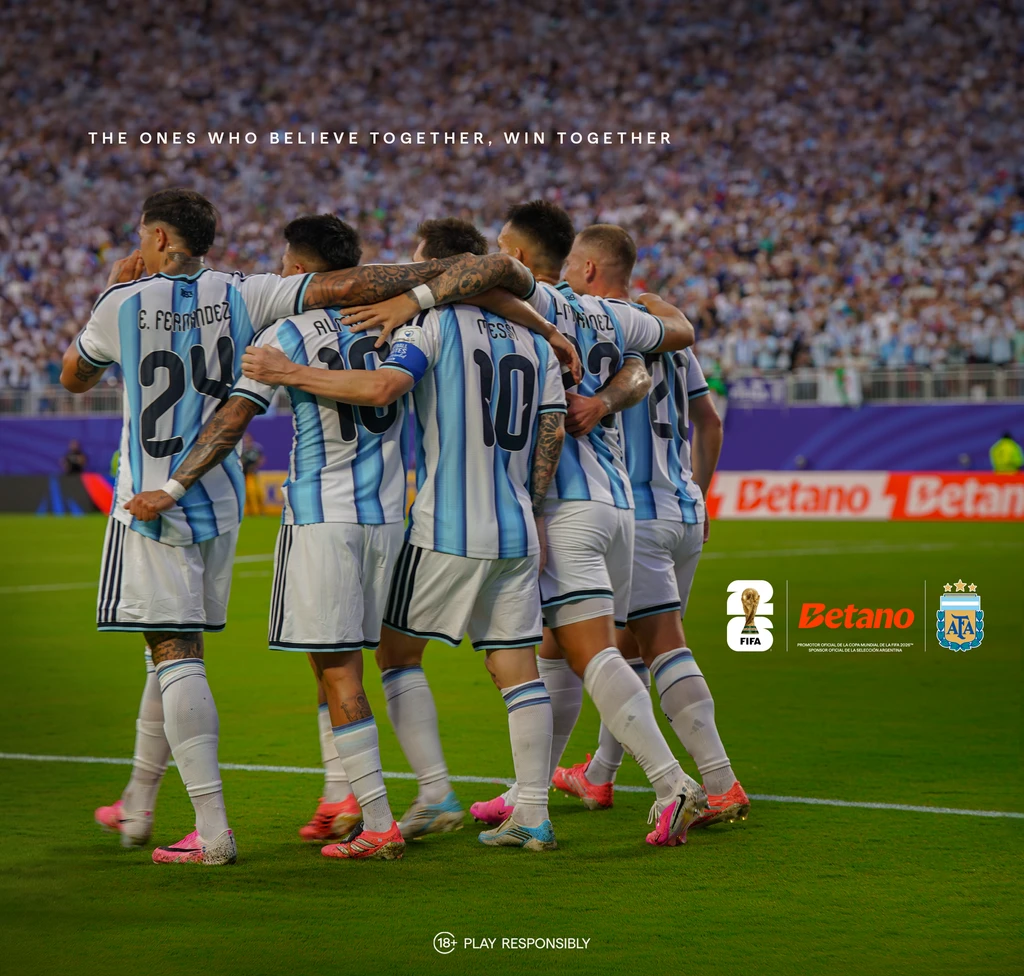
The sponsorship portfolio has grown in step: FIFA, UEFA club competitions, Bayern Munich, Flamengo, River Plate, FC Porto and, most recently, Tottenham Hotspur – which follows a two-season front-of-shirt run at Aston Villa that ended with the arrival of the Premier League’s gambling sponsor ban.
“Our sponsorships are a deliberate map of our markets,” Iglesias Hernando says. “The right partnership in the right territory, with the right club for that audience, does work that a generic global campaign simply cannot replicate.”
That still leaves the inevitable CFO question: what does any of it actually return? He is honest about what can and can’t be measured. Technology now offers “genuine visibility into fundamentals like brand exposure under specific broadcast conditions, share of voice, and audience reach across markets”. But some things can’t be captured in numbers: “the cumulative effect of being present at the moments that matter to fans, the brand permission that comes from association with clubs people love.”
Iglesias Hernando acknowledges: “We won’t always have a clean number to put in front of our CFO for every element of that work, but we know why we’re doing it, and the results across our markets continue to validate this conviction.”
As for what gets a deal over the line – or kills it – the answer is direct: “If there is no trust that the partnership has the potential to be a long-term one, there is no deal. That’s the one-liner non-negotiable. If I don’t trust you, I can’t trust you with my money. It seems quite obvious, but you would be surprised.” The rest, he says, “is boringly commercial. If there is no economic logic behind any deal, it will be a short one.”
The Tottenham experiment
The Tottenham partnership, announced in July 2026, is arguably the most interesting deal in the portfolio precisely because of what it is not. Betano becomes the club’s training wear partner for the 2026/27 season only – replacing BetMGM – before the arrangement evolves into an official Europe and LatAm betting partnership running through 2029.
The Betano logo will not appear on retail training merchandise at all. It is, in effect, a live test of what a Premier League gambling sponsorship looks like once the front-of-shirt inventory disappears from 2026/27. Is this the blueprint for gambling sponsorship in the post-shirt-ban era? “We don’t know, but we are willing to try,” Iglesias Hernando says.
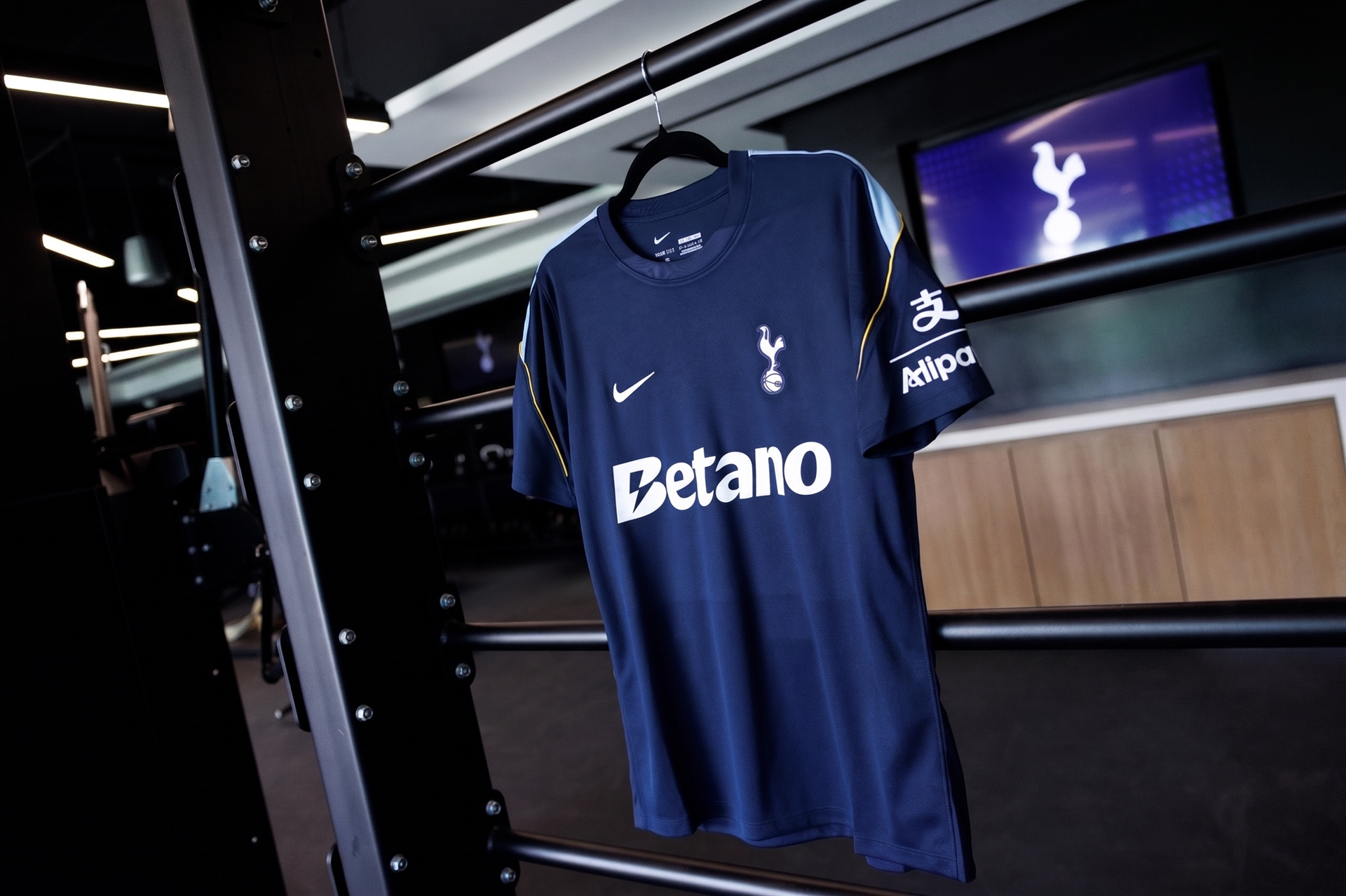
He rejects the notion that reduced visibility means reduced value. “Yes, the Premier League’s front-of-shirt restrictions reduce certain visibility. That’s simply the reality of the regulatory environment in England. Nonetheless, we have secured invaluable assets: the association with one of the Premier League’s most globally recognised clubs for the next three seasons, prominent presence across training wear and highly engaging partnership activations.”
The regional structure is telling. Tottenham claims a global audience of more than 600 million and one of the Premier League’s fastest-growing social followings; Betano’s centre of gravity increasingly sits in Latin America. A Europe and LatAm betting partnership stitches the two together neatly.
“The market changed,” Iglesias Hernando says. According to him, the companies that thrive are those that find ways to adapt and create value within whatever regulatory framework they’re operating in, rather than simply lamenting what’s no longer available. “Betano has been doing exactly that across multiple markets for years. The Tottenham structure is an expression of that capability.”
A clean regulatory house
That theme – treating rules as something to work with, not complain about – runs through everything Kaizen says about regulation. The company operates only in regulated markets, a choice Iglesias Hernando describes as foundational. “While others might frame regulation as a burden, for us it’s the entry price to the tier of the market where we want to compete. You don’t get those relationships without a clean regulatory house.”
What worries him is not any specific restriction, but rules that aren’t applied equally. “A level playing field is non-negotiable. It is equally critical that action is taken to eliminate the black market. Implementing restrictive regulatory frameworks in environments where unlicensed gambling platforms remain highly accessible, only drives more consumers to them.”
Has tightening regulation ever forced a fundamental rethink? Not really, he explains: “We’ve had to pivot our strategy more than once, but we haven’t had to tear up the commercial model and start from scratch.”
What next?
Kaizen’s expansion map has its own logic. Ghana, entered in February 2026 as the group’s 20th market and second in Africa after Nigeria, is dominated by an incumbent with a reported 60%-65% share. Why bother? “We don’t view each market in isolation, but as part of a consolidated portfolio,” he explains. “The marginal cost of being present in Ghana or Ecuador looks very different for us than for an operator starting from scratch, because the platform, the compliance frameworks and, in many cases, the regional brand recognition already exist.”
Still, he is under no illusions about the competition. “We’re clear-eyed about Africa. There are strong local champions who have built loyal customer bases. We’re not walking in assuming our brand alone is sufficient. What we believe Betano can offer is a superior product: greater depth in sportsbook and an extensive gaming portfolio that doesn’t yet exist at scale in many of these territories.” The bet is also on timing: “The time to position yourself in a high-growth market is before the consolidation happens, not after.”
The obvious gap is the United States – even as Betano sponsors a World Cup played largely on American soil. “Steering clear of the US market has been a strategic decision,” he says. “We have watched many overseas brands incur staggering losses trying to capture market share there.” The door isn’t closed: “We’re always examining the developments, while we gain important learnings about the landscape in North America through our presence in Ontario, Canada.”
The stated ambition is discipline over sprawl: “Our goal is to be a top-three operator in every market where we offer Betano.”
The art of adapting to the environment
Ask what he carried over from consumer goods, and the answer doubles as a critique of his adopted industry. “I believe that our industry has amazing technical expertise in the digital space, but an appalling lack of knowledge of marketing fundamentals. And this is where we shine. A large part of our industry still does not get it, or even worse, they just imitate. They don’t understand why they do something. Sponsorship is a characteristic example of this.”
Looking towards 2030, he offers what he calls confidential information. “Our secret motto is: NO FOMO. No deal in itself is important enough to sacrifice our principles and framework. We believe in sponsoring as a brand development vehicle with very clear criteria on what to do and what to avoid.”
In a sector where sponsorship spend is often reactive – a rival signs a club, so you sign the neighbouring one – that restraint may be the most unconventional position Kaizen holds. The plan is more of the same, done more demandingly: “Flexibility and curiosity are leading principles for us. We will adapt to the environment, try new things, fail and learn. Rinse and repeat. There is no other way.”