
Why Balkan operators are uniting in the fight against the black market
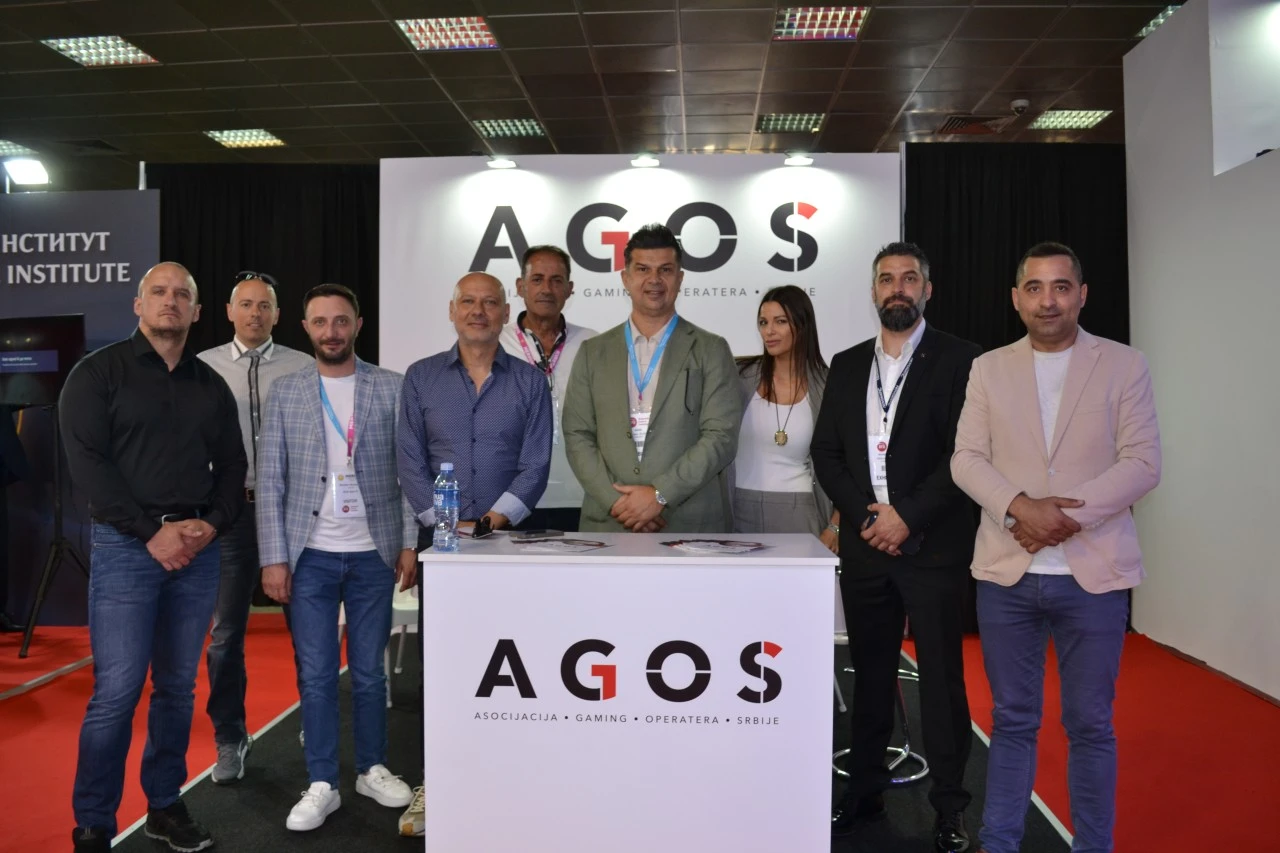
Across southeastern Europe, the pressure on legal gambling operators is mounting. From Romania to Croatia, illegal operators are expanding across borders and finding new ways to attract customers, while legal operators feel stifled by rising costs and regulatory pressures. Squeezed on both sides, operators have opted to form a unified front.
In March this year, seven countries came together to found the Balkan Gaming Federation (BGF). The initiative unites trade associations representing operators and suppliers from across the Western Balkans, including Serbia, Bulgaria, Croatia, Romania, Montenegro, Bosnia and Herzegovina and North Macedonia. Its founders cite two key aims: fighting the illegal market and promoting proportionate regulation in the region. The two, they say, are closely interconnected.
Most crucially, the federation hopes to give a voice to an industry that feels increasingly under siege in the Balkans, buffeted by regulatory headwinds, an ever-higher tax burden and an increasingly bullish black market.
Building dialogue
A few months in, the work has already started. After signing its Memorandum of Cooperation in Belgrade, BGF has opted to register its seat in Croatia and is set to elect its first president this autumn.
The federation is also organising a major roundtable of Balkan regulators, bringing together leading companies, independent experts and government representatives in an unprecedented exchange of ideas. The goal is to foster dialogue between the regulators and the industry on topics like regulation and the black market, creating an atmosphere of collaboration rather than confrontation.
“Licensed operators should not be viewed as part of the problem – they should be recognised as part of the solution,” explains Miloš Lalević, vice president of GPIS Montenegro, former deputy minister of sports and culture, and member of Montenegro’s negotiation team for European integration.
“They are the entities that invest in compliance, responsible gambling programmes, consumer protection, technological innovation and anti-money laundering systems. If governments want to effectively combat illegal gambling, they need strong and competitive regulated markets.”
Regulatory burdens
Looking at the story of gaming in the Balkans over the past few years, however, it is easy to see why the industry feels it has been treated as “part of the problem”. Once seen as the affordable gateway into European gaming, the region has seen a spate of tough regulatory measures introduced in recent years, combined with spiralling costs.
According to Lalević, operators have often been the victim of “outdated perceptions”. At the same time, regulators fail to consider how much they contribute economically. In Romania, where the situation is arguably the most extreme, the land-based slots sector is collapsing amid new local authorisation laws. The new rules, which follow recent tax hikes and a ban on slots in small towns, effectively put the industry at the mercy of local councils.
In Bulgaria, meanwhile, operators have seen a similar ban on gambling in small towns. There has also been a near-total ban on advertising and an extension of the self-exclusion scheme – all within the past few years.
In Croatia, where the federation has its seat, a similar regulatory overhaul is under way, implementing tough rules on advertising, player identification and self-exclusion. On top of this, the industry is facing steep tax hikes and increases in licensing fees.
“My concern is that, in many jurisdictions, there is still an insufficient understanding of the practical consequences that certain regulatory measures can produce,” says Lalević. “When regulation becomes excessively restrictive, the outcome is often the opposite of what policymakers intend.
“Players do not disappear from the market; they simply migrate to unlicensed operators that are beyond the reach of national regulators, tax authorities and consumer protection frameworks. This is precisely why the growth of the black market has become one of the most pressing challenges facing our industry today.”
Buoyant black market in Balkans
Indeed, while legal operators struggle, there are signs that the black market is thriving in the wider region.
According to data from intelligence provider Gaming Compliance International (GCI), channelisation for online gaming stood at just 11% in the Balkans in 2025, with illegal gaming accounting for 89% of the market. (This is based on data from Serbia, Montenegro, Croatia, Bulgaria, Romania and Slovenia, with Bosnia and North Macedonia excluded.)
Filip Jelavić, secretary general of the Croatian gaming association HUPIS, is all too familiar with the threat of illegal gaming. Both on the European and local level, he has been tirelessly working to tackle the black market with new enforcement tactics and methodologies.
With Croatia now the seat of the federation, Jelavić believes HUPIS can help forge tighter links between other Balkan nations and Europe, while also offering vital expertise on protecting the regulated market. “The Croatian industry has been actively involved in combating illegal gambling for more than fifteen years and has invested significant effort into digital enforcement over the past seven years,” he tells iGB. “Through cooperation with regulators, financial institutions, payment providers and international partners, important progress has been achieved, but the challenge continues to evolve rapidly.”
According to Jelavić, the black market in the Balkans is becoming “increasingly sophisticated and well-organised”. He adds: “Through influencers, affiliate networks, social media channels and other digital communication tools, unlicensed operators are able to attract players to platforms that operate outside regulatory frameworks and offer little or no consumer protections.”
By sharing information and tools across borders, the federation aims to beat the black market at its own game.
‘A genuine partnership‘
As well as building bridges between southeastern European nations, the Balkan Gaming Federation aspires to create a “genuine partnership” between public authorities and the industry, Lalević says. According to the former Montenegrin culture minister, dialogue already exists between politicians and trade associations. However, these conversations are “often more formal than substantive”.
“While consultations are taking place, we are still not seeing enough concrete progress towards creating a sustainable balance between the legitimate interests of the state on one hand and the ability of licensed operators to provide their services in a viable and competitive environment on the other,” he explains.
The federation hopes that a unified voice across the region will help to bring about change. “Licensed operators should be viewed not merely as taxpayers – although they are among the most significant contributors to public budgets –- but also as strategic partners in advancing responsible gambling, consumer protection, anti-money laundering measures and broader regulatory objectives,” Lalević adds.
“The success of public policy in this sector depends on a strong partnership between regulators and compliant operators.”
Cooperation throughout Europe
With so much happening in the world of Balkan gaming, the federation’s first year is set to be a busy one. As well as the roundtable, plans are under way for closer coordination with EUROMAT on tackling illegal gambling and protecting legal operators. In September in Bucharest, the European and Balkan associations will meet to agree on a shared direction and closer industry co-ordination.
In November, when the president is announced, the first-ever Balkan gaming awards will also be taking place, celebrating the best of local talent in the region. It is yet another sign that the region’s gaming industry is determined to pull together, celebrating its achievements and protecting its common interests.
Asked about his hopes for the federation’s first year, HUPIS’ Jelavić says he would like to see the federation established as a “credible regional voice” and “relevant stakeholder” in discussions with government, regulators and European institutions.
“If, after the first year, the federation is recognised as a serious regional partner, actively engaged in the fight against illegal gambling and capable of bringing together operators, suppliers and industry stakeholders around common goals, that would be a very successful start,” he adds.
The road ahead
For Lalević in Montenegro, success for the federation is also about real-life consequences. As Montenegro aims to complete its EU accession process in 2028, regulatory alignment on anti-money laundering and data protection regulations lies ahead. Meanwhile, politicians and industry will need to pool expertise to help understand the role of emerging technologies like artificial intelligence, particularly when it comes to safer gambling.
Whether the federation succeeds will depend on its ability to translate regional unity into tangible influence with regulators. Over the coming year, the planned roundtable and closer cooperation with EUROMAT will provide the first real test.
“Ultimately, stronger institutional coordination is not an end in itself,” says Lalević. “It is a means of creating more effective regulation, stronger consumer protection, a more successful fight against illegal gambling and a healthier and more sustainable gaming sector across both the Balkans and Europe.”