Building the betting audience beyond football: Which other fandoms can be activated in LatAm?
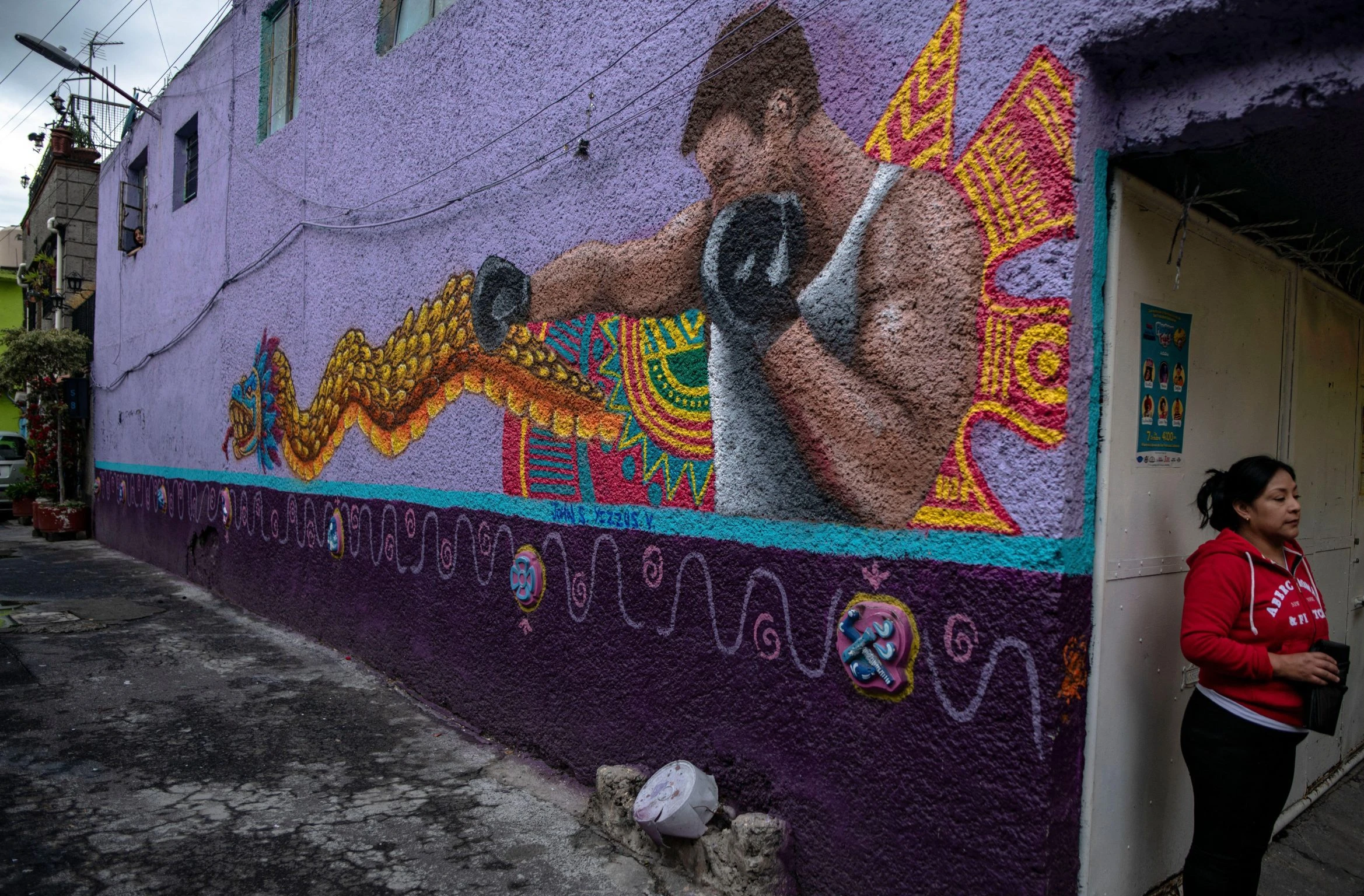
“If you walk on the streets in some Mexican towns, you’ll see massive murals of some famous boxers,” says Stake CMO Akhil Sarin. “They’re very big now on their local boxing.” Speaking to iGB at iGB L!VE in London, Sarin was asked which non-football sports are showing the most interesting growth signals in LatAm.
“Football will be football,” he says. “They live and breathe football all across LatAm, but there are sports and verticals that are growing aggressively.” Sarin draws a comparison to the prevalence of a different sport in his home country of India. “Cricket is akin to a religion in India, and then everything else is secondary. Very similar to that – football is like a religion in LatAm, but there is also hyper growth in tennis and baseball.”
Alberto Alfieri, co-founder and executive chairman of South America-focused platform provider Blokotech, also points out how the preoccupation with football in the region can lead people to incorrect assumptions. He says: “Think about Argentina, for instance, a country super in love with football. The actual gambling industry there is almost totally on casino rather than sports betting.” His claim is supported by estimates published in Fiebre de Casino’s 2025 Latin American gambling market report, which put online casino GGR at $2.29 billion for 2024, compared to just $500 million for sports betting.
Any sportsbook in the world will tell you tennis is probably their highest turnover sport
— Akhil Sarin, CMO, Stake
Alfieri, originally from Italy, but a regular visitor to Latin America due to his company’s focus, adds: “From Europe, there is the perspective that football is the only solution. In reality, we already see differentiating factors. We need to go country by country.”
Indeed, football is a constant across the vast majority of Latin American markets, but if you zoom in on each country individually, a complex picture of sporting preferences emerges, and one that offers plenty of excitement for operators hoping to build out betting audiences in them.
Sports and countries to keep an eye on
As mentioned, Mexico, the northernmost nation of the LatAm region, is big on boxing – thanks to the legacy of figures such as Canelo Alvarez and Julio Cesar Chavez. But Sarin also identifies baseball in Mexico as the most underserved betting market in LatAm right now, with Alfieri mentioning the popularity of NBA over the border from its US home, too.
Venture south into Venezuela and you will find baseball as the national sport, surpassing even football in popularity. Basketball is also described by Alfieri as “quite strong” there.
Brazil may be the nation most associated with football, but as the largest in the region, there is plenty of audience to go around. Despite the current tricky regulatory situation in the country, it remains pivotal to the LatAm gambling scene. Alfieri asserts that both volleyball and basketball are strong performers in Brazil, and claims it is the nation that is furthest ahead on non-football sports in South America. “The biggest media exposure of MMA is in Brazil,” he says. “Traditionally speaking, with Capoeira and Jiu-Jitsu, Brazilian Jiu-Jitsu, they already have a big number of followers. Brazil is already doing what it should be doing [in terms of other sports].”
Tennis has huge potential and Sarin thinks it is underserved by operators across the entire region. He adds: “Any sportsbook in the world will tell you that tennis is probably their highest turnover sport, purely because you don’t have to wait for an outcome; you can bet on every single point – that’s a big reason why. They’ve got really good players coming out of LatAm at the moment.”
Thanos Ntakis’ tour of sports betting in Latin America

GR8_TECH’s head of strategic sportsbook partnerships takes us through some key markets of the LatAm sports betting scene.
Mexico
There’s a huge amount of NFL fans, which is not typical to the rest of the region. They also have a very famous boxer, Canelo Alvarez, that everyone follows, so boxing is very important. Don’t forget baseball – not only MLB, but they have their own local league that they follow very closely and really like to bet on.
Argentina
A great history of tennis players and also a great national team in basketball, so we can see a trend in these sports here.
Puerto Rico
For basketball, Puerto Rico is very strong.
Venezuela, Dominican Republic, Nicaragua & Panama
These countries have baseball betting in such great volumes – close to football. I wouldn’t say they beat football, but they are close!
Brazil
This is a totally different discussion because Brazil has this unique peculiarity. It has a wider spectrum of sports that are being bet on. Football is really the king in Brazil. They are like the fathers of the sport. However, we have seen rising numbers in tennis and basketball. We’ve also seen esports and player-versus-player video game wagering, which is very important because you need to understand the mentality of the bettors who select these. We’re talking about entertainment bettors who want to bet on something fast between football matches.
Stateside spillover?
What about the USA’s big hitters of the NFL and NBA? Tomas Kavulakian, regional account manager (LatAm) for 1/ST CONTENT, a horse racing content distributor, thinks they could become huge for betting in LatAm. “The NFL and the NBA – just the amount of matches they have,” Kavulakian begins. “It’s a product that everyone will have interacted with. You have at least watched one basketball game. You know who LeBron James is, you know who Stephen Curry is, you know who Kevin Durant is, right?
“Then you have super events like the NBA finals and the play-offs in the NFL, the Super Bowl. Those marquee events and the fact they’re playing in the US, so time-zone-wise for LatAm, that’s very important.”

Kavulakian, who is based in Buenos Aires, believes the fact many LatAm natives move to the USA could help increase the betting markets for both sports. He explains: “They live in Houston, they live in Florida, they live in New York, they live in California. That gives a lot of traction. When they come back or talk with their friends in the WhatsApp group… In years to come, [NBA and NFL betting] could be big. If I had to bet on it, I think it will grow simply because it’s fun.”
With the sheer amount of English and Spanish-language online content around those two sports, Kavulakian is expecting the traction to build for betting on them. He adds: “It has all this American entertainment and showmanship coming with it.”
Between them, Kavulakian, Sarin and Alfieri have picked out quite the range of sports as potential growth markets – and therefore lots of different directions for operators to take their LatAm offerings.
Bringing the horse to the water
Time for a case study. Horse racing is one of the world’s oldest and most popular betting sports with deep traditions in countries as far-flung as Japan, the UK, Australia, France, the USA and Hong Kong. But how does it perform in Latin America? Kavulakian, whose business provides video, data and audio content from horse racing tracks to operators, sees growing its presence as an exciting challenge.
“Latin America has a very long-standing tradition of horse racing,” he explains. “Argentina, Chile, Brazil, Peru, Mexico – back in the day – and Uruguay. We all have a tradition, so horses and horse racing have been a relevant part in the history of our countries. This has worked for so long, but now it’s about offering a more modern product.”
The modern bettor, says Kavulakian, is not just one who bets on the horses because they’re at the track, but one who has a huge offering of sports to bet on from their phones. He asks: “So how do we adapt horse racing betting, one of the oldest types of betting that still lives on today, to that?”
While he acknowledges that currently horse racing is a legacy betting sport in LatAm, the regional account manager says that 1/ST CONTENT have already seen younger generations engaging with it when marketed the right way and through the “right media channels”. He elaborates: “Maybe the legacy audience consume horse racing in a different way. They won’t look at a content creator or influencer on social media, but younger generations will. When we have worked along those lines, we have seen younger generations engage and bet on the product, and that’s great.

“As of now, it’s still more of a legacy thing, but that’s not a bad thing. It gives us that cushion… that allows us to build momentum on the younger generation.”
Kavulakian also points to older fans passing their passion for racing onto the younger generation themselves. He says: “There are relatively big audiences of people who have, for many years, been betting on horses. Maybe they’ve passed on that love for the horse, or the adrenaline of a horse race to their children.”
While in some parts of the world, horse racing and gambling go hand in hand, Kavulakian admits that in LatAm “it’s not a product that comes to mind right away for younger generations when they think of sports betting”. But in the Dominican Republic, 1/ST CONTENT has already seen first-hand signs of how a fixed-odds horse racing betting product can grow month on month thanks to a younger audience. Kavulakian says the island nation’s older racing fans are used to pari-mutuel betting and “might not have kicked off with fixed odds right away”. Kavulakian reads the steady growth in betting turnover from a new fixed-odds product as a sign that younger bettors are coming in and engaging.
Keeping it simple
Some people might see horse racing as complex, with form guides, track conditions and lots of contenders to consider. Kavulakian admits that operators new to racing often ask things like “What about the odds? What about the margins? Is this going to cost us a lot? What if somebody hits a jackpot?”
But boiled down to its simplest form, Kavulakian believes horse racing can work very well for newcomers. “‘Win’, ‘place’, ‘show’ are still the most popular bets pretty much everywhere in the world,” he says, while acknowledging that in the UK it’s “each way” instead of “place” and “show”. “Those are very simple bets to understand. That adrenaline for a minute, a minute and a half. You have favourites, of course, which is an intuitive way to understand how the market views the race. The odds are fairly simple to understand because you have a bunch of horses and the way it’s presented, it’s very easy to bet on a favourite.
They think they can apply whatever they’ve been doing in Europe. That's not the case. You need to know the local reality.
— Alberto Alfieri, co-founder & executive chairman, Blokotech
“It might sound a little simplistic, but even going to those places and saying, ‘Okay, the favourite, or the first two in the betting – win, place, show’. You’ll usually get a good run for your money. With a race every five minutes you can drop in anytime and it’s enjoyable!
“It’s just a fun product to bet on, and when you go watch the race, that last furlong, that’s where the adrenaline really comes into play, and it’s really engaging.”
With major US racetracks such as Gulfstream and Santa Anita suiting LatAm time zones, and high-profile jockeys coming from Brazil, Peru or Venezuela, horse racing betting is certainly a vertical to watch in the region.
Activation, community and creators
Zooming back out from horse racing and looking at the bigger picture of sports in Latin America, the question remains: how can the industry really popularise betting on things other than football?
For Stake’s Sarin, you should bear in mind that fandoms don’t “auto-translate into betting behaviour”. He adds: “As a brand, you have to ensure what a fandom does for you.” And he cites a solid example – Stake’s partnership with the UFC.
Sarin says: “If we just said we’re the official betting partner of the UFC and let it be, sure, we would get some betting action – but it wouldn’t be at the levels that we hope for.
“But the way we activate the partnership is why it is incredibly big for us. We didn’t stop at just sponsoring the UFC, we then partnered with all of the champions in different weight classes, male and female. Alex Pereira is a brand ambassador. These are long-term partnerships – we’re not just plastering our name across the Octagon, we’re actually making sure our sponsorships are creating something unique for our audience.
“The point I’m making is you’ve got to see the growth signals, UFC being one of them in LatAm. It’s a huge growth area, and is a sport where we can deliver something different. But you can’t just do a partnership and let it be. Sustained betting activity comes from continued activation and you’ve got to stay on top of that.”
“You can’t treat other sports like getting groceries from the store. It's not like that. You have to pay attention.”

GR8_TECH’s head of strategic sportsbook partnerships Thanos Ntakis on how tennis, basketball and MMA complement football as part of the LatAm gambling landscape.
Football is king in LatAm, but is it as dominant in what people bet on?
We’re talking about a region that lives and breathes football. They know the sport really well and have populated all the top clubs in the world with their talent. So it makes sense that they got used to betting on it more easily and faster than all the other sports.
However, while it is king and it dominates sports betting, it is not as much as viewership would suggest. In LatAm, football is 60% or 70% of the bets, but if you look at the viewership figures, it’s much higher.
The reason is the rest of the sports fill the calendar. You don’t have important football matches all year round. You have many international breaks. Tennis and basketball attract more unique bets because of their nature, with a lot of in-play markets and a lot of score changes.
Akhil Sarin of Stake says tennis is one of the highest-turnover sports at any sportsbook. Do you see that in LatAm, and is it underused?
Not only in LatAm, but tennis is number two worldwide and it has one peculiarity that makes it great. Let’s not forget that tennis runs for 11 months a year. You have tournaments all over the globe, so the time difference is not a problem. You are going to have an interesting tournament to bet on, wherever you are. And it’s mostly in-play as it has so many score changes and you have so many markets to bet on. That increases turnover because people gain money, then lose money and bet again on the same odds for the next game or the next point.
I would say it is being underused in terms of merchandise and marketing. The demand is really high in this region. You have local heroes like Joao Fonseca from Brazil, Juan Martin del Potro from Argentina, very famous players. This makes a very big difference in betting. If tennis betting is underused, you have to navigate your operators to help them understand how to utilise the sport better and not just keep in mind that ‘we are in Latin America, we need football’. You have to promote it efficiently to drive more people into this sport.
Baseball, basketball, MMA or NFL: Which has the most room to grow with LatAm bettors, and why?
Basketball. Because of the number of players and the increasing number of people from Latin America playing in the NBA. It becomes increasingly popular – the schedule is perfect for Latin America. The matches start when the workday of most people finishes.
But baseball, I think, has the most potential in terms of countries that can have more interest in the sport. NFL, from what we have seen at GR8_TECH, is mostly a Mexico story – not something that drives the whole continent crazy.
MMA and boxing are very popular, but the schedule is very important. They are event-driven spikes. Great for acquisition, but not so good for retention because you don’t have it all year long, every week, every day.
How is pricing and trading tennis or baseball different to football?
The first difference would be that football is very low-scoring and also has draws. And it moves really slowly between goals. One team scores and you might have 45 minutes or even until the end with no more goals.
Tennis, on the other hand, is point by point. The model is driven by the server to hold his or her serve, and the probabilities are based on that. The prices change every few seconds. If the player who serves loses the point, you will see a great switch. So the difference between them is that in tennis you need data speed and a special logic to be 100% perfect. Otherwise, you are open for abuse.
Another difference is tennis has retirement and walkovers. Players that stop because they get injured. In soccer, it’s far less likely for a match to be abandoned. So you have a lot of voided bets and return to the customers.
For baseball now, it’s a completely different world. We’re talking about a sport that has innings, outs, bases – stuff that, in Europe, sounds very strange. But in the US and the whole American continent, actually, they are very popular. What we need to keep in mind for baseball is that the pitcher makes a whole difference. The LA Dodgers changing their pitcher can significantly change the odds in favour of or against one team. It’s something you don’t see in football.
In short, I would say that in football you just need a very good model to trade. On these other sports, you also need fast and clean data, and people who understand the changes and take action.

Do LatAm bettors behave differently on non-football sports? For example, in-play versus pre-match or singles versus accumulators?
Generally, yes. Football is more pre-match combos. You have very knowledgeable people who try to beat you and go for the grand prize instead of just placing fast bets and getting some money back. We have seen a huge increase in bet-builder use, which is not as popular in other sports.
Tennis is mostly singles, and the in-play factor is very important because it gives you an idea that you can see how the player is doing, how he did on his last hit and understand if he’s going to win the next point or the next game.
Basketball is also player props-driven – they are increasingly popular. In-play totals are also popular because people want to see good players scoring baskets.
In MMA and boxing, we are talking about a vast majority of single pre-fight bets in the method-of-victory or match-winner market. There isn’t such a variety of markets in MMA and boxing, so people select mostly those two.
Is it harder to make money on non-football sports?
I would say different, not harder. The margins of profitability in basketball and tennis are thinner than football. But this has to do with the whole format of the game. With focus on in-play markets all the time, you might be a little off. Someone can see something that the scout has not seen. So sharp and niche bettors are going to come. Football has such great volume that even if the favourite wins constantly, you are going to compensate.
In basketball and tennis, you can actually have local leagues with greater margins to attract more people. But you can be picked off on your pricing if they find a weak spot. Or we can say that more stability comes from matching the limits and the margins per league. You need to be very careful with that and not just say that ‘basketball and tennis are major sports, so I’m going to have flat limits and margins everywhere’. You have to treat each league differently.
What’s the biggest mistake operators make when adding new sports?
I would say the biggest mistake would be to treat sports like getting groceries from the store, like a checkbox. Add 40 sports with the same depth, the same limits and no merchandising, and let’s see how it goes. It’s not like that. You have to pay attention.
The second mistake for LatAm would be to copy the European sports calendar. A lot of people have the idea that ’Europe has football as a first sport. LatAm has football too’. So why not be the same? It’s not the same. It’s not only about the schedule and the times. It’s also about the events you promote to your customers and the point they are awake to bet on it. Treating sports like this can create issues.
How can a sportsbook add sports without a much bigger trading team or much more risk?
It’s very important in this region to be able to profile bettors, so you can segment the users and handle some customers differently. It’s very important to suspend markets automatically when you think you have data delays or you see that something is wrong. This is why you need a very experienced team to monitor events and odds 24/7. You need to be able to trust the content you are giving out. You need to understand why you are losing some days, because remember, sportsbook is not casino. It’s not a predefined margin of winning. The sportsbook will lose some days.
A good illustration of this is how Stake leaned into former UFC champion Pereira’s past as a garage worker to activate both MMA and F1 audiences. Sarin recounts: “Alex Pereira used to work in a garage and change 100 tyres a day – obviously a lot of physical toil and labour. After he became champion, we had the Stake F1 team, so we got him on the grid in the middle of a race to do a pit stop. So there’s that double whammy of the legacy career and the homage to where he’s come from, which obviously the audience connects with.”
The way Sarin sees it, fan communities and creators within those are key to growing those betting audiences. He draws an analogy, saying: “Think about someone who’s got 50 million followers on Instagram. Think of that person as football, everybody follows them, everybody is interested. Someone may be a die-hard ultra, someone may just say, ‘Hey, what was the score last night?’ But they form a part of the 50 million followers.
“Now compare that to someone who has only 200,000 followers on Instagram. Let’s make that baseball. The 200,000 that are following baseball or that Instagram page are the true loyalists, because it’s not cool or fashionable to be a part of, unlike the 50 million group.
“The smaller the community is, the smaller that sport is – and there is a growth signal –- the more it has to be community- and creator-led. It’s an approach of high affinity.”
Sarin thinks this theory of fandom and engagement can apply to most things in life. As he puts it: “Everyone likes to eat Italian food, everyone likes pizza or pasta. But someone with a particular orientation will go two hours away to find one particular spice. It’s the same level of human psychology that people use.”
Building an esports audience from scratch
One betting market that most would consider more akin to an obscure spice than a slice of Margherita is esports. Popular in Brazil – and Peru, according to Alfieri – Sarin says: “Some brands do esports really well, especially those that operate in the CIS region. [But] I haven’t seen esports being done amazingly in LatAm at all, if I’m being honest, and Stake is looking to change that.”
To make that happen, the crypto-rooted operator has launched its own esports tournament, Stake Ranked, which Sarin believes will eventually become a major event on the esports circuit. “Not only did we create an amazing IP from the ground up,” he proudly says. “But we also directly translated it into GGR for the business. We’ve done one, and now the idea is to expand it to eight or 10 events.”
Not every country shares the same approach towards regulating betting and online casino
— Tomas Kavulakian, regional account manager (LatAm) for 1/ST CONTENT
Sarin believes that one of the keys to Stake’s success has been staying “data-driven, but not data-obsessed”. He elaborates: “[We’ve been] keeping a finger on the pulse and being trendy and cultural, so I wouldn’t say we’ve taken decisions based purely on data ever.” He claims that all of Stake’s investments in official sports partnerships in LatAm have paid off, but admits that some creator-led partnerships in the region have failed to give the desired ROI.
Knowing the local realities of Latin America
With the online gambling industry much longer established in Europe than LatAm, it is common for companies to start in the former before moving into the latter, and Blokotech’s Alfieri thinks this is an issue. “It’s always about the flexibility of the product,” Alfieri says, adding that many European companies “think they can apply whatever they’ve been doing in Europe [with] no changes to go to LatAm, and that’s not the case. You need to adapt – you need to know the local reality.”
He adds that many providers in Europe “keep failing because they don’t adapt to the situation”. To avoid this issue himself, Alfieri and Blokotech acquired an existing platform and company which was already based in South America.
Using the local knowledge he’s acquired, Alfieri identifies a couple of alternative sports that could prove to be cheaper entry points for operators venturing into the region. He says: “Maybe you wouldn’t think about it, but volleyball or handball might be big and worth it as an entry point. It could be a lot cheaper than having your name on a football shirt.”

He thinks operators need to be able to adjust the priority depending on the player they are serving. “Maybe I’m in a country where football is the first sport, but I don’t want to bet first on football. I want to see the actual sport of my interest, and this is a reality already today in South America.”
Alfieri believes harnessing the power of the media ecosystem for non-football sports is the way betting audiences could be grown. He explains: “If you look at the way Americans do it, they turn sports into an actual business circus. See how soccer is growing in the United States – they decided to switch on their engines, like they did for the NBA. To replicate this in South America, it’s a matter of media exposure. Local media already do that, so it’s more of about the rest of the actors involved playing along and deciding where to put their chips.”
What the future looks like
Of course, the gambling industry’s involvement in the media ecosystem depends heavily on regulation. As Kavulakian puts it: “Every country has its challenges because regulations are still being worked on. Not every country shares the same approach towards regulating betting and online casino.”
The recent online gambling ban in Brazil introduced by President Lula has sent shockwaves across the region, with its biggest market going from regulated to offshore almost overnight. In terms of impact on non-football sports betting though, Alfieri believes Brazil will remain the foremost LatAm country despite the ban. He says: “Sports are sports. In terms of following, I don’t think [the ban] will change that. Of course, there will be less money for football [due to gambling sponsorships], so that might actually help the minor sports to be more visible.”
There are clearly lots of factors that impact the growth of different betting audiences in LatAm. Kavulakian believes almost any sport could become a betting hit if promoted correctly, citing darts as an example that has become a “great product”. He adds: “Maybe one product is marketed really conveniently and suddenly the world starts betting on that.” This reinforces Sarin’s earlier point on how activation within sports’ audiences is crucial to pushing engagement beyond what you may get with a simple sponsorship deal.
Regardless of which sport will become the next big thing in LatAm gambling, Sarin is certain the future is bright for sports betting operators in the region. He insists: “It’s going to thrive. A lot of technology and innovation will come in. We’re now in the era of AI, and it’s going to be more efficient. The way the product looks at the moment is going to change a fair bit. It’s going to be faster, it’s going to be leaner, it’s going to be meaner.”
Article Partner

GR8_TECH
GR8_TECH are a high-performance B2B provider, with iGaming solutions that drive fast launches, maximize your revenue and help to conquer new markets.