
Francis Lui leads Galaxy, Macau into parallel universe
Since the end of Covid restrictions and collapse of the pre-pandemic junket system, a paradox has emerged in Macau tourism. Macau authorities want to create a global destination less dependent on gaming. Macau’s six gaming concessionaires largely driving tourism express commitment to that goal yet continue to focus on high end gaming, frequently at the expense of accommodating other visitors.
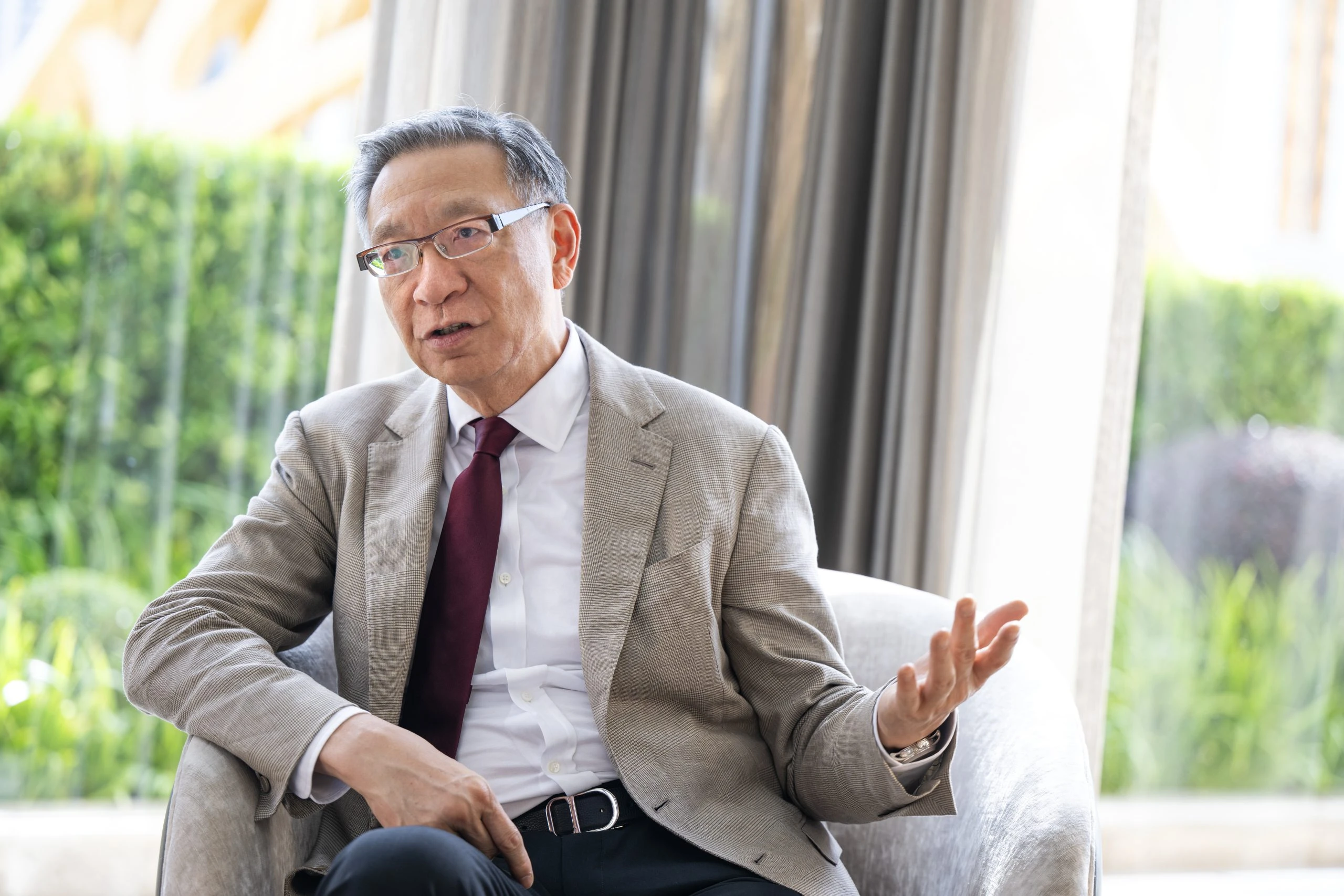
Galaxy Entertainment Group chairman Francis Lui suggests satisfying both goals through “parallel strategy,” developing premium gaming and non-gaming amenities concurrently along separate tracks. Not just talking the talk, Lui leads Galaxy’s parallel walk, as always, closely in step with Macau’s governing authorities.
“The vision in Macau is that it has to be sustainable, and you don’t want to bet on just pure gaming,” Lui says in an exclusive interview with iGaming Business. Lui acknowledges Macau’s extraordinary privilege as China’s only place for legal casinos, noting that Macau’s mainland market “under-penetration is humongous.” In return for the gaming privilege, “We try to understand and try to support what the government wants us to do.”
Widely seen as the leading voice in Macau’s casino industry, Lui reads messages from the authorities as, “Look, guys, you can continue to evolve and earn your money, but at the same time, there’s some social responsibility, economic values that you have to create.”
Third phase the charm
Lui believes Galaxy Macau Phase 3 “represents the government vision as to what they want Macau to be. We sort of sensed it a few years back, and then we decided that Phase 3 is going to match that vision.
“So we decided to build the MICE and arena, and the key is that we do want to do it top notch. Because at the time, we’re also thinking about regional competition, that we have to do something special, where we would be able to compete with regional cities like Hong Kong, Singapore. So this is why we didn’t spare any dime at all in making sure that our MICE facility is state of the art.
“We did something that everybody could be proud of, and I feel proud because I feel we are a major contributor to making, in the last three years after coming out from Covid, Macau a city of entertainment and city of sports.”
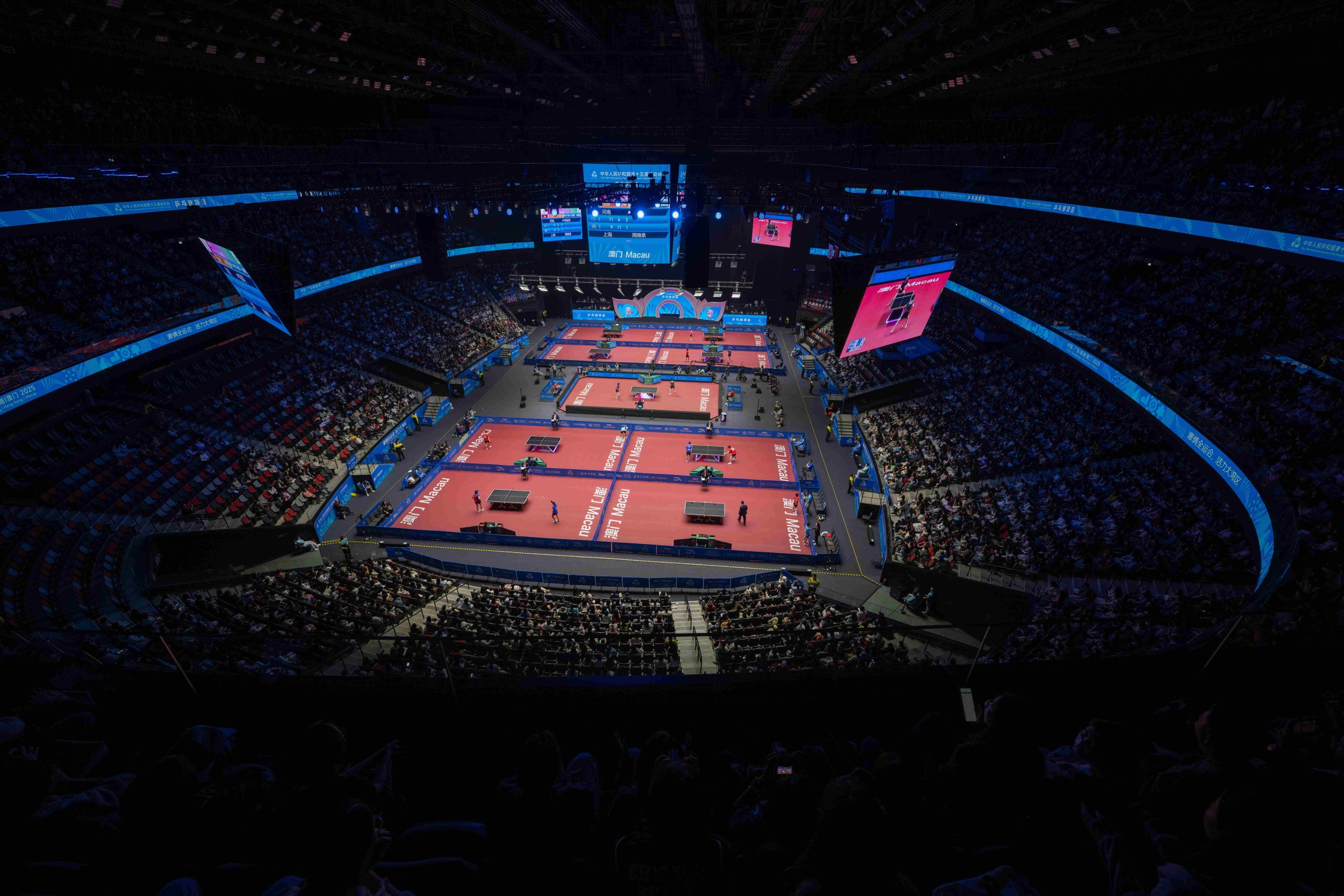
Opened in 2023, Galaxy International Convention Center and Galaxy Arena can combine to create 10,000 square meters (108,000 square feet) of pillar-free ground floor space amid the latest event and broadcast technology. Seating 16,000 with eight luxury suites, Galaxy Arena is Macau’s largest indoor venue. A 715 key Andaz hotel tops the complex.
Luxury track
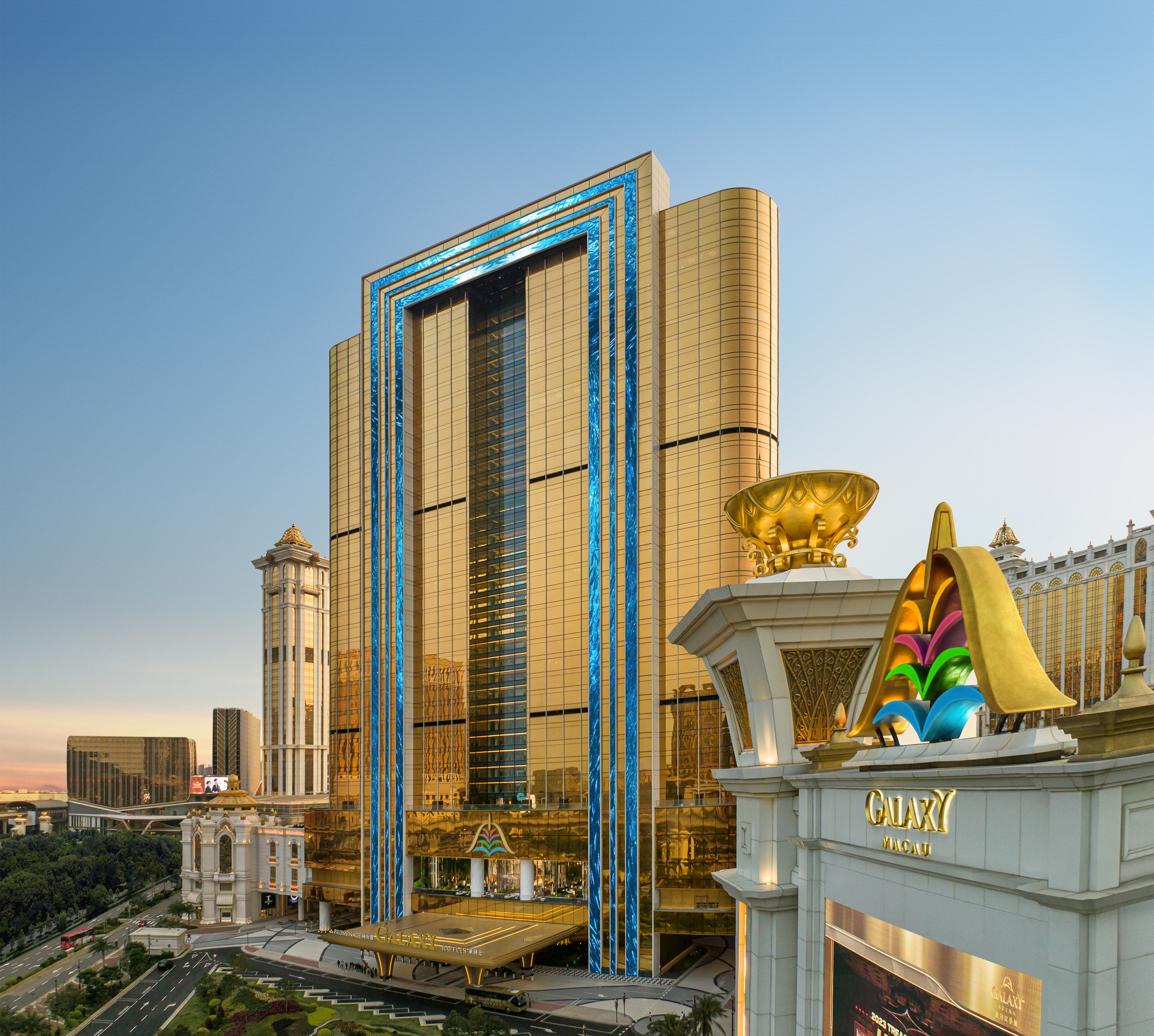
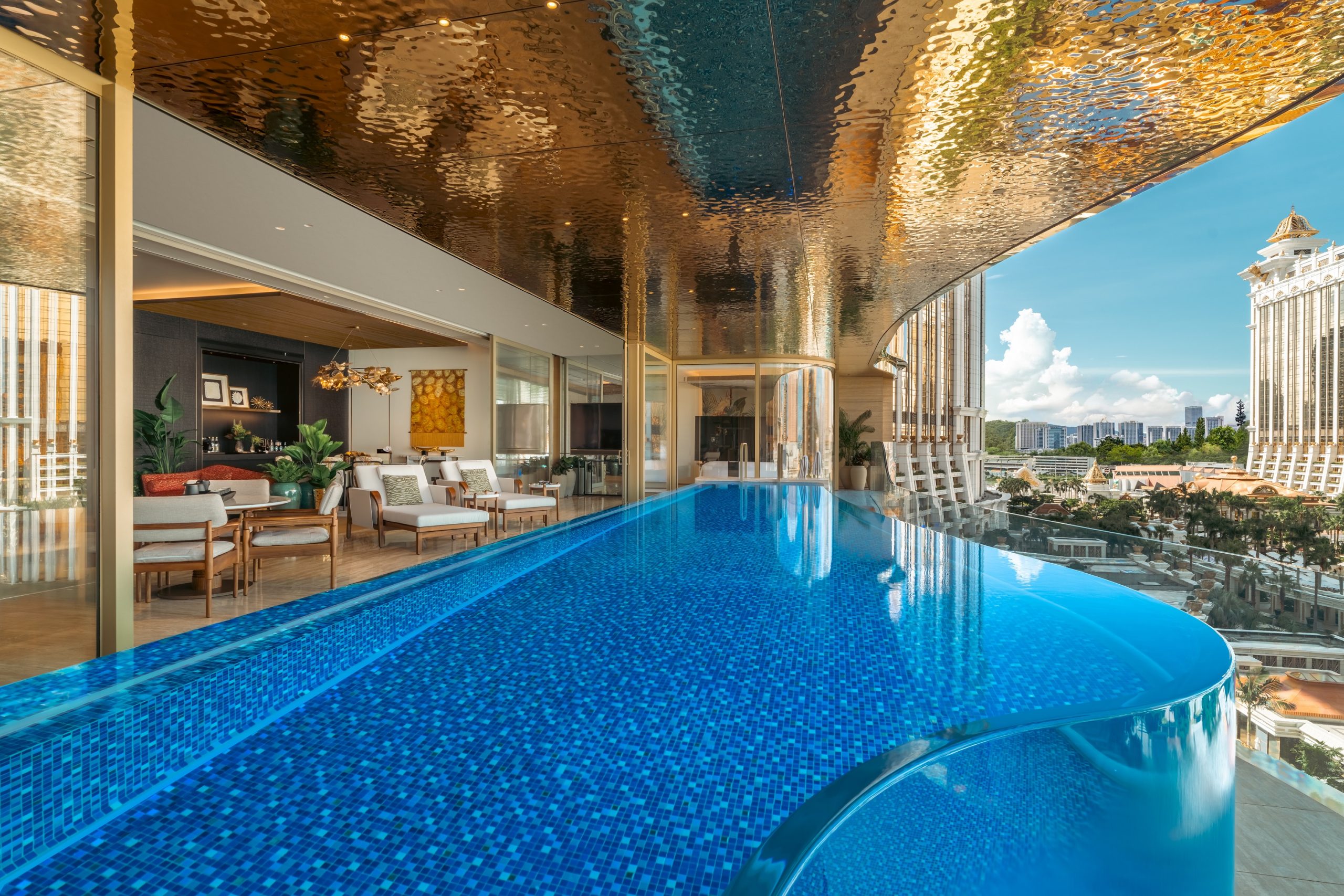
“Along with the MICE and the arena, we built two other premium hotels, Raffles and Capella, because we also felt the customer base has now changed to a more multi-experiential demand,” Lui says. “This is why we felt Capella and Raffles is the model for the next phase development. And since then, you see a lot more other people now following, building up premium hotel rooms. So we like to say that we were pioneer. So from VIP to mass to premium mass, we see diversification.”
Since Macau’s high end guests favoring Raffles and Capella inevitably gamble, each hotel has a premium gaming area with private salons. Exclusive non-gaming amenities include top shelf F&B, bowling, golf simulator, spa, barbershop, 8-seat movie theater and karaoke.
“It’s a very different business model that we’re evolving into. In 2019, the business model was a less regulated model, more a VIP-centric model. Now we are moving into a more sustainable business model,” Lui says. “We are equally happy that, as we are moving from the 2019 model, we are still keeping our profit more or less the same as we were making. In the meantime, we are supporting the vision of the government. I still feel this is the right model.”
With Phase 3 additions, Galaxy Macau offers 5,000 guest rooms across nine brands, dozens of food and beverages choices, a massive gaming floor with hundreds of tables and slot machines, the Grand Resort Deck featuring the world’s largest rooftop wave pool and Galaxy Promenade, a 100,000 square meter shopping mall with 200-plus outlets. Galaxy habitually runs first or second (to Sands China) in Macau’s gaming and profit tables. Galaxy’s group EBITDA exceeded US$1.8 billion last year, compared with US$2.1 billion in 2019.
Evolution in four phases
Galaxy’s parallel strategy continues with Phase 4, scheduled to open next year, introducing more new-to-Macau luxury hotel brands, a 5,000 seat theater, extensive retail and F&B, its own resort deck and a casino. With Phase 4, Lui estimates total Galaxy Macau capital investment reaching HK$100 billion (US$12.75 billion).
“From day one, we decided we wanted to build out our piece of land in four phases [because] we felt the clientele was evolving very fast,” Lui says. “I feel that we did the right thing by carving out four phases, so that each couple of years, we were able to gauge what consumer evolution [and] preference is going to be, and do something new.”
In Phase 4, “Initially, we were thinking about building 2,000-2,500 hotel rooms. Since then, because we read the market and it is more premium centric, now we’re able to reduce the number of rooms to only 1,500.”
Lui acknowledges that fewer, more luxurious accommodations runs counter to the government goal of making Macau a world center for tourism and leisure that’s less reliant on gaming. “This is why it should be a parallel strategy, where at one time we should be looking after our premium players, because we are competing with regional cities like Singapore and Japan [MGM Osaka, a US$9 billion IR, is expected to open by 2031]. At the same time, we should go ahead and have government support to build more hotel rooms for family and business travelers.
Space race
“If you can find the space in Macau, great. But there’s a great piece of land sitting in Hengqin where the land cost is cheaper, the opex will be cheaper, the labor cost will be cheaper. All we have to do is make sure that logistics and infrastructure are ready when it’s done.”
An island three times the size of Macau, Hengqin is a special economic zone in Zhuhai created to foster economic development on both sides of the border. Macau’s light rail crosses the narrow channel from Cotai to Hengqin, but visa restrictions forbid multiple entries into Macau by mainland visitors, with a recent exception for group tour guests.
Lui revealed that Galaxy no longer holds an option on land in Hengqin where it had proposed creating a seaside resort. But he remains bullish on the island.
“We should take a look at Hengqin because when you talk about from 40 million to 50 million visitation, man, you are talking about a lot of hotel rooms to make sure they stay with us. You don’t want people to [sightsee] with us and go back to Zhuhai the same night, right? You want to hold on to them.
“I feel that if Hengqin becomes more seamlessly connected to Macau on a 24 hour basis, allowing visitors to stay in Hengqin [and] to be able to come to Macau multiple times on a 24 hour basis, then that’s the future that we want to see, a parallel strategy where we will look after the premium top customer in Macau, but then again, we build sufficient world class attractions and more [lower priced] hotels such that we would be able to retain both categories of customers.”
Must-see for all
As for must-see attractions, Lui has done personal research. “I’ve just been recently to Vegas and to London. There were two things that I went to see when I was over there: The Sphere and the ABBA show in London. Those are two entertainment [attractions] that, using soft technology, are able to come up with an experience that every customer wants to pay and come to take a look. I did, right? The tickets were not cheap. I paid maybe US$65 just to see a movie inside The Sphere. But it was phenomenal because you have very different sensation when you go in there.
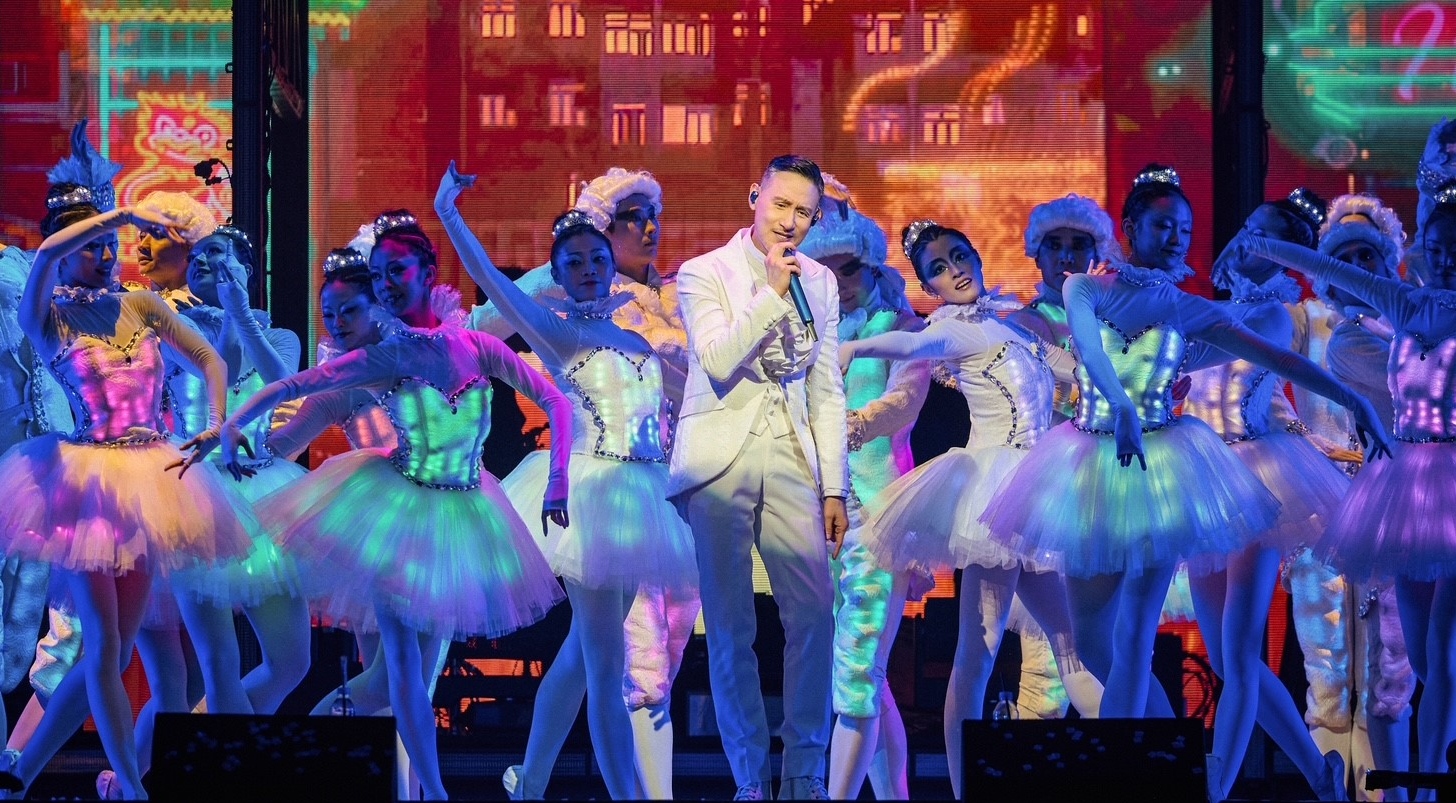
“Macau, if we want to go to the next phase of development, we have to make sure that our next generation entertainment facilities embrace technology.” Lui has “an open mind” on whether concessionaires should band together with the government to create such must-see attractions using concessionaires’ collective US$13.6 billion commitment to non-gaming investments. By whatever means, with another 20 million visitors projected within a decade, Lui says, “You need more hotels, and then you need a lot more entertainment facilities to make sure that continues to be sustainable.”
Opportunities in Macau and beyond
Following Phase 4, Lui sees opportunities for Galaxy in Macau and beyond. It is currently renovating StarWorld on the peninsula, converting its focus from VIP to mass market.
“We will definitely be looking at Broadway because it’s a property which we felt is underutilized,” Lui says of the former Grand Waldo, adjacent to Galaxy Macau, acquired in 2013 and refashioned into a hotel and Macau food street as part of Phase 2 in 2015. Transforming Broadway “very much depends on the market at the time. We are not going to make a decision today. But then again, we continue to remember that we have a Broadway.”
Lui reaffirms Galaxy’s interest in Japan, scheduled to reopen bidding on two integrated resort licenses in September 2027, and Thailand, where the current government has ruled out casino development following a 2024-25 potential licensing frenzy.
The UAE “could be a very great destination for an integrated resort,” Lui says. Galaxy’s competitive advantage in the Middle East? “We are one of the best developers in the world to build top notch integrated resorts.”
But Macau remains the center of Galaxy’s parallel universe. “We believe in the China story. We believe in the Macau story. And this is why we don’t have any hesitation in investing in Macau long term. There’s not too many countries, there’s not too many cities that have all the ingredients to build fully world class integrated resorts.”
Galaxy’s family constellation
Chairman Lui sees ownership, management as ‘different responsibilities’
In December 2024, Francis Lui became chairman of Galaxy Entertainment Group, promoted from deputy chairman after his father, founder Lui Che Woo died at age 95.
“My work now as chairman is more about getting involved in decisions of more high level strategy,” Lui says. “Right now the world is more unstable than before, so there’s a lot to talk about, just to make sure that the family and the group would be able to steer through all these unknowns.”
Galaxy retains its founding family flavor. Lui’s sisters Paddy Tang Lui Wai Yu and Eileen Lui Wai Ling sit on Galaxy’s board, the latter also serving as group director of human resources and administration. (Francis Lui chairs family property development arm K-Wah International, run by siblings Paddy and Alexander Lui Yiu Wah.)
The Lui family controls 54% of Galaxy but doesn’t necessarily need to operate the group, Lui believes. “Ownership and management are two different responsibilities. What matters is having the right people, with the right values, capability and passion, to take the organization forward. That principle applies to everyone, including my own children – I have always encouraged them to choose their own path and earn their responsibilities through merit.”
Gen next
“My philosophy has always been that I should not push my children into the family business if they do not want to be part of it,” Lui says.
His son Andrew Nicholas Lui has “quietly” worked at Galaxy for a decade, currently as head of project development. “Many of the things you see around you today are no longer driven by me directly, but by Andrew. By giving them the flexibility to choose their own path, they develop a stronger sense of ownership and commitment.”
Lui’s daughter Joanna Lui Hickox, instrumental in creating Galaxy Phase 2 innovative cafe Cha Bei, “has three small children, so she’s taking a time out before she comes back.”
On whether he views Galaxy chairman as a job for life, Lui, age 70, responds, “I’ve never viewed this as a job – it’s a passion.” He says, “Today, my passion for Galaxy remains as strong as ever. It still excites me, challenges me, and drives me every day, and I remain energized by the opportunities ahead and the chance to continue contributing to Galaxy’s growth and Macau’s future.” – Muhammad Cohen
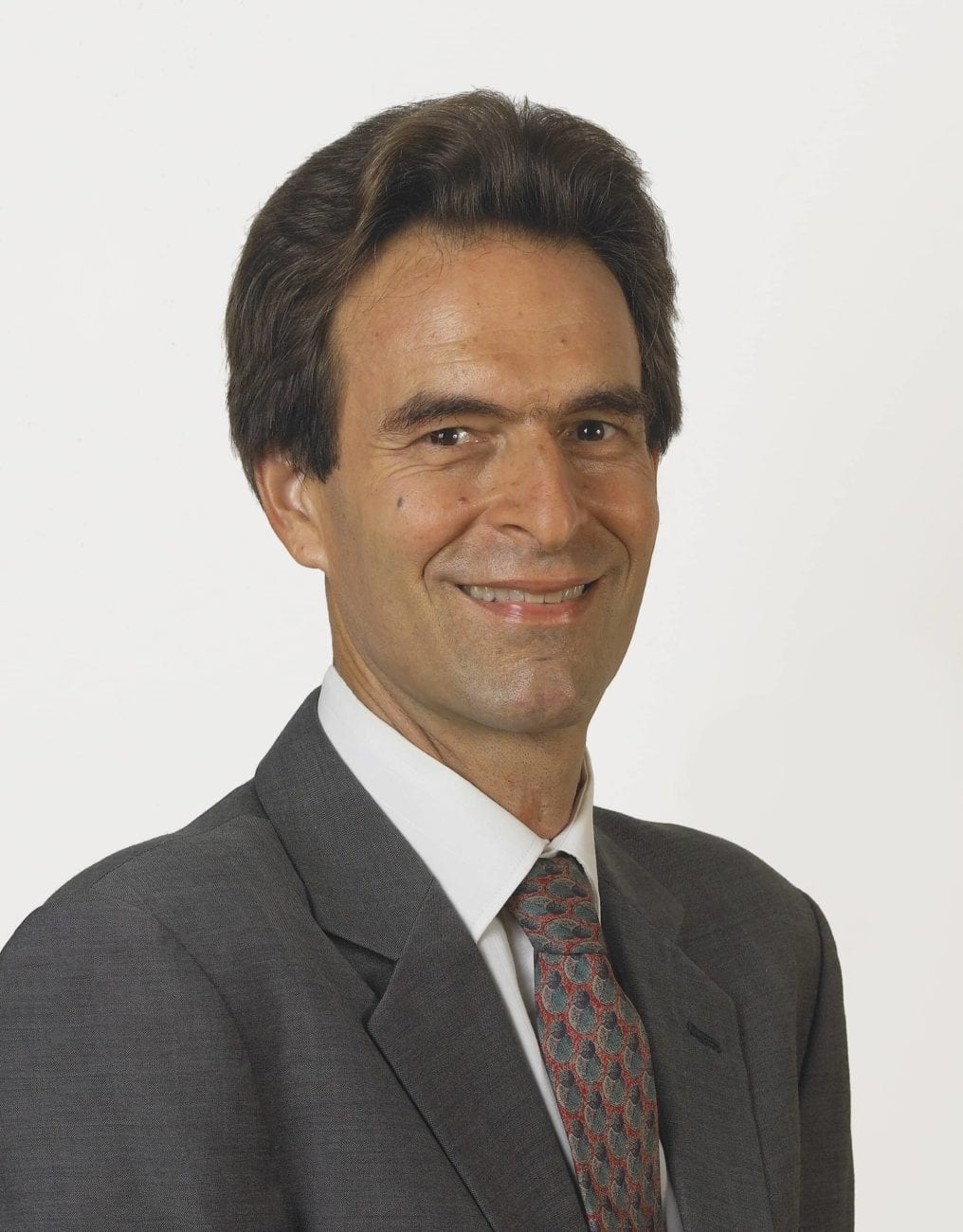
Muhammad Cohen is a former US diplomat and current iGB Asia editor at large. He has covered the casino business in Asia since 2006, most recently for Forbes, and wrote Hong Kong On Air, a novel set during the 1997 handover about TV news, love, betrayal, high finance and cheap lingerie.