
Tech Race Summit: Can CTOs really trust AI in production?
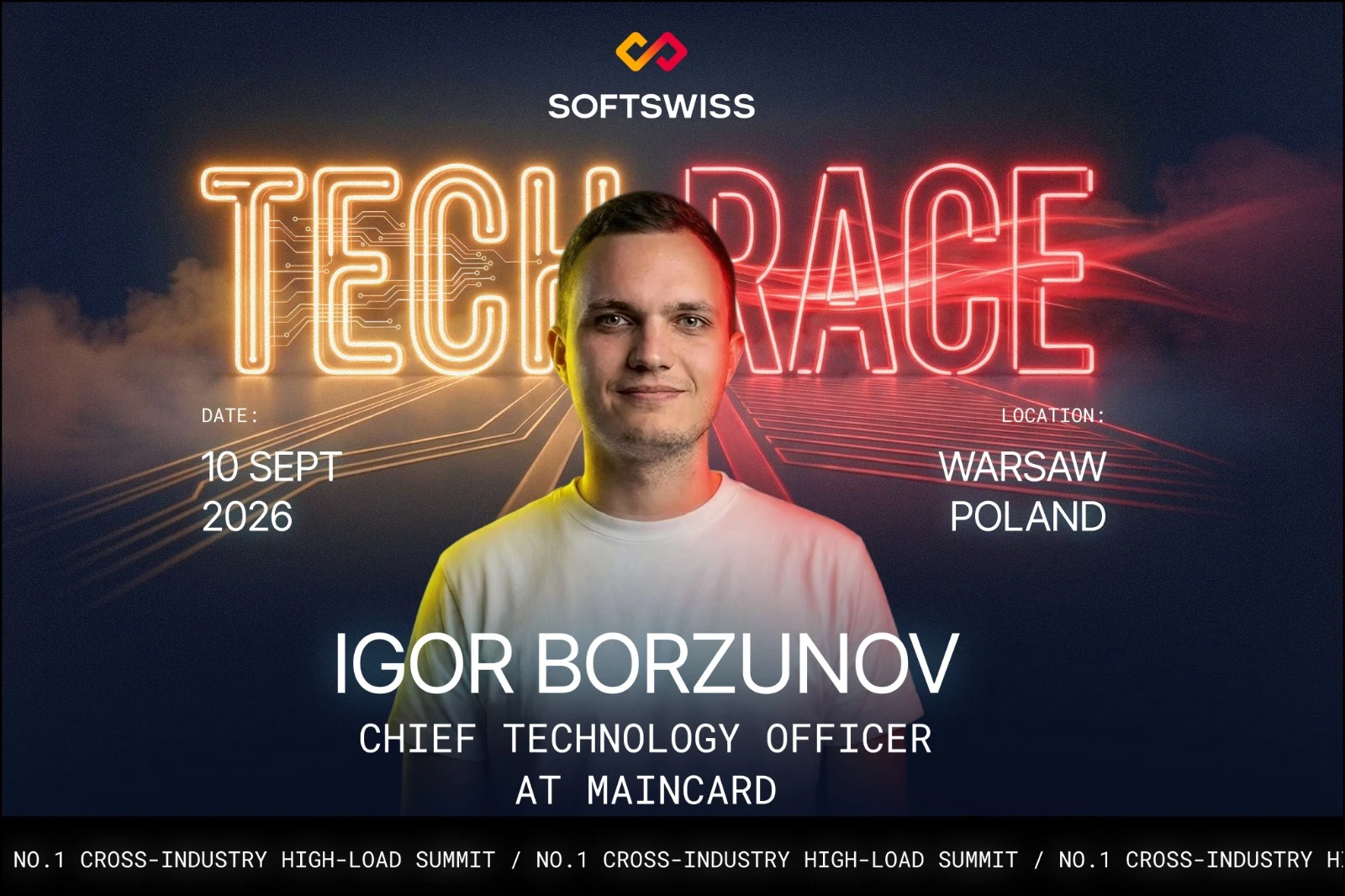
Igor Borzunov has spent over 10 years building high-load enterprise systems. Today, he is CTO at Maincard – a no-code platform that lets operators launch a branded iGaming site in under 30 minutes.
At Tech Race Summit on 10 September in Warsaw, Igor will present “From 3am pages to 30 seconds: Building an autonomous AI ops agent” – a session on what it actually takes to give an AI agent access to live production environments.
We spoke with Igor about AI in production, the real cost of scaling operations and why AI agent autonomy is a dial, not a switch.
Learn more about Tech Race Summit.
1. Engineering leaders are debating how AI is changing software development. Do you think we’re currently overestimating AI’s capabilities, or underestimating how quickly it will reshape engineering teams?
Honestly, both at once.
We overestimate what AI can do unsupervised. Every demo looks magical, but when you put it in front of real production, it confidently does the wrong thing. Our agent works well precisely because we spent most of our effort on the boring parts: guardrails, approval tiers and knowing when to stop and ask a human.
And at the same time, we badly underestimate the speed of the team change. A year ago, “give an AI access to production” sounded reckless at best. Today, it triages our night incidents.
That gap is opening faster than most leaders think. The engineers who learn to build and supervise these systems will simply outrun the ones who treat AI as a fancier autocomplete.
2. Maincard powers more than 40 casino brands from a single platform. What’s one lesson about scaling technology that you think the wider iGaming industry still underestimates?
That the hard part isn’t scaling the code, it’s scaling the operations. Making one codebase serve dozens of brands is a solved engineering problem: shared core, per-brand configuration, stable continuous integration and delivery.
What nobody warns you about is that every new brand multiplies the operational surface. More payment routes, more provider integrations, more things that can quietly break at 3am. Your platform scales linearly, and your on-call pain scales worse than that.
So my lesson is: invest in operations tooling as early and as seriously as you invest in features. We got 40+ brands running with an ops team of about 20 people, and that’s only possible because we treat operations as an engineering problem, not as a cost centre you staff with more bodies.
3. You often say that a 3am production incident isn’t necessarily a sign of bad engineering. That sounds counterintuitive. What do most companies get wrong about operational excellence?
They optimise for the wrong number. Most companies chase incident count: zero incidents, green dashboards, everyone happy. But if you’re integrating dozens of external providers who change behaviour without warning, incidents are just physics. A provider tweaks a webhook format on a Friday night, and no test suite in the world saves you.
The metric that actually matters is time to diagnosis. When resolving a failure takes 30 seconds with proper tooling instead of 25 minutes manually, you turn a potential multi-brand crisis into a non-event.
The second thing companies get wrong is blame. If every night incident turns into “whose fault is this?”, people start hiding problems instead of fixing the system. The fix lies in tooling, not in assigning blame.
4. The iGaming industry has become incredibly good at launching new brands. In your view, has launching become too easy, and has operating those brands become the real competitive advantage?
Yes, and I say that as someone who made launching easy. Our constructor turned a casino launch from a months-long project into routine. But that’s exactly the point: when everyone can launch, launching stops being an advantage. The market is full of brands that went live fast and then slowly rot, because nobody budgeted for keeping them healthy. Payments degrade, bonuses misfire, players churn.
Operating well is much harder to copy than launching. A competitor can clone your landing page in a week. What they can’t clone is the discipline and tooling that keeps 40+ brands healthy around the clock with a small team.
So yes, the competitive advantage has moved from “can you launch?” to “can you run it well with good uptime?”.
5. You’ve given AI visibility into live production, but not unlimited authority. Was the hardest challenge technical, organisational, or simply convincing people to trust the system?
Trust, without question. The technical part was the fast part: wiring an agent into MySQL, Kubernetes, Grafana and the rest is weeks of work for a good team.
The real design problem was human. That’s why our approval model has tiers: reading is free, notifications are logged, restarting a pod requires one approval and anything that touches money requires two humans to sign off. Half of that exists for safety, and, honestly, the other half exists so that people can watch the agent work and gradually relax.
We started read-only. The agent could only look and explain. Once engineers saw it correctly diagnose incidents they’d have spent half an hour on, they started asking us to let it do more. This way, trust was earned incident by incident. But we still have one hard rule: the agent has to show its reasoning.
6. Looking beyond Maincard, what technology shift do you believe will have the biggest impact on online casinos over the next three to five years and why?
I’d say AI moving from the chat window into the machinery. Right now, most of the industry uses AI as a support chatbot or a marketing copy generator, which is the least interesting application imaginable.
The real shift is agents operating inside the platform: monitoring payments, detecting AML anomalies, tuning infrastructure, and handling the operational load that today overwhelms human teams. In three to five years, I expect the gap between operators to be defined by this. Same games, same providers, similar bonuses, but one company runs 40 brands with 20 people and reacts in seconds, while another needs 200 people and reacts in hours.
Regulation will push in the same direction: compliance is pattern-matching at scale, and machines are simply better at watching everything all the time.
7. The iGaming industry is often seen as a fast follower rather than a technology pioneer. Looking outside the sector, which company or industry do you think iGaming should be learning from today, and what are we still missing?
Fintech, without hesitation – that’s where I started as a tech specialist. They live under the same conditions we do: real money, heavy regulation, zero tolerance for downtime. And they answered that pressure by turning reliability into an engineering discipline: systems reliability practices, error budgets, blameless postmortems, observability as a first-class product.
iGaming mostly answered it by hiring bigger support teams. What we’re still missing is the mindset that operations is a product you build, not a shift you staff.
The other lesson from big tech is platform thinking: build the boring shared core once, properly, and let brands be thin layers on top. That’s what our constructor is. It’s not a new idea, we borrowed it shamelessly and it works.
8. At Tech Race Summit you’ll be discussing what happens when AI moves beyond copilots and starts operating inside production environments. If attendees remember just one idea from your session, what do you hope it will be?
That autonomy is a dial, not a switch. The debate always gets framed as “do you trust AI in production, yes or no?”, and that framing is why most companies are stuck.
You don’t hand an agent the keys to everything on day one, and you don’t lock it in a chat window forever either. You give it tiered access: start with read-only diagnosis, let it earn the right to act, keep humans on the actions that matter, always two of them where money moves. Build it that way, and the question stops being scary.
If people leave my session and stop asking “should we let AI into production?” and start asking “which tier do we start at?”, the talk did its job.
Ready to hear more from Igor and the rest of the Tech Race speaker lineup? Buy your tickets at techracesummit.com.