
How BGaming made celebrity endorsement count at the World Cup
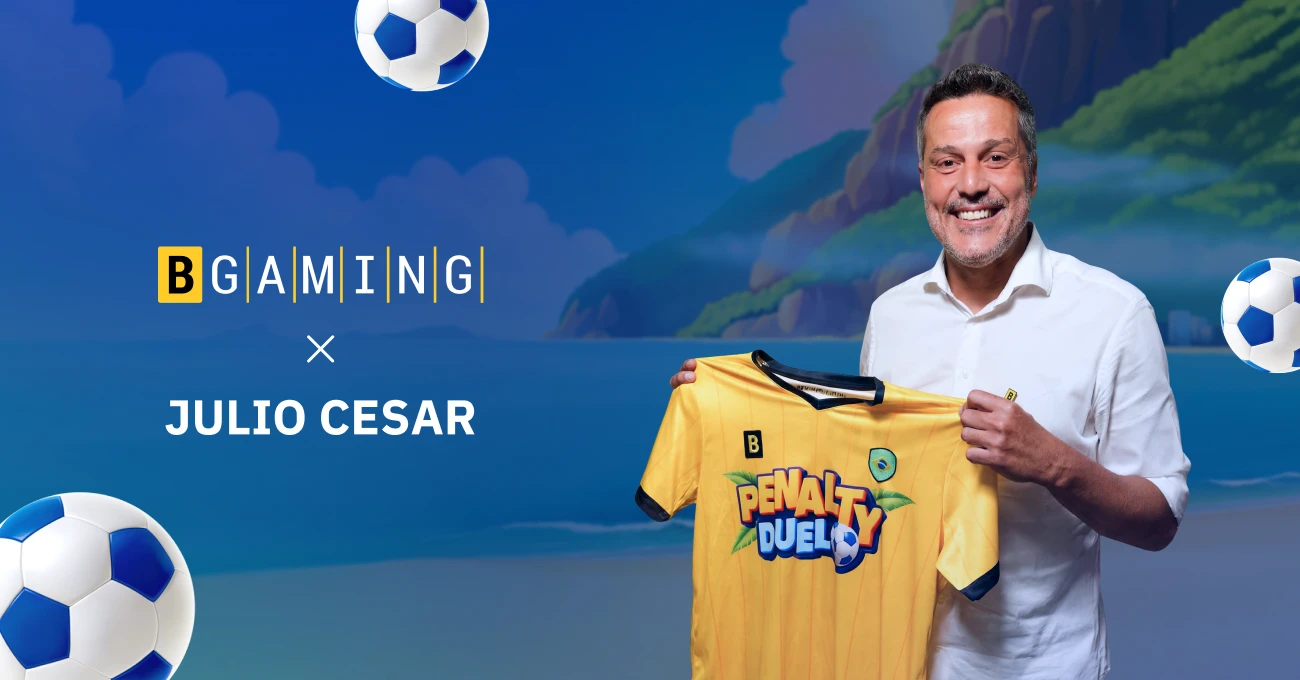
The FIFA World Cup presents casino suppliers with an enticing opportunity and a sizeable problem. Football commands enormous attention, but the industry responds with a flood of themed releases competing for the same players and lobby positions.
Attaching a famous name to a game offers one way to stand out. Yet celebrity endorsement is no substitute for a strong product. If the partnership feels forced or the personality has little connection with the gameplay, the audience may see little beyond an expensive marketing exercise.
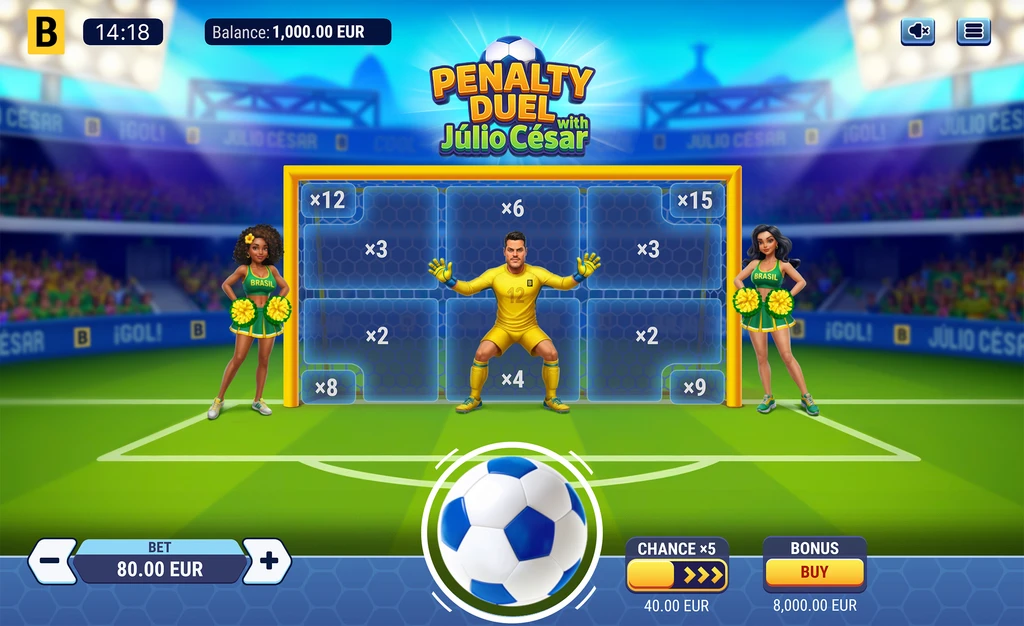
BGaming’s approach to Penalty Duel with Júlio César provides a case study in how the strategy can work. The former Brazil goalkeeper – who won 87 caps and was selected for three World Cups, as well as winning the UEFA Champions League with Inter Milan in 2010 – was not simply recruited to lend his name to the release and then wash his famously safe hands of the project. The shot-stopper renowned for his prowess in shoot-outs became an integral part of the game itself, with the player having to beat him from the spot.
For Julia Alekseeva, chief product officer at BGaming, that natural connection was fundamental.
“We never wanted to take a celebrity and simply build some marketing around their name,” she says. “We wanted the person to make sense inside the game.”
Building for the tournament
BGaming began planning its football portfolio well before the 2026 World Cup in North America. Rather than placing a football skin over a single existing format, it developed products intended to appeal to different player preferences.
Football Plinko delivers a casual experience, Lucky Pack 2026 Cup draws on the appeal of opening and collecting packs, while Ultras concentrates on supporter culture. Penalty Duel was designed around short sessions, simple mechanics and almost no learning curve.
The game therefore had a clear role before a celebrity became involved. Once BGaming considered bringing a football personality into the product, the goalkeeper’s central position in the mechanic made Penalty Duel the logical choice.

“A familiar celebrity gives you an immediate connection with the player,” Alekseeva explains. “You see someone you already know and like, and naturally you want to try the game and interact with that person in a way you normally cannot.
“In our case, you can actually take a penalty against Júlio César. That is a very simple but powerful hook.”
Júlio César also provided the local relevance BGaming wanted as it targeted Brazil and the wider Latin American market. His profile delivered recognition, while his career contesting precisely the kind of high-pressure moments recreated by the game gave the partnership credibility.
“He is also extremely recognisable in Brazil and has a strong reputation among football fans,” Alekseeva says. “So we had the three things we needed: cultural relevance, credibility and a very natural connection with the mechanic.”
Turning recognition into involvement
Authenticity also depends on what happens beyond the game. Júlio César was involved in discussions about how his character, appearance and recognisable attributes would be represented, before taking an active role in the campaign.
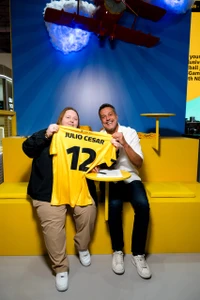
BGaming announced the partnership at BiS SiGMA South America in São Paulo. An autograph and photograph session attracted more than 200 attendees, but Alekseeva says his wider engagement made the appearance particularly valuable.
“He didn’t simply come in for the signing and leave,” she says. “He spent time at the stand, interacted with visitors and partners, and represented BGaming alongside our team. That gave the partnership a completely different level of authenticity.”
The campaign subsequently incorporated PR, social and video content, streamer activity and another wave of communication around the World Cup.
“It was much broader than a normal game launch because we were working with three things at the same time: a product, a personality and a major sporting event,” Alekseeva explains. “Product, marketing and commercial teams had to coordinate much earlier than they would for a standard release.”
Localisation beyond language
Júlio César also shows how localisation can reach further than translated copy or adapted artwork. In Brazil, his relevance was already understood by players, operators and marketers.
That helped BGaming secure an exclusive launch with Betano, giving Penalty Duel prominent initial exposure rather than leaving it to fight for attention as one more addition to a crowded lobby. A further connection emerged through bet365, for which Júlio César is also a Brazilian brand ambassador.
“If you find the right local connection, it can work simultaneously on the player, marketing and operator levels,” Alekseeva says.
“A celebrity will attract attention, but that attention will disappear quickly if the game itself isn’t good.”
The Betano agreement illustrates the importance of choosing the right distribution partner. Exclusivity has limited value without an operator capable of turning it into visibility. With sufficient scale and market relevance, however, the arrangement gives both parties a reason to support a release more strongly.
The resulting performance suggests the combined approach worked. According to Blask’s report on football-themed games during the World Cup, Penalty Duel’s gross gaming revenue increased by 163% against its performance outside the peak tournament window, while bet count rose by 150%.
Blask also reported that the title entered the top five of Betano’s main casino lobby shortly after release. It climbed from 135th to seventh in the operator’s Crash category and subsequently maintained a top-10 position.
Its reach extended beyond one operator. Penalty Duel ranked seventh among football-themed titles globally by brand count in July, appearing with 262 brands and in 69 lobbies. BGaming’s Lucky Pack 2026 Cup placed 10th, making BGaming the only provider with two titles in the report’s global top 10.
Opening a door for the wider portfolio
The value of the partnership was not confined to Penalty Duel’s direct results. BGaming says the release generated enquiries from casino brands that had previously displayed limited interest in its standard portfolio.
That multiplier effect may be the strongest commercial argument for a carefully constructed celebrity collaboration. A distinctive product can begin a conversation that the provider’s existing releases had failed to open.
“An operator may initially come to you because of Júlio César, but then they discover your other casual games, your slots and the rest of the portfolio,” Alekseeva says. “The commercial value of a celebrity collaboration shouldn’t be measured only by the GGR of that particular title.”
Celebrity endorsement cannot manufacture that wider interest indefinitely. Recognition wins attention, but the game, campaign and portfolio must then retain it.
Penalty Duel succeeded because its constituent parts supported one another. The personality belonged naturally within the mechanic, the format was immediately accessible, the partner carried genuine cultural relevance and the exclusive operator launch provided visibility at the right moment.
For BGaming, the lesson is not that every sporting release requires a famous ambassador. It is that when suppliers use one, the partnership must begin with the product rather than the promotional photograph.
“A celebrity will attract attention, but that attention will disappear quickly if the game itself isn’t good,” Alekseeva concludes. “Don’t add a celebrity just because you can. The partnership has to make the game itself stronger.”