
No luck, just strategy: How Gr8 Tech partnered with José Mourinho

In iGaming, luck is an undeniable part of the player experience. But for operators, luck is a dangerous business model. You cannot build sustainable growth on a good month, a major tournament, or a traffic spike that happens to convert.
Take this year’s World Cup. It is the largest edition in history – 48 teams, 104 matches, an expected global betting turnover approaching $150bn, and an audience FIFA projects at over five billion people. We are preparing for it with everything we have, and so are our partners.
But the operators who treat the tournament as a windfall rather than a stress test will spend the months after it wondering where the players went. A World Cup brings traffic. Only a system converts that traffic into players who stay.
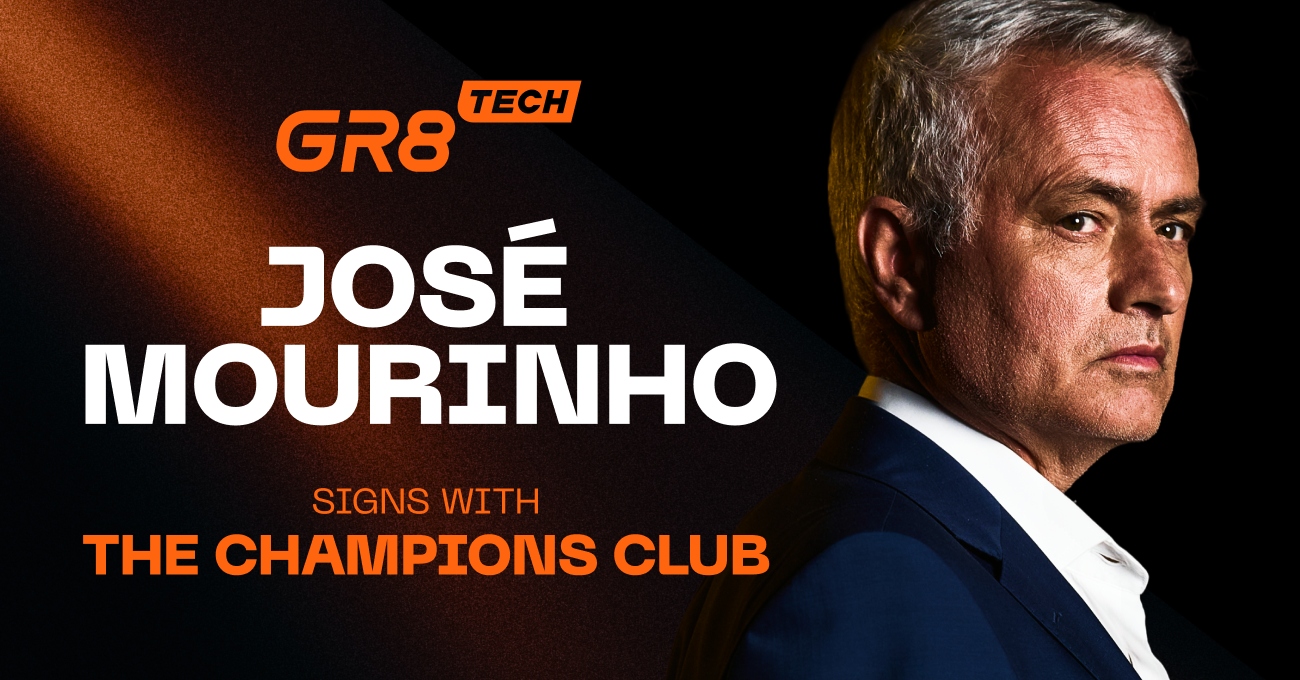
The importance of systems, preparation, and a consistent approach, even when it feels impossibly dull next to the thrill of riding your luck, is something we talk to our partners about constantly. And there was no better way to make that idea stick than through our recently launched partnership with José Mourinho.
Football management and B2B iGaming may look like different worlds, but sustained success in both comes from the same place: preparation, discipline, and execution under pressure. The partnership is built on a shared belief that champions do not rely on luck; they build systems that make performance repeatable.
And if anyone thinks such discipline sounds boring, Mourinho has won 25 trophies by making preparation his competitive edge. No one has ever called him dull.
So, what can iGaming leaders learn from GR8 Tech and Mourinho?
Know your environment
Mourinho’s record was built across very different football environments. Porto, Chelsea, Inter, Real Madrid, Manchester United and Roma all required different approaches, teams and diverse ways to win. His results point to a method: understand the environment, build the system around it, and make performance repeatable under pressure.
For operators, it’s a lesson that a strategy which works in one market cannot simply be copied into another. MENA is not LatAm. CEE is not Western Europe. A sportsbook-first audience behaves differently from a casino-led audience.
Payment preferences, content expectations, retention mechanics, compliance requirements and user journeys all change by market. Just like Mourinho, winning operators build systems that can adapt.
The operators who treat localisation as a translation exercise will consistently underperform versus those who build their entire product experience around local demand. That includes which sports appear in which order, which payment methods are available at registration, and how risk thresholds are configured for different player segments.
From our experience with geo-specific presets, operators can go live in a new market up to 8x faster and perform at least twice as well as the competition, precisely because this local groundwork is already done before they arrive.
Know your breaking point
Mourinho’s teams were famous for performing in high-pressure moments. Once again, that’s all about preparation. His squads drilled set pieces, defensive transitions and game-state scenarios until execution under pressure became routine.
For operators, peak moments expose everything.
Can the platform handle a million bet settlements per minute? Can it maintain 99.99% uptime when traffic spikes by an order of magnitude? Can payments, risk management, odds and bet placement keep running without manual interventions? All these questions are the drills that should be running constantly so that when the World Cup comes, there are no surprises.
Preparation means stress testing under real conditions, not average ones. It means knowing where the system will fail before a live audience finds out for you.
Know your player
Mourinho was known for understanding what made each individual in his squad tick: who needed pushing, who needed protecting, who performed better with responsibility, and who performed better without it. Managing 25 players means managing 25 different problems.
The operator equivalent is knowing your audience not just at the cultural level, but at the individual level – as deeply as the platform allows.
Segmentation and AI-driven predictive analytics give operators the ability to move from broad demographics to precise behavioral profiles: which players are likely to churn, which respond to specific bonus mechanics, which increase activity after personalised recommendations.
It’s all in the data, but you must know how to work with the data. The deeper an operator is willing to see into player behaviour, the more precisely they can segment, the more effective their campaigns, and the longer their players stay.
The cost of hoping for the best
In football, people often call a last-minute goal lucky. In iGaming, people often call a strong month lucky. But both won’t lead to long-term success.
In mature Tier 1 markets, customer acquisition now costs between $250 and $650 per first-time depositor, with sports betting climbing past $800 during major events. The rates are more forgiving in the Tier 2 and Tier 3 markets, which are our and our partners’ main priorities – but even there, the direction is the same: acquisition costs are rising faster than most operators’ unit economics can absorb.
The most expensive players to acquire are often the most valuable ones. Industry estimates suggest, and our data back it up, that as few as 1-2% of players can account for more than half of an operator’s total revenue.
That makes retention the real leverage point. You spend heavily to acquire those VIPs, and then you lose them to a slow cash-out, a failed deposit during a live match, a platform outage at peak traffic, or just an unengaging player journey – things that were fully in your power to prevent.
The operator’s advantage is execution
The industry is competitive, fast-moving and unforgiving. Market windows open and close quickly, player attention is expensive, margins are under constant pressure, and regulation keeps evolving. In this environment, only systems create resilience.
The World Cup kicks off in June. By the time it does, the outcome for most operators is already determined – not by the tournament bracket, but by the platform they chose, the preparation they did and whether they built for pressure or hoped it wouldn’t come.
A system is what lets an operator know what to do on Monday morning: which market to adjust, which players to retain, which payments to fix and which margins to protect. Mourinho knew the result of a match was decided before kick-off. For operators, the principle is the same. Luck is part of the player experience. For operators, it should never be the strategy.
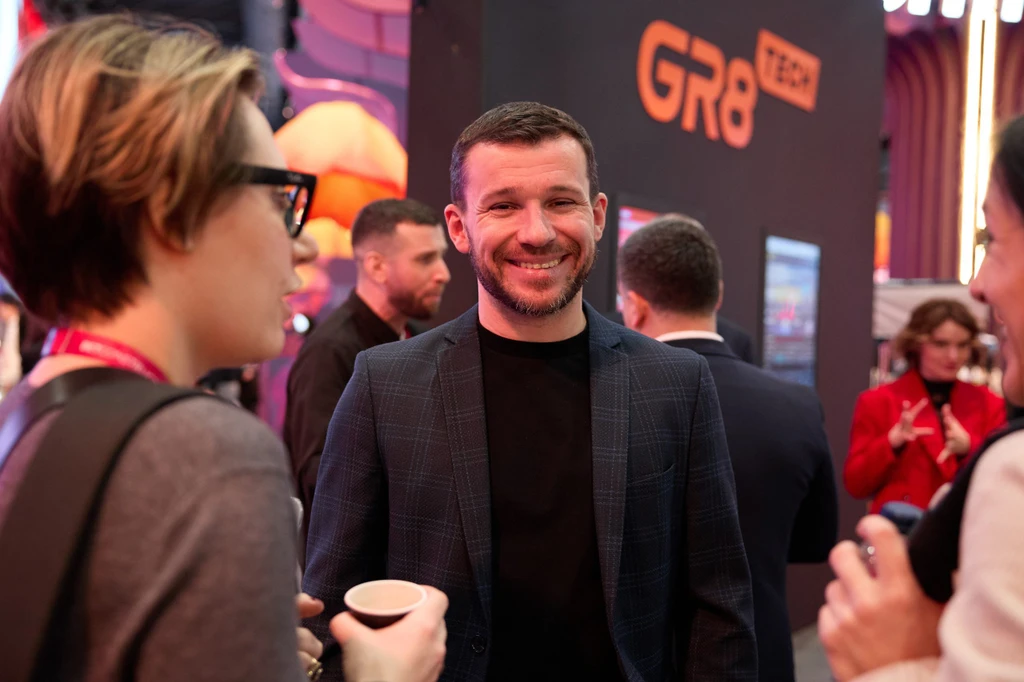
Oleksandr Feshchenko, CEO of GR8 Tech