
UK gambling industry urged to tackle reputation and champion career opportunities
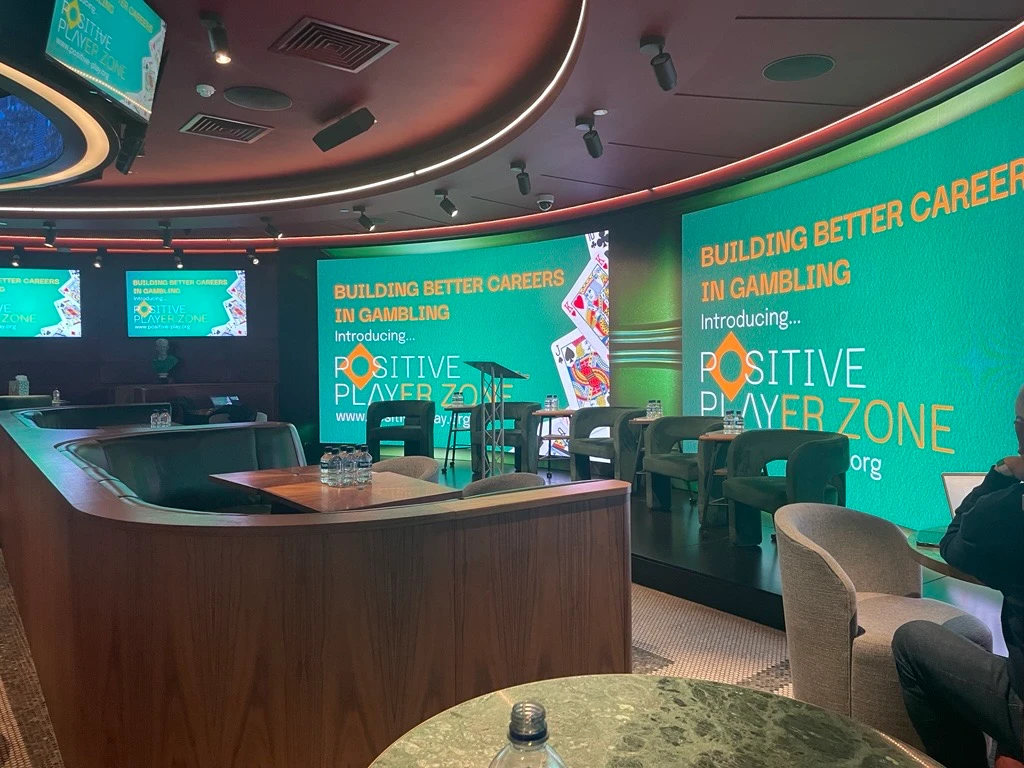
UK gambling industry representatives have called for greater investment in apprenticeships and a stronger public case for the sector’s contribution to employment.
Speaking at a panel discussion at the Hippodrome Casino on Wednesday, representatives from the Betting and Gaming Council (BGC), Bacta and the Gambling Business Group (GBG) warned that failure to address reputational concerns could leave businesses facing further government intervention.
The discussion was part of a wider Better Change initiative to promote the implementation of apprenticeships across the industry in the lead up to Safer Gambling Week.
Speakers said the sector needed to make a stronger case for its contribution to employment and local economies. They also acknowledged that the industry had not acted early enough to address some concerns.
Government need to better understand the industry
Robert Gibb, commercial executive director at Bacta, said land-based businesses were under particular pressure because they had limited ability to pass rising costs on to customers. He cited an increase in gaming duty for adult gaming centres (AGCs) and uncertainty over their treatment under business-rates relief, both of which were outlined within the 2026 Budget.
“Our stakes, our price to play, our revenue is fixed by the government,” Gibb said. “So we can’t pass that cost on.”
He said cost pressures could affect investment in staff, while pointing to apprenticeships as a way to develop skills across businesses of different sizes.
Gibb also argued that policymakers did not always understand the range of gambling and amusement businesses. Visits to venues, he said, could help address misconceptions.
“When you actually bring them in, you let them speak to the staff,” he said. “When you hear the passion from the staff and how the staff care about what they’re doing, the relationship the staff have with the customers, it actually does start to change their minds.”
Gibb also pointed out that lack of education in general around the industry from the government was also at fault
“I think it’s a real big educational piece in terms of the government. Sometimes I don’t think they quite understand all of the elements of our industry”.
‘Tell the public this is a career path for people’
Hannibal built on this sentiment, remarking that it was the industry reputation that was at play.
“When you listen to people like Dawn Butler talking about jobs in high street gaming premises are dead-day jobs, and no career paths, and all. There’s prejudice against the industry, and we are actually good at careers.”
Labour Dawn Butler MP is a key anti-gambling campaigner who most recently advocated for the eradication of ‘aim to permit’. The government announced earlier this year that it will repeal the established ‘aim to permit’ rule for betting shops and 24-hour slot machine arcades across Great Britain, removing a presumption in favour of granting permission for such venues.
AGCs in England that offer round-the-clock access to gambling machines will instead require planning approval.
Hannibal also went on to reiterate that an investment in the people of the industry was the best way forward to eradicate this negative reputation
“Apprenticeships are accessible to everyone … .if we can actually tell the public and tell the Dawn Butlers of this world, this is a career path for people…it sort of gives a better message to the public and improves our reputation as a whole industry.”
But emphasis was also put on the industry itself to clear its name. Hannibal said coverage often focused on people experiencing serious gambling harm rather than the wider customer base, while acknowledging that the sector needed to respond more confidently and with stronger evidence.
“We have to get better at that,” he said. “We have to talk with confidence, like you said, and get our facts better.”
‘History is our best teacher’
Peter Hannibal, chief executive of the Gambling Business Group, said the controversy over fixed-odds betting terminals (FOBTs) had damaged public perceptions of the industry. The maximum stake on the machines was reduced from £100 to £2 in 2019.
“In hindsight, history is our best teacher,” he said. “We should have done something ourselves about £100 stake machines in betting shops, and we didn’t. So somebody did it for us.”
Hannibal called for the industry to be more proactive, but warned that further intervention could have unintended consequences.
“We’ve got more regulation, more tax, and all those things that are hampering the industry,” he said. “It’s pushing some people away from the regulated market.”
Investment in apprenticeships
The speakers highlighted roles in compliance, data, technology and safer gambling as potential career paths. Jack Naisbitt, head of media and digital communications at the BGC, said the industry should do more to make those opportunities visible to school leavers and graduates.
“Working in this career is a career you can work your whole life,” he said, arguing that apprenticeships could turn informal training into recognised qualifications.
Naisbitt said BGC members had expanded their compliance and safer-gambling teams as regulation increased. He called for greater certainty from the Government, saying businesses needed confidence before making long-term commitments.
“If you give us a place where there’s some certainty and a bit of clear road ahead, we can look to invest in apprenticeships and young people,” he said.
Hannibal said gambling businesses could support employment and local economies if they operated in suitable conditions. “You can’t drive businesses off the high streets,” he said.
The wider picture
The discussion comes as the Chancellor’s 2026 budget outlined a rise in Machine Games Duty (MGD) by 5% to 25%. The chancellor claimed that this rise in duty would pay for greater support for high streets, including business rate relief for high street businesses.
In addition, UK gambling laws are now under wider scrutiny following the establishment of the Gambling Policy Commission (GPC), an organisation who claims it will re-evaluate the Gambling Act 2005.
The GPC will receive its seed funding from Derek Webb, former professional poker player and founder of the Campaign for Fairer Gambling. Webb was a key figure in the lobby for the FOBTs reduction.
The industry has hit back at the GPC’s establishment, calling it ‘bizarre’ and pointing out that there ‘seems to be no gambling industry representation’ in the GPC’s make-up.

Kathryn Evans
Kathryn covers bitesize breaking news with a primary focus on EMEA and US legislation. A proud North Walian, fluent Welsh speaker and lifelong Wrexham FC fan – long before Hollywood came calling.