
From filler to fixture: The growing role of fast betting content in the modern sportsbook

In the 2020s, sportsbooks have increasingly turned to next-generation digital products to mitigate downturns in betting activity.
There is good reason for such an approach. In the US, for example, the so-called ‘summer swoon’ typically sees sports betting handle drop in July and August before rebounding in the autumn with the return of the NFL, NBA and NHL regular seasons.
The challenge extends beyond the US and the monthly schedule, though. When a big game is not front of mind, betting slumps on a day-by-day or even hour-by-hour basis are common for operators worldwide – and digital-native betting products have helped to plug the gap.
However, there is now a growing belief that ‘fast betting’ content – short-format contests scheduled frequently in genres like eFootball and eBasketball – should be considered as more than merely a filler in the schedule.
A shift in perception
Peter Camden, director of fast betting content at Oddin.gg, a B2B technology company known for its end-to-end esports betting ecosystem, believes there has been a shift in how such products are perceived.
“Fast betting content was originally created and designed as filler, but that has changed in the last year to 18 months, particularly as bigger US operators have taken the product on board. For some of the larger operators there, it’s become a top-five sport,” he says.
“There is a percentage of bettors who are just betting on our fast betting content these days. That gives us a different focus in how we market our content, moving away from just being filler.”
Camden believes familiarity with sports video games can help attract players who recognise the titles and formats.
“People in their 20s and 30s are looking for something that replicates their lives in terms of the games they’re playing,” Camden says. “Fast betting content can be a gateway into sports betting.”
According to Ollie Ring, a journalist and consultant who specialises in esports and gaming, fast betting content is essentially the next generation of virtuals as a betting product.
“Virtuals have proved that there’s appetite for short, frequent, ‘always-on’ betting content,” he says. “Fast-betting content gives bettors something a little more real to bet on. Virtuals, for many, seem a bit contrived and almost casino-esque, whereas wagering on two people actually competing at something feels akin to betting on a sports event.”
A varied portfolio
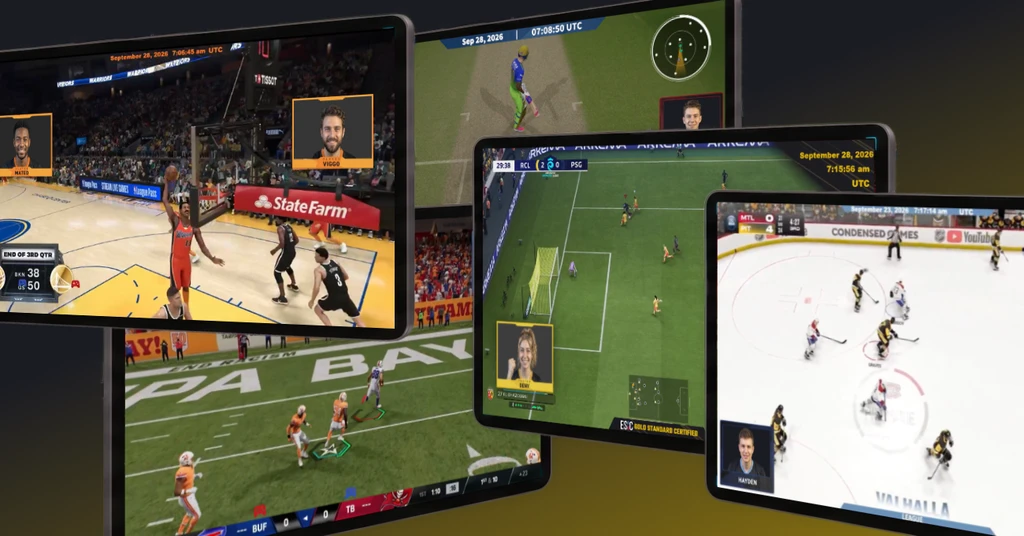
Oddin.gg’s fast betting content portfolio is varied, comprising eLeagues, which feature real gamers competing in head-to-head studio contests in eFootball, eBasketball, eTouchdown and eHockey, along with CS2 and Dota 2 duels. Encounters typically last between 15 and 30 minutes and are delivered around the clock.
Oddin.gg’s wider fast betting portfolio also includes Penalty Arena, which brings together a football-kicking machine and a human goalkeeper.
“We’ve always been a classic esports company, but we’re growing our portfolio and our customer base in fast betting content,” Camden adds. “As a product, it could probably double in size again in terms of popularity, particularly because it’s in its infancy in the US. They’re only just getting hold of it in terms of licensing and regulation.
“I expect the US to be the biggest taker of fast betting content in the coming years. We’re regulated in nine US states at the moment, and potentially there are another 11 where we can be regulated.”
Integrity credentials
Integrity is central to winning acceptance from operators and regulators, Camden argues.
“In the US, they’re seeing it as a reputable product and they realise the integrity standards are really high,” says Camden, who explains that Oddin.gg works closely with the Esports Integrity Commission and International Betting Integrity Association.
“Integrity is the cornerstone of the product, and we are very strict with gamers and traders. We have dashboards that show how gamers play and whether their performances change unexpectedly. If we think there are issues – which are very few and far between – we will contact an operator to check whether betting patterns have also changed.”
“Fast betting content is not an esports product; it is a sportsbook product”
For operators adopting the content, where it sits within the sportsbook is another important consideration.
“Initially, operators did use it to plug gaps, but the newer customers coming on board and integrating with us now understand that it’s potentially a top-five or top-10 product,” says Camden, who adds that positioning sports-based eLeagues content alongside the corresponding traditional sport can maximise its potential.
“Fast betting content is not an esports product; it is a sportsbook product. If it’s eFootball, it needs to go in the football section. You can multiply your fast betting revenue tenfold by putting the product in the correct space.”
The reason for this, Camden explains, is that the vast majority of interest in fast betting content comes from traditional sports bettors.
Ring sees fast betting content primarily as a retention and cross-selling tool, and is more cautious about its ability to attract new customers to an operator.
Camden also acknowledges that faster betting does not necessarily mean customers wager more overall. Assessing how much activity is additional, rather than displaced from other products, requires operator data that suppliers cannot fully access.
For operators, though, it is vital to keep up with the competition.
“If you have two rival operators and one has fast betting content and the other doesn’t, then the latter will feel like they’re missing out,” Camden says. “How many of their customers are moving over to a competitor because they don’t have this portfolio?”
Familiarity and continuity
As many operators have found already, fast betting content does offer obvious revenue-generating opportunities when the real-life action stops.
“For our eTouchdown product in the US, on Friday, Saturday and Sunday there’s not a huge amount of business. Then suddenly, from Monday through to Thursday, it explodes,” Camden adds. “If Arsenal are playing Chelsea at 4pm and it finishes at 6pm, we’ll often see a spike between 6pm and 8pm.
“Seasonality is really interesting. When the football season finishes in May, you generally get a spike between May and the end of July or August.”
Camden says the three core markets – match winner, totals and handicaps – account for 70-80% of Oddin.gg’s business in this area. For established sports bettors, these familiar markets offer continuity in the sports betting experience that eases the transition from traditional to fast betting.
Bet builders, which have become increasingly popular in mainstream sports betting, can also be created.
“Because of the short-form content, it makes it a little harder sometimes to provide those in real time to bettors,” Camden says. “We try to have as many markets as we can an hour or two before, so it gives bettors the opportunity to place parlays and bet builders.”
The high frequency of the short-form contests also presents a challenge in terms of giving players the opportunity to make informed betting choices – especially when they may be unfamiliar with the gamers.
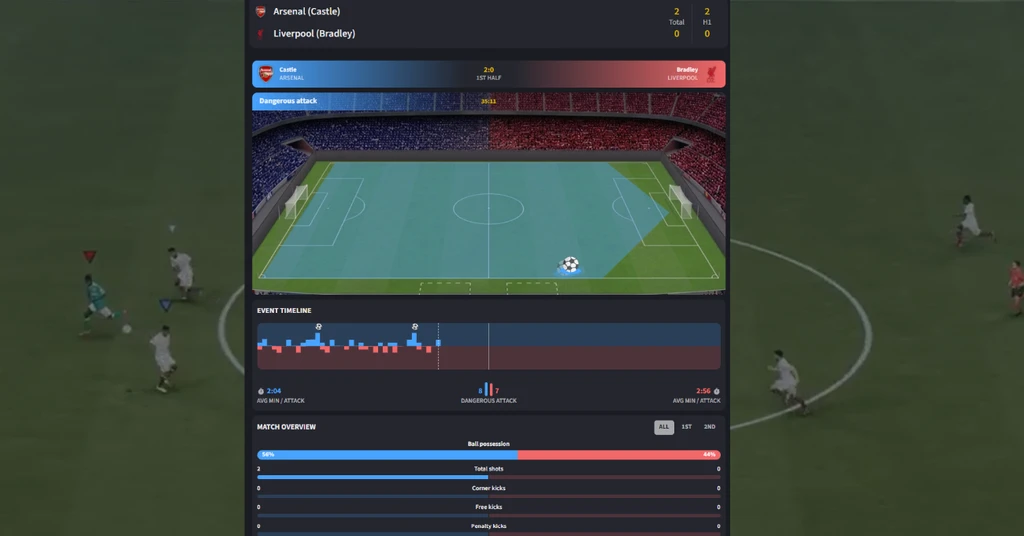
Oddin.gg addresses this by providing data-driven widgets for every contest, both on a pre- and in-game basis. For eFootball, for example, this means bettors can check out possession statistics, as well as dangerous attacks, shots on target, corners, red and yellow cards, and more. There are also form guides for every gamer.
“It’s not just a case of guessing who’s going to win,” Camden explains. “We try to replicate real sports as much as we can.”
Growth plans
As appetite for fast betting content grows worldwide, Oddin.gg is scaling its operation to meet demand.
The number of fast betting streams operated by Oddin.gg will increase from 12 to 21 early in 2027, helping to almost double the number of events per year from 350,000 to 640,000. The expansion will require more gamers and management resources, although Camden expects automation to limit the increase in trading headcount.
This increase in capacity will enable operators to bolster their offering with a vertical that drives business in its own right. However, relevance will be key, according to Camden.
“Operators should look at their market and bettors in terms of the real sports they engage with,” he explains. “If they’re not taking any money on ice hockey, I wouldn’t suggest putting ice hockey in as an eLeague. I would generally start with eFootball, given that it is popular across the world.”
Oddin.gg is exploring opportunities to introduce new fast betting products in 2027, including in combat sports and motorsport. Sub-genres of existing sports could also be introduced, such as Volta small-sided football games and Blacktop street basketball.
“There are a lot of opportunities,” concludes Camden, who underlines the importance of careful planning in the process. “You can do some good market research and understand what the value is before you actually go live with these. It’s quite costly to create a new title. It’s not cheap, so you have to understand where the value is.”

Peter Camden, director of fast betting content, Oddin.gg