
Brazil Congress fails to advance betting ban as 60-day deadline expires
The first 60 days have now passed since the issuance of Provisional Measure (PM) 1.394, which ordered a ban on betting platforms in Brazil.
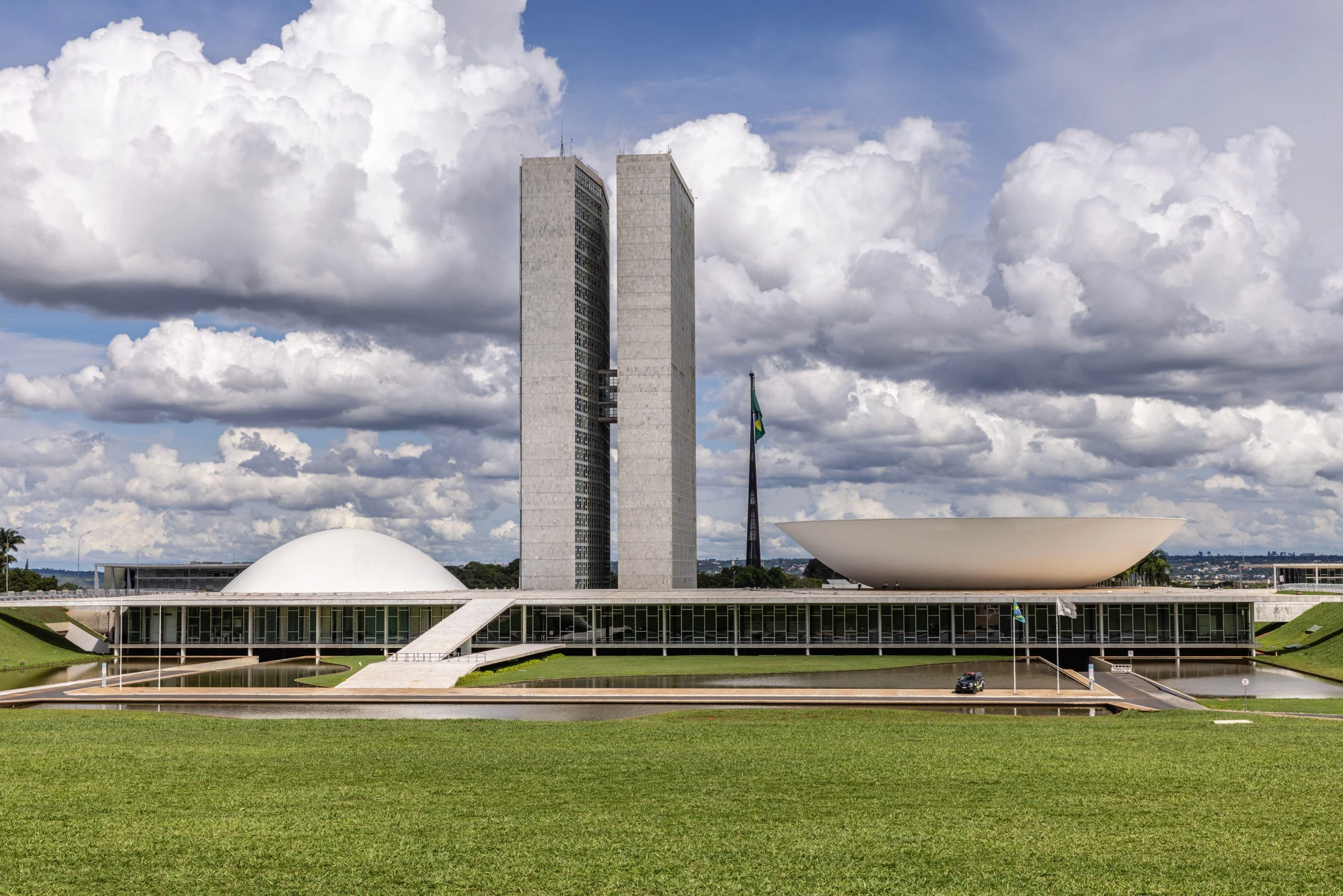
When signing the measure, President Lula cited household debt and public health concerns. Under the Constitution, a Provisional Measure may only be issued in circumstances of relevance and urgency. Yet, it seems that this “urgency” has still not been felt by the National Congress, which is responsible for deciding on it. So far, the Joint Committee tasked with reviewing PM 1.394 has not been installed, nor have a chair and rapporteur been appointed.
Two weeks ago, the president of Congress, Senator Davi Alcolumbre, extended the PM’s validity for another 60 days. The extension would have been automatic, but Alcolumbre issued Act 118 two weeks before the end of the initial period. As a result, the PM must be voted on by 4 March 2027.
Activity in Congress
The PM was submitted to Congress on the day it was published in the Official Gazette.
A provisional measure is a rule with the force of law issued by the President of the Republic in situations of relevance and urgency. Although it produces immediate legal effects, a PM requires subsequent review by both houses of Congress (the Chamber of Deputies and the Senate) to be permanently converted into law.
In the case of PM 1,394, there have been questions over both its relevance and its urgency. It appears to have been an election-driven move adopted by Lula after courtiers around him persuaded him that betting platforms were a public health problem.
Nearly 100 amendments have been filed, several of which preserve sports betting while banning online casino games. Others propose advertising restrictions and a ban on purchasing naming rights for stadiums, competitions, arenas, and club training centres.
Twelve senators and 13 federal deputies have already been nominated as full members of the Joint Committee. Among the alternates, seven senators and nine deputies have been appointed. A full committee comprises 26 senators and 26 deputies.
According to Randolfe Rodrigues, the government leader in Congress, the Executive Branch would like to see the PM approved during the current legislative session, which ends on 23 December. After that date, Brazil’s parliament goes into recess, and when it returns, newly elected deputies and senators will take office. Getting the PM approved before the recess will be an uphill battle—and it will be even harder if the government has to face a Congress largely opposed to Lula’s fourth administration, which takes office on 1 February.
Reasons for the delay
As PM 1,394 marks 60 days in the National Congress, iGaming Business set out to understand the reasons behind the delay in installing the Joint Committee, speaking with some of the most influential voices in the industry.
Attorney Udo Seckelmann, for example, believes the delay exposes the political difficulty of sustaining such a radical and controversial measure. “We are talking about a PM that seeks to completely eliminate a market that the government itself spent years regulating, that has already received billions in investments, and that began operating under a framework of public oversight and control,” he tells iGB.
According to him, it is only natural that an initiative of this magnitude faces resistance in Congress. “Especially given the economic, legal, and social consequences of a potential ban,” he says.
“In my view, the difficulty in installing the committee also shows that there is no political consensus around a decision made unilaterally by the Executive Branch, without proper debate with Congress and the sectors involved,” he adds.
Plínio Lemos Jorge, president of the National Association of Games and Lotteries (ANJL), believes that economic priorities and the government’s broader agenda have hindered the committee’s installation. “Our expectation is that it will be installed very soon, so that there is sufficient time for the Chamber and the Senate to review and vote on the amendments,” he says.
Other pressing priorities
Fellipe Fraga, business director at Stellar Gaming, owner of the Estrela Bet brand, offers a view complementary to Seckelmann’s. In his opinion, the delay in installing the Joint Committee must be understood within the political context and priorities of the National Congress.
“Brazil faces a series of economic, social, and institutional challenges that demand lawmakers’ immediate attention,” he suggests. “In this scenario, the debate over banning an activity that had already been regulated by Congress itself naturally competes for space with other major national priorities.”
“The issue has not received the priority the government apparently expected when it issued the PM. That doesn’t mean the debate over betting is irrelevant, but rather that there are truly urgent matters requiring legislative action. And perhaps that is precisely the reflection needed. If the market was already subject to an authorisation, oversight, and taxation regime, why would its prohibition need to happen through a provisional measure instead of a broader, well-founded legislative debate?”
Luiz Felipe Maia, founder and partner at Maia Yoshiyasu Advogados, emphasises that the betting PM is a complex and controversial matter that profoundly alters legislation approved by Congress itself and carries impacts for consumers, workers, companies, sports and public revenue.
“In my opinion, the delay needs to be analysed in light of the government’s stance,” he says. “It was the Executive Branch that decided to adopt an extreme measure with immediate effect, and it is now struggling to build the political support needed for its approval. It does not seem reasonable to shift onto the Legislature the responsibility for uncertainty created by the government’s unilateral decision to abruptly ban an activity it had regulated itself.”
Urgent and relevant, or not?
For a PM to be issued, the Constitution expressly stipulates that it may only be enacted under circumstances of relevance and urgency. In Seckelmann’s assessment, the failure to install the Joint Committee does not mean, legally, that Congress has ruled those requirements absent.
“But it creates an obvious political contradiction: if the government considered it so urgent to shut down an entire economic sector, why, after 60 days, have there not even been the political conditions to begin reviewing the matter?” he asks.
“It is legitimate to question what emergency would justify such a drastic decision—especially when Brazil was making progress in structuring a regulated market with oversight tools, consumer protection, and measures to combat illegality.”
“From a legal standpoint, the failure to install the committee does not, in itself, represent a formal rejection of the constitutional requirements of relevance and urgency,” says Fraga. “However, from a political standpoint, I believe this delay reinforces questions about the need to address the matter through a provisional measure.”
Where is the evidence?
Fraga sees no sufficiently convincing evidence that the regulated market produced the negative economic effects that would justify an immediate ban. “Claims about impacts on retail, services, industry, or household debt must be backed by evidence that establishes causality, not merely correlations or perceptions,” he notes.
“I also consider it essential to discuss the quality of the impact assessment that underpinned a decision of this magnitude. We are talking about halting a state-authorised economic activity, with consequences for companies, workers, suppliers, consumers, and tax revenue. A decision like this requires justification proportional to its gravity.”
Luiz Felipe Maia agrees that the fact the committee has not yet been installed does not mean Congress has formally concluded that the urgency and relevance requirements are missing. “But the situation reinforces a question that has existed since the PM was issued: what was the urgency that justified revoking authorisations granted by the government itself and immediately shutting down a regulated activity without allowing prior debate in the Legislature?” he asks.
Illegal betting
For Fraga, Brazil needed to move forward in tackling the illegal market rather than shutting down companies that agreed to comply with the rules established by the government itself. “That should have been the priority from the start, not banning the activity through a PM,” he states.
“What the legalised sector regrets is that, for as long as the ban lasts, the illegal betting market will only grow stronger, exploiting the entire vacuum left by regulated operators to attract bettors,” adds Lemos Jorge.
The government still wants to do away with betting platforms, but 60 days after issuing PM 1,394, it faces a major problem: the difficulty of coordinating with Congress to install the Joint Committee.
“The lack of effective political coordination to enable the committee’s installation raises questions about the Executive Branch’s real commitment to defending a measure it deemed urgent,” says Seckelmann. “If the government truly believes that banning betting is the solution to the problems it cites, it should be willing to defend that position in Congress and submit it to democratic debate.”
He adds: “It is unacceptable to issue a measure of this gravity, create legal uncertainty for an entire economic sector, and then fail to show the same political will to see its approval through.”
Should the government reconsider?
For Fraga, the most appropriate path would be for the government itself to reconsider the provisional measure and focus its efforts on effectively combatting illegality and refining regulation. “The regulated sector is not immune to problems and must continue to evolve, but its existence is an important part of the solution, not an obstacle to consumer protection,” he declares. “Meanwhile, it is up to the National Congress to fulfill its constitutional role and assess the concrete effects of this decision.”
Luiz Felipe Maia also sees political coordination challenges in moving the measure forward, saying: “This is understandable given the complexity of the issue and the consequences of such an extreme decision. Congress has a responsibility to evaluate the measure and the alternatives put forward by lawmakers.
“The government, for its part, needs to go beyond defending the PM’s approval. It must demonstrate that the ban is achieving its stated objectives and confront its concrete consequences. So far, companies that followed the rules have exited the market, while illegal offerings remain accessible to Brazilians. Insisting on keeping the measure intact without considering these outcomes could worsen the very problems it sought to combat.”
Amendments
The only thing that has moved forward in the National Congress is the filing of amendments to PM 1,394. Nearly 100 proposals to modify the text have been submitted. More than 40 advocate maintaining the activity with stricter oversight and tougher advertising rules. Some propose keeping sports betting while banning online casino games.
For Seckelmann, this wave of amendments “is very positive and an important sign that Congress is not willing to passively accept an attempt to eliminate a market that was legalised and regulated by the Brazilian state itself. The amendments show that lawmakers understand that betting-related issues must be addressed, but that a blanket ban is a misguided, disproportionate, and counterproductive response.”
He adds: “It is legitimate to discuss differences between sports betting and online casino games, as well as to establish specific rules and additional safeguards for each vertical. What we cannot accept is that, under the pretext of protecting society, the regulated market is destroyed, and the entire activity is pushed back underground. Prohibition does not eliminate demand for betting. It merely strips the state of its ability to supervise, collect taxes, protect consumers, and fight criminal activity. The path forward should be improving regulation, not regressing to a scenario of complete illegality.”
Amendments key to debate
Fellipe Fraga agrees that the amendments are an important expression of democratic debate. “They show that there are different perceptions of the sector and, above all, that there is still plenty of room to broaden understanding of how Brazil’s regulated market works,” he says.
“It is natural for lawmakers to submit proposals based on their constituents’ concerns. However, I believe part of these discussions is still taking place without a sufficiently deep understanding of the differences between licensed operators and clandestine platforms—or even of the control mechanisms required under Brazilian regulation.”
Lemos Jorge says the proposals are in line with what the industry expected. “The fact that nearly half of the amendments support maintaining the sector is yet another piece of evidence proving the importance of the legalised betting market in the country, especially when it comes to combatting the illegal market,” he highlights.
Practical outcomes
The ban removed licensed companies from the market, but it did not eliminate betting offerings. “On the contrary, we continue to see a substantial supply of illegal sites operating outside oversight and with no obligation to comply with Brazilian rules on bettor protection, problem gambling prevention, and anti-money laundering,” says Maia.
According to him, the impacts on tax revenue and sports sponsorships—which represent a major source of funding for clubs and other organizations—must also be taken into account. “These are concrete consequences that cannot be ignored in the discussion about the sector’s future,” he reminds.
In his view, the most appropriate solution is to refine regulation and adopt proportionate measures to address specific risks, including restrictions on games that appeal to children and adolescents and on certain mechanics that may lead bettors to believe they control the outcome. “Banning the regulated market does not mean ending betting. If demand continues to be met by the illegal market, the result may be less consumer protection and greater difficulty in enforcement,” he concludes.
Maia also points out the need to address legal certainty and the licenses granted by the government itself. “Companies invested, paid for their licenses, and made commitments based on rules established by the state. These circumstances must also be considered by Congress.”
Improving regulation
Fellipe Fraga adds that there are legitimate concerns regarding certain features of online casino games. “That is precisely why we need to discuss the importance of regulation,” he asserts. “Removing a vertical from the licensed environment does not necessarily reduce demand for it. It may simply shift consumers to operators that comply with none of the protection requirements established by the state.”
He argues that regulation should be treated as an ongoing process of improvement. “We need to discuss limits, prevention mechanisms, identification of at-risk behavior, responsible advertising, oversight, and new consumer protection tools,” he continues. “None of these discussions should end if operations eventually resume. I hope the amendments and parliamentary debate move in this direction, based on evidence rather than mere perceptions of the activity.”
Lemos Jorge notes that several international experiences have already shown that banning the legalised market “backfires and does not put an end to betting in the country. It simply operates outside the law, with no tax collection and no benefits for society. That is the message we are bringing to lawmakers regarding the amendments.”
Even the push to ban online casino games, in the ANJL president’s view, is questionable. “Banning them has a strong potential to drive bettors to illegal sites in search of this type of entertainment, since that supply will continue to exist.”
He believes that technical analysis and common sense—aimed at an outcome that ensures proper protection for bettors—will prevail in the National Congress’s decision.