
Online, on land Hawkins works to right Philippine flagship Solaire
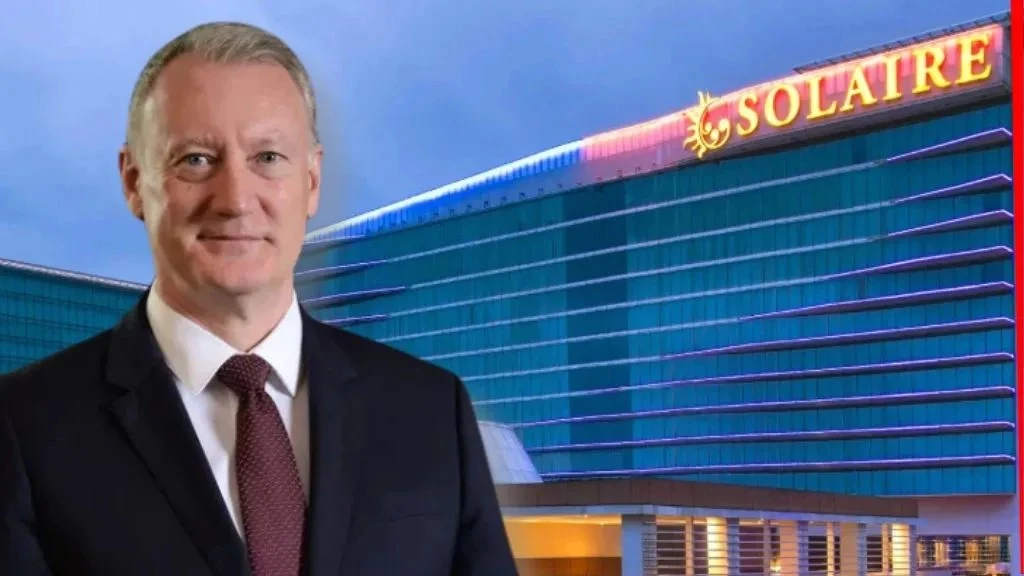
Last year, Global Gaming Business asked Greg Hawkins, then chief operating officer at Bloomberry’s Solaire North integrated resort, whether online gaming is a threat. “It’s an opportunity,” he replied. Now as Bloomberry’s group president and COO, Hawkins is doubling down on that opportunity in Asia’s biggest legal online gaming market.
“Online presents very big upside if we can execute properly. And we’re at a point now where technically we have the ability to execute properly, which means effective marketing. So that’s a significant focus,” Hawkins says in an exclusive interview with iGaming Business.
In July, Bloomberry officially launched FUNaloMAX, an online mass market platform built on in-house technology.

“Online has been about ensuring that we have strong stability on the platforms that support our online consumer experiences,” Hawkins says. “Solaire Online, which is well established as an online brand, speaks to the Solaire premium gaming experience. Then FUNaloMax, which is a product of Solaire so it gives it that credibility, is very much focused on that broader mass online market.”
Under Hawkins’ stewardship, in an acting capacity since December 2024 that became official in June last year, Bloomberry has revamped its online business. It launched MegaFUNalo in mid-2025 as a mass market gaming and entertainment platform, complementing Solaire Online, launched in 2021 when regulator Pagcor licensed Philippine Inland Gaming Operators (PIGOs) to help land-based casinos cope with Covid pandemic restrictions.
Third party ‘teething problems’
MegaFUNalo, using third-party technology, featured live and digital casino games, arcade games, carnival games and even movies. “We quickly recognised some technical teething problems,” mainly regarding “the guest experience”, Hawkins says.
“So behind the scenes really has been looking at the platform that our online systems sit on.” That process began late last year and produced FUNaloMAX. Solaire Online will move to an in-house platform this quarter, Hawkins says.
“We’re only stepping now into the active marketing of FUNaloMAX, so that will very much ramp up over the next couple of months into the new year, which would include awareness branding, as well as direct marketing offers to the database,” Hawkins says. “A lot of that is rebate and other offers to initiate a gaming experience.”
Global iGaming market intelligence platform Blask calls FUNaloMAX “a fast-growing niche challenger” in the broadly fragmented Philippine market. At the end of July, a month into its launch, FUNaloMAX ranked 70th of 335 Philippine market brands Blask tracks.
Righting the flagship
Bloomberry’s second quarter results show signs of a turnaround from 2025’s full year loss of PHP2.8 billion (US$45.4 million), despite a challenging Philippine market.
Much of the 2025 decline occurred at Solaire Entertainment City, longtime Philippine gaming market leader. Righting Bloomberry’s flagship IR has been a priority for Hawkins.
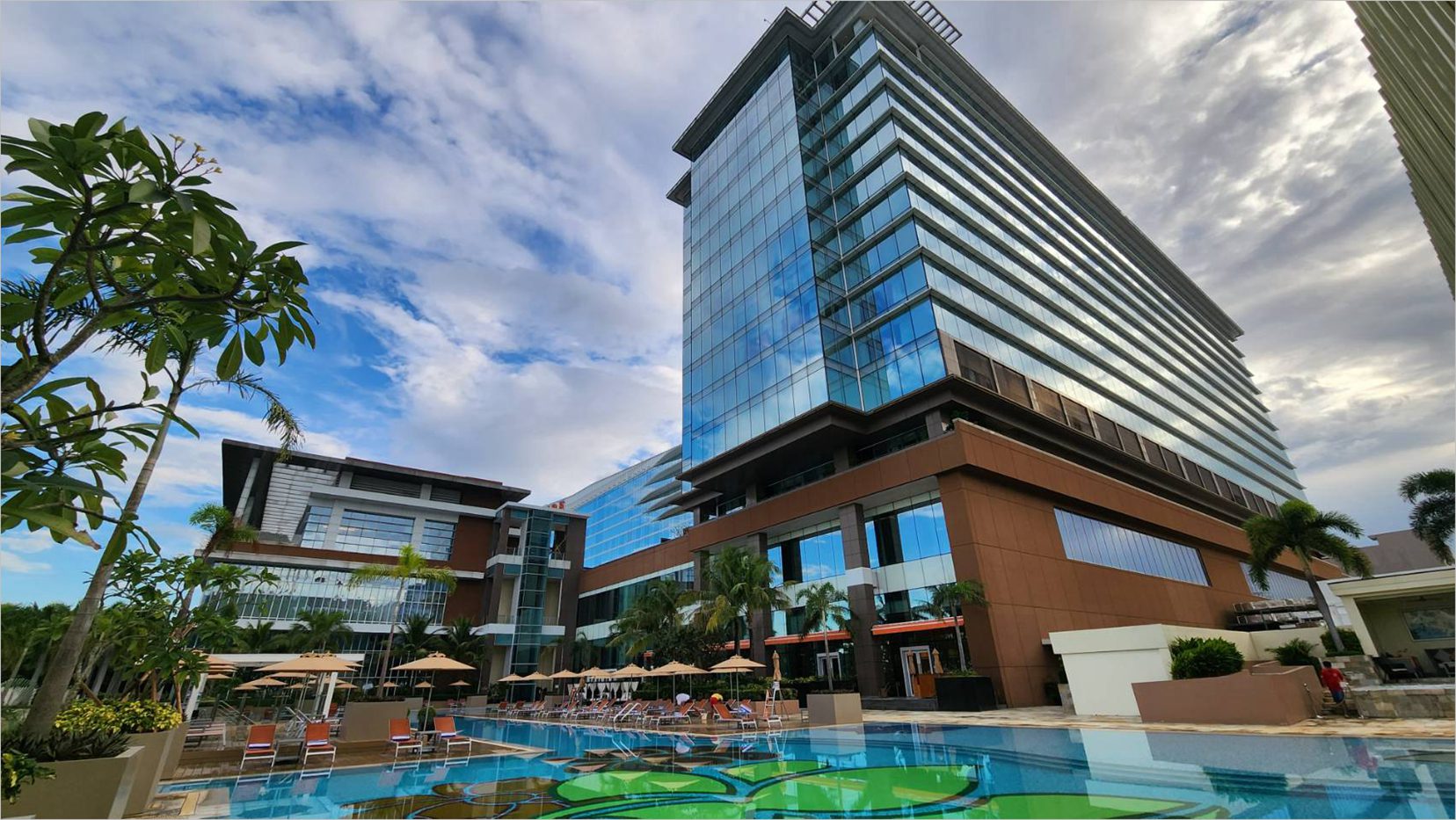
Solaire Entertainment City GGR fell 27% year-on-year in Q2 last year, with VIP cratering 62%, mass tables off 9% and slots down 16%; this year Q2 GGR rose 18%, VIP up 81%, mass tables ahead 8% and slots gaining 6%, even though cumulative Entertainment City GGR fell 1%. Last year Q2 property EBITDA fell 61% to PHP1.7 billion; this year, it rose 40% to PHP2.4 billion as margins rebounded from 20.8% to 26%.
“The relevant margins in the business required a proper focus on cost management and capital expenditure management,” Hawkins says. “So that’s been an area of focus, from my perspective, to ensure we’re fully engaged across our management teams on cost and margins as much as we are on top line and GGR growth.”
Post-POGO hangover
Externally, “The broader economy and local economy has been softer than what it has been historically, and at the same time we were still working our way through that post-POGO era,” Hawkins says, referring to Philippine Overseas Gaming Operators that brought hundreds of thousands of mainly Chinese expats to the Philippines working in overseas online gaming enterprises. Philippine President Ferdinand “Bongbong” Marcos Jr banned POGOs in 2024, amid pressure from Beijing and allegations of widespread criminal activity.
“The post-POGO environment is very different. There’s no doubt a lot of the revenue generation wasn’t just existing within the VIP segment. It was quite a cash-rich environment at that point in time, flowing through to other parts of the business. So post-POGO presents different opportunities for companies, and that the ability to strategically adapt is what we’re focused on.”
This year adds the challenge of conflict in the Gulf region. “When the Middle East crisis first started, there was an immediate flow through that we felt,” Hawkins says. “We’ve come through that and the businesses have adapted, but cost of living pressures, particularly fuel, are still a close watch.”
Broad local, global horizons
More broadly, Hawkins says, “The scale of the market in Metro Manila and in the Philippines generally [is] still very, very significant because of the population growth and the propensity to want entertainment and gaming experiences. For such a large population, the opportunity is still there, whether it’s niche or large scale, if executed.”
Hawkins also believes, “The international market is the one with very big upside for the country as a whole, as well for the integrated resource sector, but it’s a combination of country positioning, infrastructure development and a collaborative approach” needed for success.
“Entertainment City was clearly evolved from a strategic mindset of developing a precinct to grow tourism inbound into the Philippines and to provide investment and job opportunities, stimulate inbound in international and domestic tourism, all within the confines of a precinct,” Hawkins says.
“The foundations are all there, the investment’s been made. So it’s moving into that next stage of building the international stay profile for the properties here, which requires a concerted effort from government as much and in conjunction with the private [sector] and licensed operators here.”
Pre-island experiences
Hawkins observes, “International tourism into the Philippines generally, is arriving into Manila and in most cases, going straight into island experiences outside of Metro Manila, whereas the opportunity for a two or three day stay in wonderful international standard integrated resorts very close to the airport is a real opportunity.
“So we would look at that as how can we get more guests coming to the Philippines, giving the Philippines proper consideration compared to Vietnam and Singapore and Indonesia. There’s a strategic intent from the Department of Tourism to drive international tourism to the country, get a city short stay, and then an island experience, and all of that needs cohesion in the strategic execution, as well as the infrastructure that’s in place to support it.”
Along with Solaire, Entertainment City on Manila Bay hosts City of Dreams Manila, owned by billionaire Sy family controlled Belle Corp and operated by Melco Resorts, and Okada Manila, owned and operated by Japan’s Universal Entertainment. Travellers International Hotel Group, part of billionaire Andrew Tan’s Allied Global conglomerate that includes Newport World Resorts, the former Resorts World Manila, is scheduled to open the district’s long-awaited fourth IR, Westside City, later this year.
“I don’t think [Westside City] will necessarily hurt Solaire,” Hawkins says. “I think adding more critical mass and hotel rooms into Entertainment City is a net positive. It’s driving more awareness. It’s probably broadening the demographics who have access to Entertainment City as well.
“No doubt it heightens the competition in the gaming and resort space. So we expect that, and we’ve been monitoring closely what will evolve there. They’ve got an expansive approach to live entertainment. Our theater and our space and what we do at this property is really important to us.”
Staying on top
Burnishing Solaire’s market leading position has been a key for Hawkins. “It’s important to us that the position of this property indicates a position of strength that reinforces our brand, particularly Solaire Entertainment City, which is focusing on that premium segment of the market. So the reputation for quality guest experiences, for safety, for personalised hosting that is sort of wrapped up in that is important to our objectives.”
Management has reviewed the resort’s “positioning in the market and how we can use its physical scale more effectively to drive footfall, maybe through broader entertainment offerings”.
That review includes analysing “the mix of allocated space to historically VIP. Can we look at converting some of that, as the VIP segment is not as strong as it was historically, to either more mass or more premium mass? So we’ve been looking at the configurations of this property overall, both on the gaming side and the non-gaming side,” Hawkins says.
VIP MIA
“We know that VIP segment has shrunk considerably in the Philippines over the past couple of years. So that means a property of this scale needs to adjust its strategic positioning relative to the changes happening in the market.
“What does that mean? That means to me that we need to more broadly appeal to gaming and resort guests who are after new and exciting experiences. What does that mean? That means that the property needs to offer more, broader entertainment experiences. You have got a fantastic theatre here, but we’ve converted an area just outside there, The Space, which is another large, operable area that we’ve been running various events and entertainment-oriented experiences through, driving footfall more broadly as a focus for the property.”
To maximise its Broadway-style, 1,851-seat Theater at Solaire, Bloomberry entered into a strategic partnership with GMG Productions for top local and international shows and events.
On the F&B side, Hawkins says, “We want to ensure that the beautiful restaurants that are here have a variation in their menu experiences, or the different types of shifts that can come in to ensure that the beautiful historic environments are feeling refreshed from a guest point of view.”
Northern light
Solaire North, Hawkins’ US$1 billion former redoubt, about an hour from Entertainment City, continues to ramp after celebrating its second anniversary in May. “Across that journey, it’s clear that it’s much more of a locals property,” primarily catering to the market around Quezon City, Metro Manila’s largest municipality with three million residents, Hawkins says.
At the property Bloomberry now calls Solaire Quezon City, second quarter GGR rose 9% year-on-year in a flat market for licensed casinos. EBITDA rose 19% to PHP1.3 billion.
Hawkins rejects the idea of Solaire North as a category killer, similar to Hann Resorts in Clark. “I do believe in the first mover advantage,” Hawkins says. “I think first mover into markets with real potential, with a well-executed plan, creates long term shareholder value.”
Quayle habitat
Hawkins’ promotion prompted Bloomberry to hire Damian Quayle as Quezon City COO in July last year. “The big drivers here are entertainment and fun,” Quayle, experienced in Australia, Macau and Manila, says.
Slots dominate the gaming floor. “I think of the slot floor like a theme park,” Quayle says, with zones for different volatility models and a prize patrol celebrating wins. The ballroom hosts weekly bingo games with singing and dancing. “If I could get that kind of entertainment with table games…” Quayle muses.
Quezon City is a hub for government, media and, soon, the burgeoning regional rail system. “Government workers are not allowed to gamble,” Quayle says, “but they love our F&B,” featuring more than a dozen options.
Entertainment top to bottom
Last September, Quezon Club debuted on the lobby level as a supper club showcasing Philippine talent. Offerings have been refreshed at level 38 venues Sky Bar and Finestra, Solaire’s signature Italian restaurant along with Chinese signature Red Lantern and Japanese Yakumi.
The two Solaires “work hand in hand”, Quayle says. Quezon City success with pickleball spawned an Entertainment City sports club, also including padel and a golf simulator.
Controlled by Philippine billionaire Enrique Razon Jr, primarily a global port operator, Bloomberry has been linked to overseas gaming opportunities from Bangkok to Brazil to South Korea’s Jeju island, where it sold its casino business in March.
In 2024, Bloomberry announced plans for a beachfront resort in Cavite, south of Metro Manila. “Cavite is still there as an opportunity, but still down the path,” Hawkins says. “It’s not an area that’s actively focused on from my perspective.” Fixing what’s broke comes first.
Muhammad Cohen is a former US diplomat and current iGB Asia editor at large. He has covered the casino business in Asia since 2006, most recently for Forbes, and wrote Hong Kong On Air, a novel set during the 1997 handover about TV news, love, betrayal, high finance and cheap lingerie.