
Build first, shout later: How PRace is closing gaming’s sales-marketing gap
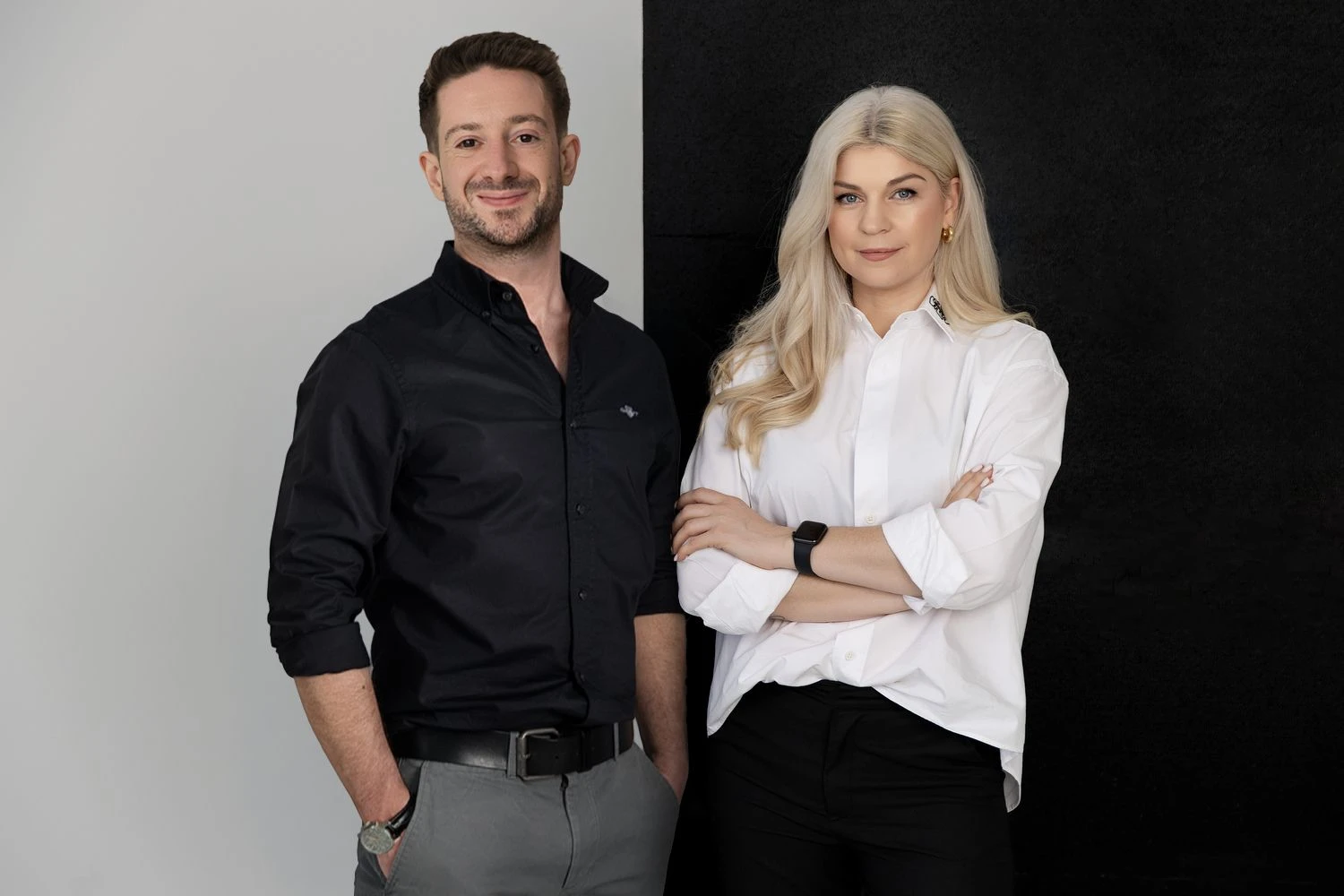
In 2024, B2B marketing and PR agency PRace entered the market under complete stealth. It may seem counterintuitive for an agency whose goal is to capture the attention of the sector and win clients, but co-founders Nick Brown and Aiste Garneviciene chose to stay entirely out of sight.
In the first 12 months of operations, Brown says the team deliberately avoided marketing themselves and actively turned down industry event invites.
“We knew we were sitting on valuable IP that no-one had brought to the industry before,” notes Brown. Rather than launching with an immediate marketing blast, they stayed true to their Lithuanian cultural connection. “Build first, succeed and shout about it after. [In those] first 12 months – zero marketing, zero announcements, zero mentions.”
The agency was launched with a commitment to deliver “exact ROI on spend”. It is an offering that has attracted a growing client base across European and global gaming suppliers. Rather than relying on speculative publicity, PRace positioned its model around attributable pipeline growth. At the same time it is moving away from traditional agency retainers that treat media exposure as the sole measure of success.
Led by CEO Garneviciene and co-founder Brown, PRace was built to close the gap between media coverage and tangible commercial outcomes. That is a challenge long observed in an industry perceived as too comfortable with legacy PR methods. Rather than pitching purely to marketing departments, the agency targeted both CMOs and CCOs from the outset. This was to align marketing output directly with sales targets.
PRace’s development has been deliberate and self-financed by choice. Since day one it has been about scaling sustainably without external capital. The agency now employs nearly 20 staff servicing 18 client accounts across the sector. These include EveryMatrix, Amelco, Spotlight Sports Group, Imagine Live and Relax Gaming.
Mind the gap
“It’s like a constant war between sales and marketing across the industry,” says Garneviciene. “Sales blames marketing for not creating enough leads, and marketing blames sales for dropping the ball on follow-up. We believed it was us who could change that, and that’s how PRace was born.”
Brown came into the gaming space from enterprise technology marketing at global agency Metia. That is where he worked on major accounts including BMW and Intel. In that environment, content and press outreach formed just one part of an integrated, 12-desk marketing operation. An approach he believes gaming suppliers need to adopt as European compliance costs rise and operating margins tighten.
“I came from the world of enterprise tech and fintech, which was an easy crossover for me. And I think gaming now demands that level of marketing,” says Brown. “Back in the day, it was just about making noise and spending endless budgets. Today, escalating compliance and regulatory overheads, as well as tighter operator margins means every line item is scrutinised.”
Prior to launching PRace, Garneviciene spent over a decade as a founding team member and chief operating officer at live dealer studio BetGames. She scaled the business from a Vilnius start-up into a brand live across four continents. Her commercial background navigating operator procurement cycles and enterprise RFPs directly informed PRace’s focus on sales alignment.
“When we were scaling BetGames, our commercial team suggested bringing on a traditional PR agency on a monthly retainer to increase visibility,” Garneviciene explains. “I had to ask what we actually received in return. A few interviews and a weekly recap email of published links? As an executive, I needed to see how that spend was translating into sales pipeline, booked meetings and commercial deals.”
The agency structured its offering around a proprietary three-stage commercial model designed by Garneviciene: Establish, Engage, Convert. The framework moves operator prospects from top-level market positioning into micro-segmented retargeting, before handing pre-warmed decision-makers directly to client sales teams to close deals.
A shared culture
The agency’s operational model is anchored in a dual-hub setup between London and Vilnius, combining its UK base with Lithuanian talent.
Garneviciene has spent her executive career based in Vilnius, while Brown lived in the capital for six years between 2005 and 2011, establishing a shared cultural connection that predated their business partnership.
“Vilnius sits comfortably among the top European tech hubs, producing exceptional tech talent,” says Garneviciene. “Nick’s years living in Vilnius meant we shared that exact same cultural shorthand and relentless work ethic from day one. Without that mutual understanding of Baltic discipline, PRace wouldn’t exist.”
“That shared Lithuanian bond gave us an element of trust between each other from day one,” adds Brown. “That element of never having to question or watch your back when it comes to the person you work with is the most essential thing in business.”
Precision marketing and the event fallacy
A core element of PRace’s delivery is integrated digital marketing campaigns, which the agency uses as a primary B2B acquisition tool rather than solely LinkedIn as a digital noticeboard. In a highly regulated sector, LinkedIn, for example, provides direct access to operator C-levels, although Garneviciene notes that unmanaged campaigns can quickly burn capital.
“We often hear B2B brands say, ‘We tried LinkedIn, but it cost a fortune,'” notes Garneviciene. “Yes, it does if you don’t know how to run it. If you aren’t micro-segmenting your target operator accounts and running structured retargeting funnels, you are just burning budget on vanity traffic.”
This focus on measurable spend extends to exhibition strategy at major industry trade shows, where both founders believe traditional marketing budgets are routinely misallocated.
“Brands spend enormous budgets building beautiful stands for a three-day show, expecting footfall to convert into revenue automatically,” says Garneviciene. “They focus entirely on the middle three days and completely abandon the pre-show lead generation and post-show closing sprint. That isn’t strategy; it’s burning cash.”
“Big stands only work if they are integrated into an active sales pipeline,” adds Brown. “Ahead of one major show, we ran a targeted three-month campaign for a top-tier platform client and booked 73 operator meetings before their commercial team even set foot on the exhibition floor.”
The conversation inevitably turns to automation, where both founders take an intentionally conservative stance amid the wider industry rush toward generative tools.
While PRace utilises automated systems for back-office data collation and market mapping, Garneviciene notes that there is an over-reliance on AI-generated copywriting. It has created a sea of indistinguishable trade marketing. The real commercial differentiator in B2B comms, she argues, has shifted back to human-led strategy and authentic executive positioning.
Looking beyond the feed
After 12 months operating strictly under the radar, PRace broke cover at NEXT.io Valletta in May 2025. Rather than launching as an unproven concept seeking early traction, the agency arrived on the Mediterranean island with 11 active client accounts and a 13-person team already embedded across Spain, the Baltics and the UK.
Over a year later, that multi-market footprint continues to define the agency’s operational structure. With staff distributed across London, Vilnius and key European hubs, the founders have intentionally steered away from the legacy agency overheads of central London real estate. The remote model allows them to recruit specialist tech and multilingual talent across continental Europe, all while keeping operational focus squarely on client delivery.
European regulatory tightening is real and escalating compliance overheads continue to squeeze supplier margins. Brown believes the demand for measurable marketing performance will only intensify. Particularly as B2B brands look toward capital-intensive expansions in Latin America and North America.
While precision LinkedIn campaigns remain the agency’s strongest weapon for reaching operator decision-makers, Brown insists the business will not be defined by a single channel.
“LinkedIn is our primary vehicle today because that is where our sector conducts its business, but the platform itself is secondary,” concludes Brown. “Marketing channels evolve, but our core thesis never changes. We integrate directly into a client’s commercial engine, we generate qualified pipeline and we deliver measurable ROI on money spent.”