
House of Lords committee urges near-total ban on gambling advertising in updated report
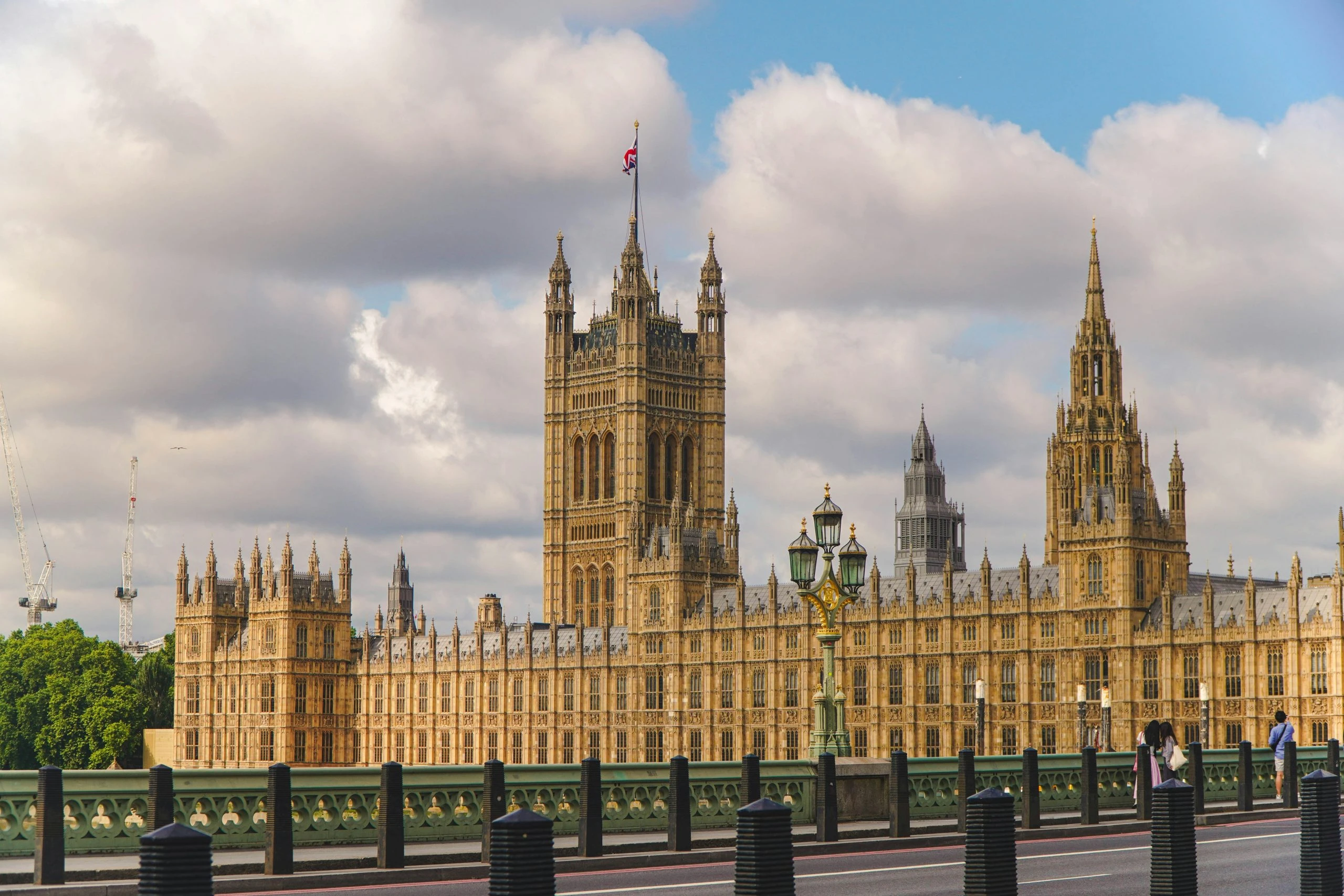
A cross-party committee covering gambling in the House of Lords has recommended a comprehensive ban on gambling advertising across the UK, identifying a reduction in marketing reach as the most effective measure to combat gambling-related harm in Great Britain.
Published on 17 September, the House of Lords Liaison Committee’s follow-up report revisits their 2020 inquiry into the social and economic effects of the gambling industry, with a focus on advertising, marketing and sponsorship.
The committee concluded that current evidence justified taking “meaningful steps” against the sector, including a comprehensive advertising ban, to reduce exposure especially among children and vulnerable groups, and to curb problem gambling.
The report underscored gambling harm as a significant public health concern. It cited the Gambling Commission’s Gambling Survey for Great Britain (GSGB), which has indicated that between one and 1.5 million adults in Great Britain now score high enough on the Problem Gambling Severity Index (PGSI) rangeto indicate problem gambling.
According to the system used to rank players on the PGSI, a score of 0 or between 1 and 3 is considered low-risk, while scoring between 3 and 7 suggests moderate risk, and a score of 8 or higher represents problem gambling.
Although many industry commentators have pushed back against the GSGB and methods used in the survey to determine the scale of problem gambling in the UK.
A shift since 2005
The committee identified the Gambling Act 2005 as the moment when licensed operators gained broad advertising freedoms across media. Prior to 2005, television and radio gambling advertising was limited to products like bingo, football pools and the National Lottery.
Since then, annual advertising expenditure by licensed operators has grown substantially and is now estimated to be between £1 billion and £2 billion, accoridng to , the report said.
According to the committee, robust evidence now links gambling advertising to increased participation and associated harms.
Committee Chair Lord Ponsonby of Shulbrede highlighted that, since 2020, the growth of online marketing techniques and associated harms have shifted the debate substantially.
“The time was right to reassess this crucial policy area, focusing on the topic of gambling advertising where the former committee’s strong recommendations have been largely unaddressed and where substantial developments in the gambling advertising landscape since 2020 have demanded a re-evaluation of the policy options,” he said.
Move from ASA to GC?
The committee has advocated for applying a public health framework to gambling advertising regulation. It criticised the existing patchwork of self-regulation, noting the Advertising Standards Authority (ASA) codes, co-regulation for broadcasts and industry-led voluntary measures, were inadequate.
Instead, the report recommended that advertising regulation be placed on a statutory footing under the Gambling Commission.
This would grant the regulator enhanced powers to proactively enforce rules and restrict problematic advertising channels effectively.
Gambling ads are currently monitored by ASA under the CAP 16.1 code. Just this week, Midnite received its third ASA ruling. The operator was told to remove a TikTok advertisement that featured a young-looking character.
Specific marketing practices under scrutiny
The report singled out several marketing tactics which had been flagged as particuarly concerning.
The first was direct marketing (emails, texts, push notifications). Citing randomised studies, the committee noted that limiting direct marketing resulted in reduced betting and fewer short-term harms.
Referencing an Australian study on direct marketing and its link to gambling harms, Dr Philip Newall, senior lecturer at the University of Bristol noted that “causality was established by getting a random subset of participants to opt-out of receiving direct marketing offers”.
It was found that “this group then self-reported significantly lower expenditure and harms [ … ] over the next two weeks”.
They recommended banning direct marketing by operators and affiliates except for essential account or safety communications.
The committee also suggested a ban on inducements (free bets, sign-up bonuses) as these promotions stimulate betting activity and recruit new or lapsed customers.
Another point of contention was content marketing and influencer promotions. The Lords committee advised treating this as advertising and, if a full ban were not immediately feasible, prioritising its prohibition.
Sport sponsorship
Sponsorships and advertising with sports teams was also flagged as according to the report, voluntary efforts had failed to reduce the industry’s exposure.
With int he report Dr Matt Gaskell MBE observed that “overall exposure (including shirts, hoardings, logos, sponsorship and related marketing) during live sports programmes does not show that self-regulation has reduced exposure meaningfully”.
Voluntary efforts have included Premier League football opting to ban front-of-shirt gambling sponsorships, as of the beginning of this current season. Although, branding remains on training kits, shirt sleeves and across stadium advertisements.
The committee’s previous 2020 report had recommended banning gambling ads on team shirts, training kits, stadium advertising and broadcasts, although on-course advertising for horse and greyhound racing was exempt.
The report rejected argumentswarning that advertising restrictions would drive consumers to illicit gambling sites. They citied weak evidence for mass migration to illegal operators following advertising limits.
“Interviews [ … ] with representatives of state monopoly operators across European jurisdictions consistently suggested that advertising restrictions did not lead to consumer migration towards illegal operators,” the report said.
Government response and future directions
This report arrived amid the UK government’s 2023 white paper on gambling reform, which introduced a statutory levy for funding research and treatment.
A cross-party of MPs similarly branded gambling advertisement as a “public health issue” in a recent parliamentary debate. The comment came after the publication of the All-Party Parliamentary Group’s May report.
The report cited concerns that current measures inadequately protected children and young people from the marketing tactics of the gambling industry.
The Department for Digital, Culture, Media and Sport has recently appointed a research fellow to study innovations in online gambling advertising, including content creators; however, the Lords caution that this research should not delay necessary policy changes.

Kathryn Evans
Kathryn covers bitesize breaking news with a primary focus on EMEA and US legislation. A proud North Walian, fluent Welsh speaker and lifelong Wrexham FC fan – long before Hollywood came calling.