
Prediction market roundup: Polymarket severs ties with Santos amid insider trading probe
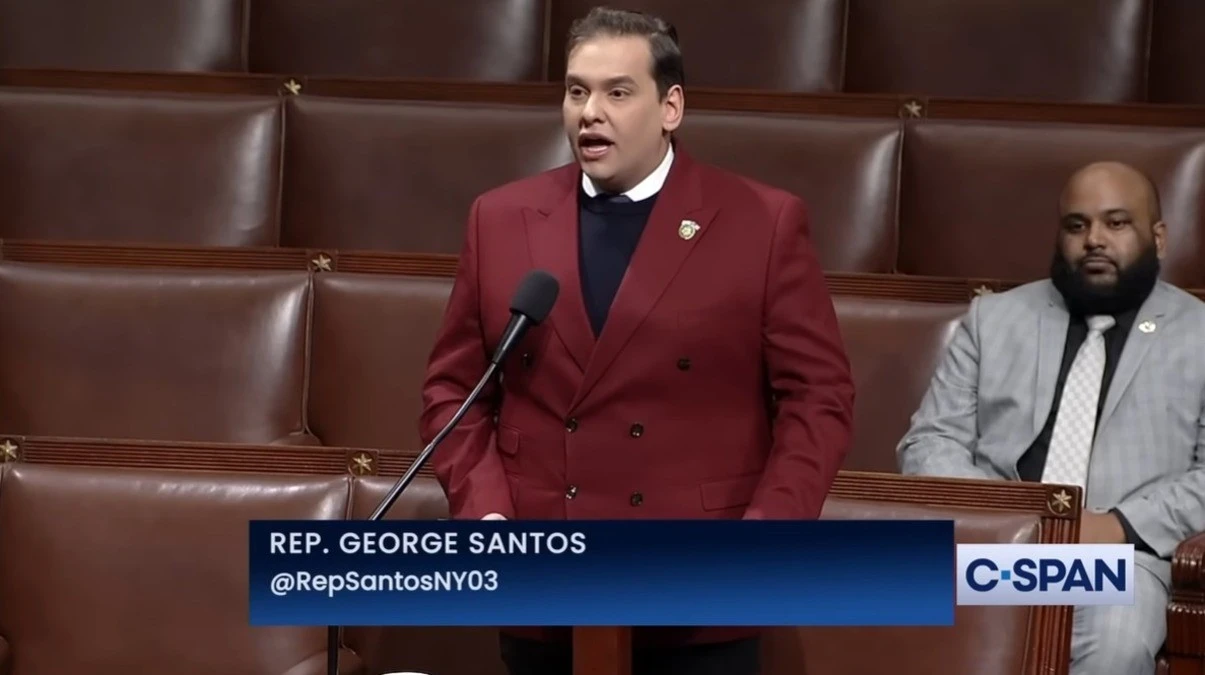
In a period rife with insider trading cases on prediction markets, a federal probe involving a disgraced former US congressman represents the latest blight.
On Wednesday, Polymarket ended its paid relationship with George Santos amid a Department of Justice investigation on whether the former New York congressman placed a wager on his appearance at the State of the Union address on 24 February. Prior to the speech, Santos stated his intentions to attend the Congressional address.
“I’m going to be there for the State of Union in the gallery, guys,” Santos wrote in a post on X, a day before the address.
On Kalshi, a rival prediction-market site, millions of dollars were traded on whether certain individuals would make an appearance at the annual speech. Santos later posted during the address that he could not attend due to flight trouble.
Multiple outlets reported this week that Santos placed wagers on himself on Kalshi. After detecting Santos’ trades, Kalshi froze his account then referred the matter to federal authorities, NPR reported. According to the time stamp on X, Santos posted the message as US President Donald Trump delivered his speech. However, the former Republican Congressman placed a wager on himself to not attend, NPR reported, citing three unnamed sources.
When asked by NPR if he maintained an account at Kalshi, Santos responded: “I’m not saying yes, I’m not saying no.”
A federal judge sentenced Santos to 87 months in prison last April on felony wire fraud and check fraud charges. After Santos served several months in 2025, Trump granted the former congressman clemency, resulting in his immediate release. Shortly after his release, Santos began working as an influencer for Polymarket.
Illinois throws prediction market tax into state budget
Earlier this week, Illinois became the second state to approve a tax on prediction market operators, joining Kentucky in placing the new levy on companies that offer sports-event contracts.
However, the process to impose the levies may be fraught with complexity, possibly resulting in protracted litigation. Under SB 3019, the Illinois General Assembly approved a measure that will place taxes on prediction markets, fantasy sports, digital assets and social media companies. Altogether, the new taxes are projected to raise about $65 million in revenue for the state.
The tax changes are a part of Illinois Governor JB Pritzker’s $56 billion budget for fiscal year 2027. As of Friday, exact percentages on the prediction market tax were not disclosed. The American Gaming Association, a detractor of prediction markets, has estimated that US states have collectively lost at least $1 billion in tax revenue from the explosion in sports event contracts.
Prediction market advocates, on the other hand, largely believe that the levies essentially amount to double taxation. As with trades on online brokerage platforms, profits from prediction market trading over a certain threshold are subject to taxes on capital gains. More than two dozen states have pending legislation against prediction markets.
NYC bar hedges Knicks’ promo with Kalshi
As the seconds ticked down in Game 1 of the NBA Finals, numerous patrons of an Upper East Side bar cheered boisterously for their team.
With a sizeable lead over the San Antonio Spurs, the New York Knicks were about to secure their first NBA Finals victory in 27 years. The win also ensured that owners of The Jeffrey would cover a large portion of their tab on Wednesday night.
“Thanks fans, you’re eating and drinking on the house tonight,” said Andy Freedman, owner of the bar.
That is because Freedman hedged a Game 1 promotion with a $5,000 wager on the Knicks placed on Kalshi. If the Knicks won, The Jeffrey pledged to cover all food and drink purchases by each customer, up to $100. The promo did not cover any sales tax or tips. With a 37% probability on the Knicks to win, the wager resulted in a payout of around $12,940 or 2.59x.
Kalshi, which issued a statement before the game, described the promotion as a way of turning a “risky promotion” into a “fully insured one”. However, it is unclear if The Jeffrey broke even on the promo. The bar has not publicly divulged drink and food expenses for customers who qualified for the promo.
Said Kalshi’s Nicolas Hull: “Small businesses are exposed to real-world risk … traditional insurance is not built for this kind of operational exposure.
“Kalshi changes the equation: liquid, transparent markets that let any business take an offsetting position on the risks that affect their bottom line. This is the beginning of a fundamental shift in how small businesses approach risk.”
As of Friday afternoon, the Knicks had a 53% chance on Kalshi to win the NBA title.

Matt Rybaltowski
Matt is primarily responsible for long-form feature coverage on complex sports betting scandals. He also provides coverage on finance, M&A and other technological developments.