
BetConstruct and GO Academy LatAm announce second edition of Sportsbook Academy
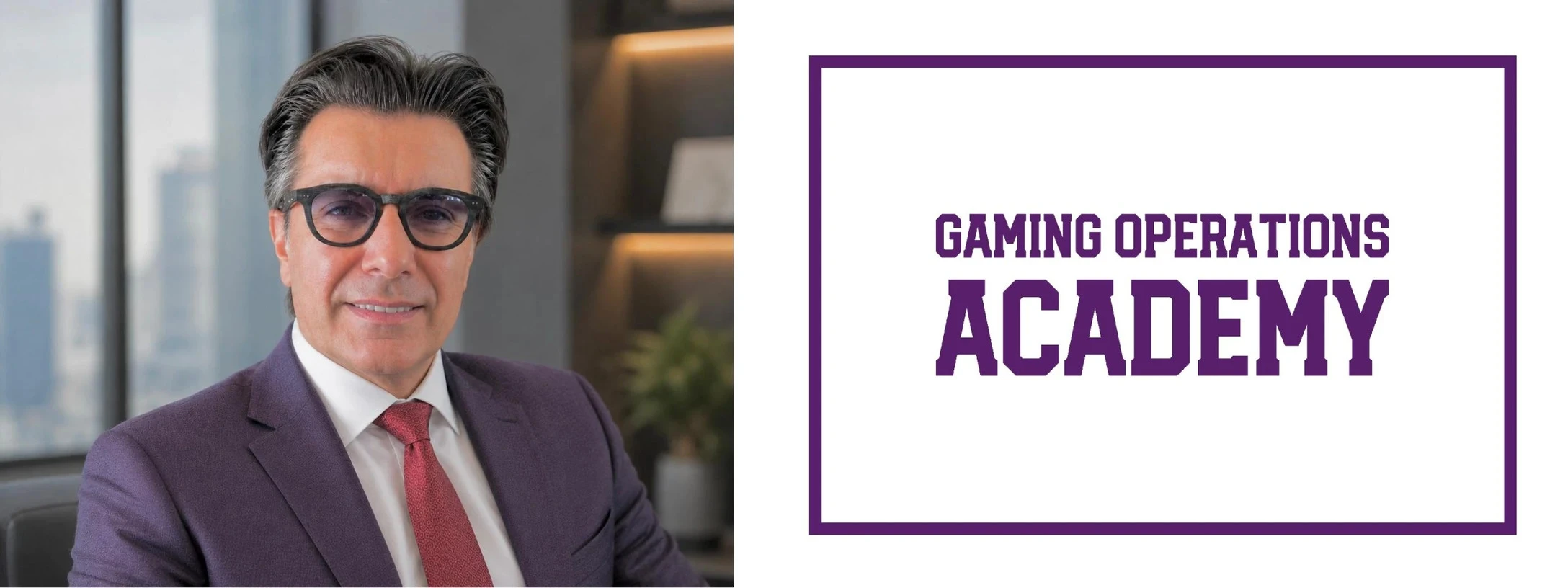
The new edition of the Sportsbook Academy will take place in February 2027, a partnership between GO Academy LatAm (Gaming Operations Academy), coordinated by Liliana Costa and Adam Roebuck, and Fabio Tiberia, VP of BetConstruct Latin America.
Launched in 2024, the Sportsbook Academy returns with Level 2, aiming to train the next generation of traders to face the new challenges of the sports betting industry.
Legal certainty crucial for industry development
Fabio Tiberia, a pioneer of sports betting in Latin America, has over 20 years of experience in the industry, working in operations, technology, trading and risk management. Joining GOA LatAm in this project, Tiberia emphasises that the timing is perfect for launching the second edition of the Sportsbook Academy.
“We are experiencing a profound transformation throughout the region, but the industry’s development depends on something fundamental: legal certainty,” he says. To explain the situation, the executive uses the analogy of the ‘cracked glass’. “Imagine a glass that cracks,” he states. “It may continue to function, it may even be repaired, but we will hardly trust it in the same way again.”
According to him, something similar happens with regulation. When a market establishes rules, attracts investments, and then faces abrupt changes or threats to its continuity, a breach of trust is created. Even if the decisions are reversed, the insecurity remains. The investor, who previously planned for five or 10 years, begins to question the predictability of that market. The problem, he emphasises, goes beyond the operators and can affect sports clubs, jobs and the entire economic chain.
Latin America is undergoing regulatory changes, with jurisdictions updating and modernising their regulations. Meanwhile, Brazil is facing the delicate situation of the ban on betting. All of this will be discussed at the Sportsbook Academy, although the course’s focus is on training the next generation of traders to face the new challenges of the sports betting industry.
Responsibility
Tiberia draws attention to an often overlooked aspect. “Regulated operators also play an important role in protecting sporting integrity and combatting match-fixing,” he continues. “Through the analysis of large volumes of data, real-time monitoring of bets, and the identification of atypical movements in odds and markets, specialised operators and providers can detect signs of possible irregularities.
“When shared through appropriate channels with integrity bodies, federations and authorities, this information contributes to the prevention and investigation of match-fixing. The responsibility of the entire betting ecosystem will be addressed at the event.”
When bettors migrate to illegal platforms, some of this monitoring and traceability capacity can be lost, making it difficult to identify suspicious behavior and weakening the mechanisms for protecting sports. “Regulation is not just an economic or tax issue,” he argues. “It is also a fundamental instrument for transparency, consumer protection, and strengthening sporting integrity.”
“Margins are sanity”
Regarding the evolution of fixed-odds sports betting, the executive points out that the sportsbook has changed radically in recent years.
“Competition has increased, odds have become more aggressive, and many operators have started sacrificing their margins to win over customers,” Tiberia says. For him, there is a fundamental difference between betting volume and profitability, summarised in an expression he often repeats: “Uncontrolled betting volume is vanity. Margin is sanity.”
Tiberia emphasises that the operation should not be managed as something purely random, as there is a mathematical structure based on probabilities, pricing, overround, financial exposure and limits.
When an operator continuously reduces its margin to compete on price, without adequately adjusting risk management, it can create financial exposures incompatible with its operational capacity.
The real challenge, according to him, is not just increasing turnover, but transforming that volume into sustainable profit, avoiding excessive fluctuations that could compromise the business.
The executive emphasises that BetConstruct’s strategy for Latin America fits within this context. “We don’t simply want to sell technology,” he states. “We want to deliver value, share knowledge, and help our partners scale their businesses.”
He will demonstrate how the company operates in a pioneering way in the region. BetConstruct launched its first platform in 2014, and now has a global structure of over 7,000 employees, a presence in more than 16 offices, and a team of approximately 600 professional traders, more than 450 of whom specialise in live betting and 150 in pre-match events. The trading operation covers more than 140,000 pre-match events and 90,000 live matches per month. This will be one of the examples to be dissected at the Sportsbook Academy.
Artificial intelligence
Tiberia points to AI as one of the greatest revolutions in the industry and a central foundation of training. AI models can analyse enormous volumes of data, identify patterns, assess probabilities and assist in detecting risk concentrations with a speed impossible to achieve through manual processes alone.
“At BetConstruct, we are evaluating new approaches to liability-driven pricing and dynamic rebalancing, with the idea of evolving from a model based predominantly on probabilities to a management approach that also considers the financial exposure, limits, and risk capacity of each operator,” Tiberia explains.
“The goal is to transform data into strategic intelligence, reduce financial fluctuations, protect margins, and provide traders with greater predictability and consistency in results. We want to replace the logic of highs and lows with a more balanced, controlled, and sustainable growth model.”
He makes a caveat, however, adding: “Artificial intelligence does not replace human experience. It enhances the ability of our traders to interpret information and make decisions.”
Raising the level of knowledge
The new edition of the Sportsbook Academy is scheduled for February 2027, in partnership with GOA LatAm, under the coordination of Liliana Costa and Adam Roebuck, professionals with recognised experience and extensive backgrounds in the gaming industry.
“Following the previous experience, we want to raise the technical level of the training, directing the programme towards professional traders from different companies,” says Tiberia.
This course will present a comprehensive overview of how sportsbooks have evolved and how new technologies have profoundly changed betting management. The content will delve into topics such as odds, odds pricing, overround, liability, financial exposure, rebalancing, limit models and accumulator bet management.
CRM, player segmentation, retention, and bonus and promotion management will also be covered, demonstrating how these strategies need to be connected to risk control and profitability.
Artificial intelligence will play a central role, especially in data analysis, scenario simulation, anomaly identification and supporting trading decisions.
Practical examples and case studies will demonstrate how small operational decisions can generate significant impacts on a sportsbook’s margins, with the goal of training professionals capable of understanding risks before they translate into financial losses.
“We don’t just want to teach tools,” Tiberia summarises. “We want to share experience and develop professionals capable of transforming knowledge into concrete results for their companies.”
In the coming weeks, more information will be available about the event and how to participate, including a link to register.