
The hidden cost of inefficiency: Why iGaming needs a B2B infrastructure makeover
In today’s iGaming world, the biggest hurdles are not necessarily the most obvious.
They do not come from a lack of creativity or a shortage of innovative products. One only has to look around to see the dazzling range of products on offer and the cutting-edge front-end technology bringing entertainment to so many players worldwide.
No, the real barriers lie in what happens behind the curtain: the inefficiencies that quietly slow everything down.
On the surface, these may look like small, everyday hurdles. But their hidden costs are far-reaching: lost revenue from delays, strained partnerships when trust erodes, gambling regulation compliance risks from poor transparency, and wasted manpower on manual fixes.
Natasha Giorgio, Hub88’s head of business development and sales, deep dives into why these challenges continue to persist, and how Hub 88’s innovative infrastructure is helping the industry move forward more efficiently and successfully.
Key growth inhibitors
Each day spent untangling these issues is time competitors could use to move faster and further ahead. And the biggest culprits are all too familiar.
Take onboarding. Whether it is a new game, payment provider, or compliance solution, integration often drags on for weeks or months. In a sector where speed-to-market directly fuels revenue, every extra day is a missed opportunity.
Then there is the problem of siloed data. Marketing, product, and compliance teams frequently work in isolation, juggling fragmented systems and inconsistent reporting. Without a shared source of truth, decision-making falters and strategies lose clarity.
Communication gaps must also be discussed. Misaligned workflows between operators, iGaming software providers and internal departments turn into duplicated tasks, errors and costly rework. Over time, trust weakens and the ability to adapt shrinks.
iGaming’s structural obstacles
In a market as fast-moving as iGaming, delays created by these inefficiencies can mean ceding ground to competitors who are more agile. For Hub88, creating solutions that can solve these inefficiencies is a driving force.
“The industry’s next leap forward will not come from more products, but from a smarter, connected infrastructure that finally clears the path for innovation,” Giorgio says.
“At Hub88, we see these inefficiencies not just as irritants, but as structural obstacles to be overcome. In creating a unified infrastructure that eliminates friction, we help operators and suppliers avoid these hidden costs and unlock the full value of their partnerships with us.”
The fallacy of the front-end focus
Giorgio is clear on where the roots of iGaming’s inefficiency problem lie – the industry’s unique complexity.
Both operators and iGaming software providers are required to adapt constantly to shifting gambling regulations, jurisdictional stipulations, and compliance demands. The uncertainty over regulations and taxation rates in the Netherlands recently illustrates some of the challenges operators face.
To cope, many businesses have historically adopted a bolt-on approach – adding systems and platforms as needed rather than rethinking infrastructure holistically.
She adds: “Over time, this results in a patchwork of legacy tools that are costly, fragmented, and extremely difficult to untangle.
“True modernisation isn’t just about catching up – it’s about laying the foundation for an industry that can innovate faster”
“Regulatory complexity magnifies the inefficiencies caused by fragmented systems, while fragmentation makes compliance a more error-prone mire to wade through. Together, they create a cycle of inefficiency that slows time-to-market and erodes competitiveness.”
That challenge, she notes, is compounded by the industry’s priorities. “Another cause is iGaming’s front-end focus. Investment has typically flowed toward areas that directly impact players – acquisition, UX, content libraries.”
The consequence is that back-end processes, which underpin efficiency, have been deprioritised. Many companies are now running on outdated infrastructure that slows their ability to scale, even as the player-facing side evolves rapidly.
For Giorgio, the solution is about turning imbalance into opportunity. “As an aggregator, we see these challenges not as barriers but as opportunities,” she says. “By offering a flexible, centralised integration layer, we help modernise without the disruption of replacing entire systems. True modernisation isn’t just about catching up – it’s about laying the foundation for an industry that can innovate faster, operate smarter, and grow without the hidden costs of inefficiency.”

A self-service solution
Hub88 is currently partnered with more than 120 providers, giving access to many tier-one suppliers, while also supporting new studios. Its technology empowers casino managers to track performance and KPIs in real-time. Recent additions to its diverse list of partners include Origami and Victory Ark Gaming.
Last year, Hub88 debuted HubConnect to tackle the industry’s biggest efficiency challenges head-on. The platform was designed around those three previously mentioned critical pain points – onboarding delays, siloed data, and communication gaps – with the goal of turning them from obstacles into opportunities.
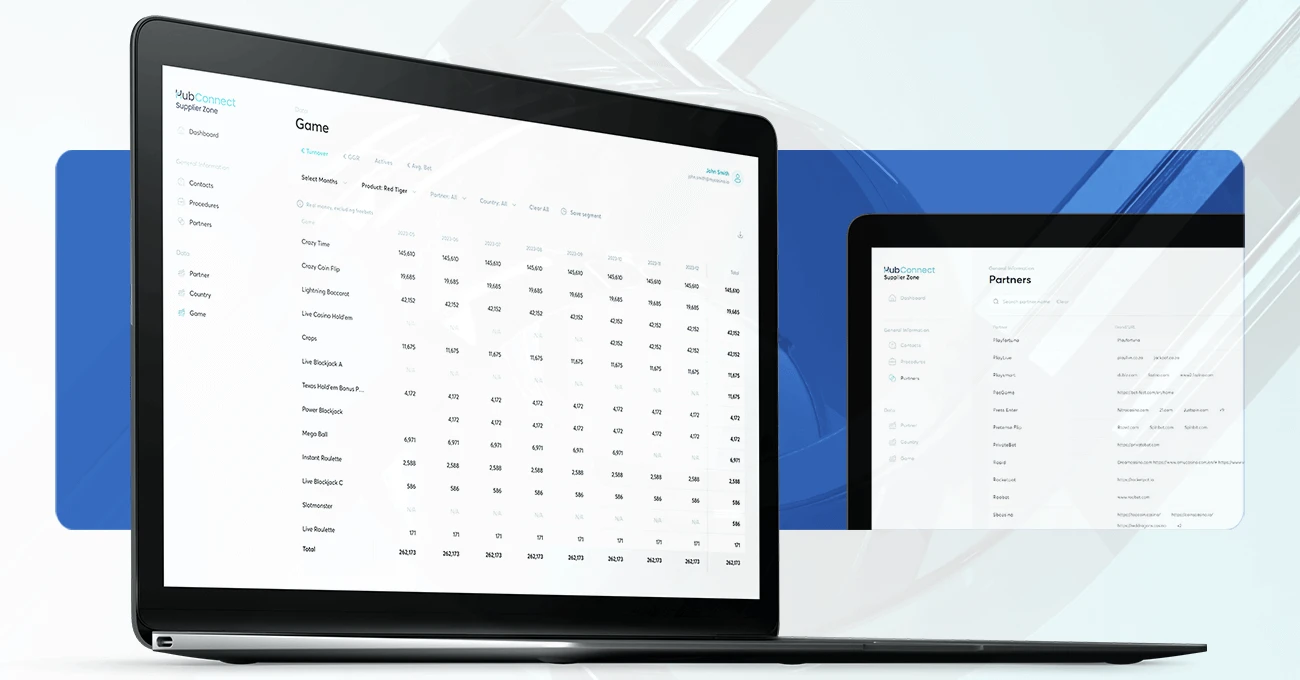
At its core, HubConnect is a unified self-service platform that streamlines operations for both operators and suppliers. Dedicated Supplier and Operator Zones give each side of the ecosystem the tools they need to act quickly, manage effectively, and collaborate more transparently. Real-time dashboards bring performance, compliance, and reporting into one place, replacing fragmented systems with a clear, central source of truth.
This structure directly addresses the inefficiencies partners told Hub88 were holding them back. Onboarding timelines are cut from weeks to days, giving businesses the speed-to-market advantage they need. Unified dashboards eliminate duplication and enable sharper, data-driven decisions. And with the Hub88 Knowledge Base centralising communication channels, partners can align more easily, reduce friction, and focus their efforts on growth instead of firefighting.
As Giorgio explains: “We wanted to address those three pain points head-on, creating a space where collaboration can be faster, smarter, and more transparent. Instead of constantly reacting to regulatory or technical hurdles, operators and suppliers can rely on an infrastructure that adapts with them – making it easier not just to survive in fragmented markets, but to thrive ahead of their nearest competitors.”
The self-service model also fosters scalability for Hub88 partners expanding into new markets or adding new products.
“Time and again, operators and suppliers told us that traditional models left them waiting on third parties to manage updates, integrations and so on,” Giorgio says.
“With HubConnect they can now launch seamlessly within the same environment, without the friction of traditional onboarding processes. It’s about creating a collaborative ecosystem where partners are equipped to grow, adapt, and succeed on their own terms. We see that empowerment as the true measure of partnerships.”
A joined-up future
So, what does a truly modern B2B infrastructure for iGaming look like? For Hub88’s Giorgio, the answer comes down to connectivity and automation.
“We can only hope the days of fragmented systems and manual workarounds will soon be behind us,” she says. “In the same vein as our own model, the future lies in environments where content, compliance, and reporting flow together effortlessly.”
That vision means no more waiting on integrations or updates. Partners will have the tools to act instantly – whether onboarding new products, accessing real-time insights, or adapting to shifting regulations without disruption. “It’s about autonomy supported by platforms that are flexible enough to evolve with the market, rather than locking businesses into rigid workflows,” Giorgio explains.
Advanced analytics will also shape this future. With benchmarks, flagged activity, and predictive insights, decision-making will move from reactive to proactive, enabling companies to anticipate challenges and seize opportunities ahead of competitors.
The bigger picture is clear: modern infrastructure will redefine how the entire sector operates. By eliminating inefficiency and empowering every stakeholder with clarity and control, the industry can shift its focus to what really matters – building player-first experiences, strengthening trust, and driving sustainable growth. In this vision, infrastructure is no longer the hidden cost of doing business, but the foundation for an iGaming ecosystem that innovates faster, collaborates smarter, and competes on a truly global scale.

Natasha Giorgio, Hub88’s head of business development and sales