
An uncertain future for Brazilian betting
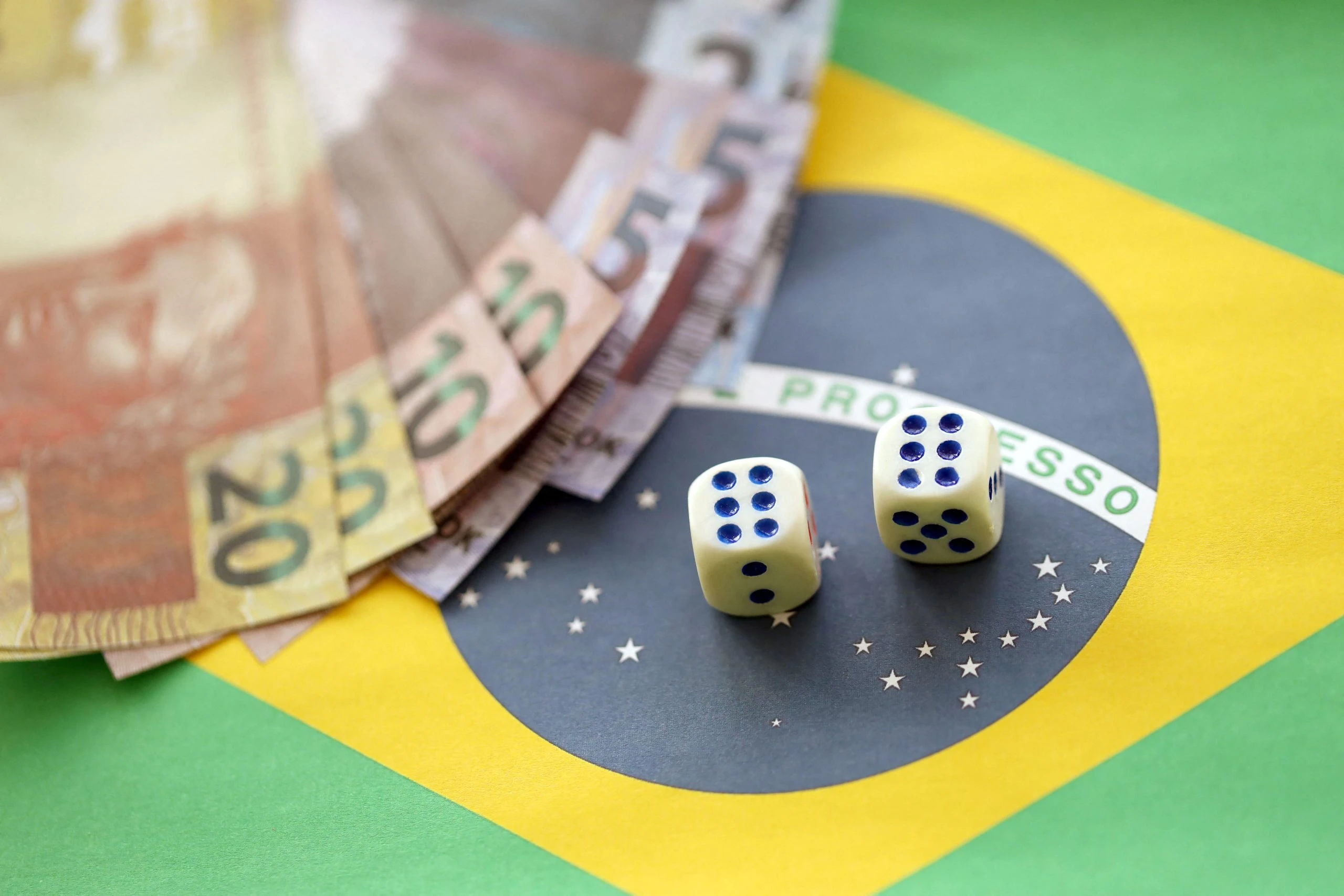
Licensed gambling in Brazil came to a shocking halt in late September, when the nation’s President Luiz Inácio Lula da Silva announced Provisional Measure 1.394, banning the sector.
The prohibition, which is subject to ongoing court proceedings and Congressional approval, followed years of work to bring licensed gambling to Brazil. The arrival of the regulated market on 1 January 2025 brought with it significant investment and an overall commitment to a competitive, transparent licensed sector facing strict regulations.
Licensed operators also faced a hefty financial burden with a five-year licence coming with a fee of BRL30 million ($6 million). Add to that a sizeable tax burden.
But with the sudden ban, companies that have played by the rules paid the price.
Ari Celia, director at the Brazilian payments company Pay4Fun, says the announcement came as a huge shock to the industry, particularly given the years of work that had gone into establishing the regulated market.
“The ban on gambling in Brazil came as a major and disappointing surprise,” he tells iGB. “After the industry had spent so many years fighting for a regulated market, no one saw this coming.”
Legal action underway
The legal response to the ban was almost immediate. The National Association of Games and Lotteries (ANJL) and the Brazilian Institute of Responsible Gaming filed a lawsuit with Brazil’s Supreme Federal Court (STF) in the days following Lula’s announcement.
ANJL President Plínio Lemos Jorge describes the ban as an “illegal and abrupt measure”. He noted the wider impact on investor confidence in Brazil.
“The reaction, not only from the ANJL but from the market as a whole, was one of perplexity,” he says.
Brazil has a history of respecting contracts across a wide range of economic sectors, he says. “Unfortunately, that reputation has shifted following the introduction of Provisional Measure 1.394.”
The ANJL’s case is yet to be ruled upon by the STF, which held a public hearing in early November. At the hearing, stakeholders presented arguments both for and against the ban.
Lower-court proceedings halted
Notably, the STF issued a stay order to all lower-court proceedings relating to the ban until it has made its own ruling. This followed two instances where licensed operators had been granted injunctions, temporarily allowing them to resume operations. The injunctions were quickly overturned.
There had been some optimism among operators that STF Justice Luis Fux might grant an injunction against the provisional measure, according to Celia. However, that prospect now appears less likely following the decision to refer the case to the full court.
“There was hope that Judge Fux might grant an injunction. But it seems the case became too significant for him to handle alone, so it has been referred to the full court,” he says.
Luiz Felipe Maia is a founding partner of the Brazilian law firm, Maia Yoshiyasu Advogados. He describes the STF’s halting of lower-court proceedings on the ban as “very negative”.
Felipe Maia labels it as “basically an unconstitutional decision issued by the Constitutional Court”, explaining: “According to the Brazilian Constitution, no claim can be prevented from being brought to the courts.
Felipe Maia added: “What he [STF Justice Luis Fux] expressly stated is that the betting companies are not entitled to go to court right now to discuss the constitutionality. That is because we have a pending case.”
Where’s the urgency?
As Felipe Maia explains, the implementation of a provisional measure is only applicable in “important and urgent cases” under Brazil’s Constitution.
Lula announced the provisional measure just over a week before the first round of Brazil’s presidential election – an election he ultimately won. Felipe Maia suggests this was the only urgency for the ban on betting.
This could open the door to the provisional measure being deemed unconstitutional, he says.
“It’s not like betting is something that has just happened, or that it’s something that was not previously approved by the Congress. Or that this is the only thing that can be done to tackle this,” he says. “There was no urgency.”
Celia is similarly critical of the reasoning behind the decision. The arguments used to justify the ban have failed to withstand scrutiny, he says.
“The current situation is defined by uncertainty. I have no indication of what will happen next. The decision is 100% political. Every argument presented to justify the ban has been debunked.”
Additionally, Felipe Maia highlights that little was done to assess the economic impacts of banning the licensed betting sector. It is a sector that contributed almost BRL10 billion in tax revenue to Brazil across its maiden year of 2025.
“According to the Brazilian Fiscal Responsibility Law, when you have a bill of law or a provisional measure, then you need to inform the source of the revenue. And that will replace those tax revenues that are being cancelled by that law.”
The government, says Felipe Maia, didn’t conduct any studies on the fiscal effects of the provisional measure. “There is no study on economic effects, on fiscal effects, on regulatory effects. It was done quickly because of the elections.”
It will likely be Congress that decides
Under Brazil’s Constitution, provisional measures lose effectiveness from the day of their issuance if they are not converted into law within 60 days. It is extendable by a further 60 days.
That validity has already been extended by a further 60 days. With Congress entering its legislative recess from 23 December until 1 February, the deadline to vote on the measure is now 4 March.
Felipe Maia and Lemos Jorge both see Congress as more likely to make a decision on whether licensed gambling returns over the STF. According to Felipe Maia, the STF is in a “very complicated situation in terms of public image”, given a corruption scandal that is currently ongoing.
“So I think this is the kind of unpopular decision that they would probably prefer not to have to issue at this time. Which again makes me think that the most likely solution to this situation will come from the Congress,” he says.
Illegal market stands to benefit
While the licensed industry makes attempts to bring back its legality, its black market counterparts appear to be making hay. The ANJL claims that on the day of the public hearing at the STF, 34,000 illegal sites were found to be active and accessible. “Why does the ANJL make an effort to publicise these figures?” Lemos Jorge asks. “Because supply exists only because there is demand.
“It is clear, therefore, that if thousands of websites are available and hundreds of influencers are promoting them, it is because there is an audience that is not only willing to bet – it is actively seeking out such opportunities.”
Celia also believes the biggest beneficiaries of the prohibition are those operating outside Brazil’s regulatory framework. Licensed operators are unable to compete while illegal alternatives remain accessible. “The only ones truly happy with this situation are the operators currently working illegally in Brazil,” he declares. “The government is failing to combat them. And bettors are losing their rights, and no taxes are being paid.”
The human impact of prohibition
In mid-October, an ANJL survey found over 3,500 workers had been laid off by the betting industry in the weeks following the issuance of the provisional measure.
Pay4Fun was among the companies forced to reduce its workforce following the suspension of the market.
“Like many other affected companies, we unfortunately have had to cut jobs,” Celia says. “The cruel irony is that the president’s party is called the ‘Workers’ Party’. Yet at no point did the government acknowledge the layoffs that would inevitably follow.”
A very different future
Felipe Maia suggests that if the market returned, it would be considerably smaller than the 85 operators that were licensed at the time of the ban coming in.
“The problem is, I think just a few companies would be able to survive five months without revenues in Brazil,” Felipe Maia states. “So even if we assume that the industry will be back and the betting market will be open again in Brazil, it’s going to be completely different.
“We had 85 operators licensed by the government. I think we may have five at the end of the day. I don’t think we’re going to have more than 10, at least during the first days. I think the appetite for foreign investors to trust in the Brazilian regulation and the Brazilian legal stability has been compromised.”
Despite this, Felipe Maia believes Brazil remains an attractive market, due to its scale.
This, he feels, could mean that larger operators will remain in the market should it return.
“If you are successful in Brazil, you make a lot of money,” he notes. “So I think, of course, the risk assessment will be different, but the return or the potential return of that risk is still worth it.”
He thinks it’s going to be harder for new entrants to trust in the regulation. But for companies like Betano, Bet365, Superbet, Blaze and Flutter, that were already doing well in Brazil?
“I don’t think they would leave the country.”
Brazilian betting may never be the same
For those who invested in Brazil’s regulated market, the hope remains that either the STF or the Congress will eventually provide a route back. Whether the industry can recover its previous scale, attract fresh investment and regain trust remains an unanswered question.
The general feeling seems to be one of injustice, as Lemos Jorge explains.
“Imagine I am a foreign investor who comes to a country to legally provide a specific service; I meet every single requirement and pay the federal government a multi-million-reais licensing fee for the right to operate that service for five years,” he declares.
“A year and a half after the inception of this regulated market, the regulatory authority – lacking any justifiable technical basis – is effectively dismantling the industry. What message does such an action by a country send to investors in any sector?”
It is expected to fall upon Congress to either approve the provisional measure as it is, amend it to introduce new regulations for the betting sector, or reject it entirely.
Additionally, the provisional measure could expire without any Congressional decision. Felipe Maia explains: “It is a sensitive topic, and it’s quite common in situations like this when there is no consensus or no strong majority for a provisional measure not to be voted at all.
“We have a common saying here, that in Brazil, ‘anything can happen, including nothing’. Assuming nothing happens and the provisional measure is not voted, everything goes back to what it was.
Of course, it will never be what it was.”