
High-street fight
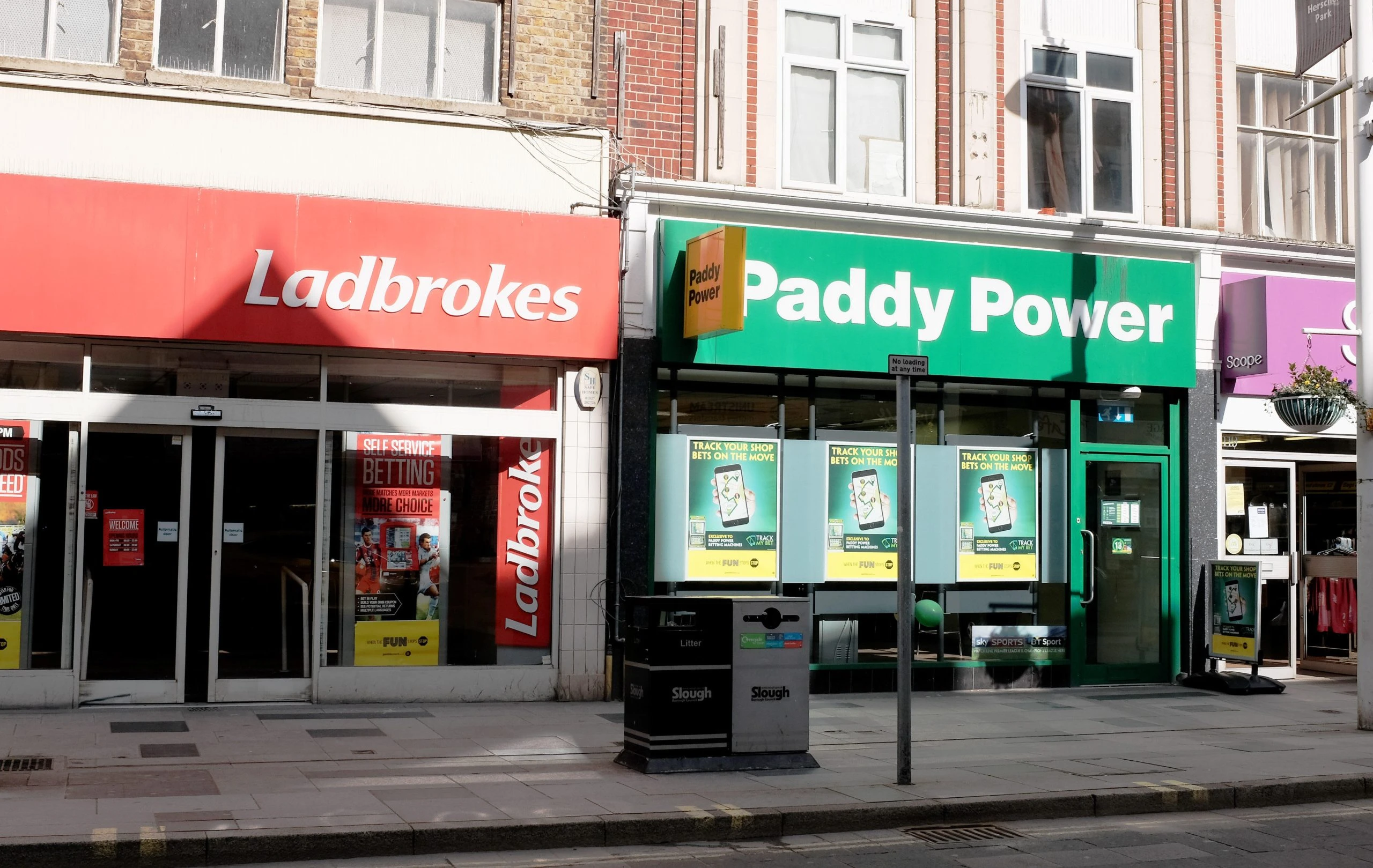
It’s no surprise that the gambling industry reacted angrily when Prime Minister Andy Burnham placed betting shops alongside vape shops and rogue operators in his diagnosis of Britain’s failing high streets.
Burnham’s government intends to remove the “aim to permit” principle from the Gambling Act 2005, giving local authorities greater freedom to reject applications for gambling premises. New adult gaming centres will also require planning permission.
But it was the language surrounding the announcement that caused the greatest offence. Burnham claimed betting and vape shops had replaced the shops, services and community spaces people wanted, while the policy was presented as a means of reining in “dodgy businesses”.
For the bookmakers, the obvious objection is that the story being told – some might say fabricated – bears little resemblance to the facts on the ground. Britain has fewer than 5,900 betting shops, compared with nearly 9,000 in 2015. Rather than spreading unchecked, the retail sector has been contracting for more than a decade.
Dodgy businesses?
JenningsBet chief executive Greg Knight described the comparison as an insult to both employees and customers. “What sort of ‘dodgy’ business provides employment for 40,000 people, finances the entire British horseracing industry… and pays billions in taxes and rates?” he asked.
His own business neatly illustrates the disparity between the rhetoric and the reality. JenningsBet has opened four shops this year but closed three, producing organic growth of precisely one outlet. Most of its expansion has come through acquisition.
Knight believes new openings could “grind to a halt” if councils receive greater discretion, although applications are already down to a trickle. He also suspects politicians may be conflating betting shops and AGCs, which remain different businesses despite being bundled together in the government’s announcement.
The AGC sector has mounted a similar defence. Bacta communications director Alistair Gair pointed out that venue numbers fell from 1,610 in 2015 to 1,502 last year. “This is a sector in decline, not one taking over Britain’s high streets,” he said.
Gair’s argument goes beyond the statistics. AGCs occupy units that may otherwise stand empty, provide employment and offer supervised, low-stake entertainment in regulated, alcohol-free environments. Restricting licensed premises, he warned, risks pushing customers towards illegal alternatives where none of those protections exists.
The butcher, the baker, the candlestick maker
If high streets are being hollowed out, closing or preventing the occupation of commercial units will not necessarily refill them with banks, butchers and community centres. Councils can only choose among businesses willing and financially able to operate there.
Christopher Snowdon of the Institute of Economic Affairs argued in a substack posting that Burnham has confused the cause of high-street decline with one of its effects. Betting and gaming businesses have not displaced a thriving retail economy; they have become more visible because falling demand and rents allowed them to move into units abandoned by traditional retailers.
“The idea that the high street can be revived by killing off the few remaining businesses that are able to operate on it is just silly,” he wrote.
The deeper change, Snowdon suggests, is structural. Supermarkets and online shopping have permanently reduced demand for banks, bookshops, newsagents and electronics retailers. The surviving high street will increasingly consist of services that must be consumed in person, including pubs, cafés, barbers and repair shops, with surplus premises converted into housing.
Restricting legitimate operators will not reverse that transformation, while creating new laws to address criminal activity in some vape shops and barbers risks substituting regulation for enforcement of existing laws.
Rank chief executive Richard Harris offered a defence of the industry’s place in society. Speaking during the company’s year-end results call last week, he said Rank was proud of venues it considers “community assets”, providing gambling supervision and safe entertainment.
“We try and look after our customers really, really well,” he told the analysts. “That is the game that we are in. We will continue to offer them the best entertainment, the best fun that we possibly can.”
Losing the narrative
Some want the industry to be more on the front foot. Patrick Jay, formerly of William Hill and now a consultant, argues that the sector has suffered from a leadership void and been repeatedly outmanoeuvred by opponents who established the dominant public narrative.
“What we have fundamentally misunderstood is how to fight back,” he tells iGB. “The goalposts have moved. We needed to have a social media paid response team that deals with all the health lobby nonsense on an hourly basis, so that these narratives get immediately challenged. Because at the moment, a guy at the SMF says stuff and there is no real pushback.”
Statistics alone will not settle an argument about how high streets feel to the people who use them. But the sector needs to demonstrate its local value consistently, not merely when threatened.
The challenges faced by retail betting now land in the in-tray of Vicki Foxcroft, the newly appointed minister responsible for gambling. She inherits an industry convinced it has been maligned, a prime minister who has already chosen his language and a policy whose simple announcement disguises some complicated legislative questions.
Not many would relish the task ahead. As the old joke about a tourist asking for directions in Ireland has it, “if I were you, I wouldn’t start from here.”

Scott Longley has been a journalist since the early noughties covering personal finance, sport and gambling, and is the founder of Earnings+More. Previously Scott worked for a number of publications including Investment Week, Bloomberg Money, Football First, eGaming Review and Gambling Compliance.