
From compliance to intelligence: Geolocation’s expanding role in iGaming
For years, geolocation technology served a relatively straightforward purpose in online gambling. Operators needed to establish whether a customer was physically located in a jurisdiction where they were permitted to play. If they were, they could proceed. If not, access was denied.
That requirement remains, but the role of geolocation services is changing. The expansion of regulated gambling markets, increasingly complex regulatory requirements and advances in location technology are encouraging operators to look beyond compliance and towards new opportunities. What was once regarded as a necessary operational cost is becoming a potential source of commercial intelligence, fraud prevention and competitive advantage.
Will Whitehead, commercial director at geolocation services specialist GeoLocs, believes this evolution is fundamentally changing the relationship between operators and their providers.
“Geolocation is becoming much more than a compliance function,” Whitehead explains. “It’s moving into risk, but also marketing, product and technology. It’s becoming a pivotal part of the overall ecosystem.”
A strategic capability for operators
The expansion of regulated online gambling across North America has significantly increased the importance of geolocation technology for operators. Following the repeal of the Professional and Amateur Sports Protection Act (PASPA) in 2018, individual US states began establishing their own sports betting frameworks, while markets including the Canadian province of Ontario have introduced further regulatory requirements.

“There’s much more complexity, especially in North America – and the rules are getting stricter as well,” says Whitehead, whose company is active worldwide. “Every state has slightly different rules.”
The consequences of inadequate location verification can be substantial, with operators risking financial penalties and potentially the loss of their licence. For example, Ontario’s authorities fined NorthStar Gaming CA$30,000 (US$21,750/£16,700/€20,100) for offering its services to consumers outside of the province.
Reliability is therefore becoming an important consideration. Whitehead points out that while operators commonly work with multiple payment and KYC providers, many still rely on a single geolocation supplier. That creates a potential vulnerability if the service becomes unavailable, particularly when integrating an alternative provider is much less disruptive than operators assume.
More broadly, accuracy, resilience and the ability to support expansion into new markets are increasingly influencing how operators assess geolocation technology.
“Operators once saw geolocation as something they merely had to have,” Whitehead explains. “Now it’s very much down to the quality of the product rather than just wanting the cheapest and quickest available.”
From geolocation to geo-intelligence
Technology originally designed to confirm whether a player is in an authorised location is increasingly being developed to help operators understand customer behaviour, identify commercial opportunities and deliver more personalised experiences.
“When it comes to placing bets, the operators know what bets their customers are placing, how they place it and when they’re placing it,” Whitehead explains. “However, they don’t know exactly where.”
That missing geographical dimension can reveal patterns that would otherwise remain hidden. mkodo-owned GeoLocs’ analysis of location activity during the first 100 days of Alberta’s regulated online gaming market, for example, found that an estimated 20–30% of observed activity took place outside the Calgary and Edmonton metropolitan areas.
‘Geolocation is becoming much more than a compliance function. It’s moving into risk, but also marketing, product and technology’
The data also revealed significant activity along the corridor connecting the two cities, including Red Deer, as well as in smaller regional communities. Such insights could help operators identify opportunities beyond the largest population centres, make more informed decisions about where to direct their marketing investment and ultimately unlock new sources of revenue.
The opportunities extend beyond analysing existing behaviour too. mkodo is working with lottery operators on proof-of-concept projects that could allow them to recognise when customers are approaching a physical ticket retailer and deliver relevant offers or incentives.
Artificial intelligence takes geo-intelligence a significant step further, enabling operators not simply to analyse where customers have played, but to anticipate their future behaviour and deliver more personalised content.
Whitehead explains: “By understanding individual and group behaviour, including where people are playing, we can help operators deliver content that’s more relevant to their customers.”
“We’re working with CRM providers to ensure operators communicate relevant offers to customers at the right time,” Whitehead explains. “It’s about delivering personalised content without overwhelming players with unnecessary messages.”
From commercial intelligence to fraud prevention
The potential applications of geo-intelligence extend beyond marketing and customer engagement. The same geographical and behavioural insights that help operators identify commercial opportunities can also play an increasingly important role in detecting fraud.
By combining location information with data about devices, accounts and betting activity, operators can identify suspicious patterns that might otherwise go undetected.
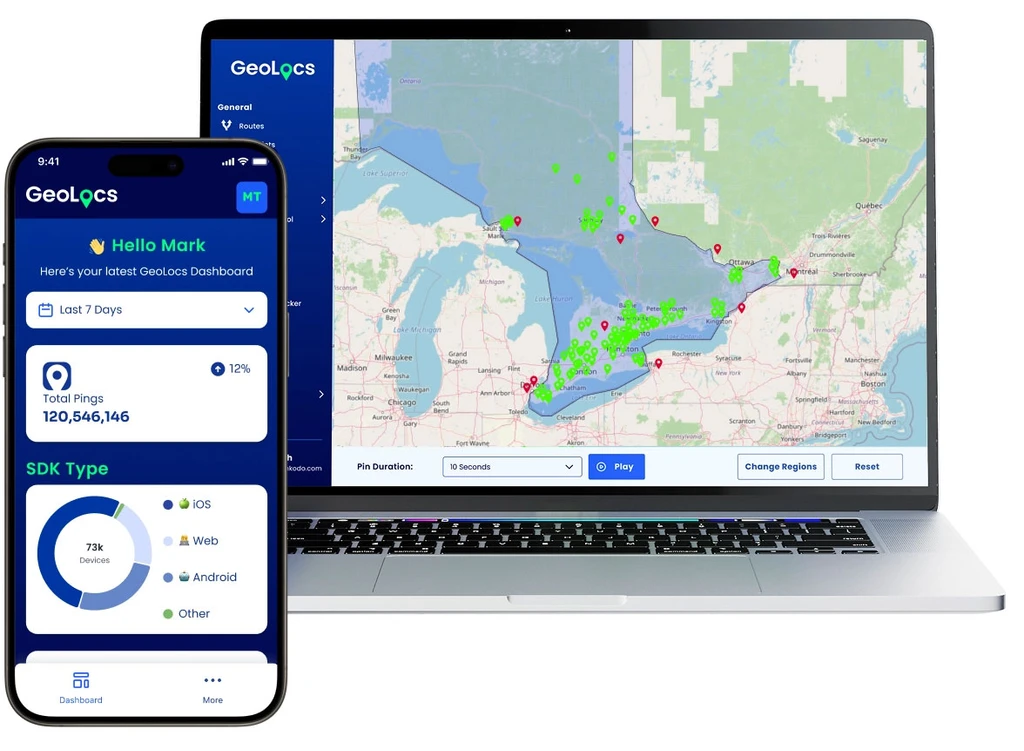
This is driving the development of more sophisticated fraud detection tools, allowing operators to monitor activity in real time, configure thresholds and determine when intervention is appropriate. mkodo has incorporated these capabilities into Fraud Shield, an extension of its GeoLocs offering.
‘We’re continuously using AI to improve the technology, simplify onboarding and integration, and increase automation’
The wider opportunity lies in combining these capabilities with predictive technologies. As more behavioural and location data becomes available, Whitehead anticipates artificial intelligence (AI) playing a greater role in identifying emerging fraud patterns and potential threats earlier, while helping operators distinguish suspicious activity from legitimate customer behaviour.
“The key is identifying this behaviour in real time, so operators can respond quickly without unnecessarily disrupting genuine customers,” Whitehead explains. “When suspicious activity meets certain thresholds, we immediately alert the operator, who can then decide whether to investigate, intervene or block the activity.”
What’s next for geolocation and geo-intelligence?
AI will play an increasingly important role in the evolution of geolocation technology, including helping operators turn location data into more sophisticated commercial intelligence and automated decision-making.
Whitehead also sees AI helping to simplify the technology itself, reducing the work involved in integrating geolocation solutions and managing processes that previously required manual intervention.
“We’re continuously using AI to improve the technology, simplify onboarding and integration, and increase automation,” he explains. “The aim is to make these services easier for operators to adopt and manage.”
Alongside these advances, Whitehead anticipates a shift in how operators source their technology. Rather than maintaining relationships with numerous specialist suppliers, he believes they will increasingly favour a smaller number of partners capable of delivering a broader range of services.
For geolocation providers, like GeoLocs, that means expanding beyond location verification to offer integrated capabilities spanning fraud prevention, geo-intelligence and player engagement. mkodo is pursuing this approach through the continued development and broadening of its GeoLocs offering.
Ultimately, these developments could fundamentally change how operators view their geolocation partners, bringing them into decisions that extend well beyond regulatory compliance.
“Historically, operators simply wanted geolocation technology to work reliably in the background,” Whitehead explains. “Now they’re recognising that it can contribute much more to their business, from managing risk to improving customer engagement, informing commercial decisions and increasing revenue. It’s becoming a strategic capability rather than just another compliance requirement.”