Why winning Latin America’s underbanked matters

The final whistle is seconds away. With the Copa Libertadores on the line, the ball strikes an outstretched hand. The referee points to the penalty spot. It’s pandemonium in the stadium.
And in the betting markets. A new customer scrambles to wager before the decisive kick is struck. They confirm their bet and head to the cashier—but stop. They don’t have a credit card, and their preferred payment method isn’t listed.
The ball hits the back of the net. The moment has gone.
For betting operators in Latin America, this is a costly reality. It means abandoned transactions, wasted acquisition spend and lower conversion rates. To succeed in the market, operators cannot create barriers at payment, the most crucial stage of the customer journey.
The payment gap
The Latin American iGaming market is projected to reach nearly $10 billion by 2028. With newly regulated markets, greater connectivity and rapid mobile adoption, as well as a huge population of sports fans, the region is attracting interest from domestic and international operators.
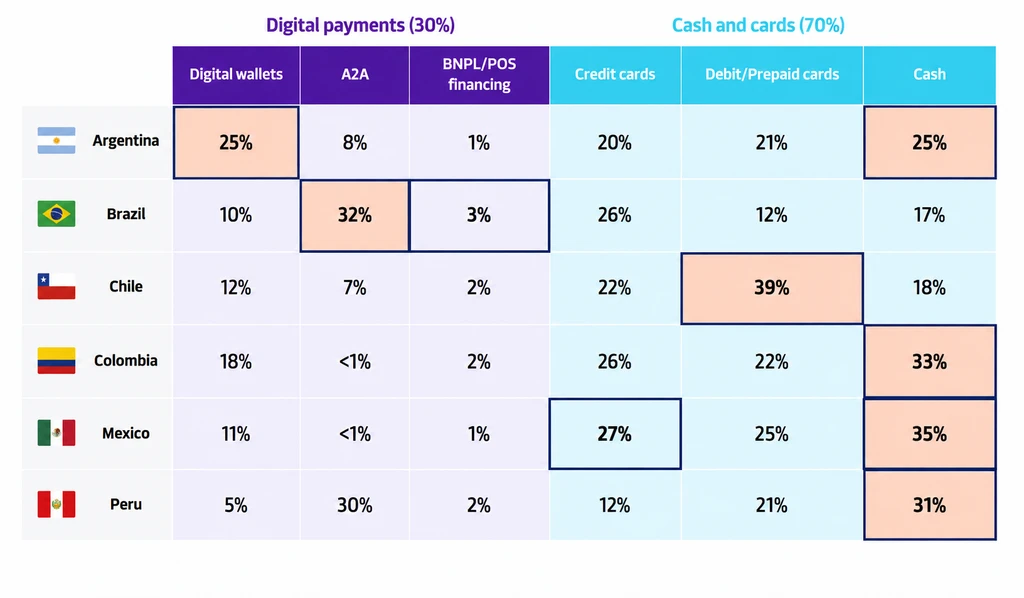
Despite great leaps forward, a relic from the past remains: cash. According to the Worldpay global payments report, in 2025 cash accounted for 23% of point-of-sale spending. This is 9% higher than the global average.
The trend is not linear across the region. Countries such as Brazil (12%) and Chile (16%) use cash in line with the rest of the world, whereas Colombia (32%) and Mexico (40%) are much more reliant on this payment method.
In addition, a reported 26% of Latin Americans are unbanked. For betting operators, reaching them requires payment options that reflect how they already manage their money.
Even if you have a bad credit record, you can still get a bank account
— Ari Célia, co-founder and director of Pay4Fun
And the answer may partly lie in technology. In Latin America, regulatory reforms have galvanised fintech sectors. Major countries have implemented new frameworks to embrace the digital financial era.
Brazil is a compelling example of this transformation. As Ari Célia, co-founder and director of Pay4Fun, points out: “Digital bank accounts in Brazil are common and easy to open. You just download an app”. He goes on to add that “even if you have a bad credit record, you can still get a bank account”.
Pix, a digital payment system managed by the Brazilian Central Bank, has enjoyed unrivalled popularity. Offering bettors instant access to funds, Pix accounts for a reported 96% of gambling transactions in Brazil, according to data from Pay4Fun.
This is a blueprint for how local payment methods can attract players previously excluded from traditional banking systems.
In focus: point-of-service payment methods
Banking barriers
In Chile, consumers have embraced formal financial systems. This is in part due to the country’s historic economic stability, compared with regional neighbours such as Argentina. As a result, there is a high percentage of banked customers in Chile, with debit or prepaid cards accounting for 32% of online payments.
However, trust in institutions is not linear across Latin America. Mónica De Martino, a senior leader in payment solutions, explains that Mexicans may not “want the government to know their behavior or how much money they are moving around”.
While Mexicans are resistant to perceived government surveillance, employment dynamics also explain the reluctance to enter the formal banking system. “The problem in Mexico is there are a lot of informal jobs, which pay in cash,” De Martino tells iGB. She explains that as these jobs are not formally registered, ”employers don’t have to pay all the employee’s taxes to the government or cover any medical insurance”.
With cash ubiquitous, many consumers continue to rely on it for everyday transactions. This is particularly evident in Mexico, where cash remains essential for routine purchases and services, from public transport to small retail payments.
Financial literacy is also a stumbling block to entering traditional banking. Many people are unsure how bank accounts work, or what they offer. Without easily accessible information, the familiarity of cash feels like the simpler and safer option.
Unexpected charges reinforce this view. “They are entering the financial world. They are not used to reading contracts,” notes De Martino. Demonstrating her point, she observes that “many cards will impose a charge if you don’t use them that month.” For traditional cash users, this may outweigh the benefits of having a bank account.
Players get upset if it takes more than 10 seconds to confirm Pix
— Ari Célia, co-founder and director of Pay4Fun
And traditional banking doesn’t guarantee smooth transactions. Delays, failed payments and declined cards remain common. In an industry where immediacy is crucial, this presents a considerable challenge.
To illustrate the issue, Célia uses the example of Boleto, a voucher-based payment method. “Boelto used to take one business day to confirm business transactions. And people were fine with that,” he says.
But that was in 2020 when delays were expected. The industry has moved on, and Célia states that “now players get upset if it takes more than 10 seconds to confirm Pix”.
Opening digital access
In iGaming, payments are an essential part of the player experience. To enable seamless transactions, operators must understand the pain points common in each market.
In Argentina, Célia asserts that “historically hyperinflation made it complicated for international payment companies”. Though inflation is easing, players are inclined to avoid holding Pesos, instead looking for alternatives to protect their money.
Digital wallets such as Mercado Pago are often the answer. Users can earn returns on their balances, while easily accessing funds for everyday payments.
The same trend is visible in credit. Argentina’s buy now, pay later (BNPL) market is expected to reach $6.19 billion by 2030, with platforms such as Mercado Libre offering flexible instalment options.
Not everyone will want to go into a financial system the way you want them to
— Mónica De Martino, senior leader in payment solutions
Supporting trusted local wallets widens player reach, while encouraging digital finance adoption. And once they make digital payments, operators can gain deeper insights into player behaviour for essential functions such as personalisation, marketing and bonuses.
These strong incentives for digital payment adoption may make operators push hard to expedite underbanked or unbanked players straight into new methods. However, De Martino warns that businesses need to “respect that not everyone will want to go into a financial system the way you want them to”.
This is particularly true for cash-dependent markets, including Mexico, Colombia and Peru. With players entrenched in long-standing behaviours, new payment methods may seem inaccessible due to digital literacy, or undesirable due to trust.
OXXO, a cash-and-voucher payment system popular in Mexico, offers a great example of overcoming these barriers. As De Martino explains: “People can have access to a financial product without going to the bank. Customers can either download the app, or get a debit card from an OXXO store. It takes two minutes; you just need an ID”.
This omnichannel solution enables customers to move seamlessly between cash and digital payments. And with OXXO, there’s likely a familiarity with the product, where customers can use in-store facilities to pay for a range of services, from mobile phone top-ups to utility payments.
Furthermore, OXXO stores provide a welcoming environment where, for customers, “The manager of the store is their friend. Someone they see every week,” De Martino says. Putting a face to financial transactions makes the process more transparent, particularly important for betting operators targeting cash-reliant players.
Branching out
While some countries in Latin America are pioneering digital payment ecosystems, others still lack the financial infrastructure needed to reach underserved communities. This challenge is particularly acute in rural areas.

De Martino points out that in major Mexican cities “you will see five or six ATMs very near each other”. However, in other areas of the country there are no branches, which highlights the challenge of financial inclusion.
To address this issue, OXXO has expanded to around 25,000 stores countrywide. The vast majority of Mexicans are now within walking distance of a financial access point, rather than a bus journey away.
For operators, payment strategy should reflect how people can access financial services. Success depends on meeting customers where they are, whether through established digital wallets or cash-to-digital networks.
Expanding into new markets means thinking beyond the cashier. Operators that tailor payment journeys to local infrastructure and consumer behaviour will be better placed to reach underserved audiences and support long-term growth.
Making a connection
As the region’s biggest markets, particularly Brazil, become increasingly competitive, operators may explore new countries for growth. Many of these target markets, such as Paraguay, traditionally have a high unbanked population.
Yet underbanked customers are not disconnected. Mobile penetration is high across Latin America, creating fertile ground for digital wallets and mobile-first payments. Yape, a digital payments platform created by Banco de Crédito del Perú (BCP), illustrates this shift, with an estimated 70% of adults in Peru now using it.

However, even where connectivity and innovation are strong, cash can still feature. In Colombia, Nequi, a digital financial platform from Bancolombia, accounted for 54% of online retail payments in 2025, but cash remained the funding source for digital wallets in 15% of transactions.
With customers in each market displaying distinct payment behaviours, how can operators best reach them?
Célia points to a solution, drawing on Pay4Fun’s experience bringing Pix to Argentine casinos: “We found the right partner in Argentina, a local payment service provider.” That partnership proved essential to navigating the nuances of the market.
In addition, a skilled partner can turn payments into an operational advantage. As Célia notes, they can assist with “complying with regulations, checking IDs, avoiding fraud, and monitoring for AML issues”.
Reaching underbanked players requires more than adding payment methods. It demands partners that understand local markets and regulatory requirements.
A new way to pay
Governments in Latin America are pushing for the financial system to be more accessible. Peru’s National Financial Inclusion Strategy provides a pertinent example. According to the World Bank, it was instrumental in halving Peru’s unbanked population from 2011 to 2024.
While momentum behind digital financial services is growing, operators must be careful how they approach the underbanked.
Confidence in traditional banking institutions remains weak in parts of the region. At the same time, Latin Americans have more trust in AI compared with people in other regions.
Operators should therefore look to embed these technologies into digital payments. As the independent think tank, Consultative Group to Assist the Poor, puts it, “AI can enhance customer’s trust in financial institutions by improving fraud detection and prevention, including for small-value transactions”.
In addition, with gambling regulations intensifying as the region’s market grows, digital payments will become critical. Célia points out that in Brazil “the government doesn’t want to have cash in the system for AML reasons”.
It’s logical for this regulatory trend to spread across Latin America, albeit at different paces. Operators that connect with the underbanked now will be better positioned as regulated markets become dependent on digital payments.
Key takeaways:
- The underbanked are a huge growth opportunity for betting operators in Latin America
- A regional shift towards digital payments means operators must adapt quickly
- Trust, employment dynamics and financial literacy account for market differences
- Innovative payment methods can provide a bridge from cash to digital payments
- Artificial intelligence can enhance customer journeys and improve operator performance