
Ashton suicide ruling narrows route to negligence claims against gambling operators, says legal expert
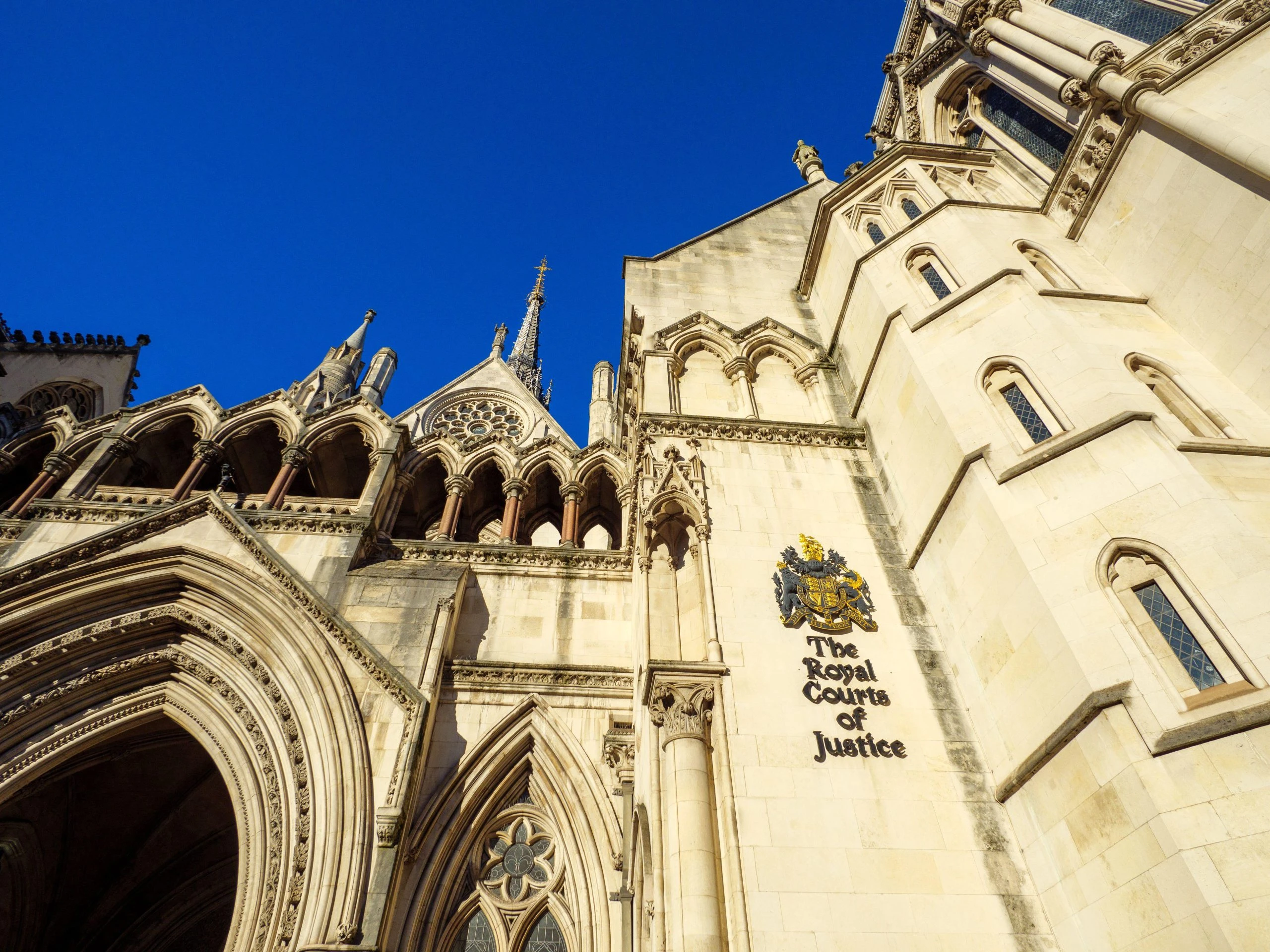
The High Court’s recent ruling in the case surrounding the death of gambling addict Luke Ashton is not mainly significant for opening the door to a new wave of claims, according to Bethan Lloyd, partner at Wiggin Law. Its main importance lies in narrowing when a gambling operator can be held to have known about a customer’s disorder.
The case in question was brought by Mr Ashton’s widow, Ann-Marie Ashton. They argued that Betfair had failed to identify and respond to Mr Ashton’s gambling, worsening his condition and contributing to his death.
They sought damages for psychiatric injury and losses under the Law Reform (Miscellaneous Provisions) Act 1934 and the Fatal Accidents Act 1976. Mr Ashton, 40, died by suicide in 2021.
But last Friday, Friday 13th November, Judge Swift dismissed the claim against TSE Malta LP, the operator of Betfair’s betting exchange. The judge found insufficient evidence that Ashton had a gambling disorder or that the company knew, or ought to have known, he faced the relevant risk.
A Flutter UKI, parent company of Betfair, spokesperson told iGB: “While we welcome the court’s ruling, this is a tragic case and we once again offer our sincere condolences to Mrs Ashton and her family.”
‘Knowledge’ for claimants is made clearer
“The trigger is more narrow than ‘foreseeable’,” Lloyd told iGB this week. “Ashton provides helpful guidance as to the court’s position on when a risk of severe disorder becomes ‘foreseeable’.”
Mr Justice Swift held that a gambling operator could owe a customer a duty of care to prevent severe gambling disorder where the risk was foreseeable, but dismissed the wider negligence claims.
Lloyd said the judgment clarified that the duty arises only in situations “beyond the limits of genuine and informed choice”.
The operator must have knowledge of the risk, she said, and disorder would be foreseeable only where either “the operator is on notice of a diagnosis of gambling disorder in any form” or a customer’s behaviour is “so extreme as to demonstrate that their gambling is wholly outside their control”.
“I think Ashton is more significant in narrowing the scope for claimants to say ‘you should have realised I had a problem from the data you collected on me’,” she said. “The position on what constitutes ‘knowledge’ of an operator is now even more clear than it is in opening the door to more claims”.
A narrow duty, not a general obligation to intervene
The judgment addressed whether gambling companies owe customers a common-law duty of care to prevent gambling-related psychiatric injury.
The family had drawn on the employment case Hatton v Sutherland (2002), in which a teacher alleged that workplace stress had caused psychiatric illness.
The High Court judge recognised some parallels, including contractual relationships and statutory obligations intended to protect wellbeing, but found the relationship between an operator and a customer to be fundamentally different.
The court also considered the Gambling Act 2005 and Gambling Commission requirements concerning interventions to address gambling-related harm. It concluded that regulatory obligations did not, by themselves, provide a suitable basis for a civil negligence claim.
Lloyd said the distinction was important because claimant law firms had sought to argue that a breach of an operator’s regulatory duties should itself give rise to civil liability.
“We have always been strongly against this position, had Parliament intended this to be the case, it would have said so in the legislation, and Ashton confirms that a regulatory regime and the law of negligence serve different purposes and should not be merged,” she said.
“Indeed, section 24(8) of the Gambling Act provides that breach of the Gambling Commission’s Social Responsibility Code does not of itself give rise to civil liability. Otherwise, as the judge said, the duty of care would ‘usurp the position and role of the statutory regulator’.”
Regulation ‘too broad’ for negligence claim
Lloyd said regulation was “too broad to give rise to a claim in negligence”, particularly in a system that is outcomes-driven rather than prescriptive.
The judgment, Lloyd said, treated regulatory standards as an “inapt starting point” for deciding the scope of a legal duty.
It also rejected the suggestion that a customer contract contains an implied term requiring an operator to comply with the Gambling Commission’s Licence Conditions and Codes of Practice (LCCP).
That finding, she said, prevents customers from bringing claims for breach of contract based on an alleged failure to comply with the LCCP.
Could an operator nevertheless meet regulatory requirements and fall short of a duty of care to an individual customer? Lloyd said the two questions were linked, but civil liability would depend on the facts and on the stringent test set out in Ashton.
“It is hard to see how an operator could be compliant with the LCCP and liable to a customer,” she said.
But she added that an operator could face both regulatory sanctions and a negligence claim if it breached the LCCP.
Lloyd also noted that the Gambling Commission had reviewed the circumstances of Ashton’s death in 2021 and initially concluded that no action was required against the operator.
Family accuse Betfair of ‘failing to recognise the seriousness’ of the gambling
The court heard that between 20 and 30 March, he bet every day, averaging 64 bets a day. He spent at least four hours daily on the site, with activity often starting early and continuing late.
Betfair’s systems sent him four automated safer-gambling messages during March. One followed a deposit and three were triggered by the time he spent on the website.
The messages directed him to tools including deposit and loss limits, time-outs and self-exclusion.
The family argued that Betfair’s systems failed to recognise the seriousness of Ashton’s gambling, partly because his activity was assessed against thresholds and patterns across a wider customer base.
They said the operator should have contacted him directly to understand his circumstances and offer help.
Foreseeability and the limits of data
Lloyd said Ashton confirmed that an operator must have “real knowledge” of a customer’s inability to control their gambling, rather than being expected to infer it from data alone.
“Of course, if the data includes a situation where the customer has given the operator knowledge of a disorder, then the duty would absolutely arise,” she said.
“All the case law to date confirms that once an operator has knowledge a customer cannot control their gambling, from the point of that knowledge arising, they owe a duty of care to that customer.”
She said the judgment was unlikely to produce a significant increase in litigation. “Operators have been subject to these claims for years and Ashton doesn’t materially change the established legal position.”
Causation remains a major obstacle
Even where a claimant could establish that an operator knew of a disorder and breached a duty, Lloyd said, causation would remain a major hurdle.
“Those with gambling addiction will gamble elsewhere, which makes it difficult for the courts to determine the financial liability for that one operator,” she said. That can make it difficult to recover financial harm from any single company, particularly where a customer has used several operators.
The judgment was notable, however, for establishing for the first time that a duty of care could extend to psychiatric injury, rather than only repayment of losses.
Lloyd said it would still be difficult for a customer to show that one operator was responsible for psychiatric harm if they had also gambled with multiple bookmakers.
Lloyd also said the judgment gave weight to personal autonomy, including respect for the “freedom to act unwisely”; the fact that gambling is a lawful, everyday activity; Parliament’s decision to permit and regulate gambling rather than prohibit it; and the principle that even those who develop a mild or moderate gambling disorder “should accept some responsibility to address those consequences”.
The High Court ruling comes amid continuing debate over online gambling and safer-gambling interventions. Safer Gambling Week organisers said online deposit limits in the UK rose sharply in 2025, with 16 million set across the year compared with five million in 2020.

Kathryn Evans
Kathryn covers bitesize breaking news with a primary focus on EMEA and US legislation. A proud North Walian, fluent Welsh speaker and lifelong Wrexham FC fan – long before Hollywood came calling.