“It probably won’t grow”: Finland market takes shape as licences roll in

It has been over a month since the National Police Board, the body processing Finnish gambling licence applications, granted its first B2C licence ahead of the launch of the liberalised online market on 1 July 2027.
Since then, as of the time of writing, the Finnish regulator has granted 25 licences, a list which includes major European operator groups as well as smaller challengers.
As the outlines of the market start to take shape, hopes are high and competition looks to be fierce for a piece of the established Nordic gaming destination.
“Our opinion is that it probably won’t grow,” Wildz Group’s CEO Sam Brown says of the Finnish market. “We’re not expecting it to shrink either. We’re expecting it to be to remain fairly consistent over the course of the next five years. Our job will be to see how much of it we can carve out as our market share.”
Busier than expected
Finland punches above its weight in many categories (gambling participation being one of them), but even so, it is a country of 5.6 million inhabitants and just 4.6 million adults.
With over 80 applications submitted and 25 already approved, the market will be busier than expected. Ahead of the licencing window opening iGB sources had initially expected there to be around 50 total licences, which looks set to be far outpaced should the current trajectory of licencing application approvals continue. (Out of the first 12 licence applications, there was a 100% approval rate.)
Competition, competition, competition
Competition will therefore be intense when the market opens. But Antti Kouvla, chief compliance officer at joint-venture operator HipposATG, does not necessarily see this as a problem.
“Finland is an attractive market with significant potential, and I expect competition to be intense,” he told iGB. “However, obtaining a licence is one thing; building a commercially successful and sustainable business is another.
“I see strong competition as a positive development, both for Finnish consumers and for the success of the gambling reform. Consumers benefit from having more choice, and a competitive regulated market is also essential for achieving a high channelisation rate.”
Kouvla says HipposATG’s long-term objective is to secure sustainable funding for Finnish horse racing and breeding. Its current position and experience in the region will help it excel.
“ATG’s position as the largest betting operator in the Nordics provides us with a strong foundation, both in terms of products and operational expertise. We will offer a comprehensive product portfolio covering horse racing, sports betting and online casino.”

Turning grey to white
Wildz Group’s Brown – which has big plans in Finland – also told iGB he is not particularly worried about oversaturation because licencees in theory will be displacing demand currently met by the grey market.
“There’s a lot of people that operate the market today,” he explains. “There are loads and loads of very small casinos, they pop up all the time, and the vast majority of those are not in the application process.
“Let’s just say there will be way less operators than there currently are. [But] it’s yet to be seen how the other side of the market will be handled and whether there will be a prevalence of people operating in the black market. I think that’s probably more of a risk from a saturation point of view.”
Brown noted that comparisons can also be drawn to Sweden where in the early stages post-market opening there were a lot of smaller operators that dropped away after failing to find a natural place in the market.
Veikkaus to launch new brand
Joining the upstart competition will be incumbents, who will look to leverage their years of doing business in Finland to muster an advantage under the new regime.
Chief amongst them is Veikkaus, the current state-owned monopoly, which will be able to leverage its existing customer base as it competes in the open playing field. Veikkaus’s head of icasino and sportsbook told iGB Veikkaus submitted its licence application “much later” than the initial successful licencees, so it expects to receive its decision later this year.
Last month, Veikkaus also announced a joint initiative with Nordic streaming and entertainment group Viaplay to launch a new brand, Viabet, in both Finland and Denmark.
But alongside Veikkaus will be some non-monopoly brands already active in Finland. The country has a large grey market as operators can legally accept bets in Finland as long as they are not actively marketing or targeting Finnish players. There is nothing in the legislation currently indicating that such brands would be denied a licence.
In its Q2 2026 results, multinational operator European Entertainment Group said it has operated in the Finnish market for more than 15 years through well-established local brands. The group, which has since confirmed approval of multiple licences, said in the Q2 results it believes its “existing market position, customer base and operational experience provide a strong foundation for future regulated growth.”
Lingering concern over marketing, responsible gaming
As they prepare to capture real estate upon market launch, operators are keeping an eye on how the regulatory regime shapes up as lingering concerns remain in some areas.
Market experts have previously told iGB that lack of clarity around things like marketing restrictions and responsible gaming were yet to be addressed.
Joonas Karhu, a Finnish lawyer and advisor with extensive experience in Finland’s gaming market, tells iGB he thinks the new regulatory framework is a good starting point and reasonably welcoming to businesses – but there is some room for improvement.
For example, while the new Gambling Act allows the provision of daily, monthly and annual loss limits, a decree to set specific limits has not yet been issued, Karhu says.
“The Ministry of Social Affairs and Health published draft recommendations on what those limits and player protection measures should look like. In my view, they went way too far, and that sparked a lot of debate. But those recommendations didn’t really have much political backing.”
Affiliate ban is the biggest single problem
The lack of certainty on what could in theory significantly cap revenue per player is an obstacle for operators.
Marketing restrictions have also caused the controversy. Strict restrictions on social media limit marketing to operators’ own social channels. Affiliates will also notably be banned and operators will not be allowed to advertise through celebrities or influencers, though the wording around who counts under that is arguably vague.
Karhu said the affiliate ban is the biggest single problem and projected it could reduce channelisation by as much as 20 percentage points.
‘Isn’t possible to write into law’
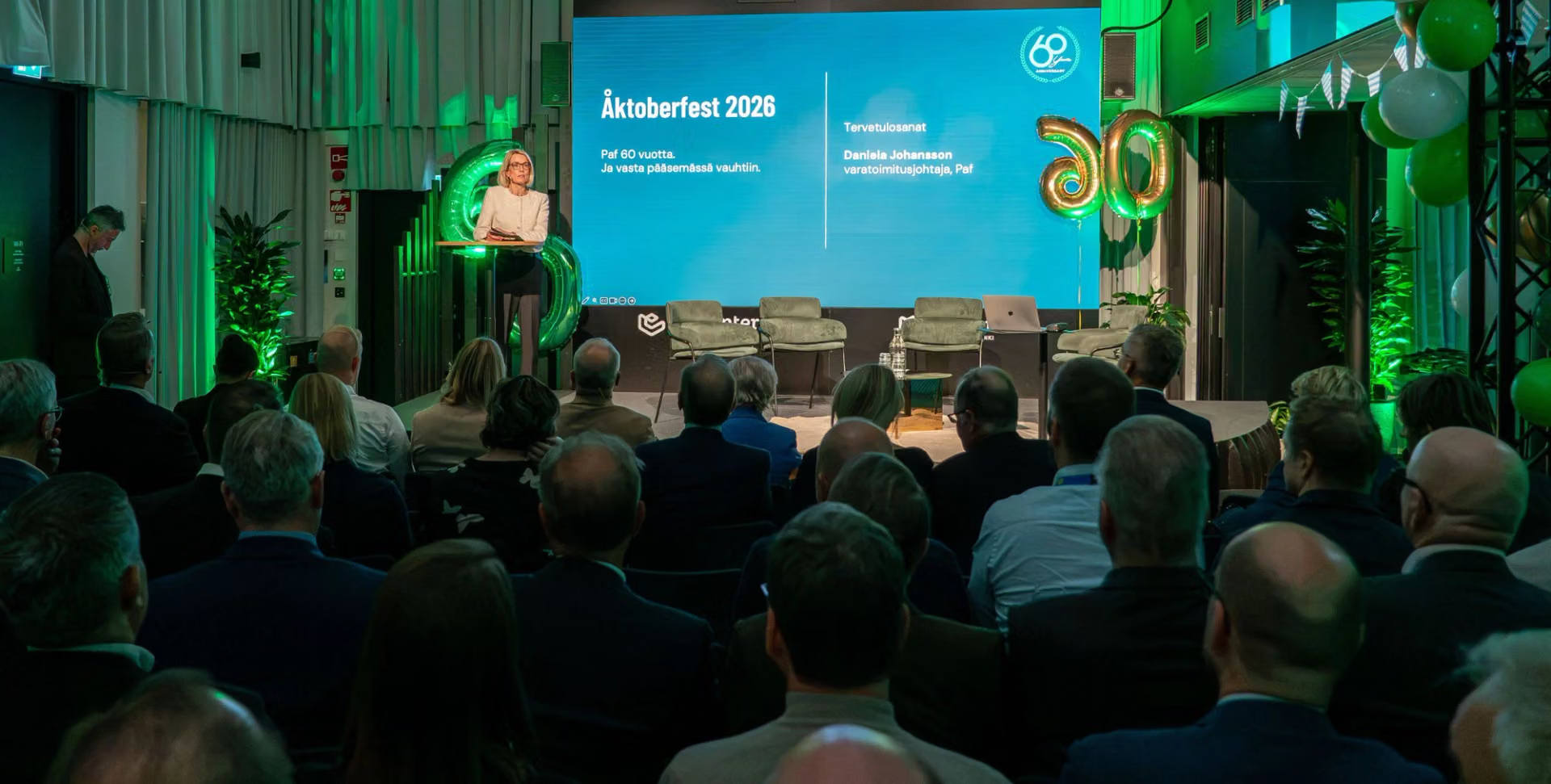
At an industry event last month, Paula Paloranta, secretary general of Finland’s Council of Ethics in Advertising, reportedly said it “isn’t possible to write into law exactly what gaming advertising should look like.” Instead, she predicted rules would emerge as individual cases are assessed and scrutinised.
As a result, traditional media and sports partnerships are expected to be the main marketing vehicles for the licenced sector. “Operators will have plenty of ways to advertise through TV, radio, newspapers, sponsorships and other permitted channels,” Karhy says.
“Where I do see a challenge is the ban on affiliate marketing and the restrictions on social media. Those are important channels for online gambling, especially for small and medium-sized operators that don’t have the budgets for big TV campaigns or major sponsorship deals. My concern is that these restrictions could make it harder for those operators to compete and attract players into the licensed market.”
Will not be straightforward
Even within permitted channels, there are signs it may not all be straightforward. Last week, the Finnish municipality of Janakkala announced it had banned gambling advertisements in its local area. The gambling advertising ban covers premises owned by the local government municipality, as well as outdoor areas and billboards managed by it.
The municipality said it was taking action now to get ahead of an expected surge in advertising post market launch, specifically citing the need to protect children and young people from gambling marketing. Finnish national broadcaster Yle reported that left-wing councils in both Helsinki and Lahti have submitted similar initiatives.
Industry is prepared, but is the regulator?
On the whole, there is broad optimism that the regulatory regime will give a significant leg up to operators participating under the licenced system, with positive implications for channelisation. Finnish authorities have stated a target of 90% channelisation; it is currently estimated at around 50%.
But how effectively the regime is policed is another question. In a recent interview, Finnish MP Sinuhe Wallinheime, who helped push the liberalised regime forward, told iGB he was concerned about whether the regulator will be ready in time.
“We don’t have the authority set up yet,” Wallinheimo warned. “Market launch is in less than a year’s time. If you are only starting it now, what will be the end result? I don’t know.”
There are also concerns around the statutory instruments available to the new body, though Sam Brown questions whether any jurisdiction really has the tools needed for that task.
“Does any regulator have the tools to keep people out of the black market? No, unfortunately, they don’t. They can’t handle these crypto giants and various other guys, it’s very hard to get to those guys.”
He says it’s not possible to build a framework that’s so complete that it will block every illegal operator out of the market.
Pragmatic approach will duty of care
The best way to keep players safe, then, is to have a market under which all types of players can play safely.
“Don’t have an overly restrictive view on how to treat customers – like in Germany, for example, just one draconian set of rules for players. That’s a really poor way to protect customers because the customers that can afford to play at those higher values in a safe way are forced to enjoy their play somewhere else.
“What I think we can see so far in the in the way that that Finland has approached it, they’ve done so in a pragmatic enough way that it will allow a kind of duty of care that will keep hopefully most value sectors of players in the regulated market.
Karhu said it is regrettable that responsibility for market oversight will switch to a brand new regulatory body on day one of the market, although it will largely be the same people doing the job under a new organisation.
“I think the regulator has a good range of legal powers to intervene. There’s been some discussion about whether it needs stronger tools to deal with operators targeting Finland without a Finnish licence.
“My view is that the best way to improve channelisation is to make the licensed market welcoming to businesses and attractive to players. If we get that right, operators will want to join and players will want to use licensed services.”
As we approach eight months until market opening, things are moving slowly, but also smoothly and efficiently, and there’s a sense that despite uncertainties, the market is in good hands – quite Finnish indeed.