What really makes a brand in regulated gambling?
“There’s a general perception that brand is logo and sponsorship, which is only part of the equation,” says Paul Rees. “That does a job of awareness. What it doesn’t do is a job of interest or conversion.”
Rees, the co-founder of Edge Marketing Institute, a marketing training and consultancy provider for betting and gaming businesses, raises a good point. But what exactly does make a successful brand in the regulated gambling industry in 2026, and what separates it from just a distribution channel with a logo?
Itai Pazner, former 888 Holdings CEO, who started out in marketing and spent 22 years with the group, says trust is still by far the most important thing for any gambling brand.
Trust as a currency
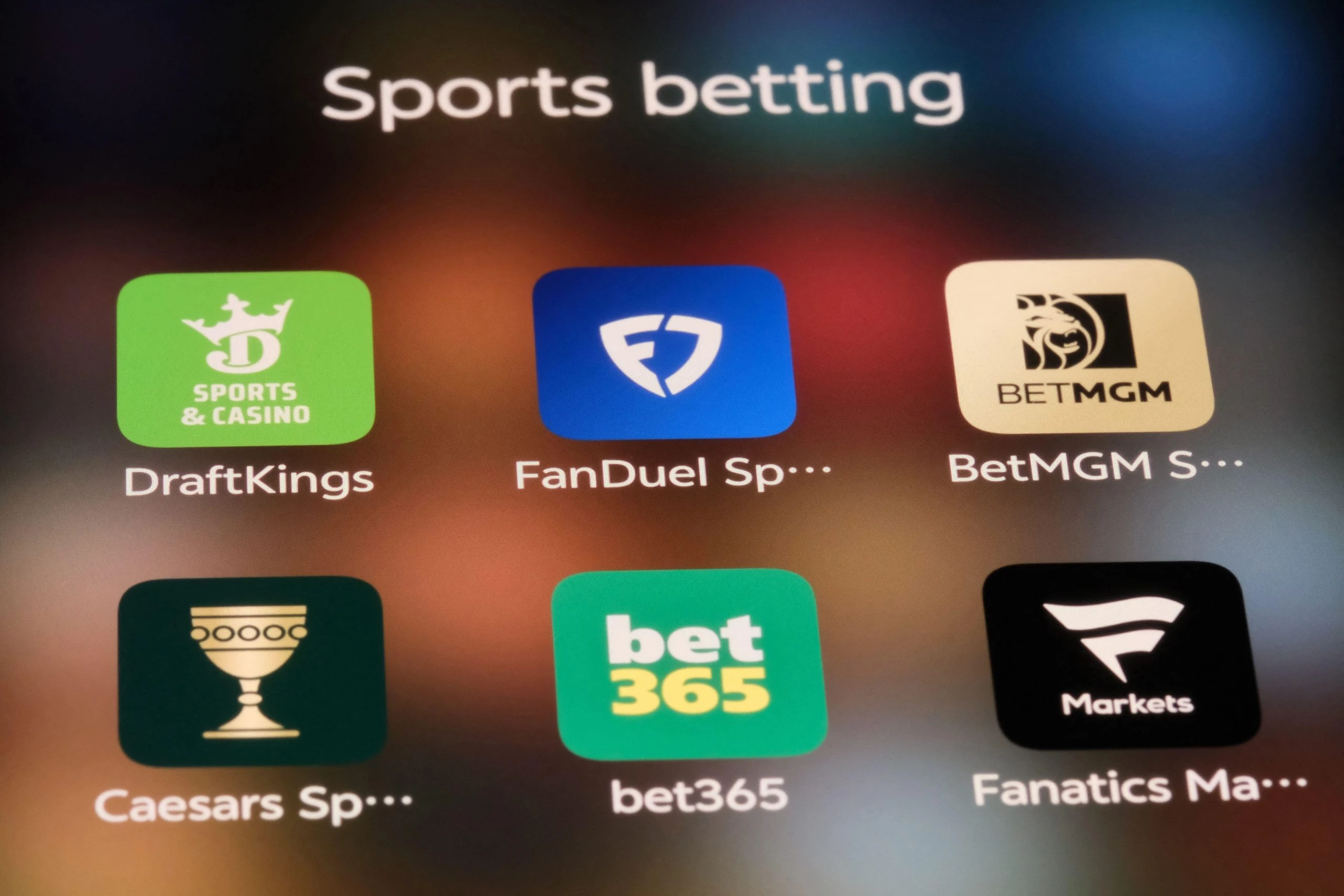
Pazner, who now works as a consultant for several companies across the industry, recounts how, shortly before meeting iGB, he read an article claiming that prediction markets brands Kalshi and Polymarket, as well as sportsbooks DraftKings and FanDuel, were among the top 100 most trusted brands in the America – across all categories.
“Now, you might think of gambling brands as ones that consumers don’t usually trust, but because of the massive marketing activity, because of the emphasis on the consumer experience, people still trust them. They know they’re gambling companies, but they trust them,” Pazner says.
Asked what he thinks gives a brand legitimacy in the eyes of players, Pazner answers: “I would say first and foremost it’s the authenticity of the product and the operator being fair and responsible.
People buy into Paddy Power, because as human beings, unconsciously, we buy an emotion
— Paul Rees, co-founder, Edge Marketing Institute
“When the player comes to cash out, how fast they can cash out; when they have a problem and they communicate with the customer support, how they react to that problem; all of those things build trust around the brand.
“Building a brand, or building trust in the brand, is an accumulation of all the touch points a consumer has with it, and all of those touch points are not just advertising.”
Rees, the former head of marketing at betting content and data supplier SIS, agrees on the trust point, adding: “I would say trust is really key. It comes through customers thinking ‘Are you giving me the best possible customer experience? Why should I choose you? Why are you different and better versus the competition?'”
The Edge Marketing Institute co-founder defined brand as a “reduction in perceived risk”. He gives UK-based price comparison service MoneySuperMarket as an example. “If you’re looking for car insurance, and the cheapest one comes up first of all but it’s a name you’ve never heard of…I don’t know about you, but I think, ‘I am not sure about that’.”
Rees argues that trust applies just as much on the B2B side. “Operators want to do business with suppliers where the risk is reduced, and that’s why I think brand is really important for B2B providers.”
Casumo CEO Francesco Postiglione agrees with both Rees and Pazner. In conversation with iGB at the World Gaming Leaders’ Summit in London, Postiglione describes how building trust through responsible gambling measures is important for the brand. “We’ve been investing very hard in Casumo to make our journey safer.
“We have invested massively in tools, in people, in skills to make sure that our compliance framework is robust. Players will find a number of self-reassuring tools where they can control their gaming experience.”
Postiglione says it’s been an active decision to be “in the face” of players, showing them their gaming behaviour in order to build credibility and, ultimately, trust for the brand.
While building trust through a strong product and good compliance is one element, creating it through marketing is where many in the industry fall down.
Paddy Power vs the generic advertising problem
In UK circles, Paddy Power leads in brand building. Both Pazner and Rees independently cite the Flutter-owned operator for its work, which has focused on comedy, publicity stunts and tongue-in-cheek social media content that leans into topical sports trends and meme culture.
“Paddy Power does it well, they’re a great example,” says Rees. “It’s an irreverent brand. Emotional connections are important – it’s not just about functional benefits. People buy into Paddy Power because as human beings, unconsciously, we buy an emotion. Operators could benefit from really connecting more emotionally.”
A lot of the ads look the same. If I just change the brand and keep the rest of the ad, you won't know who the ad is for
— Itai Pazner, former 888 Holdings CEO
Pazner believes Paddy Power is the exception to a problem he calls “generic gambling advertising”. “A lot of the ads look the same, if I just changed the brand you won’t know who the ad is for because companies aren’t differentiating enough in their marketing.
“Their view of their brand is not long-term enough. [But] Paddy Power adverts and its brand positioning is consistent and always keeps the same tone of voice. They’ve been very successful in building a brand through great marketing. Most operators don’t have a long-term, clear consistent brand positioning that they follow over time,” he adds.
Rees thinks the same is true of the content on operators’ platforms, not just their ads. “You go onto the website and the experience is very similar. You can swap out the logo and it could be any brand.”
While Pazner does praise Ladbrokes’ recent advertising campaigns and Rees picks out Betano for its personalisation and customer experience, the consensus is definitely that beyond Paddy Power, generic advertising is a real problem.
Is regulation a burden on brand-building?
One reason so few operators manage to achieve what Paddy Power has is because the room to build emotional connections is shrinking. The tightening grip of regulation has seen to that. But Rees believes tighter regulation actually elevates the importance of brand.
He claims: “Increased taxation and regulation mean margins are being eroded so operators have to focus on brand to differentiate, which means greater customer experience and personalisation. Brand becomes more important, not less important, with all the pressures.”
The UK has been hit particularly hard by recent tax hikes and regulation restrictions such as a ban on mixed-product bonuses and capped wagering requirements. Pazner thinks they are a good thing. “I think overall the UK has got that right. Within those restrictions, operators can differentiate between their brand, between their products. You can’t portray that gambling can change your life in a positive way, make you rich, make you cool… which is very sensible.”
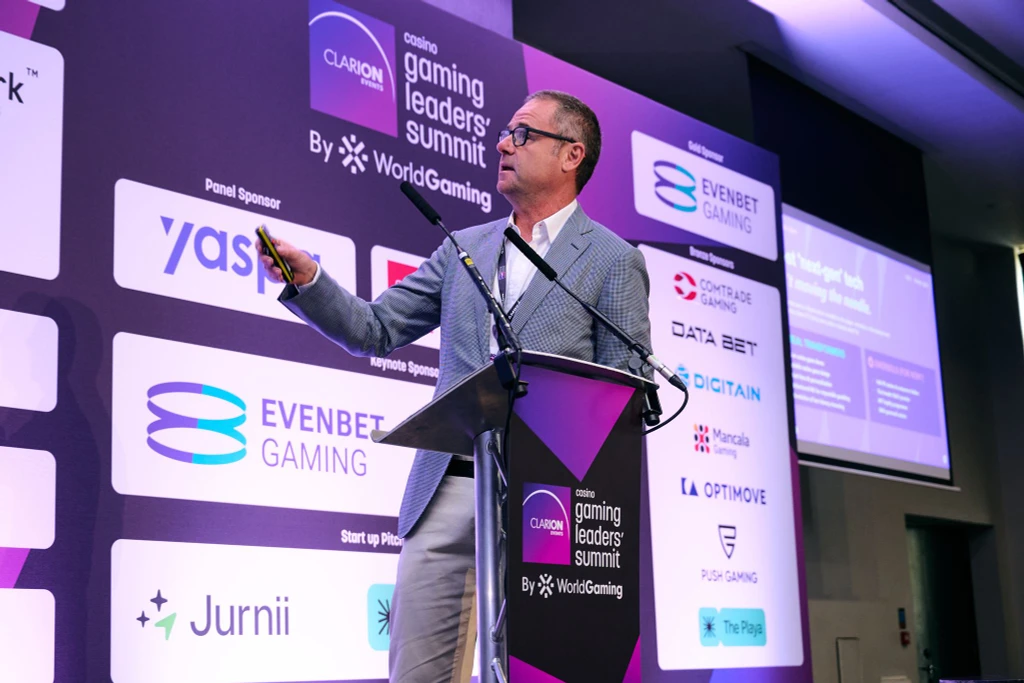
However, Postiglione raises the counterpoint that illegal operators are benefiting from the restrictions enforced on the regulated market. He expounds: “There is some inconsistency unfortunately. [As a regulated operator] we are very exposed to the black market and they can have a number of levers and tools that we cannot use. They are still able to market their products quite freely and easily. This poses a threat for Casumo and for everyone else.
“In terms of brand, we are delivering strong investments into the product, but when you have such aggressive, illegal competition, things are difficult for everyone.”
Asked if responsible gambling requirements can be a factor in brand identity, the Casumo CEO feels strongly. “Absolutely, yes” he replies. “Responsible gaming is part of the differentiation strategy, it’s what players should appreciate. If it’s delivered frictionlessly and consistently, it’s a game winner, I believe, because at the end of the day, players will understand that you’re doing it for them and not for you.”
However, Rees takes a different view: “I wouldn’t say [RG] is a differentiator. It’s almost a hygiene factor. You have to have it really, in terms of trust. It’s almost expected now but it’s definitely not a differentiator.”
Pazner points out that there’s a lot of emphasis on responsible gambling measures particularly in the UK market and warns that “operators [that] don’t react and invest are going to get into some serious problems”.
Building one brand across many jurisdictions
The regulation challenge doesn’t stop at the UK’s border. For operators running one brand across multiple jurisdictions, it’s a headache that never really goes away. Casumo’s Postiglione explains: “Storytelling and the brand is one. When it comes to how we translate this umbrella brand into different jurisdictions, it’s very much around personalisation. We have different campaigns, different promotions and a different approach from region to region.
“You need to be very specific and very technical in the way you approach things. A few things can be done in the UK that cannot be done in Spain or Sweden for example.”
Pazner uses an interesting food analogy to explain how he tackled the cross-jurisdictional challenge when at 888: “One of the good things about 888 as a brand was that it is kind of generic tofu, and then you put the flavour on it in the market that you go to.”
Italy and the US are both singled out by Pazner as particularly challenging jurisdictions to successfully build gambling brands in. He says of Italy: “The only channel that’s open for advertising is affiliates. It’s very difficult to keep your brand there, and your brand consistency comes mainly from the engagement you have with your [existing] customers.”
He describes the US as “completely different”, continuing: “Almost none of the international operators succeeded in building brands in America. The only exception is probably Bet365, that is making its way through massive investments.

“If you don’t speak ‘American’, your English is not good enough. You have to build a real American brand, which requires a lot of money and a lot of adjustments. Taking local celebrities and using completely local customer support.
“One of the things about customer support in America, people expect to get an answer within minutes, and they expect the call centre rep to be like in any shop in America – they’re over-servicing. You can’t take a global customer service centre to serve American customers because the experience won’t work, and you’re going to end up damaging your reputation.”
Rees also mentions Bet365 as a successful cross-border brand, comparing it to another international giant from a different industry. “Bet365 is a great example because it has a global brand platform, which at its core doesn’t change, but it’s tailored locally… The same principle from when I worked at Coca Cola, you might have a global platform, you want that consistency, but then you tailor it to local markets,” he explains.
How to measure trust
Tailoring a global brand by market is one thing, but knowing whether any of it is actually working with players is another. Here, opinions are divided on just how straightforward that is.
According to Postiglione, measuring trust is “very easy”. He states: “You measure through retention. The more they stay, the more they are sticky to your platform, the better you’re doing. It’s as simple as this, there is one key metric, which is ‘churn or retention’.”
This metric is a bit more complex in Sweden where operators are limited in terms of allocating bonuses only to welcome offers. This creates a system where players churn constantly with no brand loyalty to fall back on.
Anything below 30% of your budget for branding is not serious
— Itai Pazner, former 888 Holdings CEO
Postiglione explains: “In Sweden, players tend to jump from one operator to another. Once an operator launches a new brand with a new welcome offer, you see the retention dropping immediately because they’re just chasing the new welcome offer.”
Pazner believes actioning feedback from players is where trust can be built. He recounts from his time at 888: “We saw that one of the things that kept coming back over consecutive months of research was our cash-out was too slow.
“You can’t say, as an operator, ‘Okay, they’re complaining about this, but they keep playing.’ Players were starting to shift and migrate to places that were cashing out first.
“The more successful companies actually take deep insights out of both brand and consumer research and turn them into action.”
Popular brand or profit-driven acquisition machine?
So, is there an innate tension between the concept of becoming either a well-liked brand or a well-drilled player acquisition machine? Rees believes the two can exist simultaneously: “The weight of focus and spend is probably on sales acquisition, CPA and promotions. There needs to be more of a balance between demand capture and demand generation, and brand plays a big part in terms of demand generation.
“[Marketing effectiveness researchers] Les Binet and Peter Field did a very famous study called ‘the long and the short of it’, and you have to do both at the same time. The short is your sales acquisition which operators do focus on more…
“And the long is the brand building. It might be stuff like thought leadership around advertising, but it’s building demand over a long time so you’re on people’s radar. They call it mental availability, so that when people are choosing, you’re top of mind.
“If you invest in brand it actually leads to higher acquisition rates and higher conversion.”
Rees believes most gambling brands are too focused on ‘the short’, mentioning Paddy Power and Ladbrokes as two of the few UK operators which have genuinely done brand-building, when others have focused on promotions. He adds: “It’s all short term. There needs to be more focus on the long – the brand-building – and I don’t think it’s right at the moment.”
Gaming is becoming like banks… but we are not banks, we will never be perceived like banks
— Francesco Postiglione, CEO, Casumo
As Pazner sees it, financial pressure from decision-makers who are seeking instant results drives operators’ actions. “Whenever there’s pressure and compression,” he explains, “CEOs and finance people want results. Marketing people understand that brand requires consistent long-term investment, and if you just cut that, you’ll have good short-term effects, but in the long term, you’ll be negatively impacted.
“I would say anything below 30% of your budget for branding is not serious. You’re not investing in building your brand.
“What’s happening in the UK now… the knee-jerk reaction of everyone is ‘Let’s kill branding. Let’s cut all the sponsorships, all the good TV deals’. But in the medium and long term, that will have an impact on the companies that don’t bring those investments back.”
Postiglione thinks it is quite a simple equation: “If you have a good brand, acquisition should be easier with a lower cost per acquisition. If you don’t have a strong brand, your acquisition is going to be more difficult, more expensive or both.
“I’m happy to renounce one or two percentage points of margins if I’m extending the lifetime value of a player. This is a good investment.”
AI as the next brand battleground
If brand-building is expensive enough that Pazner allocates a minimum spend of 30% of the marketing budget, the impact of AI threatens to change those economics beyond recognition. Could new AI-native operators break the stranglehold of legacy brands in the industry over the next couple of years?
Pazner believes the advantage still lies with the establishment, for now. “If a new platform has been built natively with AI, it’s going to be much cheaper,” he says. “They’ll need 10 developers to operate a platform. At 888 we had 600 developers to operate our platform. They might need 10 or 20.
“That’s a massive change and the product will be faster, better and will change almost every day. So, a good AI-native operator platform will have a significant advantage from a cost basis to a legacy operator.
“However, building a brand in the industry costs hundreds of millions of dollars. If the new AI native companies don’t have that in their war chest, they’re not going to build brands that fast, because you need exposure.”
The former 888 CEO thinks that the existing big brands have the advantage because if they can quickly adapt their technology, as they already have established reputations, “no native AI company will be able to compete with them”. They simply need to avoid leaning on dated legacy technology and infrastructure.
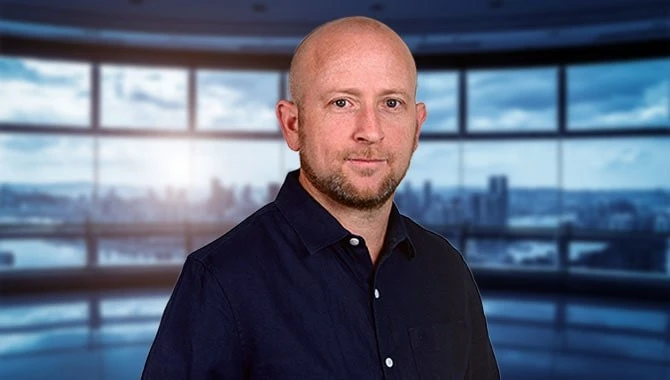
Pazner does admit that at least one global native AI operator will make waves in the market soon. “I don’t know their name yet,” he quips. “Because they don’t exist yet, but they’re going to come in the next few months.”
The gap appears to be the cost of exposure vs the cost saving of fewer staff needed, and whoever closes the gap first will win out.
Rees is of the view that operators should bear in mind what AI can and can’t do. “AI can obviously do content development, personalisation and targeting,” he says. “Where it’s hard to compete is building that unique brand proposition, and also that emotional connection. AI can’t build emotional connection; it can’t build that unique brand offer. That takes years.”
Looking ahead
So, what will a successful gambling brand look like in the future? Postiglione believes that the industry may be heading the way of financial institutions like banks. Considering how the top brands will look in five years’ time, he says: “Personalisation and frictionless experience [will be key] as regulation will evolve in a stricter way. Look at taxation, additional affordability checks, additional anti-money laundering rules, etc.
“The real differentiator will be the customer journey from onboarding to withdrawal, and how you serve your customer during this journey. The product and the content will be more and more of a commodity, while the framework that you build around the experience is going to be the real differentiator because gaming is becoming like banks.
“But we are not banks, we will never be perceived like banks, so it’s even more difficult for us because players don’t expect to be in a banking environment. They’re just going to have fun; you need to offer them this fun experience while being managed as if at a bank.”
There’s a lot more to brand-building than tackling the “logo and sponsorship” perception that Rees warned against at the start, and perhaps that’s the point. In a market where product can be emulated, re-skinned and produced at scale, what’s left to differentiate on is everything Rees, Pazner and Postiglione have been describing throughout.
Trust, consistency and the discipline to keep investing in brand when the easier short-term option might be chasing the next welcome bonus hunter.
In partnership with
World Gaming Leaders' Summit