The regulated funnel is a design problem: UK, Germany and Brazil compared

UK GERMANY BRAZIL
Every operator talks about ‘funnels’ but that isn’t necessarily the most useful way of thinking about the user acquisition journey. Instead, there is a universal set of stages – discovery, registration, verification, first deposit, play – and a different rulebook for each one depending on the user’s geo. An interface that converts cleanly in London would be illegal in São Paulo and structurally impossible in Berlin, for example.
This matters because acquisition is expensive (and getting more so) and unforgiving. Industry benchmarks put the cost of a first-time depositor anywhere from $280 to $1,400, while reg-to-deposit conversion percentages swing from the high 40s in the strongest European markets to the low 20s in the toughest. Every point of conversion you lose to badly-handled friction is wasted acquisition spend.
It is useful to think of regulation as setting a friction budget. Regulation dictates how much friction must sit between a prospect and their first deposit, for example mandatory immediate verification, deposit limits, safer gambling warnings. UX decides everything else: how the mandatory friction feels to a player, how and when it is presented to the player, and whether they make it to the cashier.
Below, this piece walks through the funnel stage by stage, comparing three different regulated markets to show where they diverge – and where the design opportunities hide.
6
Measurable stages from first visit to first deposit, each one a regulatory intervention point
$280–1,400
Typical acquisition cost per first-time depositor (industry benchmarks)
3
Markets with entirely different answers to removing friction
There is no universal funnel. There's a universal set of stages, and a different rulebook waiting at each stage
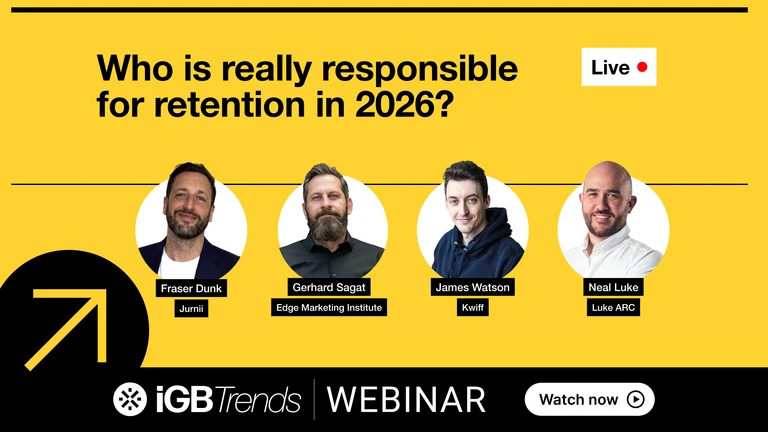
— Fraser Dunk, CEO of Jurnii
STAGE 1 – DISCOVERY/PROSPECT
The regulator mostly shapes the first impression
Before a player ever sees your product, they see your advertising, and what you’re allowed to put in front of them differs sharply by market. From a UX point of view, this is the most under-rated stage, because it sets the expectation the rest of the funnel has to honour. Over-promise in the ad and you inflate Stage 2 abandonment; set the wrong tone and you mismatch the audience entirely.
UK
Advertising is governed by CAP/ASA codes and the Commission’s content rules – no strong appeal to under-18s, restraint around responsible-gambling messaging, and from 2025 a granular, per-product, per-channel marketing opt-in that reshapes how you can re-engage a prospect at all.
GERMANY
A hard advertising curfew: no TV, radio or online ads for virtual slots, online poker or online casino between 06:00 and 21:00. Slot influencer marketing is banned outright, as are active-athlete endorsements. The creative window is small and the tone is constrained.
BRAZIL
Ads permitted only in a late-night window (~19:30–midnight), print advertising prohibited, no celebrities, athletes or influencers as endorsers, and a mandatory “18+” / risk warning that must occupy at least 10% of the ad’s space – a literal design constraint on every creative.
UX read
Each regime forces a different first-touch. Brazil’s 10%-warning rule is a layout requirement that competes with your hero message for real estate. Germany’s curfew pushes acquisition into a compressed time-of-day and toward channels that survive the restrictions. The opportunity is to design creative systems around these constraints natively rather than retrofitting compliance onto a global template.
UKOddschecker
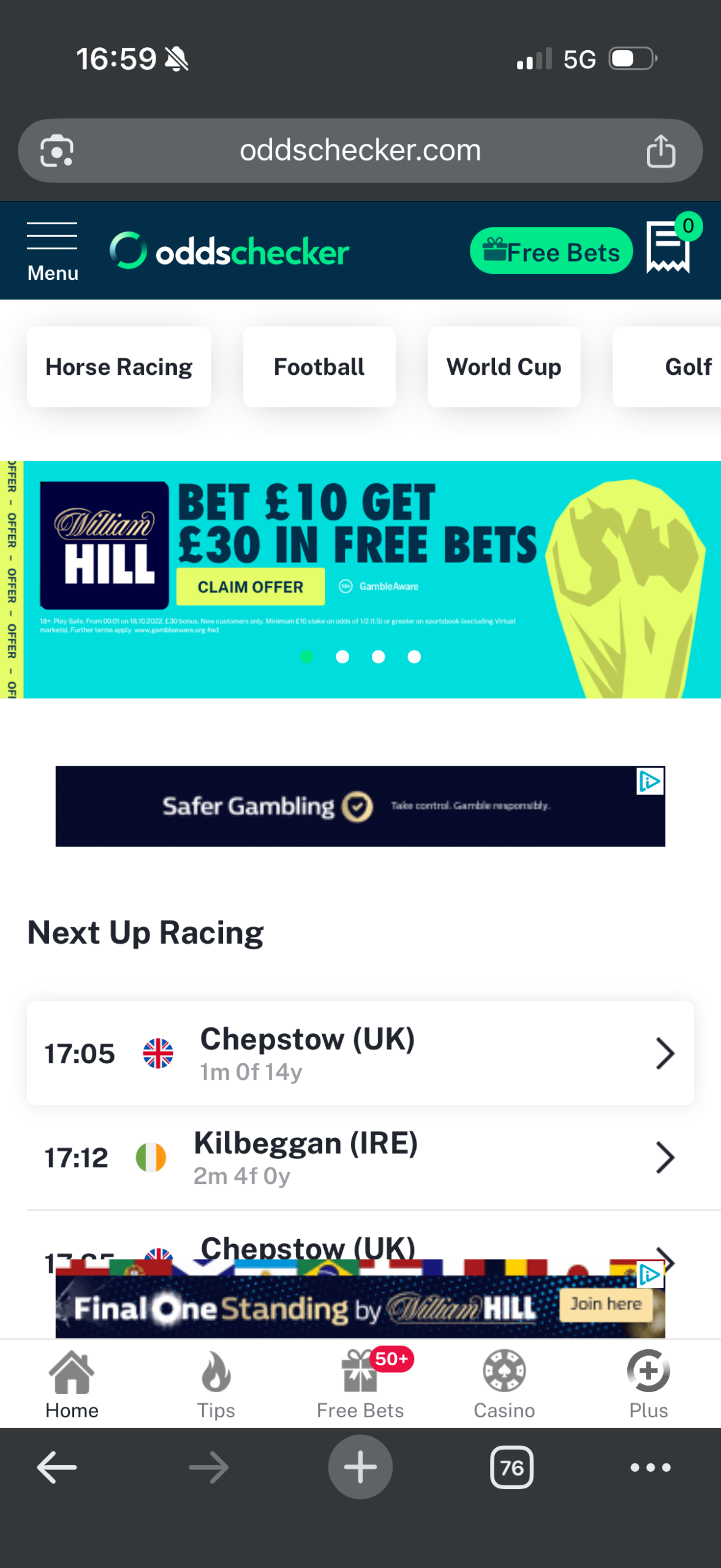
First touch via Oddschecker, an odds-comparison affiliate. A William Hill “Bet £10 Get £30 in free bets” banner leads, carrying 18+, GambleAware and small-print terms; a separate “Safer Gambling” banner sits just below. The offer is the hook – safer-gambling messaging runs alongside it, not instead of it.
GermanyLiveScore
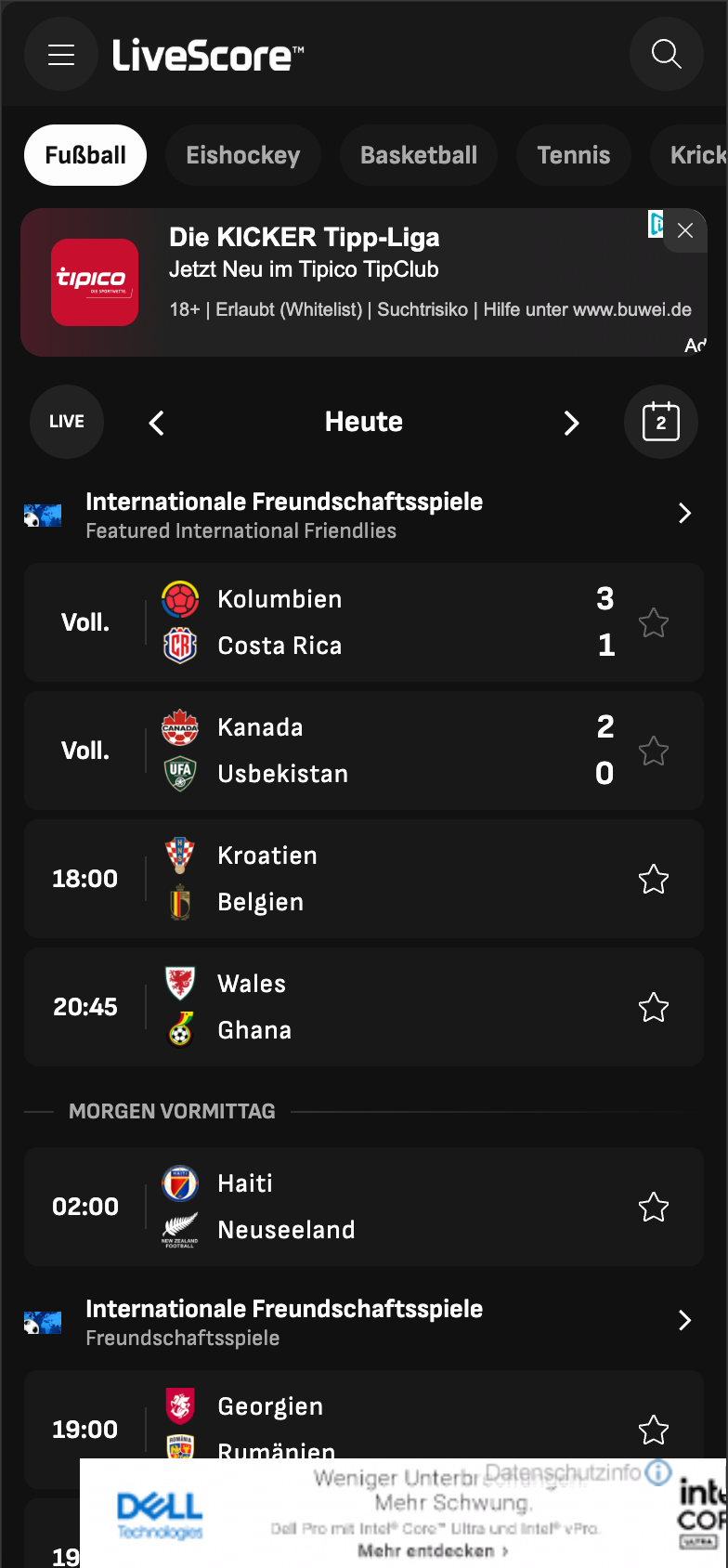
First touch via an in-app LiveScore ad for Tipico’s “KICKER Tipp-Liga”. The mandated furniture is on the creative itself – “18+ | Erlaubt (Whitelist) | Suchtrisiko | Hilfe unter www.buwei.de” – and it’s clearly flagged as an ad. Compliance text is part of the design, not a footnote.
BrazilEsportiva
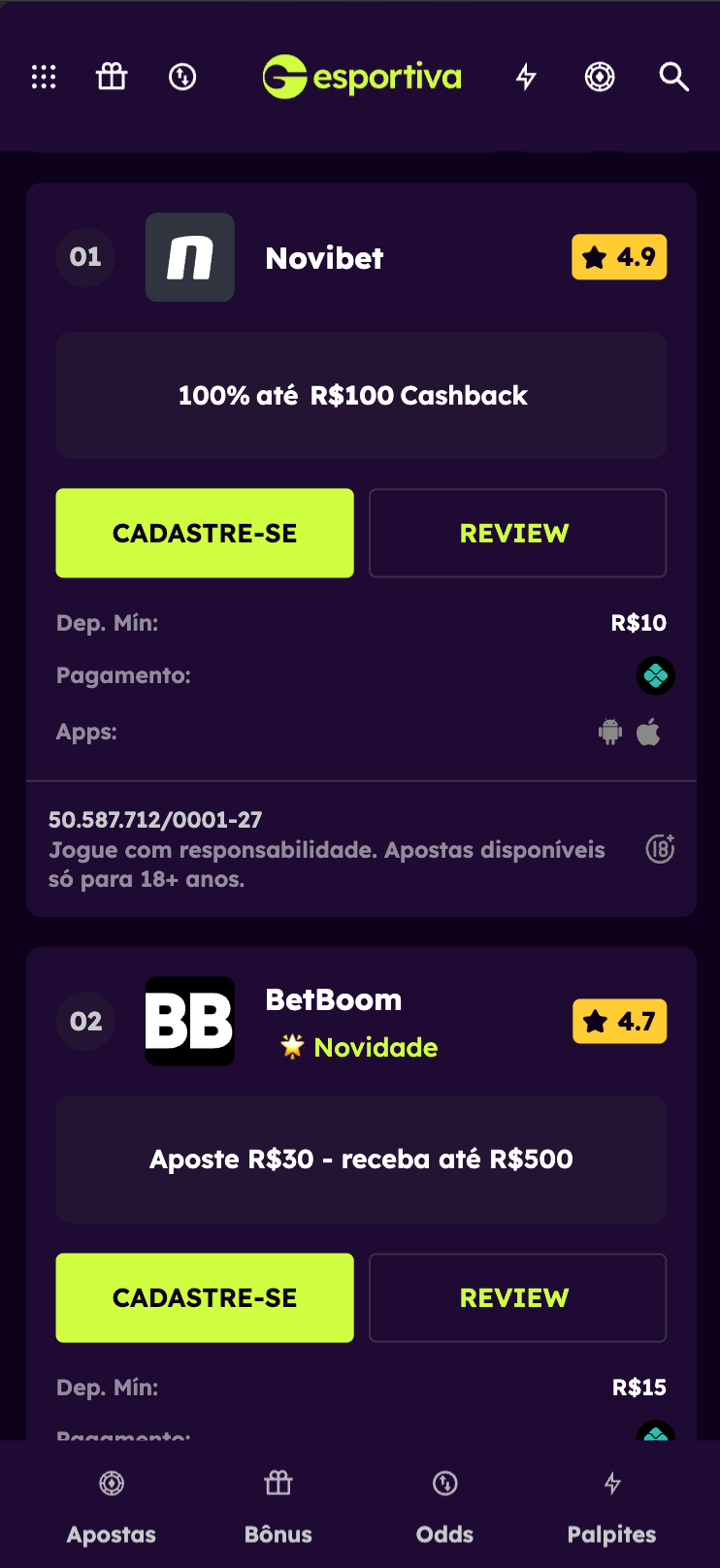
First touch via the Esportiva affiliate, ranking operators (Novibet, BetBoom) by rating and offer. Every listing carries the operator CNPJ, an “18+ only — play responsibly” line and an 18+ badge.
STAGE 2 – LANDING/THE OFFER
When you can’t lead with the bonus
The landing page is where the prospect decides to commit. For two decades the universal answer has been the welcome offer: “100% up to…”. Regulation is quietly dismantling that reflex, and nowhere more dramatically than Brazil.
UK
Welcome bonuses survive but are reined in: wagering requirements capped at 10× (from January 2026) and mixed-product offers (casino bonus unlocked by a sports bet, and vice versa) banned. The offer must be cleaner and more honestly stated.
GERMANY
Promotional freedom is tightly constrained and bundled into the broader advertising limits; the aggressive bonus-led hero common elsewhere simply doesn’t translate.
BRAZIL
Welcome, deposit and sign-up bonuses are banned under Law 14.790 (with loyalty rewards for existing customers the narrow exception). The single most common conversion lever on earth is gone from the Brazilian landing page.
UX read
Strip out the deposit-match and you expose whether a brand can actually sell an experience. The hero now has to carry product breadth, odds/price, payout speed, licensing trust marks and clarity instead of a number. This is where UX-led operators pull away: they were never only renting attention with a bonus.
Brazil took away the welcome bonus. Operators that only knew how to compete on offers suddenly had to learn how to compete on experience
— Fraser Dunk, CEO, Jurnii


UKBetfair
Betfair leads hard with the offer: “Bet £/€10 Get £/€50 in free bets”. It then stacks a “pick your offer” carousel and a money-back promo, all carrying 18+/GambleAware terms. Lower down sit the “Safer Gambling tools” and a “Take Time to Think” block. The bonus is unmistakably the hook.
GermanyBetano
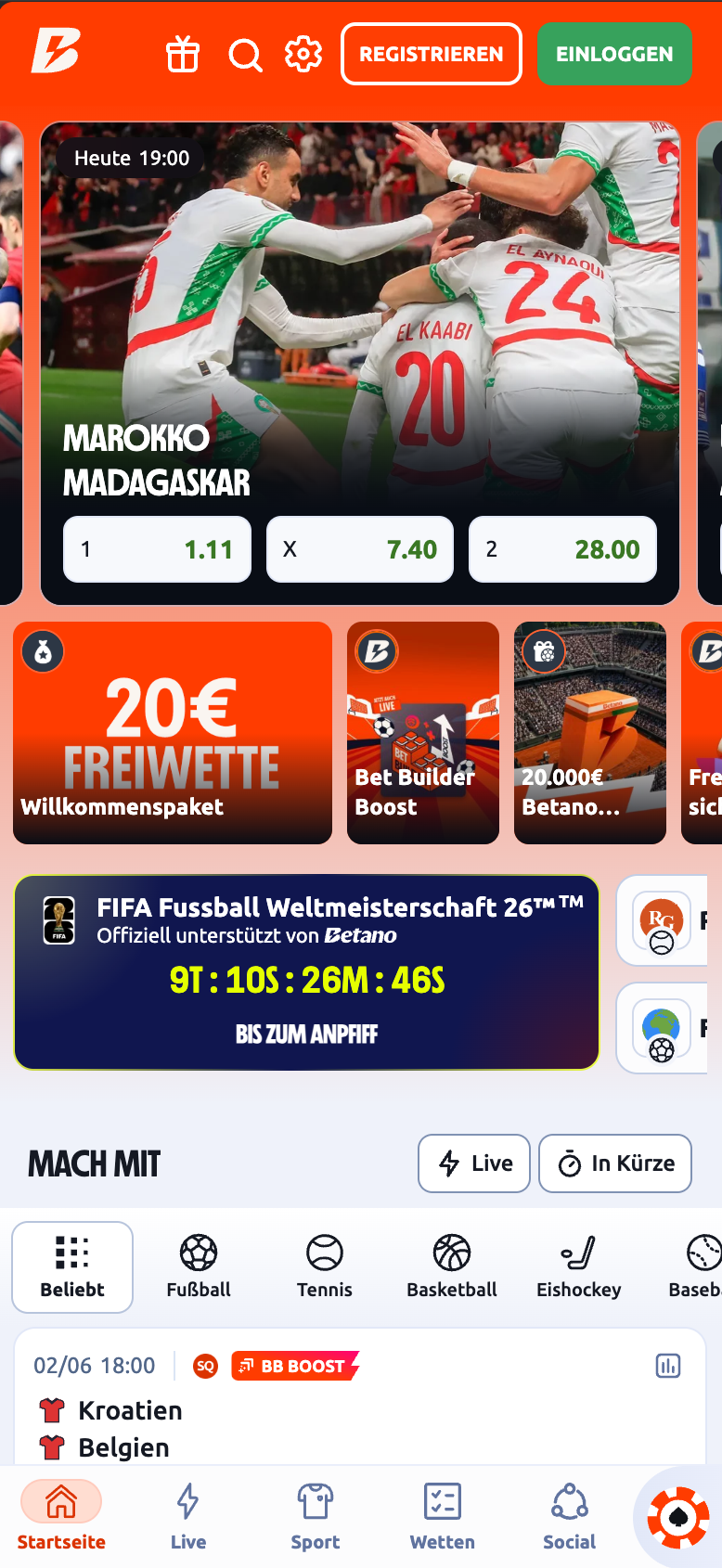
Betano’s German home still opens on an offer: a “20€ Freiwette Willkommenspaket” beside a Bet Builder Boost and its World Cup sponsorship, with registration one tap away. The promo is present but bounded by the German ad rules; the tone is sport-led rather than bonus-screaming.
BrazilBetsson
With welcome bonuses off the table, Betsson Brasil sells the experience instead: “1,000+ games”, instant deposits and secure payments with Pix, fast withdrawals and one-minute support – wrapped in the mandatory CONAR / 18+ furniture and the “use of social-assistance funds is prohibited” notice. Product and Pix speed do the job a bonus would elsewhere.
STAGE 3 – REGISTRATION
The form is the first bit of visible friction
Registration is the first time the player has to do something, and the data each regulator forces you to collect up front sets the floor on how long that form can be. The art is in sequencing and perceived effort, not just field count.
UK
Comparatively lean: name, date of birth, address, email, usually mobile. Identity is verified electronically in the background. Operators can keep the visible form short and defer the heavy lifting. From October 2025 a deposit-limit prompt has also been surfaced before the first deposit.
GERMANY
The heaviest data load of the three: first name, surname, address, date and place of birth, nationality, and maiden name where applicable. In addition, mandatory identification and authentication, a set deposit limit and registration into the national systems. Anonymous play is impossible.
BRAZIL
CPF (taxpayer ID) plus personal data and a mandatory facial-recognition step with liveness at sign-up, with deposits later locked to a bank account in the player’s own name. The biometric moment is the defining UX event of the Brazilian form.
UX read
Germany’s form can’t be made short, but it can be chunked, progressively disclosed and paced so it never feels like a wall. Brazil’s biometric step can’t be removed, but where you place it and how you prepare the player for it decides whether it comes across as secure or creepy. This is classic progressive-disclosure territory, and it’s where small UX decisions move reg-completion rates by whole points.

UKbet365
bet365’s “Join Us” form is chunked into three signposted steps (Personal Info · Address · Login Details). Step 1 keeps it to the essentials – country, email, mobile, title, name, DOB, nationality – with identity verified electronically behind the scenes. The footer carries the full UK compliance stack: Gambling Commission, GAMSTOP, GambleAware and the GamCare helpline.
Germanybwin
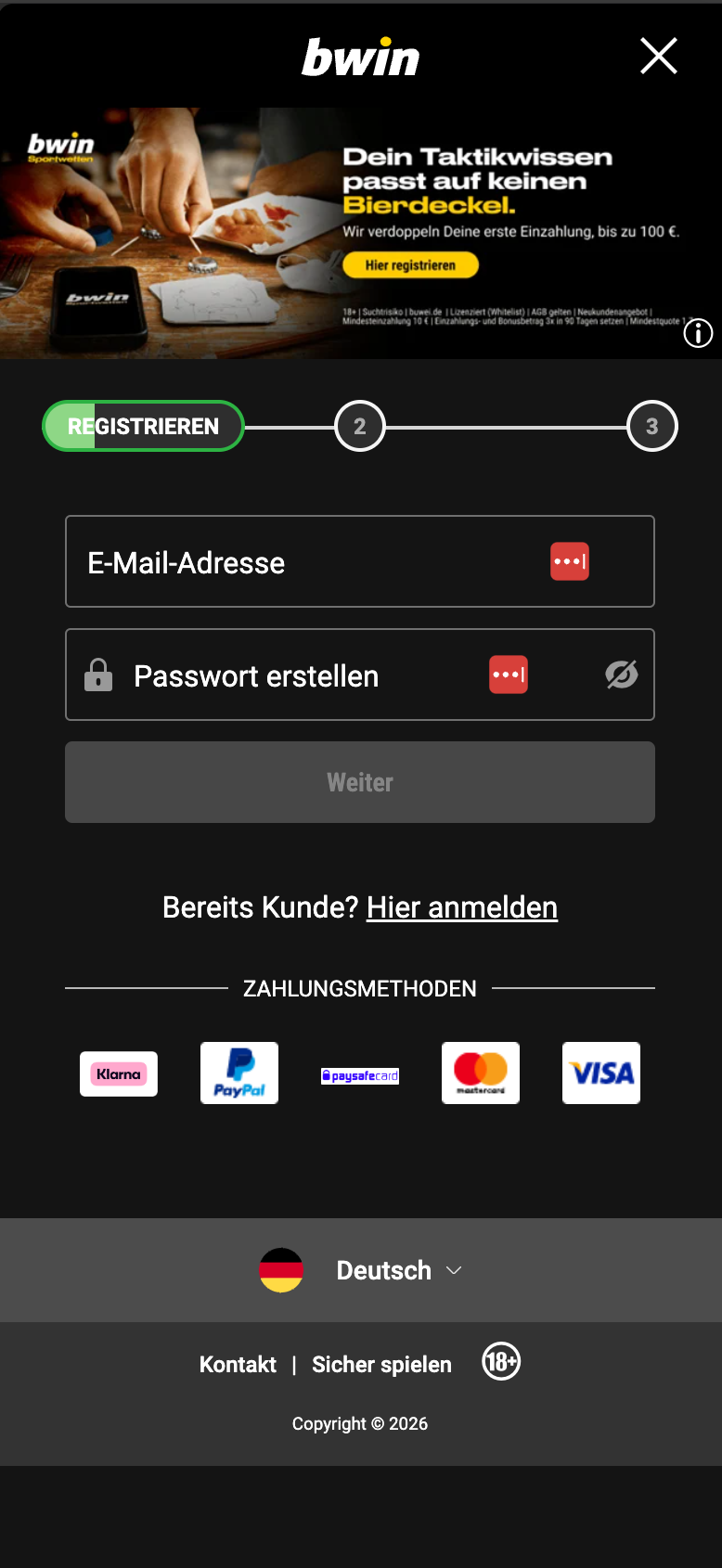
bwin runs a 3-step wizard; step 1 asks only email and password before progressing. The banner repeats the mandated “18+ | Suchtrisiko | buwei.de | Lizenziert (Whitelist)” line and the offer terms, and the locale is fixed to Deutsch. The heavier German identity set – place of birth, nationality and the rest – comes in the later steps.
BrazilNovibet
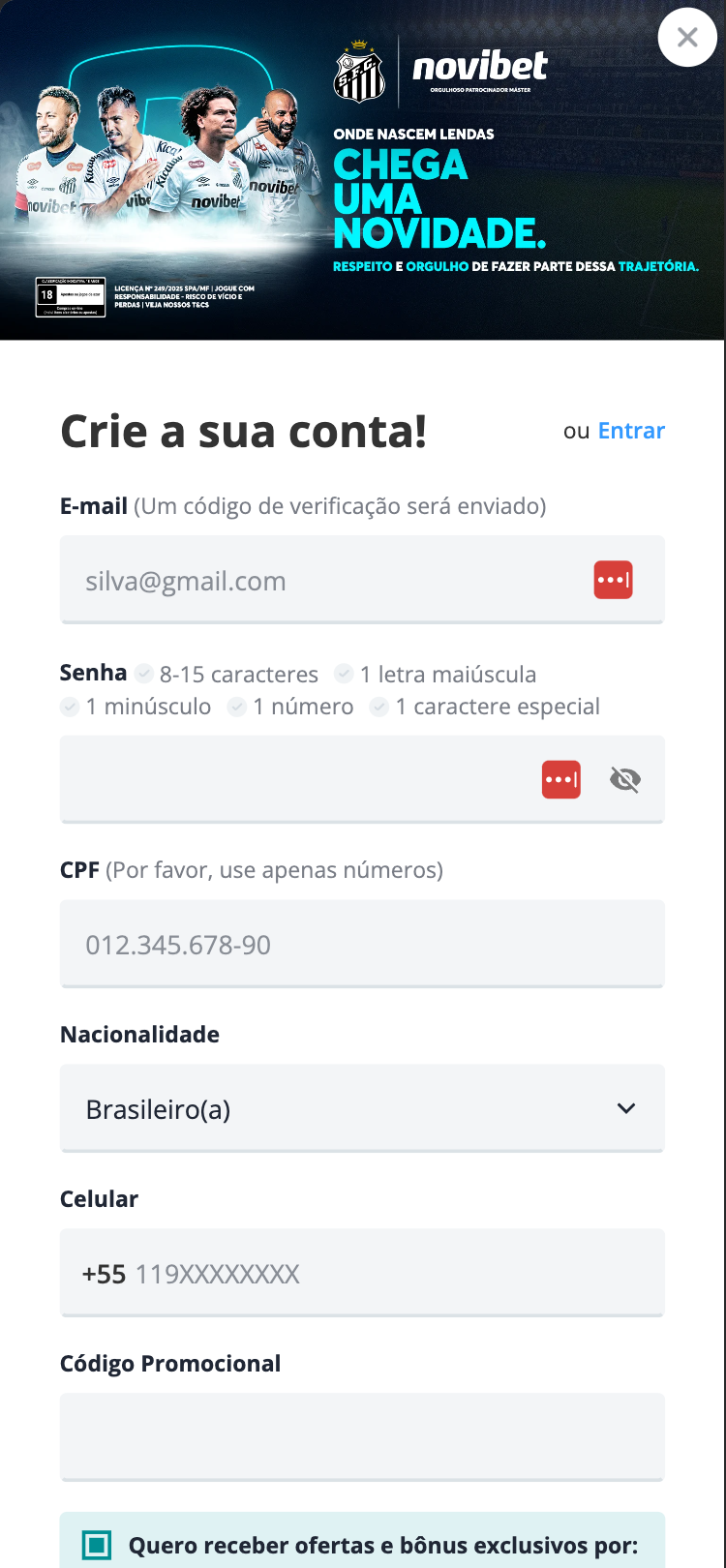
Novibet surfaces the Brazilian essentials in one pass: email (with a verification code), a password with an explicit rules checklist, the tax-payer ID field, nationality, mobile (+55), an optional promo code and a marketing opt-in. Licence “Nº 249/2025 SPA/MF” and the 18+ responsibility block sit on the creative; the facial-recognition / liveness step follows this form.
STAGE 4 – KYC & AGE VERIFICATION
Verification is the bottleneck everyone underestimates
Trade commentary is near-unanimous: KYC is the single biggest onboarding bottleneck in regulated markets. When and how you verify is largely dictated by the regulator. But the experience around it is entirely yours.
UK
Identity and age must be confirmed before any deposit, bet or even free-to-play access. The old 72-hour grace period is gone. Done well, this runs electronically and invisibly; done badly, it surfaces as an abrupt document request.
GERMANY
Operators must identify and authenticate via an approved provider (video- or auto-ident: document + selfie + liveness), cross-checked against the OASIS block-file (Germany’s central self-exclusion register – a ban with any licensed operator blocks the player everywhere). A heavier, more visible step by design.
BRAZIL
Facial recognition with liveness at registration and again at first deposit, with periodic re-authentication. The “selfie moment” is mandatory and repeated, so it has to be fast and reassuring.
UX read
The winning pattern is risk-based sequencing: front-load only what the law requires before play, and make the unavoidable biometric or document step feel fast, explained and trustworthy. The difference between an 11-second liveness check and a clunky redirect-and-wait is the difference between a converted player and an abandoned one.
Frictionless verification in a regulated market is the single biggest lever on reg-to-FTD
— Fraser Dunk, CEO, Jurnii

UKMidnite
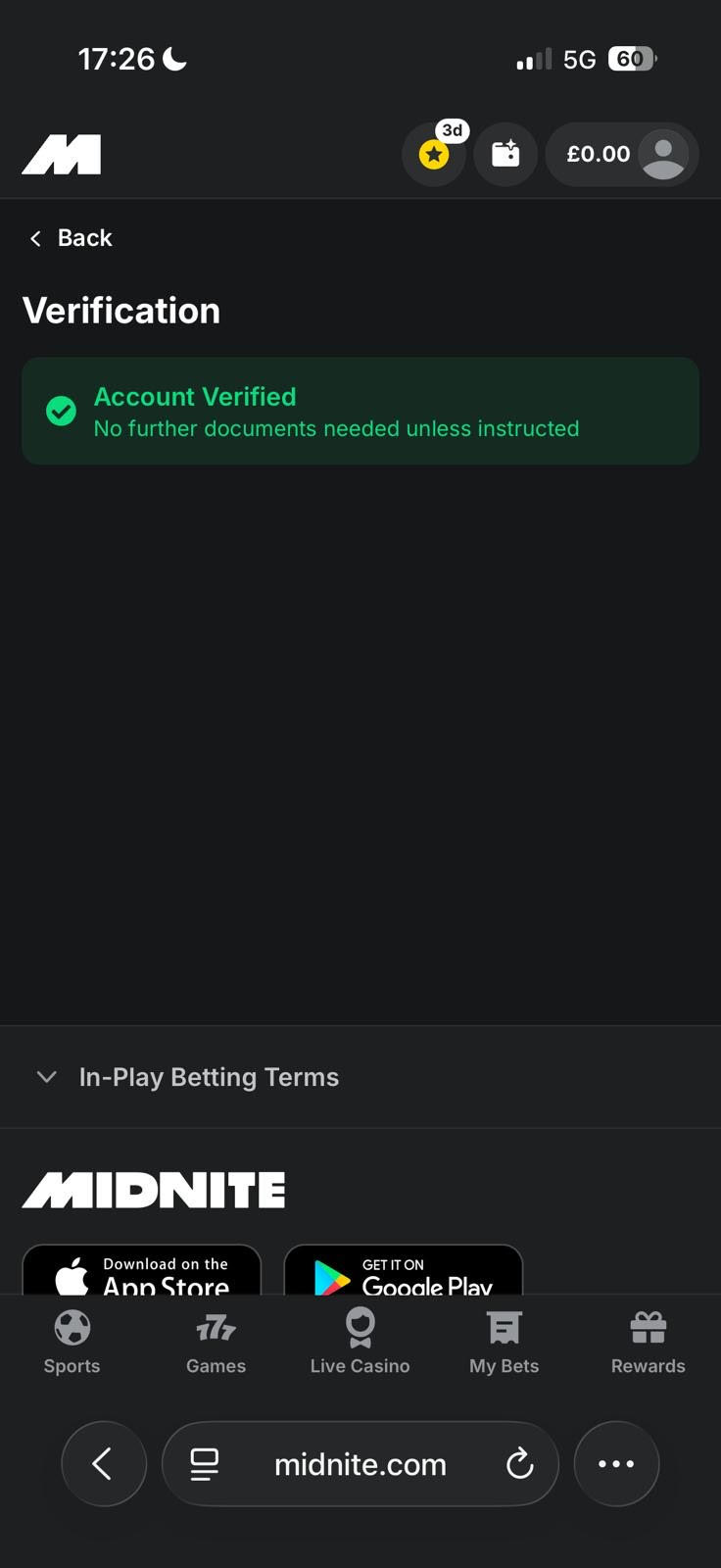
Midnite shows the happy path of UK electronic verification: an “Account Verified – no further documents needed unless instructed” state. For most users this resolves invisibly in the background with no document upload at all. Friction the player never sees.
GermanyTipico
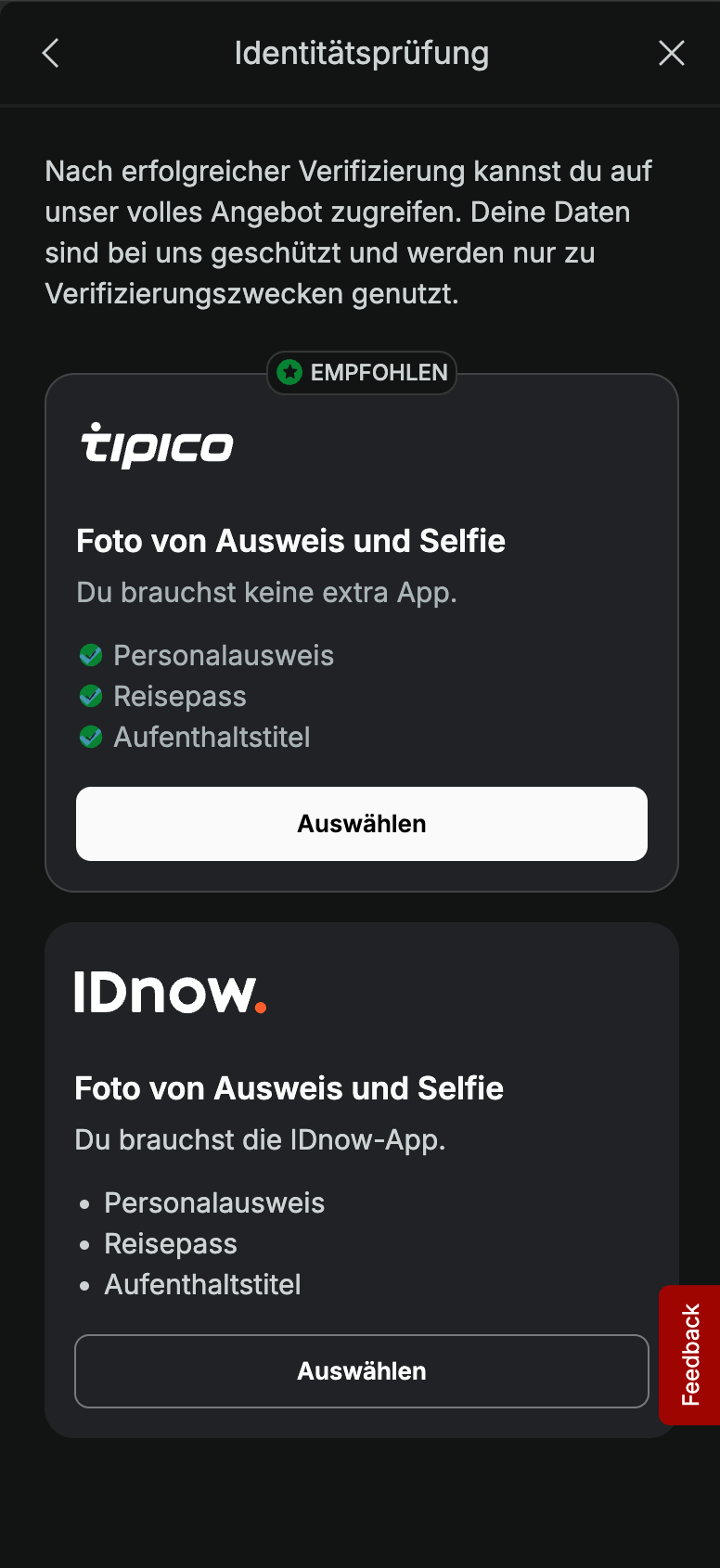
Tipico’s “Identitätsprüfung” lets the player choose how to verify: Tipico’s own photo-of-ID-plus-selfie (no extra app, marked EMPFOHLEN) or the IDnow app route. Both demand a government ID (Personalausweis / Reisepass / Aufenthaltstitel) and a selfie. This is the identify-and-authenticate step German law requires, framed as a choice to cut drop-off.
BrazilBetsson
Betsson’s “Reconhecimento facial” is the mandatory Brazilian liveness step, designed to reassure: clear guidance (good lighting, no glasses/hats/masks, fit your face in frame), a single “Estou pronto!” action and PCI-DSS / “100% secured” trust marks. The selfie moment, made as smooth as a mandated biometric can be.
STAGE 5 – FIRST DEPOSIT/FUNDING
One limit, three rulebooks
If there’s a single stage that explains why a blanket funnel is a fiction, it’s the deposit limit. The same feature behaves three completely different ways. Each one shapes the cashier UX and the lifetime-value maths behind it.
UK
Operators must prompt for a deposit limit before the first deposit, but it’s per-site and the player can decline it (“no limit”). Light-touch financial-risk checks trigger at £150 net deposits / 30 days using public data – designed to be frictionless. Credit cards are banned.
GERMANY
A deposit limit is mandatory and cross-operator: a default €1,000/month ceiling that follows the player across every licensed site, enforced centrally via LUGAS (cross-state supervision system), plus a parallel-play lock so a player can only be active at one operator at a time. Raising the cap requires financial proof.
BRAZIL
Operators must offer player-configurable limits (deposit, loss, time, number of bets) but there’s no fixed national cap. Funding is locked to Pix, debit card or a transfer from an account in the player’s own name. Credit cards, cash and crypto are banned.
UX read
The UK’s mandatory prompt is a conversion hazard if handled clumsily and a trust-builder if designed well. The question is whether you pre-fill a sensible default, how prominent “no limit” is, and whether the moment interrupts or flows. Germany’s cross-operator cap changes the economics, not just the screen: there’s a hard ceiling on what a player can spend market-wide, so CRM and cross-sell have to work inside it. Brazil’s Pix rail, by contrast, is a UX gift – near-instant, own-name, low-friction funding – provided the cashier is built around it rather than a ported card flow.
In Germany the deposit limit is a ceiling that follows the player across the whole market. That changes the maths of acquisition as well as the UX of it
— Fraser Dunk, CEO, Jurnii
UKVirgin Games
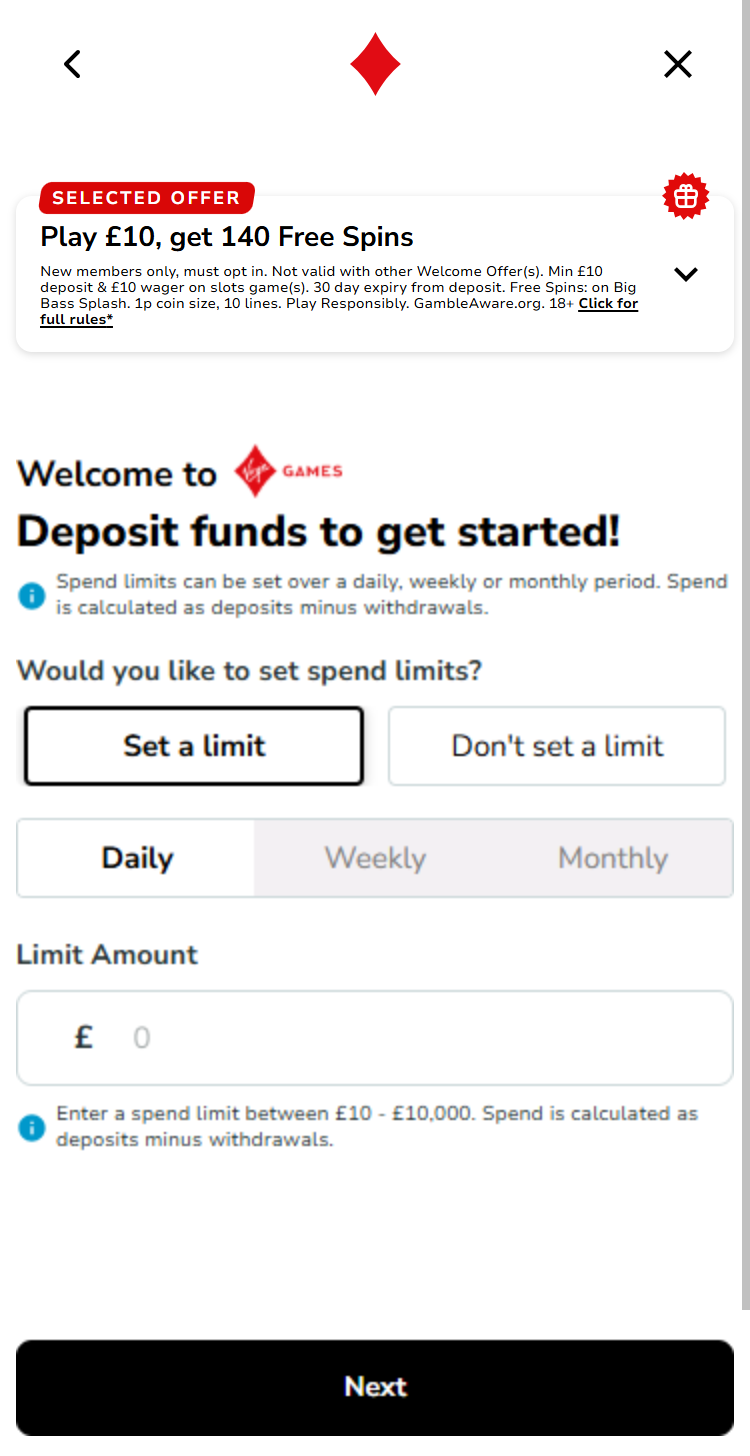
Virgin Games surfaces the mandatory deposit-limit prompt before play – “Would you like to set spend limits?” – with “Set a limit” visually preferred but “Don’t set a limit” available (the opt-out the rules allow), daily/weekly/monthly tabs and a £10–£10,000 range. Note the welcome offer sitting right alongside the safer-gambling step.
GermanyTipico
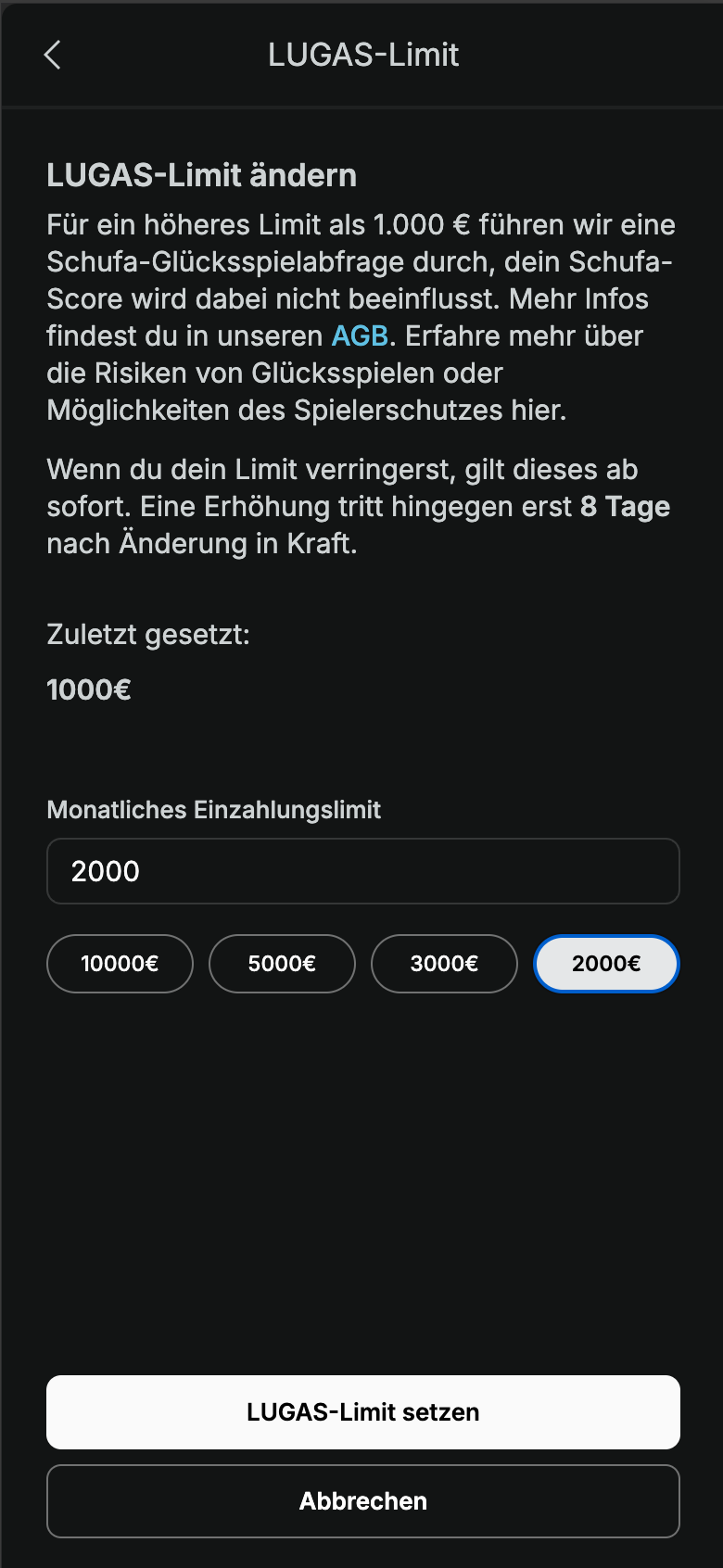
Tipico’s “LUGAS-Limit” screen is where Germany’s cross-operator cap becomes tangible: a monthly deposit limit defaulting to €1,000, with anything higher (€2,000–€10,000) triggering a Schufa gambling check (credit inquiry). A decrease applies immediately; an increase only after eight days. This one limit follows the player across every licensed operator.
BrazilBetano
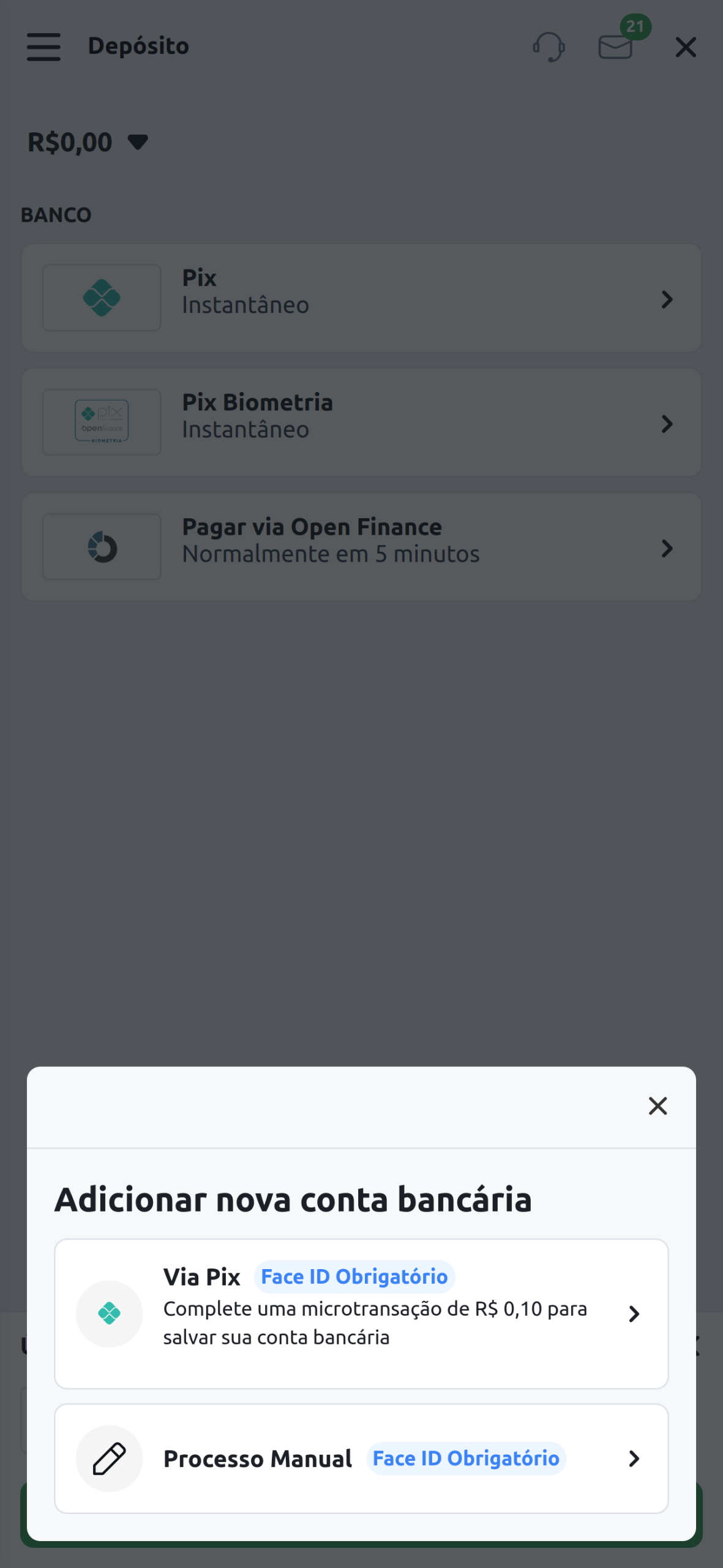
Betano’s deposit screen is Pix-first – Pix and “Pix Biometria” both “Instantâneo”, plus Open Finance. Adding a bank account is locked to the player’s own name with “Face ID Obrigatório” on every route, even the R$0.10 micro-transaction. Identity, funding and biometrics are fused at the cashier.
STAGE 6 – ACTIVATION/PLAY
Designing for friction the law puts inside the game
Conversion doesn’t end at the deposit. The first session is where habit forms and it’s increasingly where regulators have inserted deliberate friction into the product itself.
UK
Slot stake caps (£2 for 18–24, £5 for 25+), a 2.5-second minimum spin, an autoplay ban and on-screen net-spend / session information. Reality checks and ongoing monitoring sit on top; flash-loss reviews trigger around £1,000/24h.
GERMANY
The strictest play layer: slots at €1 per spin, a mandatory five-second spin, no autoplay and no jackpots. Designed explicitly to remove intensity from the product.
BRAZIL
RTP transparency on every game, reality checks, and re-authentication after 30 minutes of inactivity. The session itself carries recurring identity friction.
UX read
These constraints are non-negotiable, so the opportunity is to make mandated friction feel like care rather than interruption. A reality check can be a jarring modal or a well-timed, dismissible nudge. A five-second spin can feel like lag or like deliberate pacing. The brands succeeding at this stage tend to treat the safer-gambling layer as part of the product design rather than a compliance tickbox bolted on at the end.

UKSky Vegas
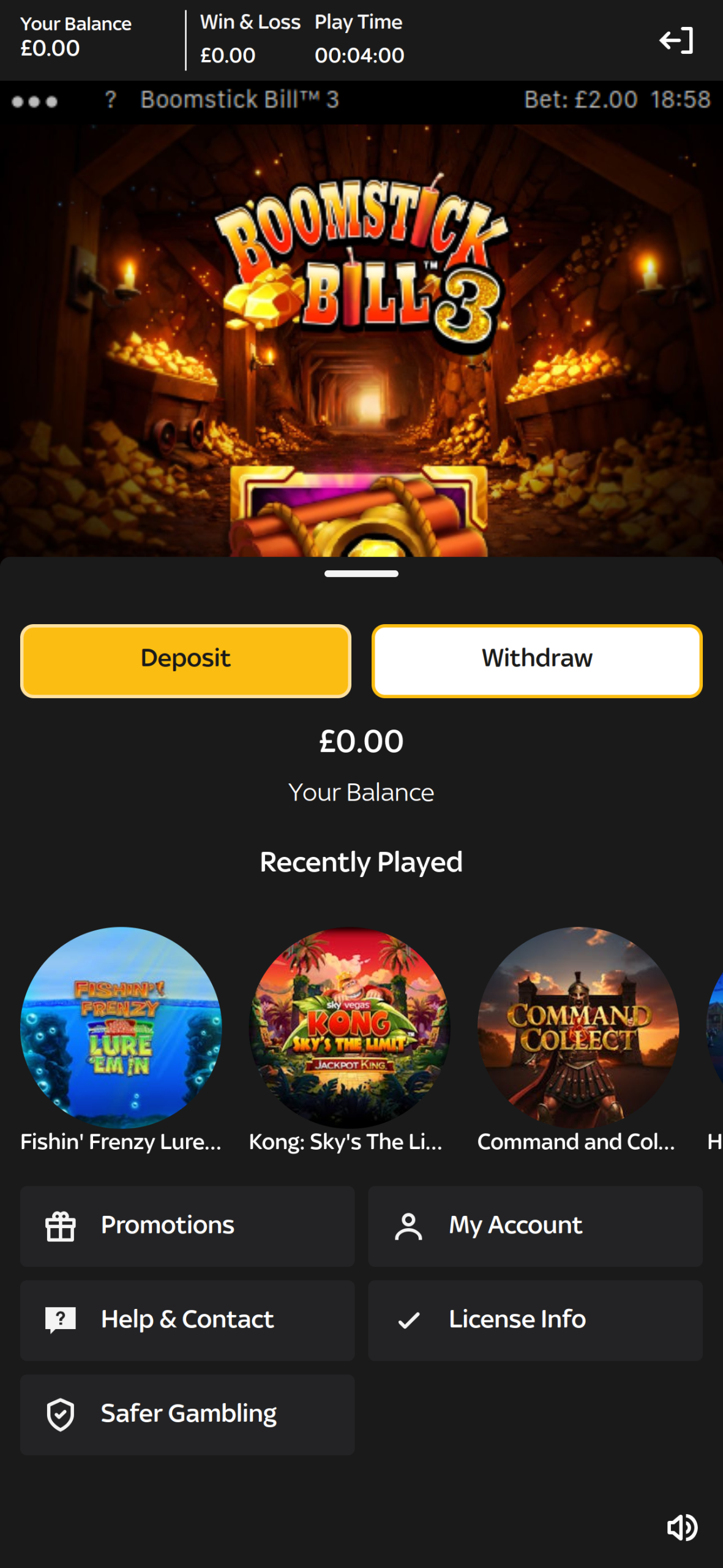
Sky Vegas keeps the safer-gambling furniture in view during play: a persistent header showing Your Balance, Win & Loss and Play Time (00:04:00), a visible “Bet: £2.00” (the stake cap in action) and one-tap access to Safer Gambling and account tools. The mandated information is built into the session, not buried in a menu.
GermanyMock-up
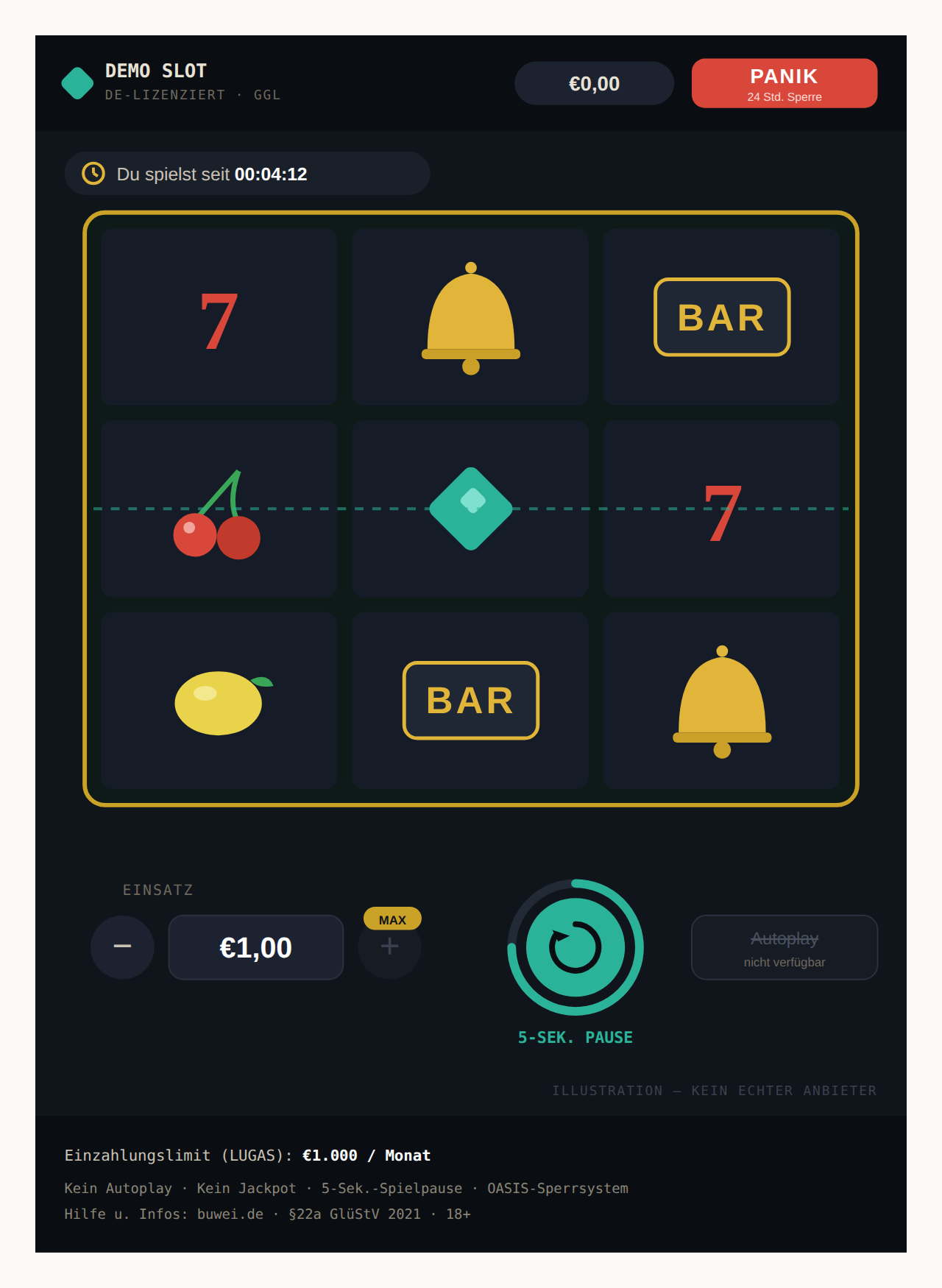
Illustrative mock-up – not a real operator. It shows what GlüStV 2021 forces onto the play screen: a €1 max stake per spin, the mandatory five-second spin pause, no autoplay and no jackpot, a highly-visible “Panik” button (instant 24-hour block), a running time-played display and the LUGAS €1,000/month limit.
Brazil7Games
7Games Fortune in play: a Brazilian slot with the bet (Aposta R$0,20) and balance shown and a persistent “Depositar” button. The lighter-touch play layer Brazil regulates – RTP transparency, reality checks and 30-minute re-auth – sit under the surface rather than capping stake and speed as Germany does.
Feature matrix: the funnel, market by market
Checklist: What good looks like
Across all three markets, five core UX principles separate the best-converting operators:
01
Treat compliance as UX, not a legal bolt-on
The deposit-limit prompt, the liveness check and the reality check are product moments. Design them deliberately or they’ll be designed against you.
02
Sequence friction to risk
Front-load only what the regulator requires before play; defer the rest to risk-triggered points where the law allows. The friction budget is fixed but how you spend it isn’t.
03
Make the unavoidable feel fast and reassuring
Verification is the biggest bottleneck. Explain it, speed it up, and remove every needless step around the mandatory one.
04
Localise, don’t translate
Pix-first cashiers in Brazil, chunked forms in Germany, honest offer messaging in the UK. Porting a global template is how you lose the local funnel.
05
Measure every stage-to-stage drop-off
You can’t optimise a funnel you only see at the ends. The operators winning these markets instrument all six stages and act on the gaps.
In partnership with

Jurnii
Jurnii is a UX agency and platform helping regulated operators turn compliance constraints into conversion advantages - mapping, benchmarking and optimising the player journey from prospect to first deposit and beyond.